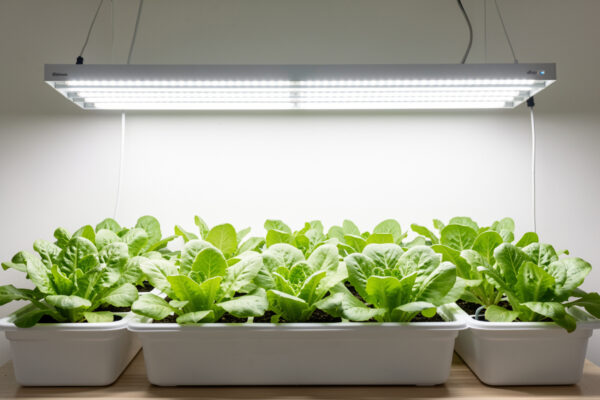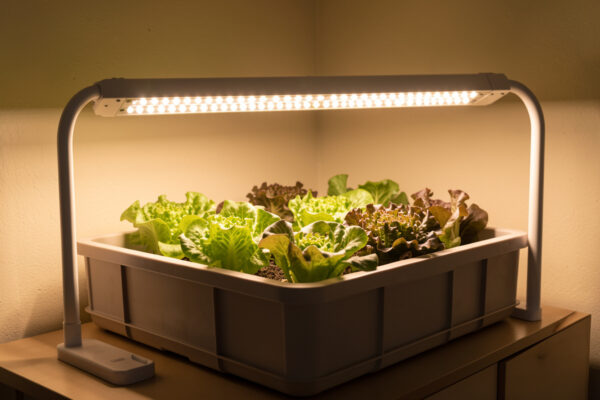
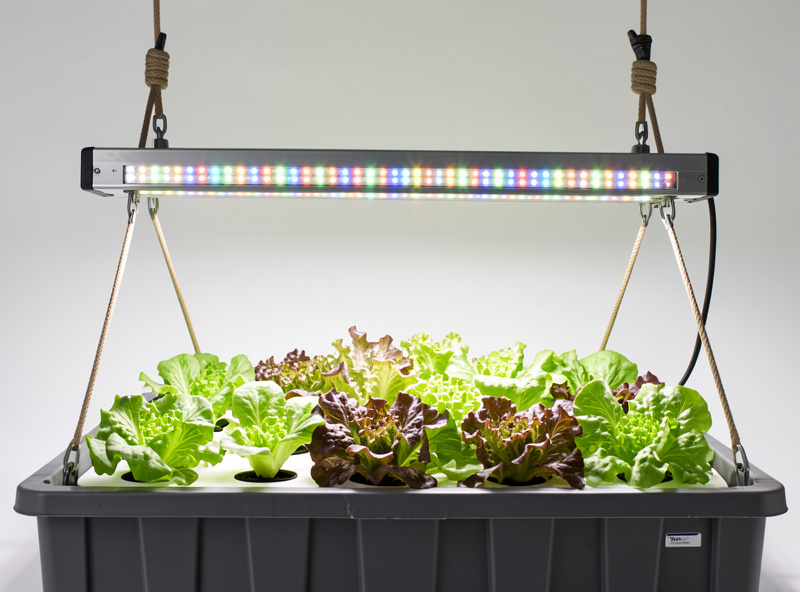
Mounting height is the most powerful adjustment on your grow light, and it’s free. You already own it — no upgrade, no purchase, just raising or lowering the fixture. Yet it’s the setting most hydroponic growers get wrong, because the manufacturer’s “hang it 18 inches above the canopy” chart is a starting guess, not an answer for your room. On my bench, hanging height is the first thing I tune and the thing I re-check most often, because the light a plant actually receives changes dramatically with a few inches of height.
The physics is simple and unforgiving: light intensity falls off fast as a fixture rises above the canopy. Move a light too far away and you grow leggy, stretched plants reaching for the source; hang it too close and you bleach or burn the tops. Between those two failures is a band where plants grow compact, dense and deep-green — and the only reliable way to find that band in your space is to measure, not to trust a chart printed for someone else’s reflector and walls.
Why a Fixed Inch Number Doesn’t Work
Every fixture is different. A high-powered LED bar might need to sit 24 inches or more above a seedling tray to avoid burning it, while a modest panel might want to be 12 inches away to deliver enough intensity. The manufacturer’s recommended distance assumes their exact fixture at their rated output in their test conditions — and even then it’s a range, not a point. Your reflective walls, your room size, and your crop’s stage all shift the right answer.
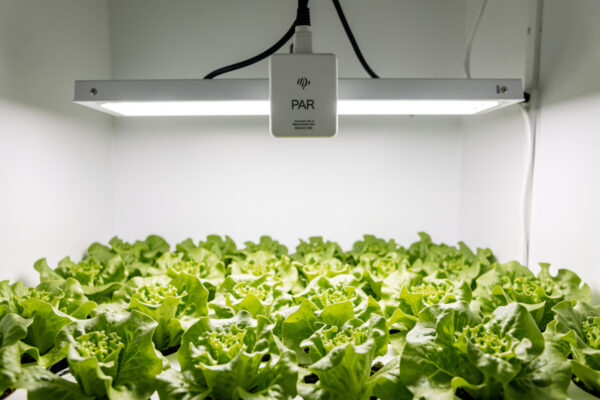
That’s why I set height by PAR meter, the same instrument-first habit I bring to PPFD and DLI. I raise or lower the fixture until the reading at canopy height matches the target for the crop — 200 to 400 PPFD for leafy greens, higher for fruiting crops — and then I let the plants tell me the rest. The chart gets me in the neighborhood; the meter gets me to the door.
Reading the Plants: Too High vs Too Close
Even without a meter, plants broadcast a height problem clearly once you know the signs. Too high (too far away): stems stretch, internodes — the gaps between leaf sets — get long, and the plant looks lanky and reaches upward. This is etiolation, the plant spending energy on stem instead of leaf trying to get closer to a weak light source. The fix is to lower the fixture or move it closer.
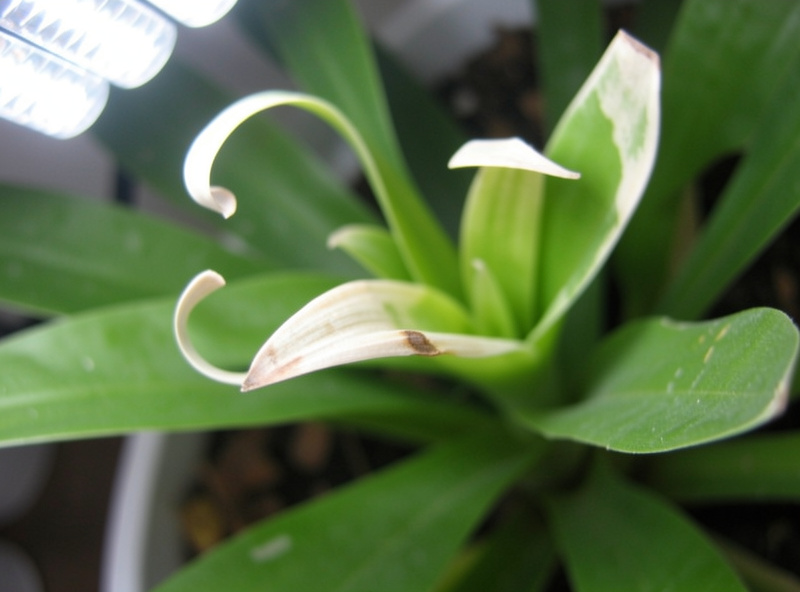
Too close (too intense): the leaves nearest the light bleach to a pale yellow-white, curl or cup at the edges, or show crispy, burnt tips. The plant is getting more light than it can use and is photo-bleaching. The fix is to raise the fixture a few inches and watch the next growth come in normal. Once you’ve seen both failure modes a few times under a meter, you start recognizing the healthy middle — compact, deep-green, dense — by eye, though I still verify with a reading.
Starting Heights by Crop Stage
Here’s the practical part. These are starting points to set with the fixture, then verify and refine by meter and by how the plants respond over the first week. Seedlings and fresh cuttings want gentle light, so hang the fixture higher and let the low intensity keep them from stretching while their roots establish. As plants enter vegetative growth, lower the light to push intensity up toward the crop’s target. Fruiting crops can take the most intensity and the closest hang your fixture safely allows.
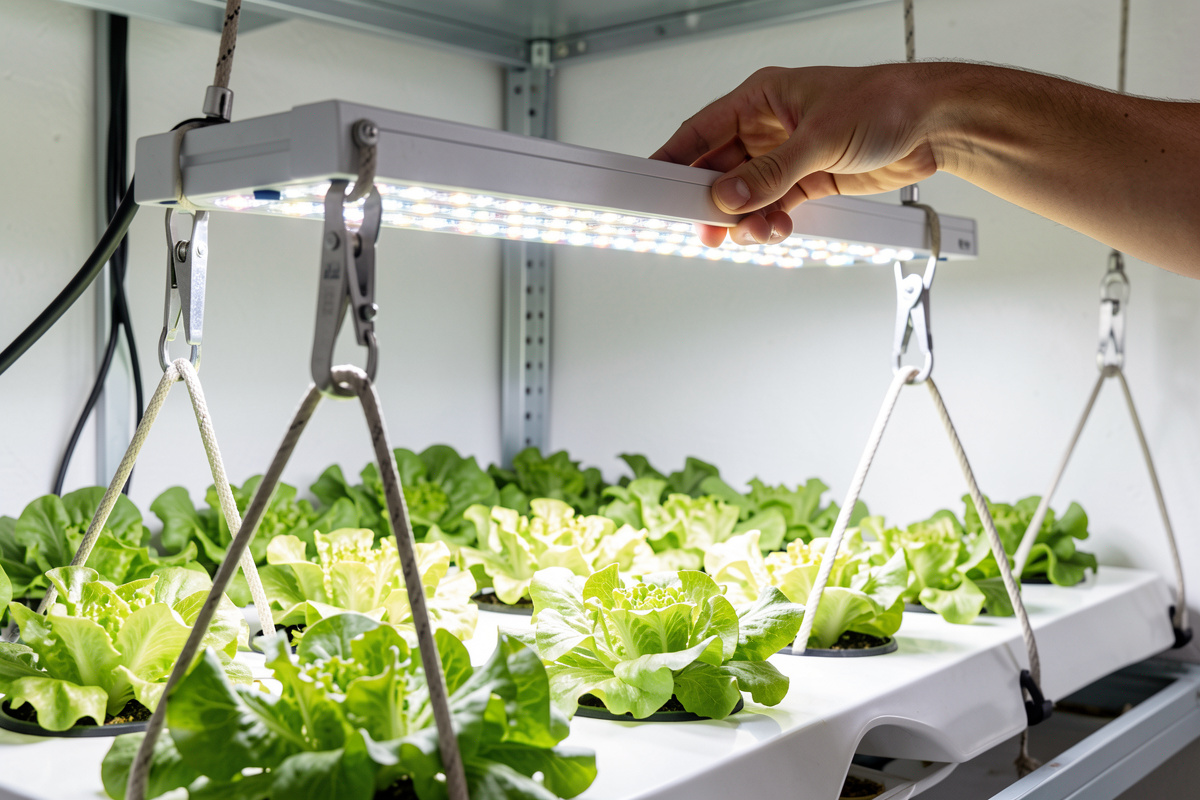
The mistake I see most often is setting height once at transplant and never touching it again. A lettuce crop can gain several inches of canopy height over a few weeks, which means a light hung at the right distance over seedlings is too close — or, more often, the canopy rises while a too-high light keeps the plants stretching the whole time. I’ve watched growers blame stretchy growth on a “weak” light when the real problem was a fixture they set in week one and forgot. The canopy is a moving target, and the light has to move with it, which is exactly why the cheap rope ratchet earns its keep: if adjusting is effortless, you’ll actually do it.
The single best tool for managing all of this is a pair of adjustable rope-ratchet hangers, which turn raising and lowering the fixture into a ten-second job instead of a chore. They’re cheap and they’re the reason I actually re-check height weekly instead of leaving it. A set of grow-light rope ratchet hangers is available on Amazon here. As an Amazon Associate I earn from qualifying purchases.
The Dimmer Changes Everything
If your fixture has a dimming dial, the whole height problem softens. Instead of physically moving the light to change intensity, you set the height once for even coverage and tune the intensity with the dial — gentle for seedlings, full for mature canopy. That’s how I run mine now: I find a height that gives good, even coverage across the growing area, then ramp the dimmer up as the crop matures rather than chasing the fixture up and down.
A fixed-output light forces you to manage intensity through height alone, which is fiddlier and means the coverage footprint changes every time you adjust. A dimmable fixture lets you hold the geometry constant and tune the photons, which is both easier and gentler on young plants. It’s the single feature I’d pay extra for, and it’s the same logic behind buying a quality fixture in the first place, as I argue in the main grow lights guide.
Coverage, Not Just Distance
One last thing height interacts with: coverage uniformity. Raise a fixture and its light spreads over a wider area but at lower intensity; lower it and the intensity climbs but the footprint shrinks and the edges fall off. There’s a sweet spot where the whole growing area gets reasonably even light, and finding it means measuring not just the center but the corners. My edge plants used to lag until I started checking corner PPFD and either lowering coverage expectations or rotating plants through the brighter center — the same canopy-mapping discipline that decides whether a fixture is right for a given spectrum over a dense crop. This is also where a single under-sized fixture exposes itself: raise it high enough to cover the whole tote and the center intensity collapses, while lowering it to hit your PPFD target leaves the corners in shadow. There’s no height that fixes a fixture that’s simply too small for the footprint, which is why I size lights one step larger than the growing area and run them with headroom to spare.
Grow Light Height Starting Points
| Crop stage | Approach | Target PPFD | Notes |
|---|---|---|---|
| Seedlings / cuttings | Hang higher, low intensity | 100–250 | Prevents stretch while roots establish |
| Vegetative leafy greens | Lower toward target | 200–400 | Compact, dense growth |
| Fruiting crops | Closest safe hang | 400–600 | Most intensity the fixture allows |
| Any stage, dimmable light | Fix height, tune dimmer | Crop-dependent | Easiest and gentlest method |
The Habit That Matters
However you set it, the rule is the same: hang by meter, read the plants, and re-check as they grow toward the light. Height isn’t a set-once decision — the canopy rises through the grow, so the gap shrinks if you don’t adjust. A weekly glance at the meter and a quick raise of the ratchets keeps the light in its band, and that small habit prevents more lighting problems than any fixture upgrade. Light is a number, and height is the cheapest knob you have to dial it in.
Frequently Asked Questions
How far should a grow light be from hydroponic plants?
It depends on the fixture power and crop stage, so set height with a PAR meter rather than a fixed inch number. Raise the light until the reading at canopy matches your crop target, then re-measure weekly as plants grow toward it.
What happens if a grow light is too far away?
Plants stretch and grow leggy, with long gaps between leaf sets, as they spend energy on stem trying to reach the weak light source. This is etiolation. Lower the fixture or move it closer until the canopy receives the target light intensity.
What happens if a grow light is too close?
Leaves nearest the light bleach to pale yellow-white, curl at the edges, or develop crispy burnt tips from receiving more light than they can use. Raise the fixture a few inches and the next growth comes in normal and deep green.
Should I move the grow light or use a dimmer?
If your fixture has a dimmer, set the height once for even coverage and tune intensity with the dial. This holds the coverage footprint constant and is gentler on young plants than repeatedly raising and lowering a fixed-output light.
Why do my edge plants grow slower than the center?
Light intensity drops toward the edges of a fixture’s footprint, so corner plants receive less PPFD than the center. Measure corner readings, lower your coverage expectations, or rotate plants through the brighter center to even out growth.