For a long time the grow-light argument came down to one fight: high-pressure sodium versus everything else. HPS was the standard every serious indoor grower defaulted to, and LED was the upstart with big promises and patchy early hardware. That era is over. On my bench, running totes and channels in a Swedish spare room, the choice between LED, HPS and ceramic metal halide (CMH) isn’t close anymore — but the reasons why are worth understanding before you spend money, because the right answer genuinely depends on your space.
I’ve run quantum-board-class LED bars over my reservoirs for years, and I came up on the tail end of the HPS generation, so I’m not picking sides from theory. Here’s how the three technologies actually compare for a soilless hobby grower, measured on efficiency, heat, spectrum and cost — not on forum loyalty.
The Short Answer: LED, For Almost Everyone
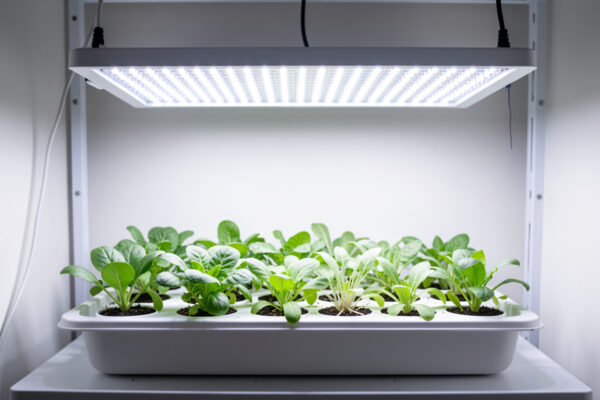
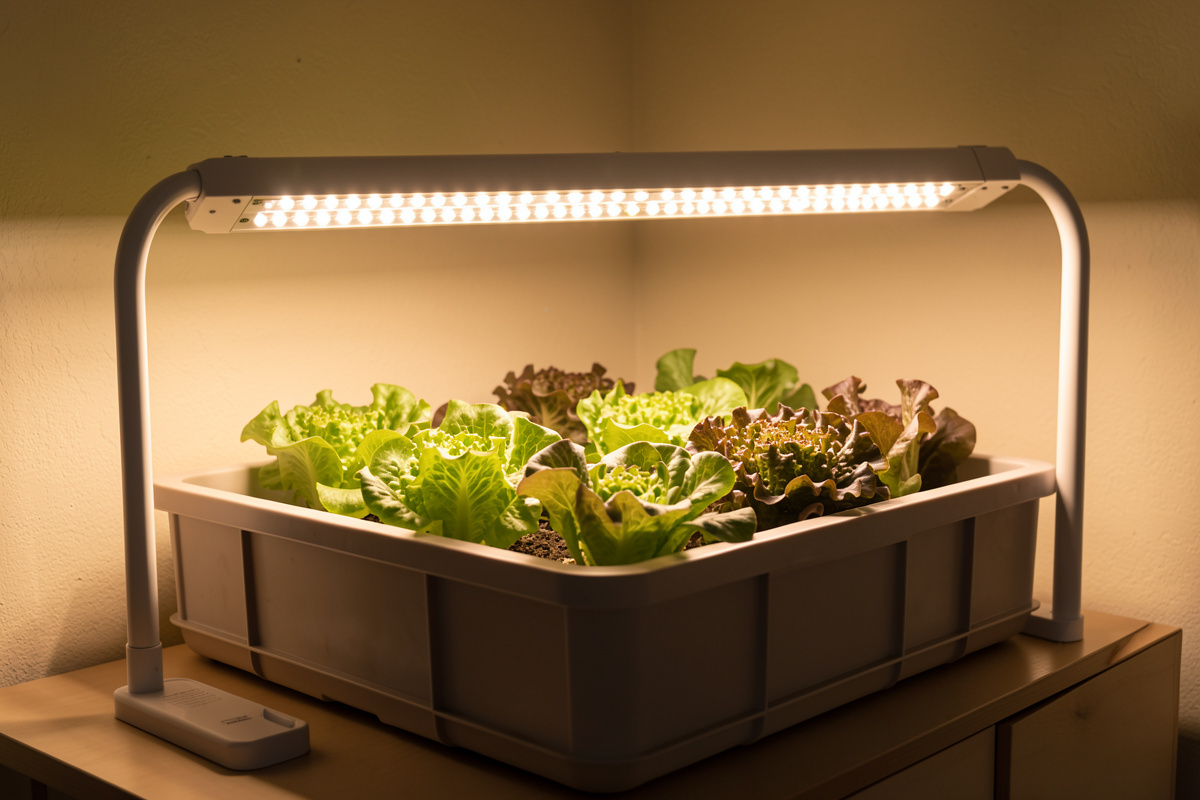
If you’re growing hydroponically in a tent, a closet, or a corner of a spare room, buy a quality full-spectrum LED. It’s the right call for the overwhelming majority of home setups, and the reasons stack up fast: higher efficacy than modern HPS, far lower heat, precise spectral control, and a lifespan that outlasts several HPS bulb replacements. The only places the older technologies still make sense are large rooms where heat is welcome and serious finishing growers chasing CMH’s specific spectrum — both edge cases for the hobbyist.
The catch that scares people off LED is upfront price: a good LED costs more than an HPS kit of similar coverage. But that’s the wrong comparison. Over a season of indoor growing, LED’s efficiency and the absence of bulb replacements close that gap, and in a cold-climate winter grow where every photon is bought electricity, the efficient fixture wins on total cost. I unpack that math in the main grow lights guide.
Heat: The Reason I Switched
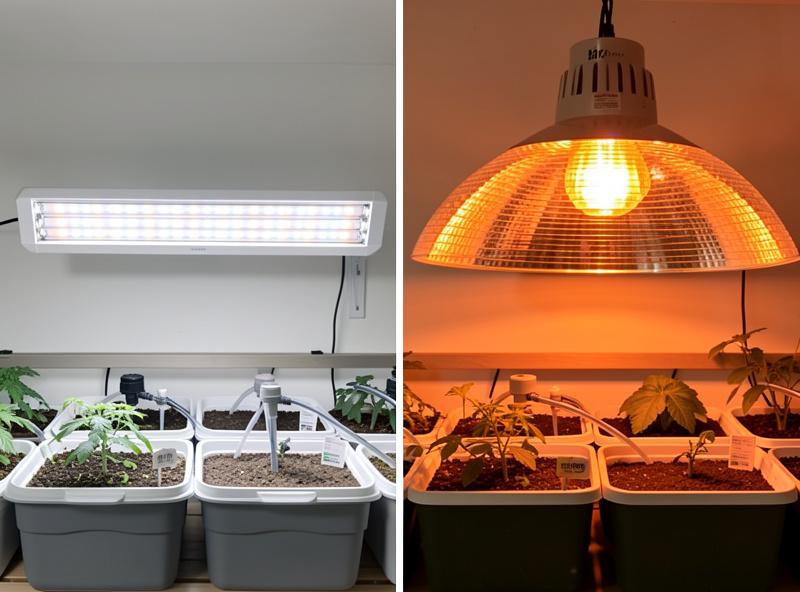
The single thing that pushed me off HPS for good wasn’t efficiency on paper — it was reservoir temperature. HPS lamps throw serious radiant heat, and in a small enclosed space that heat lands in two places you don’t want it: on the canopy, forcing you to hang the lamp far away and lose intensity, and into the room, warming the nutrient solution. I spent more than one summer fighting a res that had crept past 72°F because a hot lamp was baking the space, and warm water in a hydro system is an open invitation to root rot and Pythium.
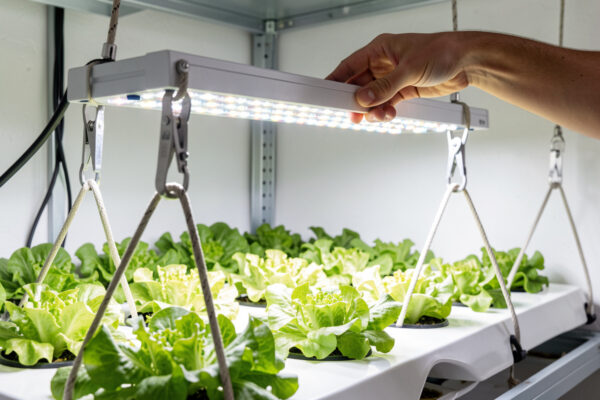
LED flips that problem. A modern LED bar runs cool enough that I can hang it close to the canopy — boosting usable PPFD — without scorching the tops, and it adds little enough heat to the room that my reservoir stays in its safe band without a chiller. For anyone growing in a confined indoor space, that thermal difference alone justifies the switch. Heat isn’t a side issue in hydroponics; it’s coupled directly to your water, your dissolved oxygen, and your disease risk.
Efficiency: Photons Per Watt
Efficacy — micromoles of photosynthetic light per joule of electricity — is where the marketing fog is thickest and where LED quietly won. A quality modern LED bar lands in the 2.5 to 2.9 µmol/joule range. A good HPS sits around 1.7 to 2.1, and CMH a touch lower. That means a quality LED delivers roughly 30 to 50 percent more usable light for the same power draw.
Over an hour that’s trivial; over a six-month indoor winter season running 14 to 18 hours a day, it’s a meaningful line on the electricity bill, and it compounds. This is the number I tell people to demand from any fixture they’re considering — if a seller won’t publish a µmol/joule figure, they’re hiding something, the same way a nutrient brand that won’t publish a guaranteed analysis is hiding something.
Spectrum and Plant Quality
HPS light is heavily weighted toward yellow-orange — great for the flowering response it was prized for, poor for vegetative leafy growth, and miserable for actually seeing your plants. Everything under HPS looks like a sodium streetlight, which means you spot deficiencies and the first signs of pests and disease late. CMH improved on that with a fuller, whiter spectrum that finishing growers genuinely like. But modern full-spectrum white LED matches or beats CMH’s spectral quality while running cooler and more efficiently, and it lets you inspect your canopy under near-natural light. For leafy greens and herbs — the bread and butter of home hydro — the white LED spectrum grows compact, sturdy, deep-green plants without any flowering-spectrum gymnastics.
Lifespan and Maintenance
HPS bulbs degrade. They lose meaningful output over a year or so of heavy use and need replacing before they visibly dim, because the photon drop happens before your eye catches it — which means an HPS grower is buying bulbs on a schedule and, ideally, metering output to know when. A quality LED holds its output far longer, with no bulbs to swap and no ballast to fail. Less consumable cost, fewer interruptions, one less thing in the maintenance loop. For a grower who treats the system like a control loop — schedules, sensing, intervention only on failure — the LED’s set-and-forget reliability is worth as much as its efficiency.
There’s a subtler maintenance cost to HPS that doesn’t show up on a spec sheet: the heat it throws shortens the life of everything around it. Plastic reservoir lids, timer housings, and nearby tubing all live a harder life next to a hot lamp, and the fan you run to manage that heat is one more moving part that can fail in the dark while you’re asleep. My LED rigs run quiet and cool enough that the only fans in the room are the ones aerating the water, not fighting the lights. Every component you don’t have to cool is a component that can’t quietly cook itself over a long season.
When HPS or CMH Still Make Sense
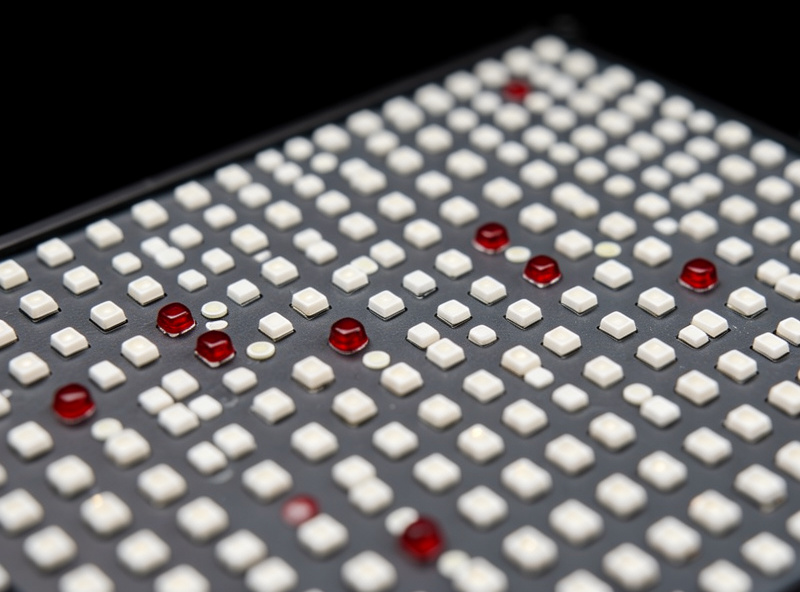
I won’t pretend the old technologies are worthless. In a large, dedicated grow room with good ventilation, HPS’s lower cost per watt of coverage can still pencil out, and the heat it throws is sometimes genuinely useful in a cold space. Serious finishing growers report that CMH’s spectrum gives them a quality edge they value, and in those hands it’s a deliberate choice, not a default. But these are operator-scale decisions — big rooms, intentional heat budgets, specialized goals. For the hobbyist running a few totes or a channel of lettuce in a spare room, none of those advantages apply, and all of LED’s do.
LED vs HPS vs CMH: The Comparison
| Factor | Full-spectrum LED | HPS | CMH/LEC |
|---|---|---|---|
| Efficacy (µmol/J) | 2.5–2.9 | 1.7–2.1 | 1.7–1.9 |
| Heat output | Low | High | High |
| Spectrum | Full, natural white | Yellow-orange | Full, whitish |
| Plant inspection | Easy | Poor | Good |
| Bulb replacement | None | Annual-ish | Periodic |
| Best for | Home/tent hydro | Large cool rooms | Finishing specialists |
What I’d Buy Today
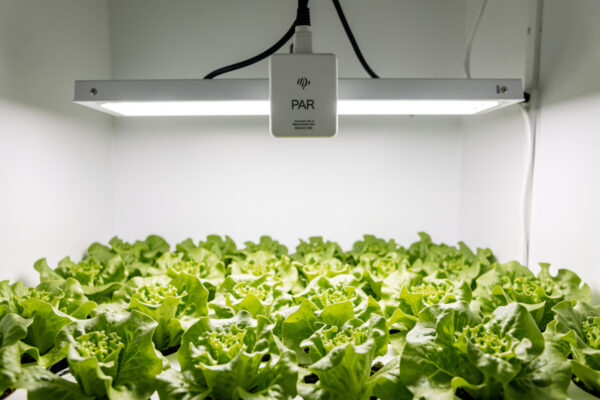
If I were outfitting a new hydro setup from scratch tomorrow, I’d buy a dimmable full-spectrum LED bar sized one step larger than my growing footprint and run it dialed back for seedlings, then up for mature canopy. That single fixture would cover the whole grow cycle, run cool over my reservoir, and sip enough less power to matter over a Nordic winter. A solid dimmable full-spectrum LED grow bar selection is on Amazon here, and if you want a way to verify your fixture is actually delivering, a PAR/PPFD meter takes the guesswork out. As an Amazon Associate I earn from qualifying purchases.
The bottom line hasn’t changed since I made the switch myself: for indoor hydroponic growing, LED is the efficient, cool-running, plant-friendly default, and HPS or CMH are deliberate exceptions for specific large-scale or finishing needs. Buy on measured efficacy and spectrum, not on what a forum said in 2018.
Frequently Asked Questions
Is LED or HPS better for hydroponics?
LED is better for almost all home hydroponic setups. It runs far cooler, delivers more usable light per watt, lets you inspect plants under natural-looking light, and needs no bulb replacements. HPS only wins in large, cool rooms where its heat is useful.
Are LED grow lights more efficient than HPS?
Yes. A quality modern LED bar runs at 2.5 to 2.9 micromoles per joule, while HPS sits around 1.7 to 2.1. That means LED delivers roughly 30 to 50 percent more usable light for the same electricity, which adds up over a long indoor season.
Why does HPS heat matter in a hydroponic setup?
HPS heat warms both the canopy and the nutrient reservoir. Warm water above 72 degrees Fahrenheit raises root rot and Pythium risk, so the heat couples directly to disease pressure in a hydroponic system. LED runs cool and avoids that problem.
What about CMH or ceramic metal halide lights?
CMH offers a fuller, whiter spectrum that some finishing growers prefer, but it still runs hot and less efficiently than LED. Modern full-spectrum white LED matches or beats CMH spectral quality for home growers while staying cool and efficient.
Do LED grow lights last longer than HPS bulbs?
Yes, by a wide margin. HPS bulbs lose meaningful output within about a year of heavy use and need scheduled replacement. A quality LED holds its output far longer with no bulbs to swap, reducing both running cost and maintenance interruptions.