If there’s one place I see hydroponic growers go wrong with light, it’s buying and hanging fixtures by feel instead of by number. Light isn’t a vibe — it’s two measurements, PPFD and DLI, and once you understand them you stop guessing whether your plants are getting enough and start knowing. These are the numbers on my PAR meter that decide every lighting choice I make over my totes and channels, and they’re far simpler than the jargon makes them sound.
I run my whole grow indoors in Sweden, where there’s effectively no useful winter daylight to lean on, so I can’t fudge the light math the way a grower with a sunny window can. Every photon my plants get, I’m responsible for — which means I learned PPFD and DLI properly, out of necessity. Here’s what they mean, the targets I actually use, and how to hit them without a physics degree.
PPFD: How Bright, Right Now
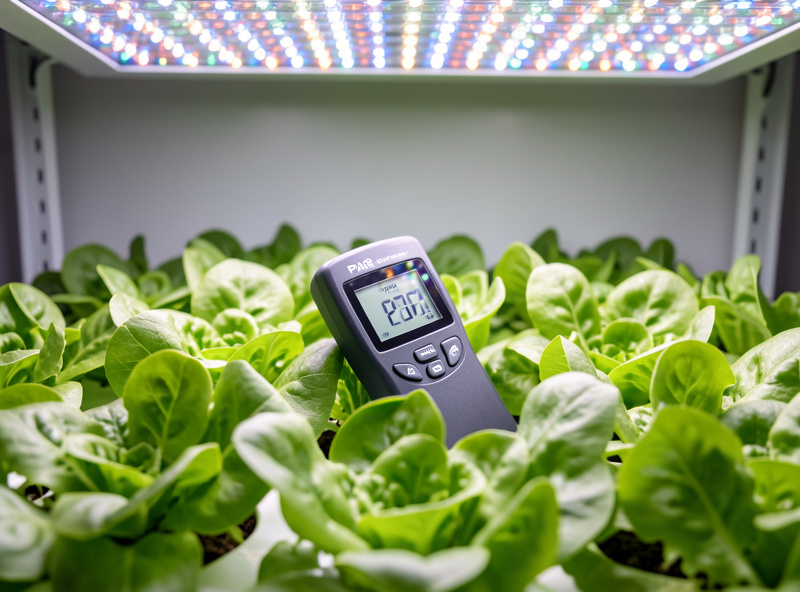
PPFD stands for Photosynthetic Photon Flux Density. Strip the jargon and it’s a count: how many photosynthetically useful photons land on a square meter of your canopy each second, measured in micromoles. It’s the instantaneous brightness your plants actually experience, and it’s what a PAR meter reads when you hold the sensor at leaf height.
The crucial thing PPFD captures that lumens and watts don’t: it only counts the light plants can use for photosynthesis, weighted the way a leaf sees it rather than the way your eye does. A fixture can look searingly bright to you and still post a mediocre PPFD, because your eye over-weights green-yellow light that plants largely reflect. That disconnect is exactly why I stopped trusting my eyes and started trusting the meter — the same instinct I bring to LED versus HPS choices in my grow-light technology comparison.
PPFD Targets by Crop
Here’s where the numbers become useful. Leafy greens and herbs — lettuce, basil, kale, the easy high-success crops — thrive in the 200 to 400 PPFD range. They don’t need blazing intensity and will happily grow compact and sweet at the lower end. Fruiting crops like tomatoes, peppers and strawberries are hungrier: they want 400 to 600 PPFD and will use more to set and ripen fruit. Seedlings and fresh cuttings sit lower still, around 100 to 250, because young roots can’t drink fast enough to support intense photosynthesis and high light just stresses them.
The trap is pushing intensity too high too soon, or assuming more is always better. Past a crop’s saturation point, extra photons don’t speed growth — they just cost electricity and can bleach the canopy. I target the middle of each crop’s band and let DLI, not raw intensity, do the heavy lifting.
There’s a staging detail that matters here too: the right PPFD changes as the plant grows. A lettuce seedling that would sulk under 350 PPFD will gladly take it three weeks later when its roots can keep pace. I ramp intensity up across a grow rather than pinning it at one number, starting young plants at the low end of the band and dialing the light up as the canopy fills in — which is exactly why a dimmable fixture earns its price. Holding one fixed intensity for the whole cycle either stresses the seedlings early or short-changes the mature plants late. Matching the photon supply to what the roots can actually drink is the difference between a crop that limps and one that races.
DLI: The Number That Actually Predicts Growth
PPFD tells you how bright the light is at a moment. DLI — Daily Light Integral — tells you how much total light a plant received over a whole day, and it’s the figure that actually correlates with growth. DLI is PPFD multiplied by the seconds of light in your photoperiod, converted into moles of light per square meter per day (mol/m²/day). It’s the daily ration; PPFD is the flow rate.
This is the concept that changed how I light. Two grows can hit the same DLI by completely different routes — a brighter light for fewer hours, or a gentler light for longer. That flexibility is gold for a Nordic indoor grower, because it lets me trade intensity against runtime to suit a crop or an electricity bill. A lettuce crop happy at 250 PPFD for 16 hours lands around a 14 mol DLI, comfortably in the leafy-green sweet spot — and I could hit that same 14 with a stronger light running fewer hours if I needed to.
DLI Targets by Crop
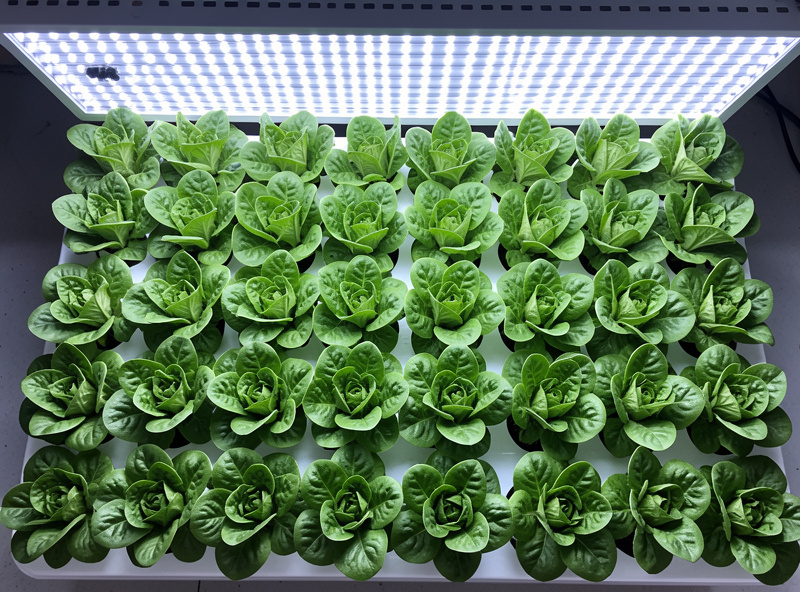
Leafy greens and herbs grow beautifully on a DLI of roughly 12 to 17 mol/m²/day. That’s an achievable, affordable target indoors and the reason lettuce and basil are such forgiving first crops. Fruiting crops want more — generally 20 to 30 mol/m²/day to fuel flowering and fruit set, which is why tomatoes and peppers demand both higher PPFD and longer photoperiods. Microgreens and seedlings are content well below the leafy-green range. Match the DLI to the crop and the photoperiod follows naturally — set the light hours to deliver the daily ration and the rest takes care of itself.
How to Measure Without Guessing
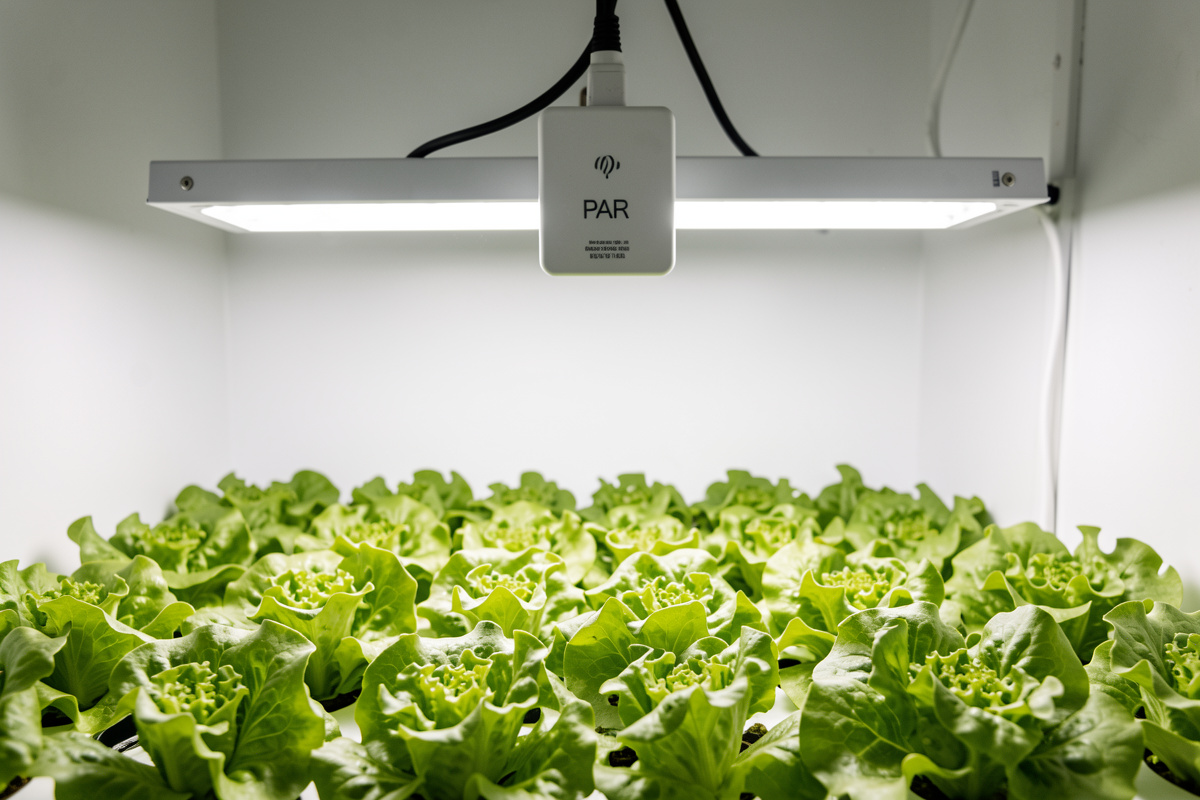
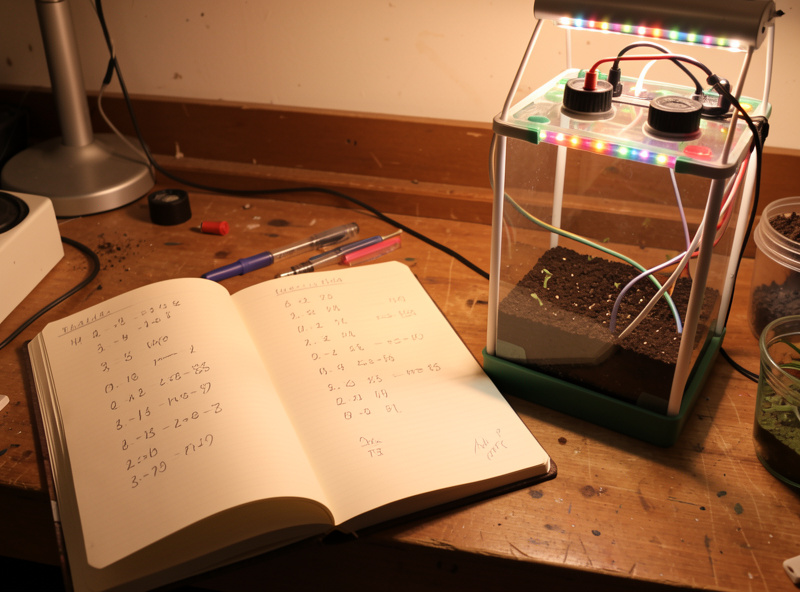
The honest way to know your PPFD is a PAR meter held at canopy height. I take readings at the center and the corners of every growing area, because coverage falls off toward the edges — my outermost plants routinely see a fraction of what the center plants get, and that gap explains a lot of uneven growth that people blame on nutrients. With the PPFD map in hand, the DLI is simple arithmetic: PPFD × photoperiod-seconds × 0.0000036 gives you mol/m²/day. I take my readings at the same time each session and jot them in the same logbook I use for EC and res temperature, because a single reading is a snapshot but a trend is information — a slowly dropping PPFD at a fixed height is the first sign a fixture is aging or the diodes are dusty, long before the plants visibly complain.
If you don’t own a meter, there are smartphone apps and manufacturer PPFD charts, but treat both as rough starting points — phone sensors aren’t calibrated for horticultural light, and manufacturer charts assume their reflector, room and mounting height, not yours. For a few totes, borrowing or buying a real meter pays for itself in one rescued crop. A dedicated PAR/PPFD meter is available on Amazon here, and it’s the single instrument that turns lighting from guesswork into a measured input. As an Amazon Associate I earn from qualifying purchases.
PPFD and DLI Targets at a Glance
| Crop type | PPFD (µmol/m²/s) | DLI (mol/m²/day) | Notes |
|---|---|---|---|
| Seedlings / cuttings | 100–250 | 6–12 | Low and gentle; high light stresses young roots |
| Leafy greens / herbs | 200–400 | 12–17 | Forgiving; the easy first crops |
| Fruiting (tomato, pepper) | 400–600 | 20–30 | Hungry; longer photoperiod needed |
| Strawberries | 300–500 | 17–22 | Between greens and full fruiting |
Putting It Together
The workflow is straightforward once the numbers click: pick your crop, look up its PPFD and DLI band, hang and dim your light until the meter reads the target PPFD at canopy, then set a photoperiod that delivers the right DLI. Re-measure weekly as plants grow up toward the light and the canopy height changes. That’s the whole game — and it’s why I’ll always argue light is a number, not a feeling. Get the PPFD right at the leaf and the DLI right across the day, and you’ve solved the variable most hydro growers never even measure.
Frequently Asked Questions
What is the difference between PPFD and DLI?
PPFD is the instantaneous brightness, counting photosynthetic photons hitting a square meter of canopy each second. DLI is the daily total, PPFD multiplied across the photoperiod into moles per square meter per day. PPFD is the flow rate; DLI is the daily ration.
What PPFD do hydroponic leafy greens need?
Leafy greens and herbs thrive at 200 to 400 PPFD measured at canopy height. They grow compact and sweet even at the lower end, which is why lettuce and basil are such forgiving first crops. Fruiting plants need 400 to 600 PPFD instead.
How do I calculate DLI from PPFD?
Multiply your PPFD by the number of seconds of light per day, then by 0.0000036, to get DLI in moles per square meter per day. For example, 250 PPFD for 16 hours yields about 14 mol per square meter per day.
What DLI do I need for hydroponic vegetables?
Leafy greens and herbs want roughly 12 to 17 DLI, while fruiting crops like tomatoes and peppers need 20 to 30 to support flowering and fruit. Seedlings sit lower. Matching DLI to the crop is more reliable than chasing raw intensity.
Do I need a PAR meter to measure PPFD?
A PAR meter is the only accurate way to read PPFD at canopy height. Phone apps and manufacturer charts give rough starting points, but they are not calibrated to your room. For a few totes, a real meter pays for itself in one rescued crop.
Can plants get too much PPFD?
Yes. Past a crop’s light saturation point, extra photons do not speed growth and can bleach the canopy. Target the middle of each crop’s PPFD band and use DLI and photoperiod, rather than maximum intensity, to fine-tune total light delivery.