Aeroponics grows plants with their roots suspended in air inside an enclosed chamber, fed by a fine mist of nutrient solution sprayed directly onto them — no growing medium, no standing reservoir for the roots, just droplets and air. It is the most oxygen-rich method there is, because the roots are surrounded by air the whole time and only ever touch a film of mist, and that is exactly why it can drive fast growth. It is also the most equipment-dependent and the least forgiving of the methods on this site, which is why I am honest about where my own bench ends: I run DWC, NFT, Kratky and ebb-and-flow as my daily systems, and I use low-pressure aeroponics for propagation, but high-pressure aeroponics is a discipline I respect more than I run continuously. I will flag clearly below which parts are lived experience and which are what serious aeroponic growers report.
Done right, aeroponics is genuinely impressive. Done casually, it is the method most likely to lose a crop in an afternoon, because there is no medium and no reservoir to buffer a failure. Here is how it works, where it shines, and why it asks so much.
How Aeroponics Works
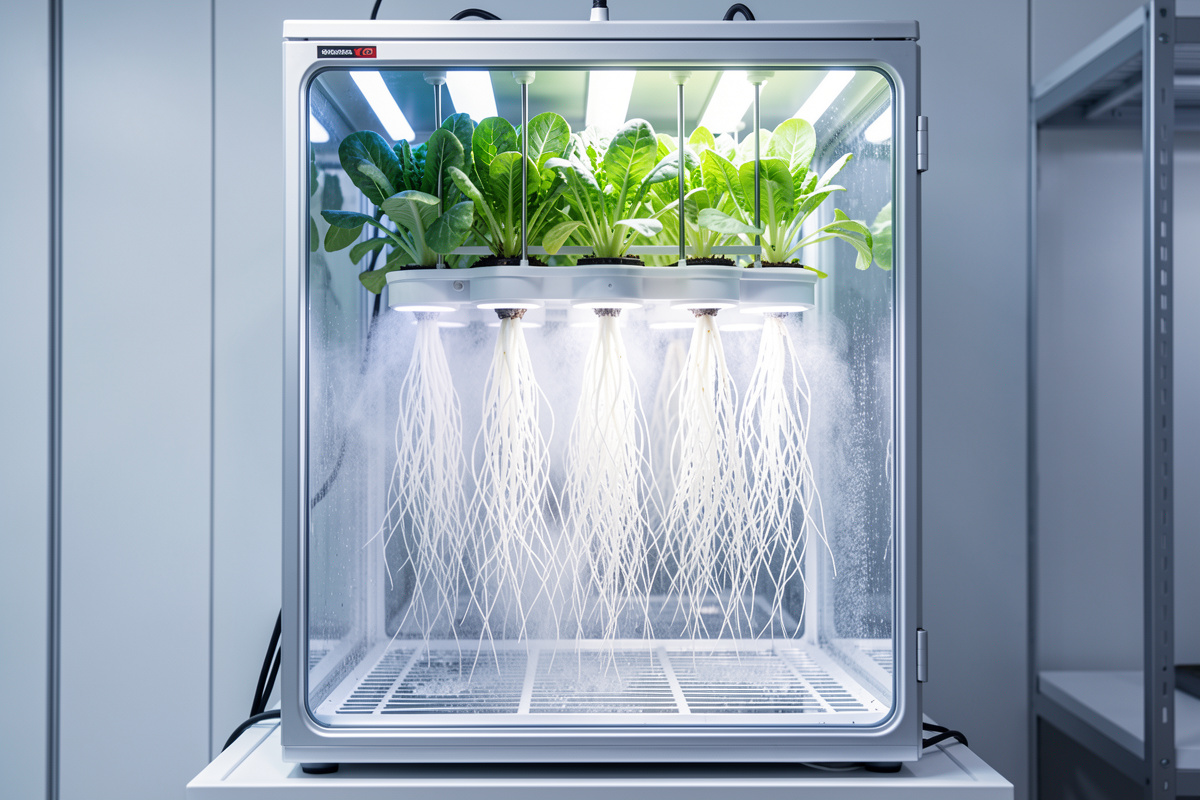
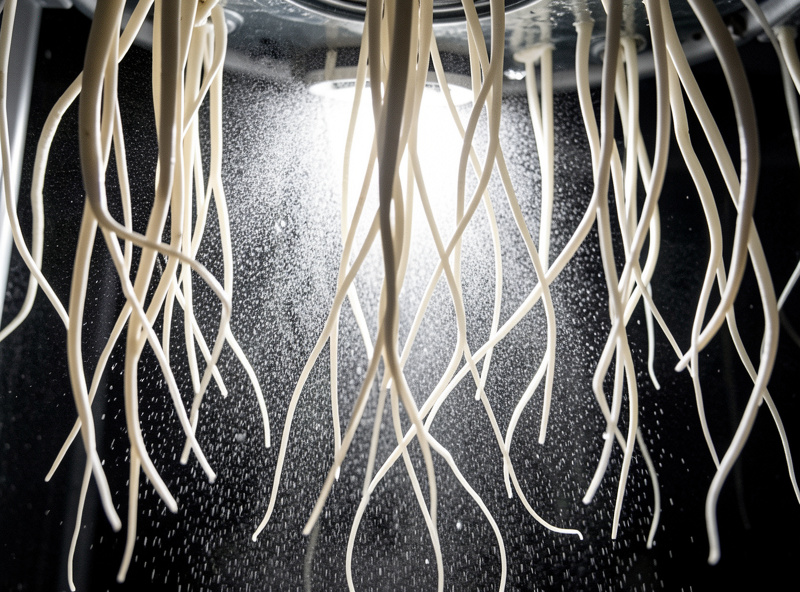
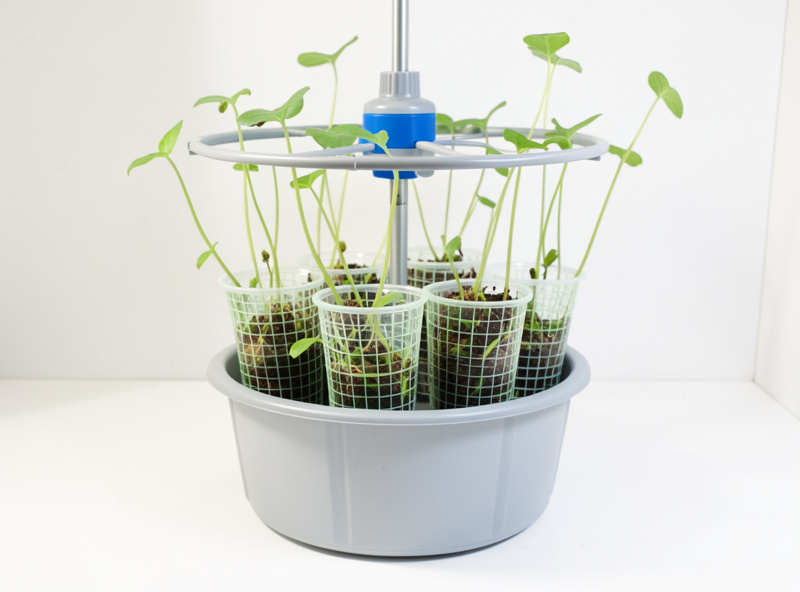
In an aeroponic system the plants sit in net-pot collars in the lid of a sealed chamber, with their roots dangling into the empty space below. A pump pushes nutrient solution through misting nozzles that spray the roots on a cycle — often just seconds of mist every few minutes. The droplets coat the roots with water and nutrients; the rest of the time the roots hang in humid, oxygen-saturated air. Excess mist collects at the bottom and returns to the reservoir.
The reason aeroponics can grow so fast is that root oxygenation is effectively unlimited — the roots are in air, not water, so they never run short of the oxygen that every other method works hard to supply. The trade-off is that the roots have no buffer at all. If the mist stops, there is no damp medium and no standing pool to keep them alive; bare roots in air dry out quickly. That single fact — total reliance on the misting cycle — defines everything about running the method.
It is worth seeing aeroponics as the far end of a spectrum the other methods sit on. Kratky gives roots a permanent air gap; NFT gives them a thin film with air above; DWC submerges them but bubbles oxygen in; ebb and flow alternates flood and air. Each is a different answer to the same question — how do you keep roots both fed and breathing? Aeroponics answers it by putting the roots almost entirely in air and delivering the feed as mist. Understanding that lineage makes the method far less mysterious: it is not magic, it is the most aggressive version of the oxygen-versus-water balance every hydroponic system is managing.
High-Pressure vs Low-Pressure Aeroponics
There are really two methods wearing one name, and the distinction matters:
- Low-pressure aeroponics (LPA) uses an ordinary submersible pump and sprinkler-style nozzles to throw a coarse spray. The droplets are larger and the system is far more tolerant. This is what most aeroponic cloners and propagation buckets are, and it is the form I actually run — I use a low-pressure bucket cloner to root cuttings, and it is excellent at it.
- High-pressure aeroponics (HPA) uses a high-pressure pump, an accumulator tank, and fine misting nozzles to produce a true fog of tiny droplets — the size range that aeroponic specialists report is ideal for root uptake. HPA is where the dramatic growth claims come from, and also where the complexity and the failure risk concentrate. This is the part I write as “growers report” rather than from daily bench experience.
If you are curious about aeroponics, start with low-pressure for cloning or a simple grow. HPA is an advanced build, and I would not point a beginner at it as a first system.
What an Aeroponic Build Needs
The parts list is short but exacting, and the quality of the misting components matters more than in any other method:
- A sealed, light-proof chamber to hold the roots in darkness and humidity. Light in the chamber means algae, same as any system.
- A pump and nozzles. For low-pressure, a submersible pump and spray heads. For high-pressure, a dedicated pump, an accumulator tank, a solenoid, and fine misting nozzles — the nozzles are the heart of HPA and the part that clogs.
- A short-cycle timer. Misting is measured in seconds on, minutes off, so you need a timer (or controller) capable of that granularity.
- An EC pen and pH pen for the reservoir, run at the same 5.5–6.0 pH band and crop-appropriate EC as the other methods.
For the part I genuinely use, a dependable aeroponic misting nozzle kit is what makes or breaks the spray, and a good cloner net-pot collar set turns a tote into a low-pressure cloning chamber. As an Amazon Associate I earn from qualifying purchases.
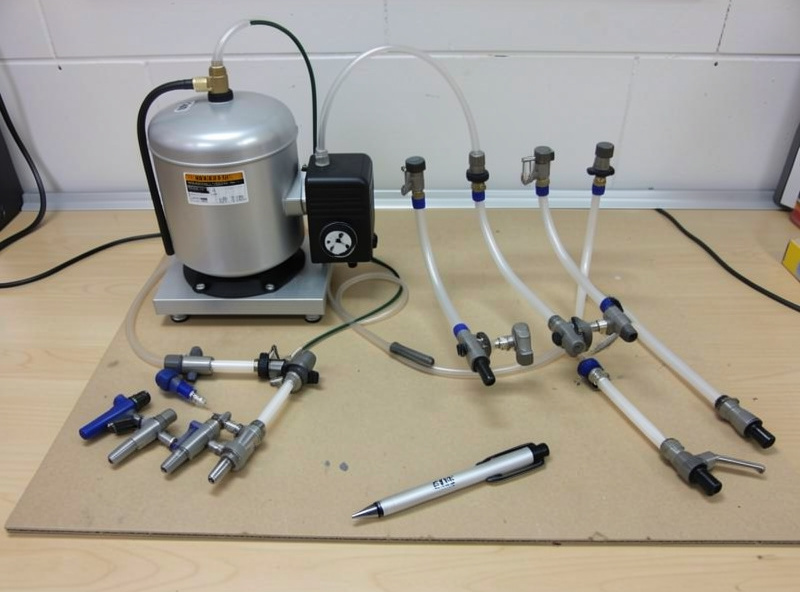
Notice what is not on that list: a growing medium. That absence is the whole identity of the method. In every other system the medium — pebbles, rockwool, even a passive air gap — quietly buffers the roots against a missed feed or a swing in conditions. Aeroponics removes that safety net entirely in exchange for maximum oxygen, which is precisely the bargain you are signing up for. It rewards a careful builder and punishes a casual one, and the build itself is where that character is set.
The Numbers and the Discipline
The settings that matter most in aeroponics are about the mist cycle and the things that protect it:
- Mist cycle: short and frequent — commonly a few seconds of mist every several minutes. Too long and the chamber floods and oxygen drops; too infrequent and bare roots dry between sprays. This is the single most important tuning parameter.
- Droplet size (HPA): serious HPA growers report a fine droplet in a specific small size range gives the best uptake; the nozzles and pressure determine it. This is firmly in the “growers report” column for me.
- Reservoir hygiene: fine nozzles clog easily, so clean solution, good filtration, and regular nozzle checks are mandatory. A clogged nozzle is a dried crop.
- Backup power: because there is zero buffer, a power-out plan matters more here than anywhere else. Even a short outage with no mist can be fatal to bare roots.
Where Aeroponics Fits
Honestly, for most home growers aeroponics is not the first or even second system to build — DWC, Kratky, NFT and ebb-and-flow cover the practical crops with far less risk. Where aeroponics genuinely earns its place is propagation: low-pressure aeroponic cloners root cuttings remarkably fast because the cut stems get maximum oxygen and constant moisture without rotting, and that is a use I rely on. Beyond cloning, high-pressure aeroponics is a rewarding advanced project for someone who enjoys the engineering and wants the fastest possible vegetative growth — but it demands reliable power, clean solution, and a builder who will maintain it. Go in clear-eyed about that and it delivers; go in casually and it is the method most likely to bite you. My own honest position is the one I would give any grower: master the buffered methods first, lean on low-pressure aeroponics for cloning, and only graduate to a high-pressure build once a stopped pump no longer means a lost crop because you have the redundancy to prevent it.
Frequently Asked Questions
What is the difference between high-pressure and low-pressure aeroponics?
Low-pressure aeroponics uses an ordinary pump and sprinkler nozzles for a coarse spray and is forgiving, common in cloners. High-pressure aeroponics uses a high-pressure pump, accumulator tank and fine nozzles to create a true fog of tiny droplets for maximum growth, but is far more complex and failure-prone.
Why does aeroponics grow plants so fast?
Because the roots hang in air rather than water, they have effectively unlimited access to oxygen, which every other method works hard to supply. Combined with frequent nutrient misting, that high root oxygenation can drive faster growth, especially with fine high-pressure droplets.
What happens if the mister stops in an aeroponic system?
The bare roots have no growing medium or standing reservoir to fall back on, so they dry out quickly. Aeroponics is the least forgiving method for this reason. A backup power plan and regular nozzle checks are essential, because even a short interruption can kill a crop.
Is aeroponics good for beginners?
Not as a first system. The lack of any buffer and the clog-prone fine nozzles make it the riskiest hobby method. Beginners are better served by DWC, Kratky, NFT or ebb and flow. A low-pressure aeroponic cloner, however, is an approachable way to try misting for propagation.
What is aeroponics best used for at home?
Propagation. Low-pressure aeroponic cloners root cuttings quickly because the stems get constant oxygen and moisture without rotting. For full grows, the practical hobby methods usually make more sense than the equipment and risk that a high-pressure aeroponic build demands.