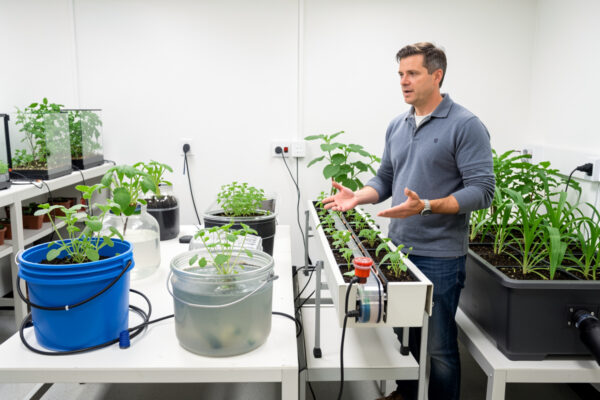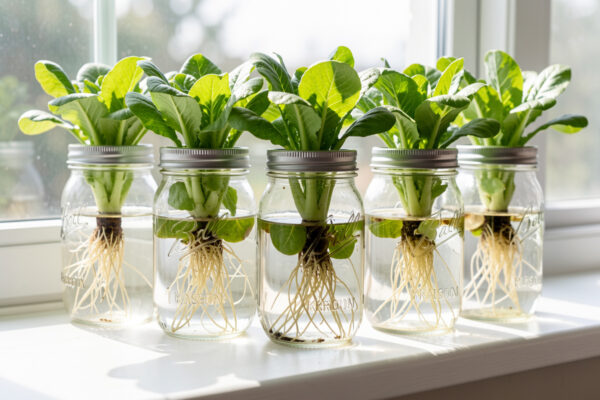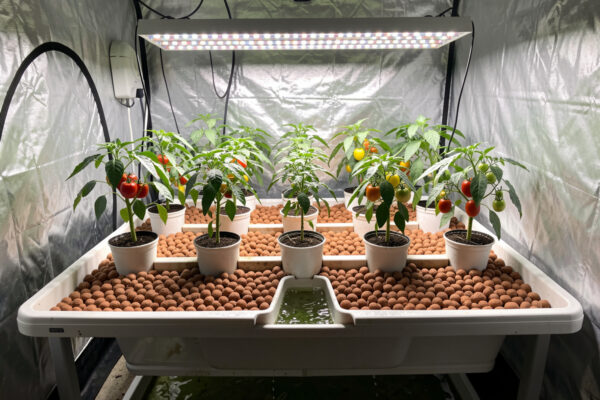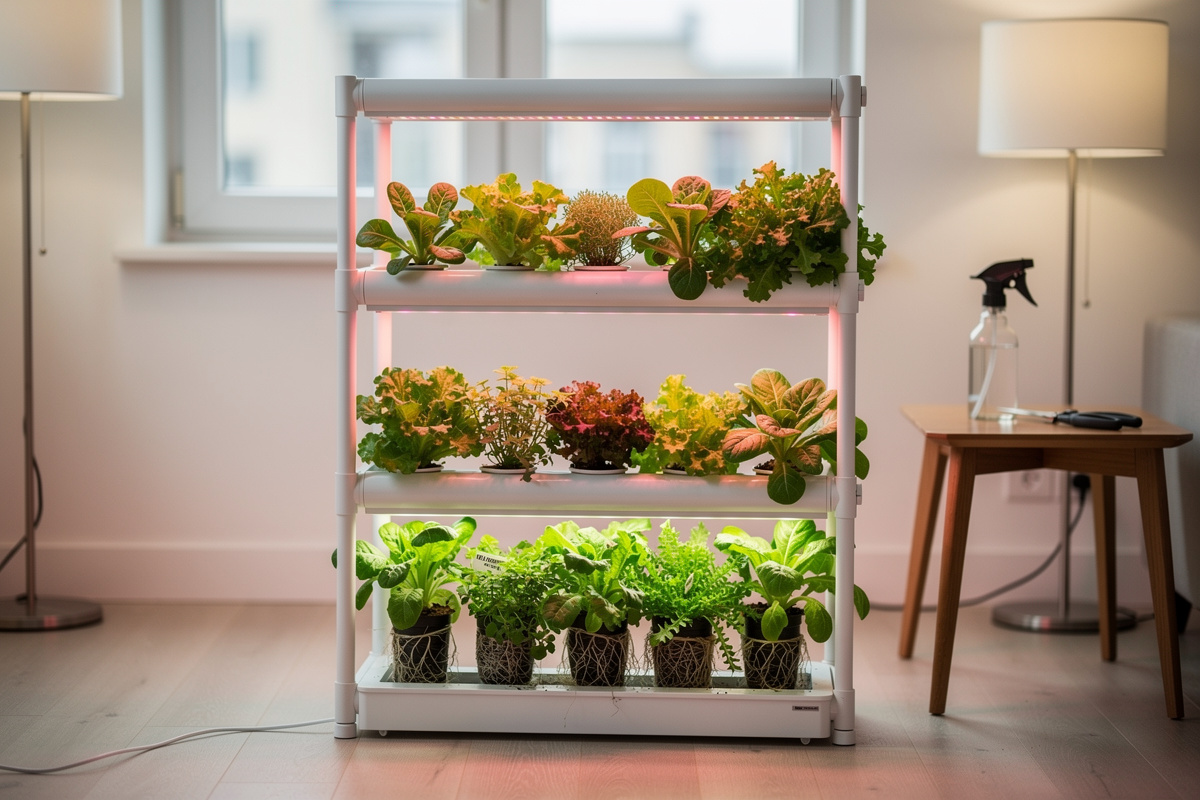
A hydro indoor garden turns any corner of your apartment into a year-round food factory. No backyard, no soil, no seasons — just water, nutrients, light, and the right system. Whether you have a spare closet, a kitchen counter, or a section of your living room, you can grow fresh herbs, lettuce, and even fruiting vegetables with a compact hydroponic setup.
Choosing the Right System for Your Space
Your available space determines which hydroponic system makes sense. There is no single “best” system — only the best match for your room, budget, and what you want to grow.
Small Spaces (Counter, Shelf, Windowsill)
If you have 1-2 square feet of counter or shelf space, a countertop all-in-one system or a small DWC bucket is your best option. Countertop units include built-in lighting and take up about as much space as a toaster. A single 5-gallon DWC bucket grows one large plant (tomato, pepper) or 4-6 small herbs.
Medium Spaces (Corner, Closet, Spare Room Section)
With 4-8 square feet, you can run a multi-bucket DWC system (4-8 plants) or a horizontal NFT channel setup (12-24 plants) on a wire shelving unit. Add a grow light panel above each shelf and you have a productive two-tier garden in a 2×4 foot footprint.
Larger Spaces (Dedicated Room, Garage, Basement)
With 16+ square feet, consider a vertical tower system or a multi-tier NFT setup that grows 30-80+ plants. These require more investment in lighting and climate control but produce enough food to significantly offset grocery costs. For vertical options, see our vertical farming systems guide.
| Space Available | Best System | Plant Capacity | Budget | Best Crops |
|---|---|---|---|---|
| 1-2 sq ft (counter) | Countertop or single DWC | 3-6 plants | $50-$150 | Herbs, lettuce |
| 4-8 sq ft (corner/shelf) | Multi-bucket DWC or NFT | 6-24 plants | $100-$300 | Greens, herbs, peppers |
| 16+ sq ft (room) | Vertical tower or multi-tier | 30-80+ plants | $300-$800 | Everything including fruiting crops |
Essential Equipment for Your Indoor Garden
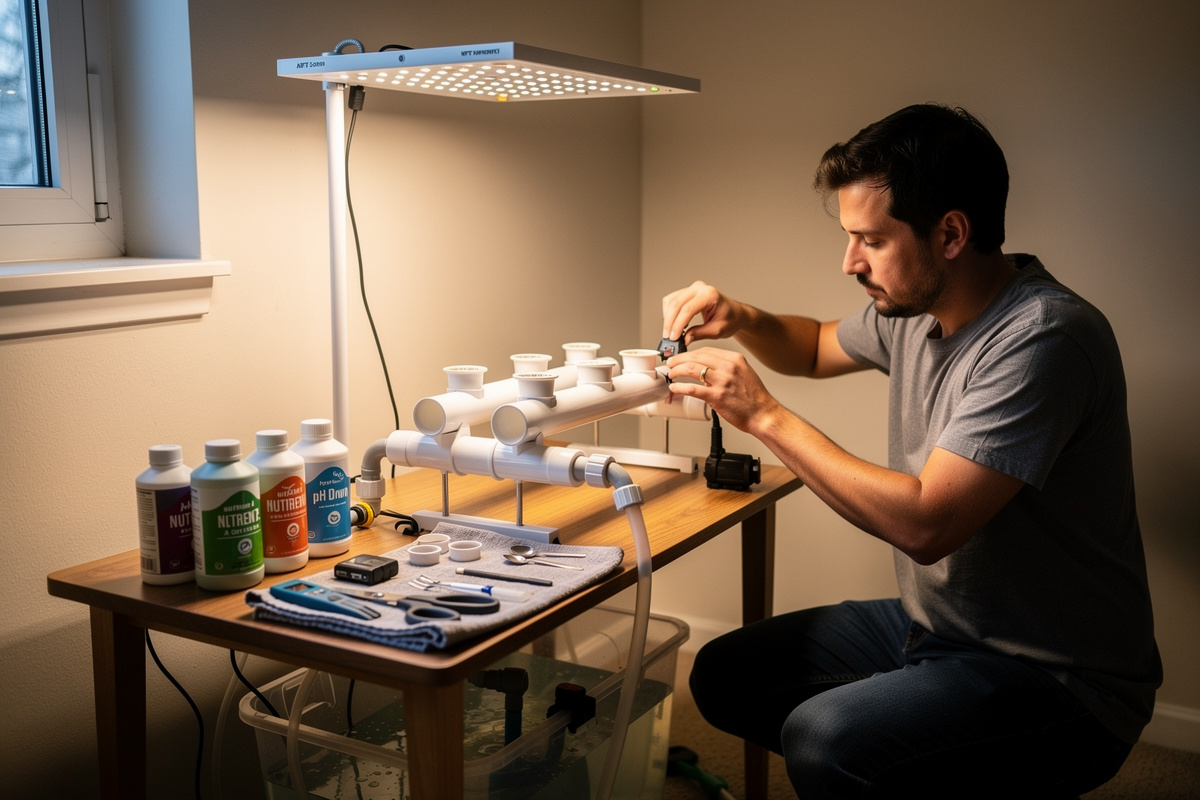
Beyond the hydroponic system itself, you need supporting equipment to create the right environment. Here is the complete list, broken down by priority. For a detailed rundown of each item, check our essential hydroponic equipment guide.
Must-Have (Day 1)
- Grow lights — Full-spectrum LED panel, 100W minimum for a 2×2 foot area. Plants need 14-16 hours of light daily. Budget: $50-$120.
- Timer — Automates light on/off cycles. A $8 mechanical timer works fine. Do not rely on memory — inconsistent lighting stresses plants.
- pH meter or test drops — Non-negotiable. Target pH 5.5-6.5. Digital pens ($20-$30) are more accurate than drops ($8-$12). Calibrate monthly.
- Hydroponic nutrients — Two-part (A+B) liquid concentrate. General Hydroponics Flora Series is the industry standard. $20-$30 for a set that lasts months.
- pH adjustment solutions — pH Down (phosphoric acid) and pH Up (potassium hydroxide). Small bottles last a long time. $10-$15 for a pair.
As an Amazon Associate I earn from qualifying purchases.
Strongly Recommended (Week 1-2)
- EC/TDS meter — Measures nutrient concentration in the water. Prevents overfeeding (nutrient burn) and underfeeding (slow growth). $15-$25 for a digital pen.
- Thermometer/Hygrometer — Monitor air temperature (65-80°F ideal) and humidity (50-70% ideal). $10-$15 for a digital combo unit.
- Small oscillating fan — Air circulation strengthens stems, prevents mold, and aids pollination for fruiting plants. $15-$25.
Nice to Have (Month 2+)
- Water chiller or aquarium cooler — Keeps reservoir below 72°F in warm rooms. Critical for DWC in summer. $80-$200.
- Backup air pump — DWC systems depend on constant oxygenation. A pump failure overnight can kill roots. Keep a spare. $10-$15.
- Drip tray or waterproof mat — Protects floors from spills during reservoir changes. Essential in apartments.
Lighting Your Indoor Hydro Garden
Light is the biggest limiting factor in indoor growing. Without adequate artificial light, even a perfect hydroponic system will underperform — university extension guidance on small hydroponic lettuce systems backs up how much of the outcome comes down to light, not just nutrients (UF/IFAS HS1422). It is the one variable I never let slide on my own bench — I’d rather under-dose nutrients for a week than run a light that’s actually too dim for the crop.
Light Requirements by Crop Type
| Crop Type | PPFD Needed | Hours/Day | Suggested Light |
|---|---|---|---|
| Herbs (basil, mint, cilantro) | 150-250 µmol | 14-16 | 40-60W LED bar |
| Leafy greens (lettuce, spinach) | 150-300 µmol | 14-16 | 60-100W LED panel |
| Fruiting crops (tomatoes, peppers) | 300-600 µmol | 14-16 | 100-200W LED panel |
| Microgreens/sprouts | 100-200 µmol | 12-16 | 20-40W LED bar |
Position lights 12-18 inches above the plant canopy for LED panels, 6-12 inches for LED bars. Raise the light as plants grow taller. Use ratchet rope hangers for easy height adjustment.
Nutrient Management
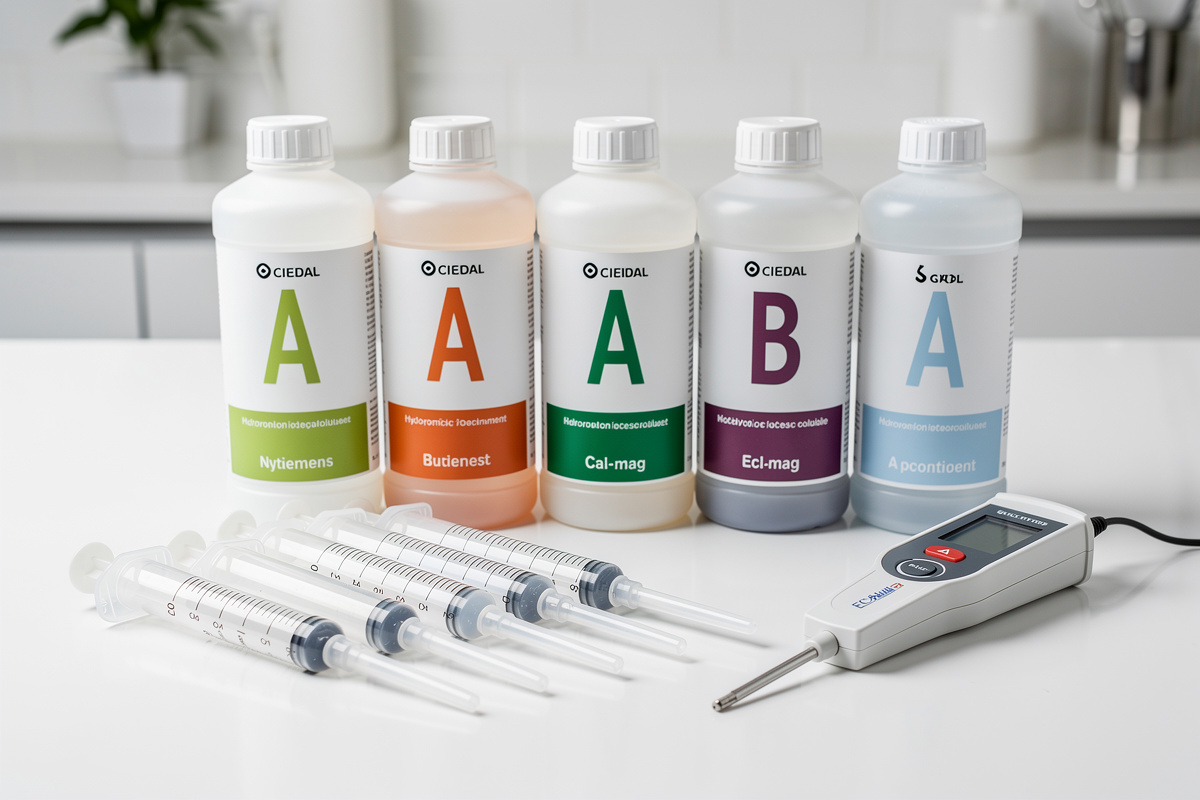
Hydroponic plants depend entirely on you for nutrition. Unlike soil, there are no organic matter reserves to fall back on. If the nutrient balance is wrong, plants show symptoms within days.
Mixing Nutrients
- Fill reservoir with room-temperature water.
- Add Part A nutrients, stir thoroughly.
- Add Part B nutrients, stir again. Never mix A and B concentrates together directly — the concentrated calcium in Part A reacts with sulfates in Part B, forming insoluble calcium sulfate that locks up nutrients.
- Check EC/TDS. Target 1.0-1.5 EC (500-750 ppm) for seedlings, 1.5-2.5 EC (750-1250 ppm) for mature plants.
- Adjust pH to 5.8-6.2. Add pH Down or pH Up a few drops at a time.
Nutrient Schedule
| Week | EC Target | Nutrient Strength | Notes |
|---|---|---|---|
| 1-2 (seedlings) | 0.8-1.2 | Quarter to half strength | Roots are delicate, excess nutrients cause burn |
| 3-4 (vegetative) | 1.2-1.8 | Half to three-quarter | Increase gradually as plants grow |
| 5+ (mature/fruiting) | 1.8-2.5 | Full strength | Fruiting crops need higher concentration |
Change the entire reservoir every 7-14 days. Between changes, top off with plain pH-adjusted water (not nutrient solution) as the level drops. Plants consume water faster than nutrients, so adding more nutrients to a shrinking reservoir concentrates them dangerously. The EC ranges above track closely with the stage-by-stage pH/EC guidance growers commonly reference (greengenius.com.au) — I mix to the target EC number rather than trusting a bottle’s “one scoop per gallon” instructions, since source water EC varies enough to throw that off. For more on avoiding nutrient problems, see our common hydroponic mistakes guide.
Climate Control
Indoor environments are generally stable enough for hydroponics, but a few factors need monitoring.
Temperature
- Air temperature: 65-80°F (18-27°C) is ideal for most crops. Below 60°F, growth slows dramatically. Above 85°F, plants stress and oxygen levels in water drop.
- Water temperature: 65-72°F (18-22°C) is optimal. Above 75°F, dissolved oxygen drops and root rot bacteria thrive. This is the most common DWC problem in warm apartments.
Humidity
- Target: 50-70% relative humidity for most crops.
- Too low (below 40%): Plants transpire too fast, leaf edges crisp. Group plants together or add a small humidifier.
- Too high (above 80%): Mold and mildew risk increases. Improve air circulation with fans.
Airflow
A small oscillating fan serves three purposes: strengthens stems (the gentle mechanical stress triggers thigmomorphogenesis — the plant responds by growing shorter, thicker stems instead of stretching), prevents mold by keeping air moving, and assists pollination for fruiting crops. Point the fan so it gently rustles the leaves — not a direct blast.
What to Grow First
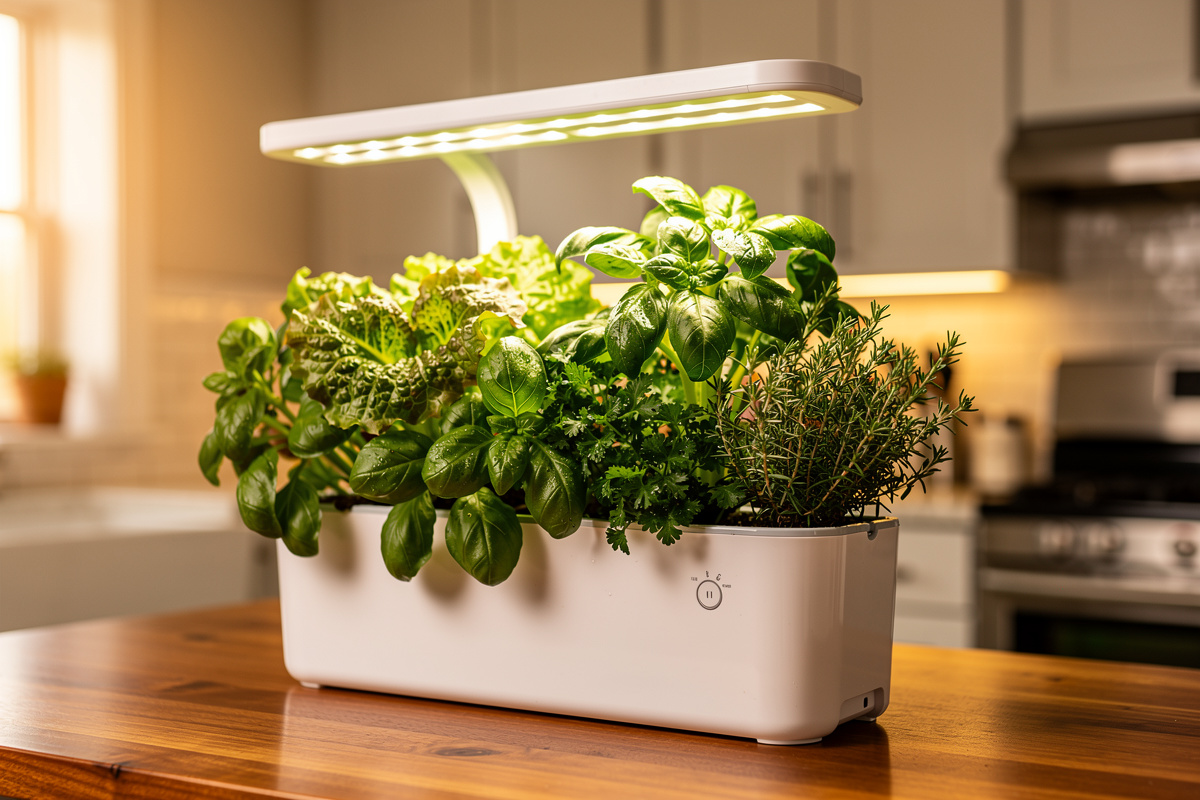
Start with crops that are fast, forgiving, and visible. Nothing motivates continued effort like eating your first harvest 3 weeks after planting — lettuce is still the crop I hand anyone running their first system, the same way I’d hand a beginner a Kratky jar before a multi-tier NFT rack.
Recommended First Crops (in order)
- Leaf lettuce — Harvestable in 25-30 days. Extremely forgiving of beginner mistakes. Cut outer leaves and the plant keeps producing for weeks. Our lettuce comparison guide covers hydroponic lettuce growing in depth.
- Basil — Ready in 25-30 days. Prolific grower. Pinch growing tips regularly to promote bushier growth and prevent flowering.
- Spinach — Harvestable in 30-40 days. Prefers cooler temperatures (60-70°F air, 65°F water). Baby spinach can be harvested even earlier.
- Mint — Nearly indestructible. Grows aggressively — give it its own container or it will dominate shared systems.
Once you have a successful lettuce or herb grow under your belt, move to more challenging crops. See our 15 best hydroponic plants for the full progression from beginner to advanced.
Daily and Weekly Maintenance
| Task | Frequency | Time Required | Why It Matters |
|---|---|---|---|
| Check water level | Daily | 30 seconds | Roots must stay submerged (DWC) or wet (NFT) |
| Visual plant inspection | Daily | 1-2 minutes | Catch pests, deficiencies, and wilting early |
| Check pH | Every 2-3 days | 2 minutes | pH drift causes nutrient lockout |
| Top off water | Every 2-3 days | 2 minutes | Prevents nutrient concentration spikes |
| Check EC/TDS | Weekly | 2 minutes | Ensures proper nutrient concentration |
| Full reservoir change | Every 1-2 weeks | 15-20 minutes | Resets nutrient balance, prevents salt buildup |
| Clean system components | Between crops | 30-60 minutes | Prevents algae, biofilm, and pathogen carryover |
Total active time: roughly 5-10 minutes per day with a 20-minute reservoir change every 1-2 weeks. Less daily effort than watering a soil garden.
Scaling Up Your Indoor Garden
Most indoor hydro growers start with one system and expand within 3-6 months. The typical progression:
- Month 1-2: Single DWC bucket or countertop unit — learn the fundamentals
- Month 3-4: Add a second system or upgrade to multi-site — start growing multiple crops simultaneously
- Month 5-6: Build a dedicated grow shelf with multiple tiers, or move to a vertical gardening system for maximum density
- Month 6+: Custom-built systems tailored to your space using our DIY hydroponics guide
The beauty of hydroponic skills is that they are system-agnostic. pH management, nutrient mixing, and environmental control are the same whether you run one bucket or twenty towers. Master the basics on a small system, then scale with confidence.
Troubleshooting Common Indoor Hydro Problems
Even a well-planned indoor hydro garden will encounter issues. Most problems have simple fixes once you identify the root cause. Here are the most common issues new growers face.
| Problem | Symptoms | Cause | Fix |
|---|---|---|---|
| Nutrient lockout | Yellowing leaves despite adequate nutrients in water | pH outside 5.5-6.5 range | Test pH immediately, adjust to 5.8-6.2, change reservoir |
| Nutrient burn | Brown, crispy leaf tips and edges | Nutrient concentration too high (EC above 2.5) | Dilute solution with plain water, reduce nutrient dose next mix |
| Root rot | Brown, slimy roots with foul smell | Water temperature above 75°F, low oxygen | Add air stones, lower water temp, trim dead roots, add beneficial bacteria |
| Algae bloom | Green slime on reservoir walls and growing medium | Light reaching nutrient solution | Cover all exposed water surfaces, use opaque containers |
| Slow growth | Plants growing much slower than expected | Insufficient light or nutrient concentration too low | Increase light hours to 16, check EC and increase nutrients to recommended level |
| Wilting despite wet roots | Plants drooping even though roots are submerged | Root zone oxygen depletion | Increase air pump output, check air stones for blockage, lower water temperature |
| White mineral deposits | Crusty white buildup on net pots and growing medium | Mineral salt accumulation from evaporation | Flush system with plain water, clean components between crops |
Prevention is easier than fixing problems mid-grow. The three non-negotiable habits: test pH every 2-3 days, change the reservoir weekly, and keep water temperature below 72°F. Follow these and you will avoid 90% of the issues above. For more detailed troubleshooting, see our common hydroponic mistakes guide.
How much space do I need for an indoor hydroponic garden?
You can start a hydro indoor garden in as little as 1-2 square feet of counter space with a compact all-in-one system or single DWC bucket. A productive setup with 6-12 plants needs about 4-8 square feet — roughly the footprint of a small bookshelf. Vertical systems can grow 30-80 plants in just 4 square feet of floor space.
How much does it cost to set up an indoor hydro garden?
A basic countertop herb system starts at $50-$80. A productive DWC setup with grow light, nutrients, and pH testing runs $100-$200. A multi-tier shelf system growing 12-24 plants costs $200-$400. Monthly running costs are $10-$20 for electricity and $5-$10 for nutrients.
How much time does an indoor hydro garden require daily?
Daily maintenance takes 5-10 minutes — checking water levels, visually inspecting plants, and adjusting pH when needed. Every 1-2 weeks, a full reservoir change takes 15-20 minutes. Total weekly time commitment is roughly 1-2 hours. Automated timers handle the lighting schedule.
Can I grow a hydro indoor garden with no natural light?
Absolutely. Most serious indoor hydroponic gardens use 100% artificial lighting. A full-spectrum LED grow light provides everything plants need — no sunlight required. A 100W LED panel running 16 hours daily costs about $7/month in electricity and gives you complete control over light intensity and duration.
Is a hydro indoor garden noisy?
Most systems produce minimal noise. DWC air pumps create a low hum comparable to a small aquarium — barely noticeable from another room. NFT systems have a quiet trickle of water flowing through channels. Countertop systems are nearly silent. The loudest component is usually a small circulation fan at 30-40 dB.
What plants are best for a hydro indoor garden?
Leafy greens (lettuce, spinach, kale) and herbs (basil, mint, cilantro) are the best indoor hydroponic plants. They grow fast, need moderate light, and tolerate indoor conditions well. Cherry tomatoes and compact peppers work with stronger lighting. Avoid root vegetables and large fruiting plants indoors.
Related Articles
- Hydroponic Systems: Complete Guide to All Methods — Compare Kratky, DWC, NFT, and more to find your ideal growing system
- Hydroponics for Beginners — complete starting guide for soilless growing
- Best Hydroponic Growing Kits — kit recommendations and comparisons
- Hydroponic Systems Explained
- Essential Hydroponic Equipment — full gear list with buying priorities
- Vertical Farming Systems — maximize growing in limited space
- Hydroponics vs Soil: Complete Comparison — decide which growing method suits you