Hydroponic root rot is a Pythium infection that turns firm white roots brown, slimy, and foul-smelling, usually because reservoir water ran too warm and too low on oxygen. The fix is the cause reversed: drop the water below 68°F (20°C), flood it with air, and re-colonize the roots with beneficial bacteria. Caught in the first day or two, most plants recover.
Root rot is the single failure mode that has ended more of my early grows than everything else combined, and it’s the one I now prevent on autopilot. The frustrating part is how fast it moves — a deep water culture bucket that looked perfect on Monday can have mushy brown roots and a wilting plant by Wednesday. This guide is the full diagnosis-and-rescue protocol I run on my own bench, with the exact reservoir targets and dilution rates instead of “treat as needed.” For the bigger picture of how root rot fits alongside the other things that go wrong, see my complete hydroponic pests and diseases guide.
Disclosure: SmartHydroLab is reader-supported. As an Amazon Associate I earn from qualifying purchases made through links in this article, at no extra cost to you. I only point to gear I actually use or would buy for my own grow.
What Root Rot Actually Is
Hydroponic root rot is caused by Pythium, an oomycete or “water mold” that behaves like a fungus but isn’t one — a distinction that matters because many fungicides don’t touch it. Pythium produces swimming spores called zoospores that move through your nutrient solution and infect roots, feeding on the tissue and collapsing the plant’s ability to take up water. It’s opportunistic: it’s often present at low levels and only explodes when conditions tip in its favor.
Those conditions are specific and predictable. Pythium thrives when reservoir water climbs above 72°F (22°C), because warm water holds far less dissolved oxygen and stressed, oxygen-starved roots are easy prey. It also exploits root wounds — which is exactly why a fungus gnat larvae problem so often precedes a root rot problem. Understanding the trigger is the whole strategy: control temperature and oxygen and Pythium rarely gets a foothold, regardless of how many spores drift through.
How to Identify Root Rot
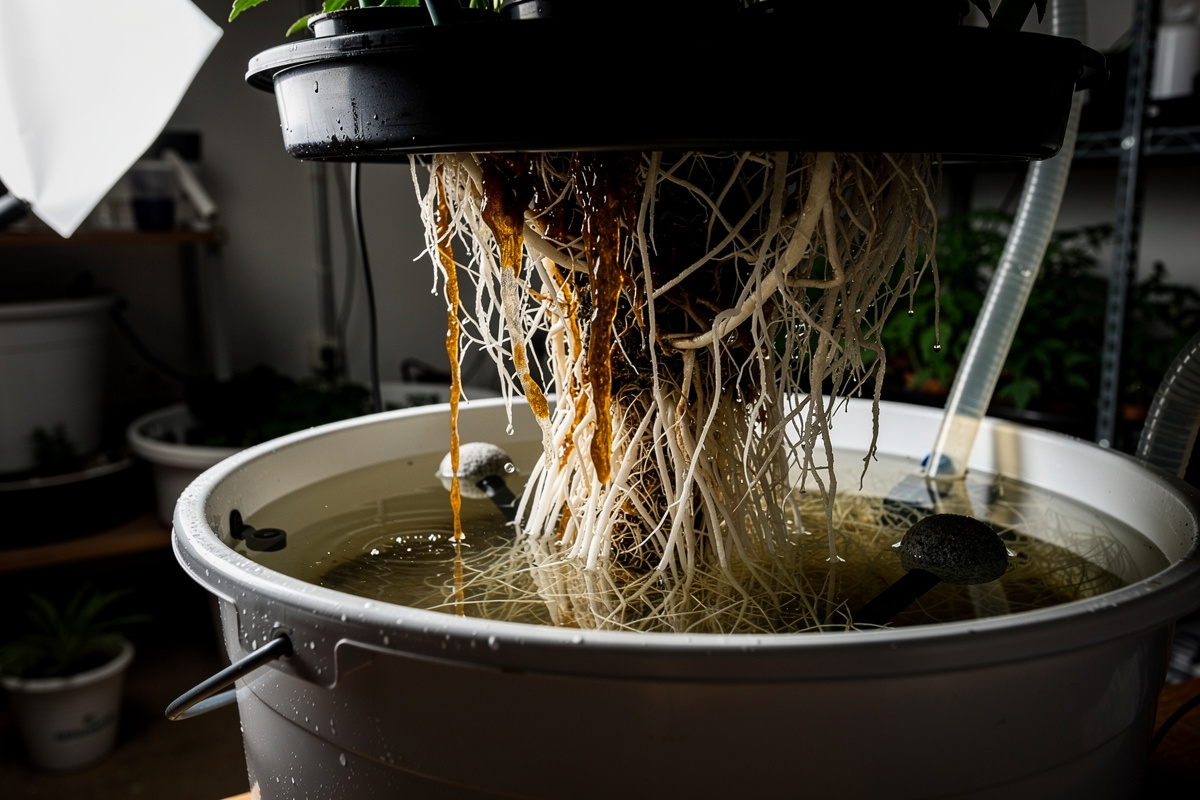
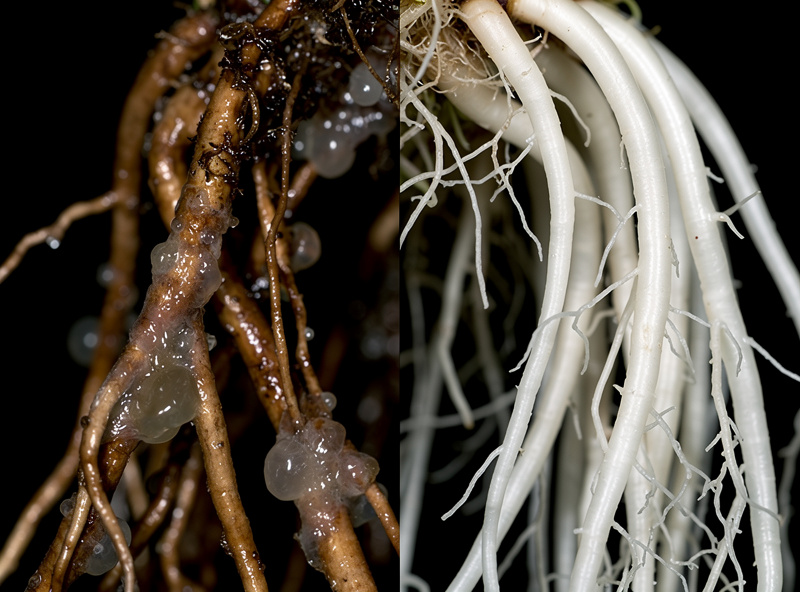
Healthy hydroponic roots are bright white to cream, firm, and often fuzzy with fine root hairs. Root rot reverses every one of those traits. The diagnostic sequence I look for: roots turn tan, then brown, then dark and slimy; they lose their firmness and the outer sheath slips off when you pull gently, leaving a bare string of inner core; and the reservoir develops a swampy, rotten-egg smell.
Above the waterline, the giveaway is a plant wilting in good light with a full reservoir. The water is right there, but rotted roots can’t move it, so the plant droops at midday as if it were bone dry. New growth yellows and stalls. Don’t confuse the brown staining some nutrients (especially those with high iron or certain additives) leave on healthy roots with rot — stained roots are still firm and odorless. Rot is brown and slimy and smells. When in doubt, the smell test is the most reliable single check.
The Root Causes You Control
Every root rot outbreak traces back to one or more of four controllable conditions. Warm reservoir water is the prime mover — above 72°F, dissolved oxygen plummets and Pythium reproduction accelerates at the same time. Low dissolved oxygen from undersized or failed aeration starves roots even in cool water. Light reaching the nutrient solution feeds algae, which consumes oxygen and breeds the fungus gnats whose larvae wound roots. And dirty, carried-forward equipment seeds the next crop with an established pathogen population.
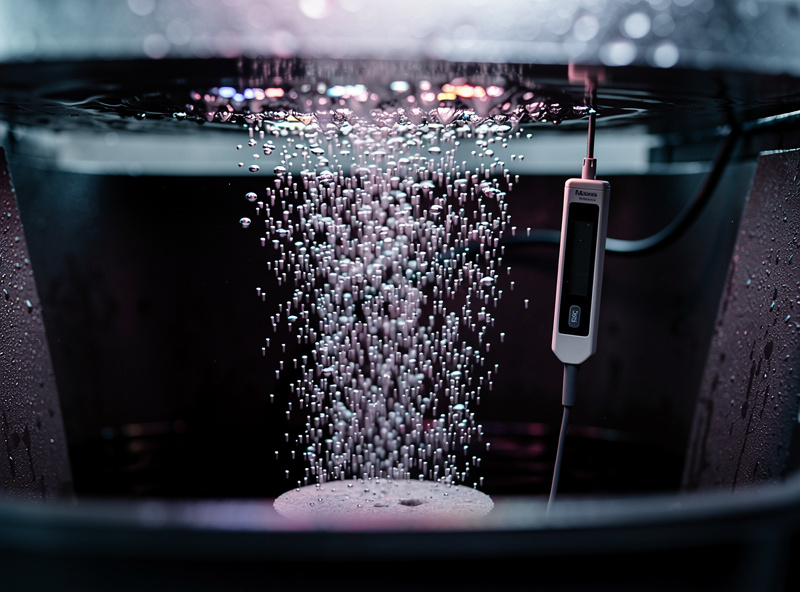
The instrument-driven way to think about it: root health is a function of oxygen availability at the root surface, and oxygen availability is governed by water temperature and aeration. Get a thermometer in the reservoir and an oxygen-rich aeration setup running, and you’ve addressed the two variables that matter most. Everything else — sanitation, light blocking, gnat control — is closing the secondary doors.
How to Treat Root Rot Step by Step
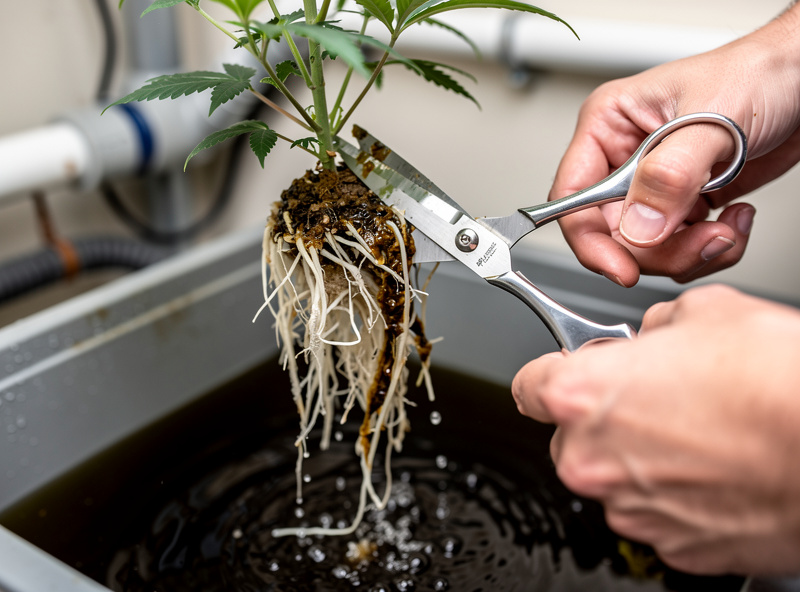
If you catch root rot early, recovery is genuinely likely. Here’s the rescue sequence I run, in order. First, change out the entire reservoir — dump the infected solution, don’t try to save it. Scrub the tote, lid, net pots, air stones, and pump with a mild bleach or hydrogen peroxide solution and rinse thoroughly. Trim away the worst of the slimy brown roots with clean scissors so the plant isn’t spending energy on dead tissue.
Refill with fresh, properly mixed nutrient solution and immediately attack the two root causes: get the water temperature down (see the next section) and crank up aeration. For an active infection, a hydrogen peroxide flush adds oxygen and knocks back the pathogen — use household 3% hydrogen peroxide at about 2 to 3 mL per liter (roughly 1 to 1.5 teaspoons per gallon) of fresh solution. The critical caveat: peroxide kills beneficial microbes too, so this is a one-time reset, not a daily additive, and you re-inoculate with live bacteria only after the peroxide has broken down (about 24 hours). Running peroxide and beneficials together wastes both.
Reservoir Temperature and Oxygen: The Real Cure
Treatment buys time; temperature and oxygen control is what actually keeps root rot gone. The target is simple: hold reservoir water at or below 68°F (20°C). At that temperature, water carries enough dissolved oxygen that healthy roots resist infection, and Pythium loses its edge. In a cool basement that happens for free; in a warm room or a Nordic summer when interior temps spike, a hydroponic water chiller is the tool that earns its cost in a single avoided crop loss.
For oxygen, an air pump running an air stone (or disc diffuser) 24/7 is the baseline in DWC; size it generously, because you can’t really over-aerate a reservoir. Cheaper supplemental tricks help in a pinch — frozen water bottles floated in the res to spot-cool, more surface agitation, increasing the air-to-water ratio — but a thermometer and a properly sized air pump are the permanent fix. I keep a thermometer in every reservoir and log temperature alongside EC and pH, because the number that predicts root rot is the one most growers never measure.
Beneficial Bacteria: Prevention That Works
The most effective long-term defense against Pythium is biological: colonize the root surface with beneficial bacteria before the pathogen can. Products built around Bacillus amyloliquefaciens (the best-known is Hydroguard) establish a living shield on the roots that outcompetes Pythium for space and resources. I dose a beneficial bacteria inoculant at every reservoir change as standard practice, not just when there’s trouble.
This is the same logic I use for a sourdough starter — establish the culture you want and it crowds out the one you don’t. The one rule that trips people up: never add beneficial bacteria at the same time as hydrogen peroxide or strong sterilizers, because they’ll kill the very microbes you’re trying to establish. Sterilize first, let it clear, then inoculate. In a recirculating system you keep the population topped up at each res change. With beneficials established, cool water, and good aeration, root rot stops being a recurring emergency and becomes a problem you simply don’t have.
Preventing Root Rot for Good
Prevention is cheaper and easier than every cure above. Sanitize all equipment between crops so you’re not seeding a fresh grow with last crop’s pathogen. Block all light from the reservoir to kill algae and the gnats that wound roots. Hold water below 68°F and keep aeration running around the clock. Dose beneficial bacteria at every res change. And quarantine new plants and clones for a week, since bought-in transplants are a common way an infection enters a clean system.
Match your vigilance to your system, too. Deep water culture keeps roots permanently submerged and is the most exposed if water warms, so temperature discipline is non-negotiable there; my guide to hydroponic systems covers how each method’s risk profile differs. Keep your pH dialed to 5.5 to 6.0 and your EC measured so roots aren’t stressed into vulnerability in the first place. Root rot is one of the most common hydroponic mistakes, and it’s also one of the most completely preventable.
Root Rot Treatments Compared
Here’s how the main interventions stack up so you can match the tool to your situation rather than throwing everything at the reservoir at once.
| Method | What It Does | Best Use | Key Caveat |
|---|---|---|---|
| Lower reservoir temp | Raises dissolved oxygen, slows Pythium | Permanent prevention and cure | May need a water chiller in warm rooms |
| Increase aeration | Oxygenates roots directly | All DWC systems, always on | Size the air pump generously |
| Beneficial bacteria | Crowds out Pythium on roots | Preventive, every res change | Never mix with peroxide or sterilizers |
| 3% hydrogen peroxide | Adds oxygen, knocks back pathogen | Active infection, one-time reset | Kills beneficials; re-inoculate after |
| UV sterilizer | Kills waterborne spores in circulation | Larger recirculating builds | Degrades chelated micronutrients |
| Full res change and scrub | Removes pathogen load | First step of any rescue | Discard solution; don’t try to save it |
Frequently Asked Questions
Can a plant recover from hydroponic root rot?
Yes, if caught early. Change the reservoir, trim slimy brown roots, drop water below 68F, boost aeration, and re-inoculate with beneficial bacteria. Plants treated within a day or two of the first symptoms usually push out fresh white roots within a week.
What temperature prevents root rot in hydroponics?
Keep reservoir water at or below 68F (20C). At that temperature the water holds enough dissolved oxygen that healthy roots resist Pythium. Above 72F, oxygen drops and pathogen reproduction speeds up, which is the exact combination that rots roots.
How much hydrogen peroxide do I use for root rot?
Use household 3% hydrogen peroxide at about 2 to 3 mL per liter of fresh nutrient solution, roughly 1 to 1.5 teaspoons per gallon. It is a one-time reset, not a daily additive, and it kills beneficial bacteria, so re-inoculate about 24 hours later.
Why do my hydroponic roots smell bad?
A swampy or rotten-egg smell signals anaerobic conditions and Pythium root rot. It means oxygen is too low and the pathogen is active. Change the reservoir, increase aeration, lower the water temperature, and add beneficial bacteria to fix it.
Does hydrogen peroxide kill beneficial bacteria?
Yes. Hydrogen peroxide kills both Pythium and beneficial microbes like Bacillus. Use it as a one-time treatment, wait about 24 hours for it to break down, then re-inoculate with beneficial bacteria. Never dose both at the same time.
Are brown hydroponic roots always root rot?
No. Some nutrients with high iron or certain additives stain healthy roots brown, but stained roots stay firm and odorless. Root rot roots are brown, slimy, soft, and smelly. The slime and smell, not the color alone, confirm an infection.