Here is something that surprises beginners: plant roots breathe. They take in oxygen to respire, just like the rest of the plant, and in hydroponics the only place they can get it is dissolved in the water around them. That is why the unglamorous air pump bubbling away in the corner is, on my bench, one of the most important pieces of equipment in the whole rig. Cut the oxygen and roots suffocate, brown, and rot — usually within days.
Dissolved oxygen is the variable people think about least and pay for most. This guide explains why roots need it, how much you need, how to get more of it into the water, and how to spot an oxygen-starved root mass before it kills the crop. It ties directly to temperature, because the two are inseparable.
Why Do Hydroponic Roots Need Dissolved Oxygen?
Roots respire, consuming oxygen to power nutrient and water uptake, and in hydroponics that oxygen comes only from what is dissolved in the reservoir. Without enough, roots suffocate and become vulnerable to root rot. Healthy hydroponic water should sit near oxygen saturation, achieved by running air stones 24/7.
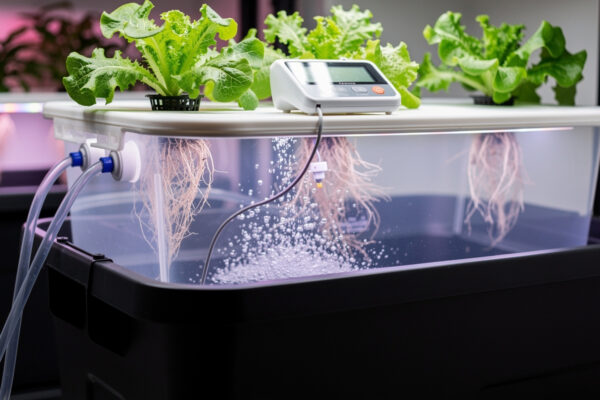
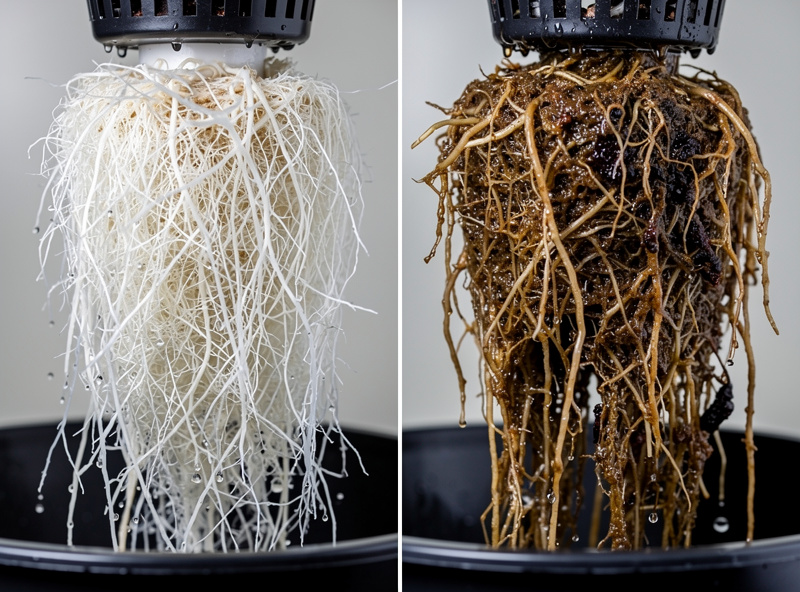
In soil, air pockets between particles feed the roots; submerge those same roots in still water and you cut off their air supply entirely unless you actively put oxygen back. That is the whole reason a deep-water-culture bucket lives or dies by its bubbler. Well-oxygenated roots are bright white, firm, and fast-growing; starved roots turn brown, go slimy, and smell. The fix is not exotic — it is moving air into water constantly — but it is non-negotiable in any system where roots sit submerged.
The Temperature Connection You Can’t Ignore
Warm water holds less dissolved oxygen than cold water — this is basic physics. As reservoir temperature rises above 72°F (22°C), oxygen capacity drops sharply right as the plants and pathogens demand more, which is why heat and low oxygen always show up together. Keeping water below 68°F is half the oxygen battle.
You cannot solve oxygen without solving temperature, and vice versa. A hot res physically cannot hold as much dissolved oxygen no matter how hard the air pump works, so a struggling summer tank needs cooling and aeration together. This is exactly why my water temperature guide and this one are two halves of the same problem — the 65–68°F band keeps oxygen capacity high, and the air stones top it up to saturation. Run a hot tank with a weak pump and you get the classic brown-root crash that fills my root rot article.
How to Add Dissolved Oxygen to a Reservoir
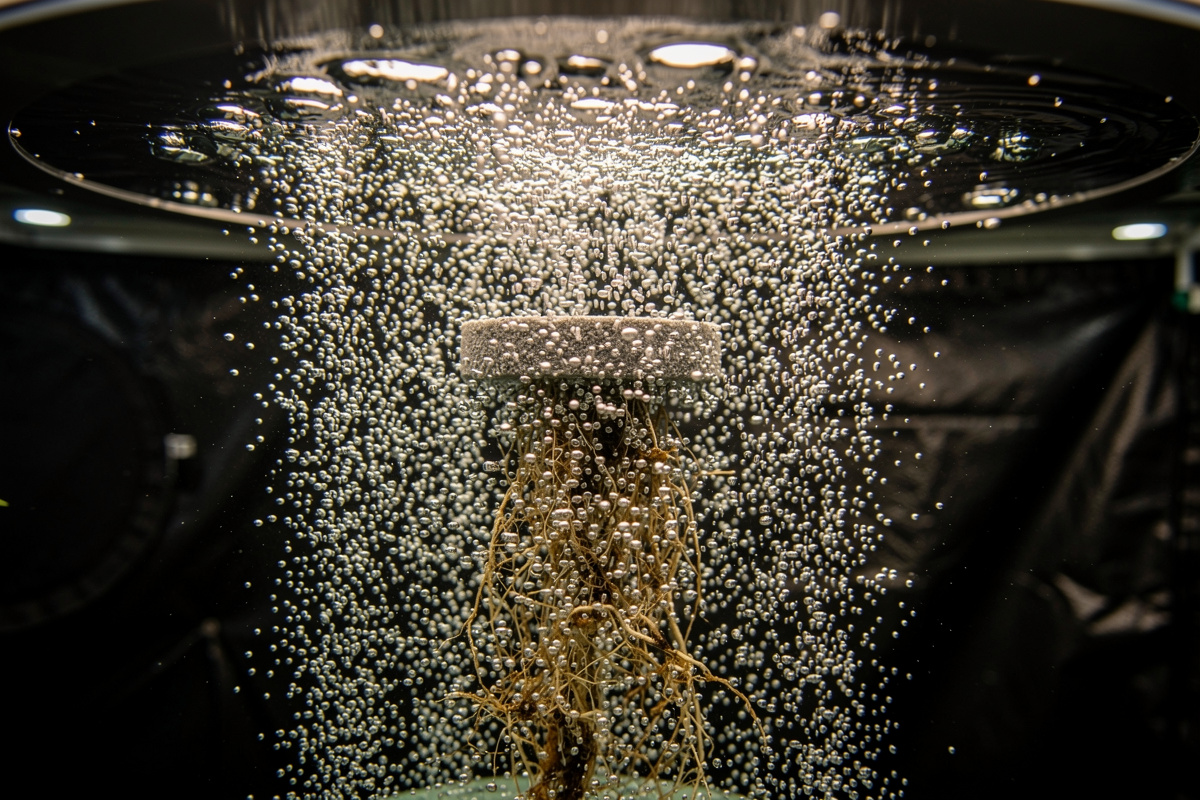
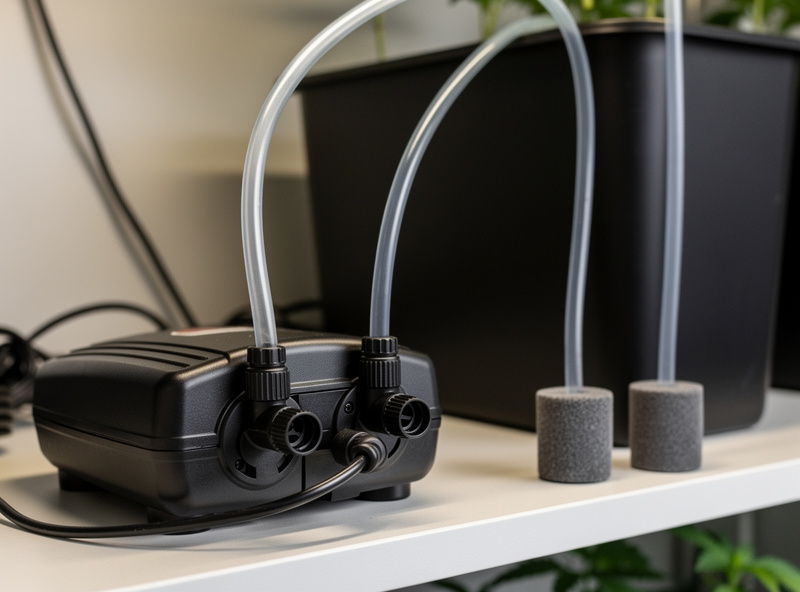
The standard method is an air pump pushing air through air stones or disc diffusers, run 24 hours a day. Size the air pump to the reservoir volume — bigger tanks need more output — and use multiple or larger stones to create a vigorous bubble curtain. Finer bubbles from quality diffusers transfer oxygen more efficiently than coarse ones.
My default on every DWC build is a capable air pump feeding one or more stones, running around the clock — never on a timer, because roots need oxygen continuously. For the stones themselves, I prefer good air stones or disc diffusers that throw a fine, dense bubble curtain, because smaller bubbles spend more time in contact with the water and dissolve more oxygen. On larger tanks I simply add more diffusers rather than relying on one overworked stone. Water movement helps too — an inline circulation pump that keeps the solution moving breaks the surface and prevents the stagnant dead zones where rot starts. The gear side of all this is covered in the equipment buying guide.
How Much Aeration Different Systems Need
Aeration need scales with how much root mass sits in standing water. Deep water culture needs the most because roots are fully submerged 24/7; NFT needs less since a thin film already exposes roots to air; ebb-and-flow oxygenates roots during the drain phase; and Kratky relies on an air gap above a dropping water line instead of a pump.
| System | Oxygen Source | Aeration Need | Air Pump? |
|---|---|---|---|
| Deep Water Culture (DWC) | Dissolved O₂ only | Very high | Yes — always, 24/7 |
| NFT | Thin film exposes roots to air | Moderate | Helpful in the reservoir |
| Ebb & Flow | Air drawn in during drain | Lower | Optional in reservoir |
| Kratky (passive) | Growing air gap above water | Built into method | No pump by design |
The clever part of Kratky is that it engineers oxygen without a pump: as the plant drinks, the water line drops and leaves an expanding moist air gap, and the upper roots breathe from that gap while the lower roots drink. It is the zero-pump control method I use to teach fundamentals precisely because it makes the oxygen-versus-water trade-off visible. DWC sits at the opposite extreme — fully submerged roots with no air gap, so the bubbler is doing all the work. Knowing where your system falls tells you how hard to push aeration, and the full method comparison lives in my guide to hydroponic systems. Tank volume matters here too, since a bigger reservoir holds more total oxygen — see the sizing guide.
Can You Add Too Much Oxygen?
For practical home hydroponics, no — you cannot meaningfully over-oxygenate a reservoir with normal air pumps and stones, since air can only push dissolved oxygen toward saturation, not beyond it. The real risks of an oversized pump are excessive water turbulence damaging fine root hairs and faster evaporation, not oxygen toxicity.
I have never once worried about too much oxygen, and you should not either. Atmospheric air maxes out at the saturation point for a given temperature, so a bigger pump just gets you to saturation faster and holds it more reliably. The only thing to watch is mechanical: a violent bubble curtain in a small tank can thrash delicate roots and whip the surface enough to speed evaporation, which nudges EC drift along. The answer is to match pump output to tank size sensibly rather than to throttle oxygen — err toward more aeration, just not a hurricane in a bucket. How evaporation feeds EC drift is part of the bigger maintenance picture in the reservoir guide.
Signs of an Oxygen-Starved Reservoir
The clearest signs are roots turning from white to brown or tan, a slimy texture, and a swampy or sour smell from the reservoir. Wilting in otherwise healthy conditions and slow growth also point to low oxygen. Catching it early — at the first brown tinge — usually means the plant recovers once you restore aeration and cool the water.
I treat any sour smell off a reservoir as an alarm: it means the water has gone anaerobic and oxygen is gone. Browning roots are the visual confirmation. The recovery move is always the same — restore vigorous aeration, drop the temperature below 68°F, and in a bad case do a 3% hydrogen peroxide reset to clear the slime and reset the tank, remembering it kills beneficial bacteria too. The full diagnostic and treatment path is in my root rot article, and the broader symptom map across pests and diseases is in the pest and disease guide. Keep oxygen high and most of those problems never start.
Affiliate disclosure: some links above are Amazon affiliate links. I may earn a small commission on purchases at no extra cost to you. I only point to gear I run on my own reservoirs.
Frequently Asked Questions
Why do hydroponic roots need oxygen?
Roots respire, using oxygen to power water and nutrient uptake. In hydroponics the only oxygen available is what is dissolved in the reservoir water, so without active aeration submerged roots suffocate, turn brown, and become vulnerable to root rot.
How do I increase dissolved oxygen in hydroponics?
Run an air pump through air stones or disc diffusers 24 hours a day, sized to your reservoir volume. Keep water below 68F since cold water holds more oxygen, add water movement, and use finer bubbles for better transfer.
Do I need an air pump for hydroponics?
For deep water culture, yes — roots are submerged full time and need constant aeration. NFT and ebb-and-flow expose roots to air during operation so they need less, and Kratky uses a growing air gap instead of a pump.
Should the air pump run all the time?
Yes. Run the air pump continuously, never on a timer. Roots consume oxygen around the clock, and even a few hours without aeration in warm water can start the slide toward root rot in deep water culture.
What are signs of low oxygen in a reservoir?
Roots turning from white to brown or tan, a slimy texture, and a swampy or sour smell from the water. Wilting in otherwise good conditions and stalled growth also point to low dissolved oxygen.
Does water temperature affect dissolved oxygen?
Yes, strongly. Warm water holds far less dissolved oxygen than cold water. Above 72F, oxygen capacity drops sharply just as demand rises, so cooling the reservoir and aerating it work together to keep roots healthy.