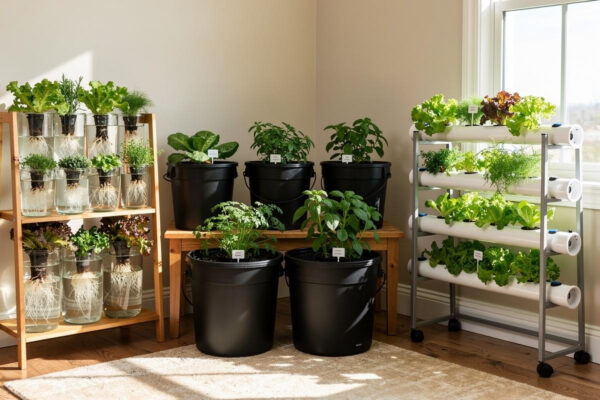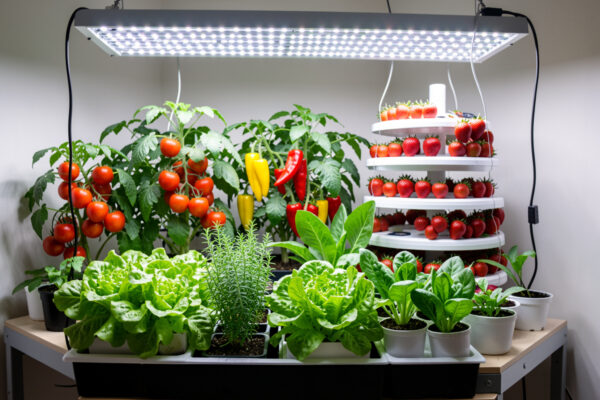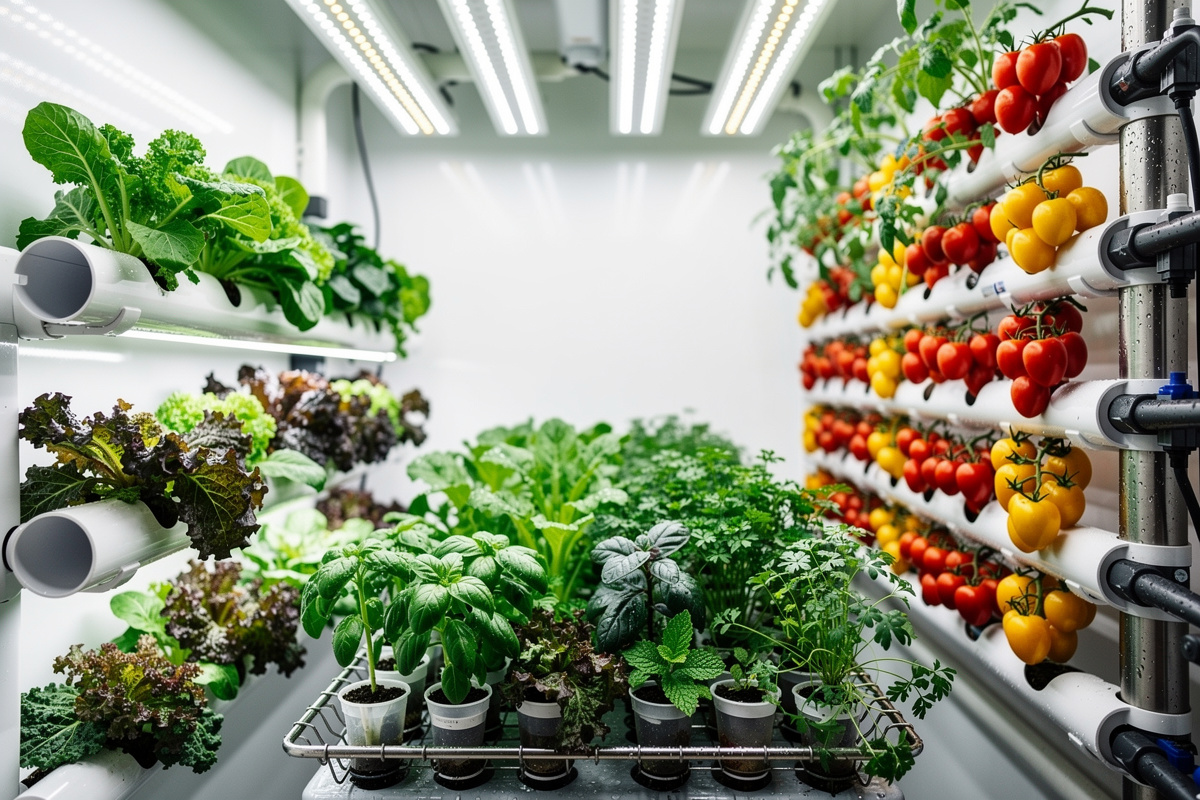
Some plants absolutely thrive in hydroponic systems while others struggle and fail. Choosing the wrong plants as a beginner leads to frustration, wasted money, and the false belief that hydroponics is too difficult. Choosing the right plants leads to fast harvests, delicious food, and the confidence to expand your garden.
The difference between success and failure often comes down to this single decision: what you choose to grow first.
This guide covers the 15 best plants for hydroponic beginners, ranked by how easy they are to grow. You will learn which plants practically grow themselves, which ones need a bit more attention, and which ones you should avoid completely until you have more experience under your belt.
New to hydroponics? Start with our complete beginner guide to understand the basics before choosing your plants.
As an Amazon Associate I earn from qualifying purchases.
What Makes a Plant Good for Hydroponics?
Before diving into specific plants, you need to understand what separates easy hydroponic plants from difficult ones. Not every plant adapts well to growing in water, and some characteristics make certain plants much more beginner-friendly than others.
Fast growth cycle: Plants that grow quickly give you faster feedback on what you are doing right or wrong. You learn more from growing ten batches of lettuce in a year than from growing two batches of tomatoes. Quick harvests keep you motivated and engaged.
Shallow root systems: Plants with compact roots work well in smaller containers and simpler systems. Deep-rooted plants need larger setups, more nutrients, and more careful management.
Forgiving of mistakes: Some plants tolerate pH fluctuations, temperature swings, and nutrient imbalances better than others. As a beginner, you will make mistakes. Forgiving plants survive your learning curve while sensitive plants simply die.
Low light requirements: Plants that thrive in moderate light are easier to grow indoors without expensive high-powered grow lights. Sun-loving plants like tomatoes need intense light that costs more to provide.
Compact size: Smaller plants fit more easily into beginner systems and do not require elaborate support structures. Large vining plants need trellises, pruning, and more space than most beginners have available.
With these criteria in mind, let us explore the best plants for your first hydroponic garden.
Leafy Greens — The Easiest Category
If you want guaranteed success with your first hydroponic grow, start with leafy greens. These plants practically grow themselves in hydroponic systems, maturing quickly and forgiving nearly every beginner mistake you can make.
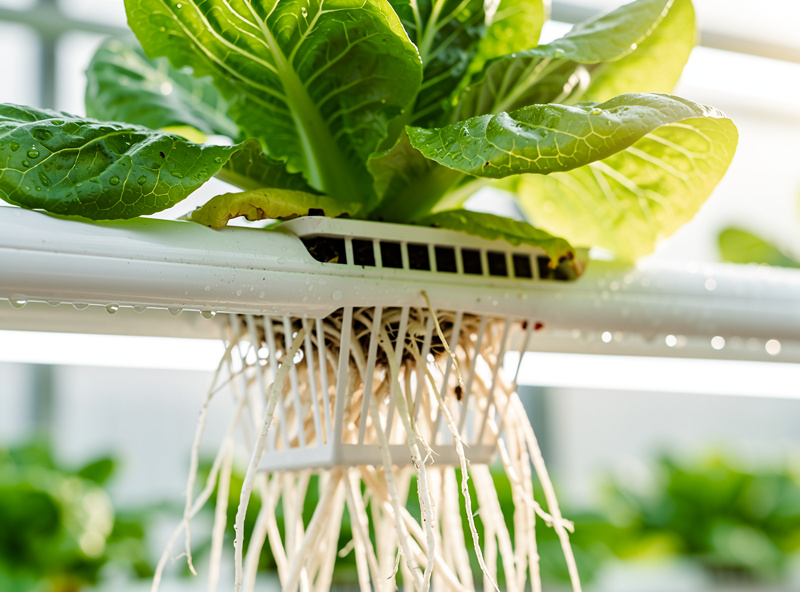
1. Lettuce — The Ultimate Beginner Plant
Lettuce is the single best plant for hydroponic beginners, and it is not even close. There is a reason commercial hydroponic operations around the world focus heavily on lettuce production—it grows fast, needs minimal care, and produces reliably in almost any hydroponic system.
Why lettuce is perfect for beginners:
- Germinates quickly and grows fast, ready to harvest in 30-45 days from seed
- Extremely forgiving of pH fluctuations and minor nutrient imbalances
- Thrives in moderate light, no expensive grow lights required
- Shallow root system works perfectly in simple DWC and NFT systems
- Cool temperature tolerance means less worry about heat management
- Multiple varieties let you grow different colors and textures
Best lettuce varieties for hydroponics:
- Butterhead (Bibb): Soft, tender leaves with mild flavor. Very forgiving and fast-growing.
- Romaine: Upright growth habit, crisp texture, classic Caesar salad lettuce.
- Looseleaf: Does not form heads, harvest outer leaves continuously for weeks.
- Red varieties: Same easy growth as green types but adds visual variety to your garden and plate.
Growing details:
- Days to harvest: 30-45 from seed, faster from transplants
- Ideal pH: 5.5-6.5
- Ideal temperature: 60-70°F (15-21°C)
- Light needs: Moderate, 10-14 hours daily
- Best systems: DWC, NFT, Kratky, Ebb and Flow—literally any system works
Pro tip: Start new lettuce seeds every two weeks for continuous harvests. By the time you finish eating one batch, the next is ready to pick. It’s also the crop I recommend for testing anything new on my bench — a new nutrient line, a printed net-pot collar, a light I haven’t run before — because it grows fast enough that a mistake shows up in days, not weeks.
2. Spinach — Nutrient Powerhouse
Spinach grows almost as easily as lettuce while packing significantly more nutritional value into every leaf. It prefers cooler temperatures, making it an excellent choice for basement grows or winter gardening when heat management is easier.
Why spinach works well:
- Fast growth cycle of 40-45 days from seed to harvest
- Compact growth habit fits small systems perfectly
- Prefers cool temperatures that are easy to maintain indoors
- High nutritional value makes every harvest worthwhile
- Cut-and-come-again harvesting extends productive life
Growing details:
- Days to harvest: 40-45 from seed
- Ideal pH: 6.0-7.0
- Ideal temperature: 60-68°F (15-20°C)
- Light needs: Moderate, 10-14 hours daily
- Best systems: DWC, NFT, Ebb and Flow
Watch out for: Spinach bolts (goes to seed) quickly in warm temperatures above 75°F. Keep it cool for the longest harvest window.
3. Kale — Hardy and Productive
Kale is one of the most forgiving and productive leafy greens you can grow. Individual plants keep producing for months, giving you ongoing harvests from a single planting. The plants tolerate a wide range of conditions and bounce back quickly from stress.
Why kale excels in hydroponics:
- Extremely hardy and tolerant of temperature fluctuations
- Long harvest period—individual plants produce for months
- Harvest outer leaves continuously while plant keeps growing
- Cold tolerant, actually sweeter after exposure to cool temperatures
- Packed with nutrients, one of the healthiest vegetables you can grow
Best kale varieties:
- Dwarf Curly: Compact size perfect for small systems
- Lacinato (Dinosaur): Dark bumpy leaves, excellent flavor
- Red Russian: Beautiful purple stems, tender leaves
Growing details:
- Days to first harvest: 55-60 from seed
- Ideal pH: 5.5-6.5
- Ideal temperature: 60-70°F (15-21°C)
- Light needs: Moderate to high, 12-16 hours daily
- Best systems: DWC, Ebb and Flow, Dutch buckets for larger plants
4. Swiss Chard — Colorful and Forgiving
Swiss chard brings stunning color to your hydroponic garden while being nearly impossible to kill. The bright red, yellow, orange, and pink stems look beautiful and taste delicious. Plants tolerate both heat and cold better than most leafy greens.
Why grow Swiss chard:
- Extremely heat and cold tolerant compared to other greens
- Gorgeous colorful stems brighten up any growing space
- Long productive life, harvest for many months
- Mild flavor works in salads, smoothies, and cooked dishes
- Very forgiving of inconsistent care and conditions
Growing details:
- Days to first harvest: 50-60 from seed
- Ideal pH: 6.0-7.0
- Ideal temperature: 50-80°F (10-27°C)—very wide range
- Light needs: Moderate, 10-14 hours daily
- Best systems: DWC, Ebb and Flow, NFT
5. Arugula — Fast and Flavorful
Arugula grows incredibly fast and adds a peppery kick to salads and sandwiches. If you want quick results to build your confidence, arugula delivers harvestable leaves in under a month from seed.
Why arugula is great for beginners:
- Extremely fast growth, baby leaves ready in 20-25 days
- Strong distinctive flavor means a little goes a long way
- Cut-and-come-again harvesting for extended production
- Compact plants fit easily in any system
- Cool temperature preference matches most indoor environments
Growing details:
- Days to harvest: 20-25 for baby leaves, 40 for full size
- Ideal pH: 6.0-7.0
- Ideal temperature: 50-65°F (10-18°C)
- Light needs: Low to moderate, 10-12 hours daily
- Best systems: Any system works well
Herbs — High Value and Easy to Grow
Fresh herbs from your hydroponic garden taste dramatically better than anything from the grocery store, and they cost a fraction of the price per harvest. Herbs are excellent beginner plants that produce valuable harvests from small spaces.
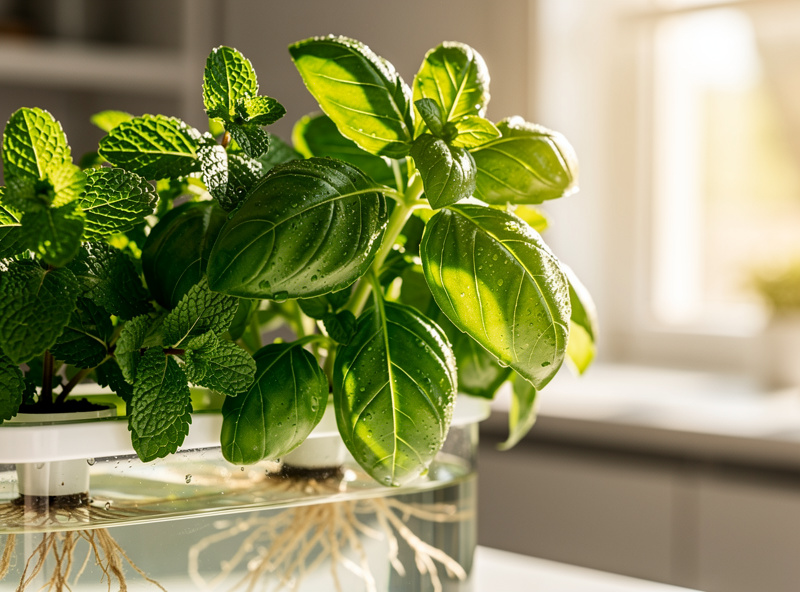
6. Basil — The Most Popular Hydroponic Herb
Basil thrives in hydroponic systems like few other plants. It grows fast, smells incredible, and produces abundant harvests that would cost a small fortune at the grocery store. Commercial hydroponic operations love basil because it is profitable and practically foolproof.
Why basil excels hydroponically:
- Grows faster in hydroponics than in soil—noticeably faster
- Loves the consistent moisture and nutrients hydroponic systems provide
- Aromatic oils are stronger when grown hydroponically
- Pinching tips encourages bushy growth with more leaves
- Single plant can produce for months with proper harvesting
Best basil varieties:
- Genovese: Classic Italian basil, best for pesto and cooking
- Thai: Spicier flavor with purple stems and flowers
- Lemon: Citrus notes, excellent in drinks and desserts
- Purple: Stunning color, slightly milder flavor
Growing details:
- Days to first harvest: 28-35 from seed
- Ideal pH: 5.5-6.5
- Ideal temperature: 70-80°F (21-27°C)—basil loves warmth
- Light needs: High, 14-16 hours of strong light daily
- Best systems: DWC, NFT, Kratky, Ebb and Flow
Pro tip: Never let basil flower if you want to maximize leaf production. Pinch off flower buds as soon as they appear to keep the plant in vegetative growth mode.
7. Mint — Vigorous and Nearly Indestructible
Mint is one of the hardest plants to kill, making it perfect for beginners still learning the basics. In fact, the bigger challenge with mint is controlling its aggressive growth rather than keeping it alive. Hydroponic systems actually help contain mint that would otherwise take over a soil garden.
Why mint works for beginners:
- Nearly impossible to kill through neglect or mistakes
- Aggressive growth means rapid, abundant harvests
- Hydroponic growing contains spread that would overtake soil gardens
- Valuable for cooking, drinks, teas, and cocktails
- Strong scent makes your growing space smell amazing
Popular mint varieties:
- Spearmint: Classic mint flavor, most versatile
- Peppermint: Stronger menthol flavor, great for tea
- Chocolate mint: Subtle cocoa undertones
- Mojito mint: Perfect for the famous cocktail
Growing details:
- Days to first harvest: 30-40 from cuttings (faster than from seed)
- Ideal pH: 5.5-6.5
- Ideal temperature: 65-75°F (18-24°C)
- Light needs: Moderate, 12-16 hours daily
- Best systems: DWC, NFT, any system really
Pro tip: Start mint from cuttings rather than seeds. Simply put stems from grocery store mint in water until roots develop, then transplant to your hydroponic system. I keep a mint bucket running on its own separate reservoir year-round for exactly this reason — it’s the one plant I’ve never once had to troubleshoot.
8. Cilantro — Quick Growing Cool Season Herb
Cilantro grows fast in hydroponic systems, though it prefers cooler conditions. This makes it an excellent choice for winter growing or naturally cool growing spaces. The fresh flavor is incomparably better than dried cilantro from a jar.
Growing details:
- Days to harvest: 21-28 for leaves
- Ideal pH: 5.5-6.5
- Ideal temperature: 50-70°F (10-21°C)
- Light needs: Moderate, 12-14 hours daily
- Best systems: NFT, DWC, Kratky
Watch out for: Cilantro bolts quickly in warm temperatures. Once it flowers, leaf production stops and the flavor becomes bitter. Keep temperatures cool and harvest frequently to delay bolting.
9. Parsley — Reliable and Long Producing
Parsley takes longer to germinate than most herbs but rewards your patience with months of continuous harvests. Once established, parsley plants keep producing through consistent cut-and-come-again harvesting.
Growing details:
- Days to harvest: 70-80 from seed (slow germination)
- Ideal pH: 5.5-6.5
- Ideal temperature: 60-70°F (15-21°C)
- Light needs: Moderate, 12-14 hours daily
- Best systems: Any system works well
Pro tip: Soak parsley seeds overnight before planting to speed up slow germination. Be patient—parsley is worth the wait.
10. Chives — Set It and Forget It
Chives require almost zero attention once established. These perennial herbs keep producing fresh onion-flavored leaves for years with minimal care. Just snip what you need and the plant keeps growing more.
Growing details:
- Days to harvest: 60-90 from seed (or much faster from divisions)
- Ideal pH: 6.0-7.0
- Ideal temperature: 60-70°F (15-21°C)
- Light needs: Moderate, 12-14 hours daily
- Best systems: DWC, Ebb and Flow, NFT
Fruiting Plants — Intermediate Difficulty
These plants require more attention, better lighting, and more careful nutrient management than leafy greens and herbs. However, they are completely achievable for beginners willing to learn. The reward is growing your own tomatoes, peppers, and strawberries—crops that taste dramatically better homegrown.
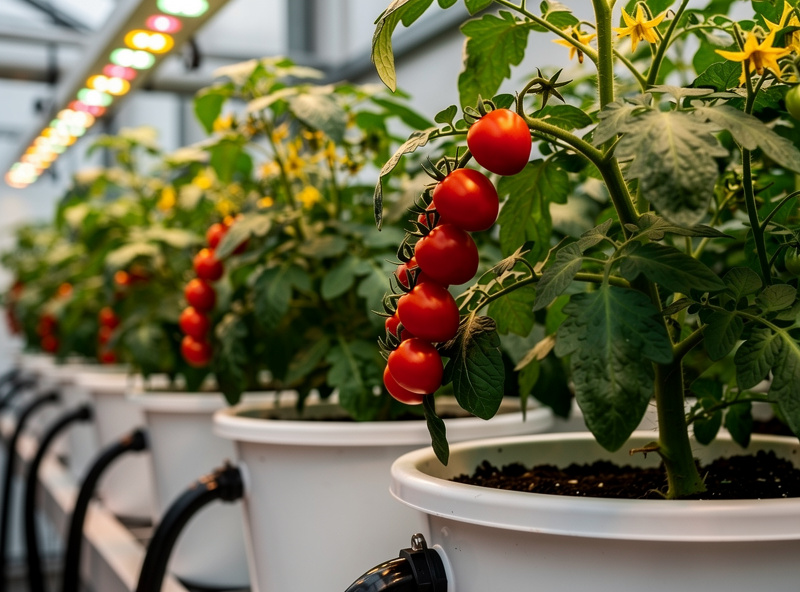
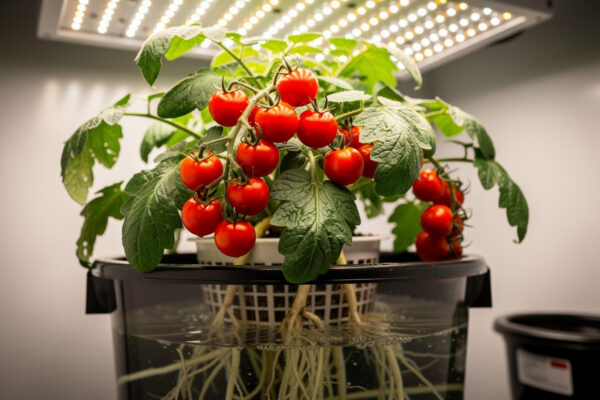
11. Cherry Tomatoes — Most Rewarding Beginner Fruit
Cherry tomatoes are the best fruiting plant for hydroponic beginners. They produce quickly, tolerate more mistakes than larger tomato varieties, and reward you with sweet fruit that tastes nothing like bland grocery store tomatoes.
Why cherry tomatoes over full-size:
- Faster to produce fruit than large tomato varieties
- More forgiving of nutrient and environmental fluctuations
- Smaller plants easier to manage in home setups
- Prolific producers—dozens of tomatoes per plant
- Sweetness and flavor far superior to store-bought
Growing requirements:
- Days to first harvest: 60-80 from transplant
- Ideal pH: 5.5-6.5
- Ideal temperature: 65-85°F (18-29°C)
- Light needs: High, 16-18 hours of intense light daily
- Best systems: DWC with large buckets, Dutch buckets, Ebb and Flow
Important notes: Tomatoes need support structures as they grow tall. They also require hand pollination indoors since there are no bees—simply shake flowering branches or use a small brush to transfer pollen between flowers. For a soil-based comparison of indoor tomato growing, CityRooted has a complete indoor tomato grow light guide covering variety selection, container sizing, and the full seed-to-harvest timeline.
12. Peppers — Similar to Tomatoes
Peppers have similar requirements to tomatoes and grow beautifully in the same hydroponic systems. Start with smaller sweet pepper varieties before attempting hot peppers, which can be more temperamental.
Best beginner pepper varieties:
- Mini sweet peppers: Fast producers, compact plants
- Bell peppers: Classic choice, need more time and light
- Jalapenos: Reliable hot pepper for beginners
Growing details:
- Days to first harvest: 70-90 from transplant
- Ideal pH: 5.5-6.5
- Ideal temperature: 70-85°F (21-29°C)
- Light needs: High, 16-18 hours of intense light daily
- Best systems: DWC, Dutch buckets, Ebb and Flow
13. Strawberries — Sweet Success
Strawberries adapt wonderfully to hydroponic growing, especially in vertical systems that keep fruit clean and accessible. They require patience through establishment but reward you with sweet berries for years afterward.
Why hydroponic strawberries work:
- No soil means no soil-borne diseases affecting fruit
- Clean fruit without dirt or mud splashing
- Vertical growing saves space and looks beautiful
- Perennial plants produce for multiple years
- Taste dramatically better than store-bought
Growing details:
- Days to first harvest: 90-120 for new plants (faster in second year)
- Ideal pH: 5.5-6.2
- Ideal temperature: 60-80°F (15-27°C)
- Light needs: High, 12-16 hours daily
- Best systems: NFT, vertical towers, Dutch buckets
14. Cucumbers — Fast Growing Vines
Cucumbers grow rapidly in hydroponic systems and produce abundantly. Choose compact bush varieties rather than sprawling vines for easier management in home setups.
Best cucumber varieties for hydroponics:
- Bush Champion: Compact plants, full-size cucumbers
- Spacemaster: Bred specifically for small spaces
- Mini varieties: Snacking cucumbers, very productive
Growing details:
- Days to harvest: 50-70 from seed
- Ideal pH: 5.5-6.5
- Ideal temperature: 70-85°F (21-29°C)
- Light needs: High, 14-18 hours daily
- Best systems: DWC with large containers, Dutch buckets
Plants to Avoid as a Beginner
Some plants are genuinely difficult in hydroponic systems, especially for beginners still learning the basics. Save these for later when you have more experience.
15. What NOT to Grow Yet
Root vegetables (carrots, potatoes, beets): These need deep growing media, specialized setups, and produce crops that are cheap to buy anyway. Not worth the difficulty for beginners.
Large fruiting plants (melons, squash, pumpkins): These need massive containers, extensive support structures, and intense lighting. They also attract pest problems and require precise pollination. Wait until you have dedicated growing space.
Corn: Needs huge amounts of vertical space, is wind pollinated (difficult indoors), and produces relatively little food per plant. Completely impractical for home hydroponics.
Trees and woody plants: Fruit trees and bushes require years of growth, enormous root space, and specialized knowledge. Not suitable for typical hydroponic systems.
Plants with extremely specific requirements: Specialty crops like saffron, vanilla, and wasabi need precise conditions that are difficult to maintain. Master the basics first.
Quick Reference Chart
| Plant | Difficulty | Days to Harvest | Best System |
|---|---|---|---|
| Lettuce | Very Easy | 30-45 | Any system |
| Spinach | Easy | 40-45 | DWC, NFT |
| Kale | Easy | 55-60 | DWC, Ebb Flow |
| Swiss Chard | Easy | 50-60 | Any system |
| Arugula | Very Easy | 20-25 | Any system |
| Basil | Easy | 28-35 | DWC, NFT |
| Mint | Very Easy | 30-40 | Any system |
| Cilantro | Easy | 21-28 | NFT, DWC |
| Parsley | Easy | 70-80 | Any system |
| Chives | Very Easy | 60-90 | Any system |
| Cherry Tomatoes | Medium | 60-80 | DWC, Dutch bucket |
| Peppers | Medium | 70-90 | DWC, Dutch bucket |
| Strawberries | Medium | 90-120 | NFT, vertical |
| Cucumbers | Medium | 50-70 | DWC, Dutch bucket |
What Should You Grow First?
Based on everything covered in this guide and what’s actually worked on my own bench across DWC, NFT, Kratky, and ebb-flow, here is my specific recommendation for your first hydroponic grow:
| Your Goal | Best First Plant | Why | Harvest Time |
|---|---|---|---|
| Fastest results | Arugula | Ready in just 20-25 days | 3-4 weeks |
| Most forgiving | Lettuce (butterhead) | Tolerates pH 5.5-7.0, any system | 4-6 weeks |
| Highest value | Basil | $3-5 per store bunch, grows continuously | 4-5 weeks |
| Lowest maintenance | Mint | Grows in any conditions, very hardy | 4-6 weeks |
| First fruiting plant | Cherry tomatoes | Compact, rewarding, good learning curve | 8-10 weeks |
| Kitchen staple | Spinach | Use daily, harvest continuously | 6 weeks |
Start with: Lettuce plus one herb (basil or mint)
This combination gives you the best learning experience with the highest chance of success. Lettuce teaches you the fundamentals while being extremely forgiving of mistakes. Adding an herb gives you variety and a high-value crop without adding complexity.
After you successfully harvest your first batch of lettuce and herbs, you will have the confidence and knowledge to try more demanding plants like tomatoes and peppers.
Next Steps
You now know exactly which plants to start with for hydroponic success. Here is your action plan:
- Choose your first plants — Pick lettuce plus one herb from this guide
- Get your equipment — a hydroponic starter kit with net pots and clay pebbles covers the basics — see our essential equipment guide for the full breakdown
- Choose your system — Read our hydroponic systems guide to pick the right setup
- Avoid common mistakes — Check our guide to hydroponic mistakes beginners make
Want to build an affordable system for your first plants? See our DIY hydroponics on a budget guide for complete build instructions.
Your first hydroponic harvest is waiting. Pick your plants and start growing today.
What is the easiest plant to grow hydroponically?
Lettuce is the easiest hydroponic plant. It germinates in 2-3 days, tolerates pH fluctuations between 5.5-7.0, grows in 30-45 days from seedling to harvest, and thrives in moderate light (200-400 PPFD). Butterhead and looseleaf varieties are the most forgiving for beginners.
Can you grow tomatoes hydroponically indoors?
Yes, cherry tomatoes are the best first fruiting plant for hydroponics. They produce in 60-80 days, tolerate some mistakes, and need DWC or Dutch bucket systems with strong lighting (600+ PPFD). Full-sized beefsteak tomatoes are much more demanding and not recommended for beginners.
What vegetables grow best in hydroponics?
Leafy greens (lettuce, spinach, kale, arugula), herbs (basil, mint, cilantro, parsley), and compact fruiting plants (cherry tomatoes, peppers, strawberries) grow best hydroponically. Root vegetables like carrots and potatoes are poorly suited to home hydroponic systems.
How long does it take to grow hydroponic herbs?
Most hydroponic herbs are harvestable in 28-40 days. Basil produces in 28-35 days, cilantro in 21-28 days, and mint in 30-40 days. Once established, a single hydroponic herb plant produces continuous harvests for 4-6 months with proper nutrient management.
Can you grow strawberries hydroponically?
Yes, strawberries grow excellently in NFT channels and vertical towers. They take 90-120 days from planting to first harvest but produce for 1-3 years. Day-neutral varieties like Albion and Seascape produce fruit continuously under 14-16 hours of light.
What should I not grow in hydroponics as a beginner?
Avoid root vegetables (carrots, potatoes), large fruiting plants (melons, squash, pumpkins), corn, and trees. These require deep growing media, massive containers, specialized pollination, or years of growth. Master lettuce and herbs first before attempting complex crops.
Related Articles
- Hydroponics for Beginners: Ultimate Guide — Complete getting started guide with step-by-step setup instructions
- Complete Guide to Hydroponic Plant Growing — Master plant selection, nutrient schedules, and harvest timing for all hydroponic crops
- Hydroponics for Beginners
- Hydroponic Systems Explained
- Essential Hydroponic Equipment
- DIY Hydroponics on a Budget
- Common Hydroponic Mistakes