What kills hydroponic plants fastest? In my own troubleshooting and across the growing literature, the same three failure points come up over and over: incorrect nutrient pH, oxygen-deprived root zones, and reservoir temperatures above 72°F. Fixing these seven common errors will save your system and dramatically improve yields.
Hydroponic growing removes many of the variables found in soil cultivation, but it introduces new failure points that soil gardeners never encounter. Understanding these pitfalls before they destroy your crops is the difference between a thriving indoor garden and a costly disappointment.
Mistake 1: Ignoring Nutrient Solution pH Levels
If pH drift is the failure mode, our guide to pH Down for plants covers safe dropwise dosing, household alternatives like citric acid and vinegar, and a full dosing reference chart by reservoir size.
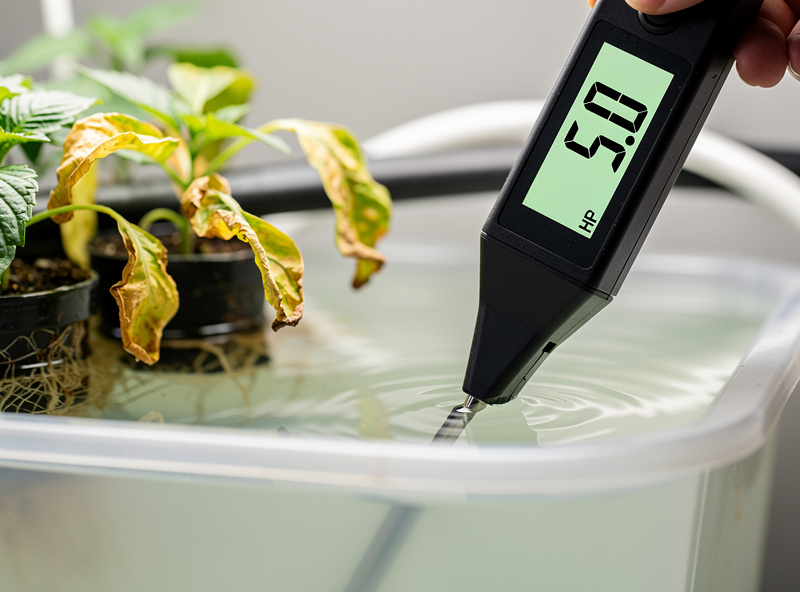
The single most common hydroponic mistake is letting pH drift outside the optimal 5.5-6.5 range. When pH rises above 7.0 or drops below 5.0, plants become unable to absorb specific nutrients regardless of how much fertilizer you add — a condition called nutrient lockout. Iron becomes unavailable above pH 6.5, while calcium and magnesium lock out below pH 5.5.
Most beginners assume that if they mixed nutrients correctly at startup, the pH will stay stable. It does not. Plants actively alter the pH of their nutrient solution as they absorb different ions. In a recirculating system, pH can shift by a full point within 24-48 hours without monitoring.
The fix: Test pH daily using a digital pH meter (not cheap test strips, which are inaccurate by ±0.5 pH). Keep pH Up (potassium hydroxide) and pH Down (phosphoric acid) solutions on hand. Adjust gradually — adding more than 1ml per gallon at once causes pH shock. Target 5.8-6.2 for most leafy greens and herbs, 5.5-6.0 for fruiting plants like tomatoes and peppers. I still cross-check my pH pen against drops every few weeks — pens drift out of calibration quietly, and a drifted pen is worse than no pen at all because it lies to you with confidence.
For a deeper understanding of nutrient management, see our guide to essential hydroponic equipment — a quality pH meter is the most important tool you will buy.
Mistake 2: Overfeeding with Nutrient Solution
More nutrients does not mean more growth — it means nutrient burn and root damage. Running your system at an electrical conductivity (EC) of 3.0+ mS/cm when your plants need 1.2-1.8 mS/cm will literally burn root tissues, creating brown, crispy root tips that can no longer absorb water or minerals.
The logic seems sound: if plants eat nutrients, more nutrients should make them grow faster. But hydroponic nutrients are concentrated salts. At high concentrations, they create osmotic pressure that actually pulls water OUT of root cells — the opposite of what you want. This is why overfed plants often show wilting symptoms despite sitting in nutrient-rich water.
The fix: Start at half the manufacturer’s recommended strength and increase gradually. Monitor EC daily with a digital EC meter. Seedlings and clones need only 0.4-0.8 mS/cm. Vegetative-stage leafy greens thrive at 1.2-1.6 mS/cm. Fruiting plants like tomatoes and peppers peak at 1.8-2.4 mS/cm during fruit set. Always check the EC of your source water first — if your tap water reads 0.6 mS/cm, that counts toward your total.
Mistake 3: Insufficient Oxygen in the Root Zone
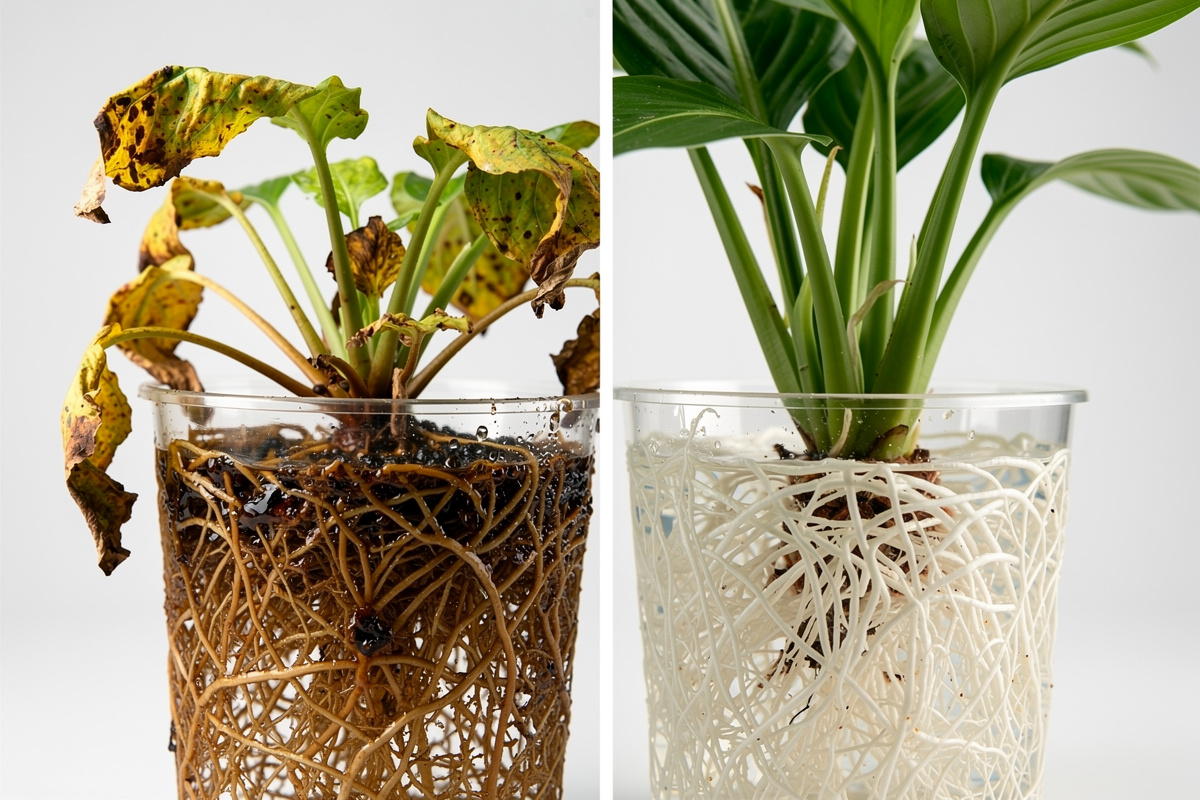
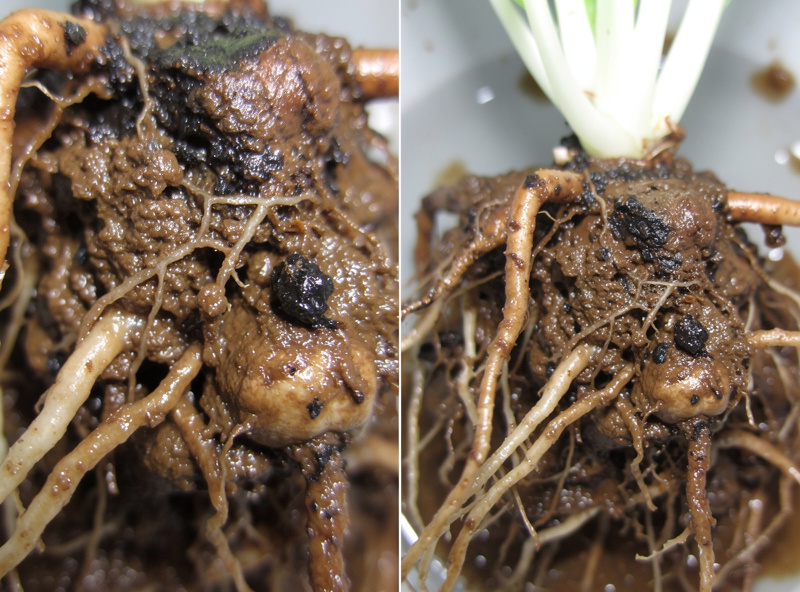
Roots need oxygen just as much as leaves need carbon dioxide. In Deep Water Culture (DWC) systems, dissolved oxygen levels below 5 ppm cause roots to suffocate within hours, creating the perfect environment for Pythium root rot — the most destructive hydroponic pathogen. Healthy roots are bright white; oxygen-starved roots turn brown, slimy, and smell like a swamp.
Unlike soil, where air pockets naturally exist between particles, hydroponic systems must actively supply oxygen to roots. Water holds dramatically less oxygen than air — at 68°F, water contains only about 8 ppm dissolved oxygen compared to 210,000 ppm in air. Without active aeration, roots consume available oxygen faster than it can diffuse from the surface.
The fix: Every DWC bucket needs an air pump rated at minimum 1 watt per gallon of reservoir volume, paired with an air stone that produces fine bubbles (smaller bubbles = more surface area = better oxygen transfer). In NFT and ebb-and-flow systems, ensure the drain cycle is complete — standing water in channels or trays is a warning sign. Water temperature matters critically: at 75°F, water holds 30% less dissolved oxygen than at 65°F. Keep reservoir temperatures between 65-68°F (18-20°C) using insulation, frozen water bottles, or a water chiller for larger systems.
Learn more about system selection in our breakdown of DWC, NFT, Ebb and Flow systems and which one fits your growing goals.
Mistake 4: Letting Reservoir Water Temperature Rise
Water temperature above 72°F (22°C) is the gateway to catastrophic root rot. Pythium, the most common hydroponic pathogen, reproduces much faster in warm, low-oxygen water — extension research on hydroponic leafy greens (e-GRO Pythium root rot bulletin) points to the same combination of warm reservoirs and low dissolved oxygen driving outbreaks, and Cornell’s controlled-environment work found chilling ponds to around 68°F measurably reduced, though did not eliminate, Pythium pressure. By the time you see brown, slimy roots, the infection is often beyond saving.
Warm water compounds the oxygen problem from Mistake 3. The relationship between temperature and dissolved oxygen is inverse: water holds meaningfully less dissolved oxygen at 75°F than it does at 65°F (see this oxygen solubility reference), which pushes already-stressed roots toward suffocation. It is exactly why I keep every reservoir I run at 68°F or below and air stones running around the clock — it is the cheapest insurance in the whole build.
The fix: Monitor reservoir temperature with a waterproof digital thermometer. Wrap reservoirs in reflective insulation (Reflectix works well) to block light and reduce heat absorption. In hot climates, run your system during cooler nighttime hours only. For permanent installations, a 1/10 HP water chiller costs $150-250 and pays for itself by preventing a single crop loss. Adding beneficial bacteria like Hydroguard (Bacillus amyloliquefaciens) provides biological protection against root rot even when temperatures fluctuate.
Mistake 5: Inadequate or Wrong-Spectrum Lighting
Using the wrong light spectrum or insufficient intensity causes leggy, weak plants that never reach full yield potential. Plants grown under standard household LED bulbs receive less than 100 PPFD (photosynthetic photon flux density) — they need 200-400 PPFD for leafy greens and 600-900 PPFD for fruiting plants. The result is stretched internodes, pale leaves, and a harvest that falls well short of what a properly lit setup produces — I’ve watched a bargain shop-light tray of lettuce bolt thin and pale next to an identical tote running under a PPFD-checked panel.
Many beginners assume any bright light will work for indoor growing. But plants do not see light the way humans do. They specifically absorb photons in the 400-700nm range (photosynthetically active radiation, or PAR). A 100-watt incandescent bulb produces almost no usable PAR despite appearing bright to human eyes. Meanwhile, a 100-watt full-spectrum LED grow light delivers the exact wavelengths plants need for photosynthesis.
The fix: Use full-spectrum LED grow lights with a PAR output matched to your crop. Leafy greens and herbs need 200-400 PPFD at canopy level — achievable with 25-40 watt LED panels per square foot. Fruiting plants like tomatoes and peppers need 600-900 PPFD — requiring 60-100 watt panels per square foot. Hang lights 12-18 inches above leafy greens and 18-24 inches above fruiting plants. Run lights 14-16 hours per day for vegetative growth, 12 hours for flowering. A $30 PAR meter or a smartphone PAR app gives you accurate readings instead of guessing.
Mistake 6: Poor System Sanitation and Algae Growth
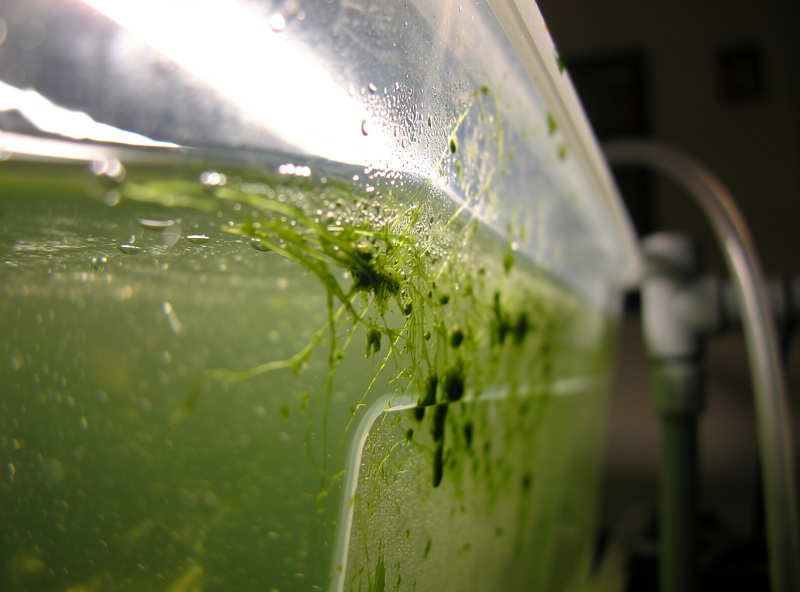
Algae and biofilm are not just cosmetic problems — they compete with your plants for oxygen and nutrients while harboring disease organisms. A reservoir covered in green algae draws down dissolved oxygen right alongside your roots, and algae die-offs create organic matter that feeds pathogenic bacteria and fungi, creating a cascading system failure.
Algae needs only two things to explode: light and nutrients. Your hydroponic reservoir contains abundant nutrients by design. Any light leak — through a cracked lid, an unsealed net cup hole, or translucent tubing — provides the trigger. Once established, algae spreads rapidly and is extremely difficult to eradicate without draining the entire system.
The fix: Light-proof every component. Use opaque reservoirs (black or white, never translucent). Seal all net cup gaps with neoprene inserts or clay pebbles. Cover any exposed tubing with reflective sleeve or black tape. Between crops, sterilize the entire system with a 3% hydrogen peroxide solution — run it through all channels, buckets, and tubing for 30 minutes, then flush thoroughly with clean water. During operation, maintain a thin layer of beneficial bacteria (Hydroguard, Great White) to outcompete harmful organisms for resources.
Mistake 7: Neglecting Regular System Maintenance
A hydroponic system left unmonitored for more than 3-4 days will develop compounding problems that become expensive to fix. Nutrient concentrations shift as plants consume elements at different rates. Water levels drop through transpiration, concentrating remaining salts. Pump intakes clog with root fragments. Air stone pores become blocked by mineral deposits. Each problem alone is manageable; together, they create a cascade of failures.
Soil gardening forgives neglect because soil acts as a buffer — it holds nutrients, regulates moisture, and maintains stable temperatures. Hydroponics has no buffer. The nutrient solution IS the entire root environment, and it changes constantly. A system that was perfectly balanced on Monday can be severely imbalanced by Thursday without intervention.
The fix: Establish a maintenance schedule and follow it religiously:
| Frequency | Task | Time Required |
|---|---|---|
| Daily | Check pH and EC/TDS readings | 5 minutes |
| Daily | Verify water level in reservoir | 2 minutes |
| Daily | Inspect roots for color and smell | 3 minutes |
| Every 3 days | Top off reservoir with pH-balanced water | 10 minutes |
| Weekly | Full nutrient solution change | 20 minutes |
| Weekly | Clean pump intake filter | 5 minutes |
| Bi-weekly | Inspect and clean air stones | 10 minutes |
| Between crops | Full system sterilization with H2O2 | 45 minutes |
Set phone reminders for each task. The 15-20 minutes of daily attention prevents the 8-hour emergency rescue that neglect inevitably requires.
How to Start Avoiding These Mistakes Today
If you are just beginning your hydroponic journey, the fastest way to avoid all seven mistakes is to start with a quality hydroponic growing kit designed for beginners. Pre-configured kits handle the most common failure points — proper reservoir sizing, adequate aeration, and appropriate light spectrum — so you can focus on learning pH management and nutrient monitoring.
For growers interested in maximizing space efficiency, our guide to vertical farming systems for indoor growing shows how to scale your setup while maintaining proper environmental control across multiple tiers.
For a complete walkthrough of setting up your first system from scratch, see our hydro indoor garden setup guide.
If you also grow plants in soil containers and want to avoid common mistakes there too, CityRooted covers 7 urban gardening mistakes that kill plants — many of the same principles about watering, lighting, and pest management apply whether you grow in hydroponics or soil.
What is the most common mistake in hydroponics?
Incorrect nutrient pH is the number one hydroponic mistake. When pH drifts outside the 5.5-6.5 range, plants cannot absorb nutrients regardless of fertilizer concentration. Test pH daily with a digital meter and adjust gradually using pH Up or pH Down solutions.
Why are my hydroponic plant roots turning brown?
Brown, slimy roots indicate root rot caused by insufficient oxygen and warm water temperatures above 72°F. Healthy roots are bright white. Fix this by adding an air pump with air stone, lowering reservoir temperature to 65-68°F, and treating with beneficial bacteria like Hydroguard.
How often should I change hydroponic nutrient solution?
Completely replace the nutrient reservoir every 7-14 days. Top off daily with plain, pH-balanced water as plants transpire. Between full changes, monitor EC daily and add concentrated nutrients only when EC drops below your target range for the crop.
Can I use regular tap water for hydroponics?
Tap water can work if its EC is below 0.4 mS/cm. Test it first — high mineral content in hard water areas means you are starting with significant nutrient levels already present. Always let tap water sit for 24 hours to off-gas chlorine before using in hydroponic systems.
How do I prevent algae in my hydroponic system?
Block all light from reaching the nutrient solution. Use opaque reservoirs, seal net cup gaps with neoprene, and cover exposed tubing. Between crops, sterilize the entire system with 3% hydrogen peroxide for 30 minutes, then flush thoroughly with clean water.
What temperature should hydroponic water be?
Keep reservoir water between 65-68°F (18-20°C). Above 72°F, dissolved oxygen drops 30% and root rot pathogens multiply rapidly. Use reservoir insulation, run systems at night, or install a water chiller for permanent setups in warm climates.
Related Articles
- Hydroponics for Beginners: Ultimate Guide — Complete getting started guide with step-by-step setup instructions
- Hydroponic Systems Explained: DWC, NFT, Ebb and Flow
- Essential Hydroponic Equipment: What You Actually Need
- Best Hydroponic Growing Kits for Beginners
- Hydro Indoor Garden: How to Set Up Your First System
- Vertical Farming Systems: Indoor Growing at Home