Growing plants hydroponically produces 30-50% higher yields and 25-40% faster harvests than soil cultivation, with some crops ready in as little as 20 days from seedling. Whether you want crisp lettuce for daily salads, fragrant herbs for cooking, or vine-ripened tomatoes year-round, understanding which plants thrive in hydroponic systems—and which growing method suits each crop—determines your success. This complete guide covers every aspect of hydroponic plant growing, from variety selection through harvest, with specific recommendations based on growth speed, nutrient requirements, and system compatibility.
Plant selection is half the battle — the other half is feeding correctly. Our complete guide to hydroponic nutrients walks through the EC and pH targets each plant family actually needs, and the best hydroponic fertilizer picks for 2026 covers which products match each crop type. For a single-product all-stage approach that fits most home setups, our MaxiBloom feeding schedule guide covers the simple 7-gram-per-gallon recipe that grows lettuce through fruiting tomatoes from one bag.
Why Plant Selection Matters in Hydroponics
Not all plants perform equally in hydroponic systems. The combination of direct nutrient delivery, constant moisture, and controlled environment creates ideal conditions for some crops while presenting challenges for others. Understanding these differences before you plant saves weeks of frustration and prevents the crop failures that discourage many beginners.
Plants that evolved in consistently moist, nutrient-rich environments—leafy greens, herbs, and many fruiting vegetables—thrive in hydroponics. Their shallow root systems, moderate nutrient demands, and fast growth cycles align perfectly with hydroponic delivery methods. In contrast, plants from arid environments or those requiring deep root penetration often struggle without soil.
The best plants for hydroponic growing guide provides a detailed breakdown of 15 beginner-friendly crops, including specific days-to-harvest timelines and system recommendations for each variety.
Quick-Start Plant Categories by Growing Speed
For your first hydroponic garden, growth speed directly impacts motivation and learning. Fast harvests let you iterate quickly, correcting mistakes before they compound. Slow crops require months of patience before you know if your setup works.
| Category | Examples | Days to Harvest | Difficulty | Best System |
|---|---|---|---|---|
| Ultra-Fast Greens | Arugula, lettuce, spinach | 20-45 days | Very Easy | Any system |
| Quick Herbs | Basil, cilantro, parsley | 28-40 days | Easy | DWC, NFT |
| Compact Fruiting | Cherry tomatoes, peppers, strawberries | 60-90 days | Medium | DWC, Dutch buckets |
| Slower Crops | Large tomatoes, cucumbers, eggplant | 70-120 days | Advanced | Dutch buckets, large DWC |
Most beginners should start with ultra-fast greens and quick herbs for their first 2-3 grows. These forgiving crops teach hydroponic fundamentals while delivering harvests within a month, building confidence before attempting more demanding fruiting plants.
Hydroponic Plant Growing vs Soil: Complete Comparison
Understanding how hydroponic plant cultivation differs from soil growing helps you set realistic expectations and choose the right approach for each crop in your garden. The growth-speed and water-usage figures below track with what extension-adjacent research on hydroponic growth rates and water-productivity studies report, and with what I’ve logged across the DWC, NFT, Kratky, and ebb-flow systems running side by side on my own bench.
| Factor | Hydroponic Plants | Soil-Grown Plants |
|---|---|---|
| Growth Speed | 30-50% faster to harvest | Standard growth rate |
| Yield Per Plant | 25-40% higher with optimized nutrients | Good—depends on soil quality |
| Water Usage | 80-90% less water | Standard—frequent watering |
| Nutrient Control | Precise pH/EC management required | Soil buffers minor variations |
| Pest Pressure | Lower—no soil-borne diseases | Higher—fungus gnats, soil pathogens |
| Flavor Profile | Clean, consistent taste | Complex, traditional flavor |
| Year-Round Growing | Easy indoors | Season dependent |
| Startup Cost | $40-200 for system | $10-50 for containers |
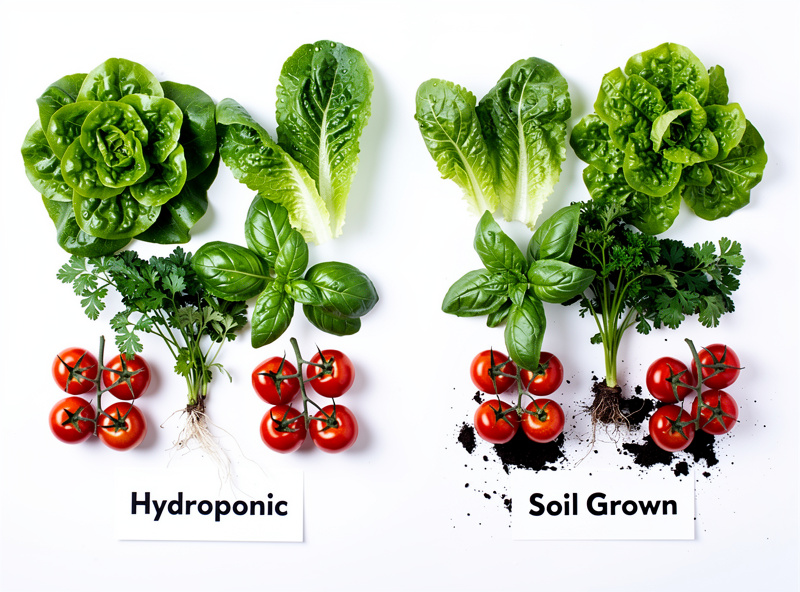
The complete hydroponics vs soil guide provides an in-depth analysis of when each method produces superior results, helping you decide which approach fits your specific plants and growing goals.
Top Plants for Hydroponic Success by Category
Leafy Greens: The Beginner’s Best Friend
Lettuce, spinach, kale, and arugula are the undisputed champions of hydroponic growing. Their shallow roots, low nutrient demands, and rapid growth cycles make them perfect for every system type from simple Kratky jars to commercial NFT channels.
Lettuce tops the list for beginners. Butterhead varieties germinate in 2-3 days, tolerate pH fluctuations between 5.5-7.0, and produce harvestable heads in 30-45 days. Looseleaf types offer even faster results—cut-and-come-again harvesting provides fresh greens within 3 weeks of transplanting.
Spinach and kale follow closely behind, offering nutrient-dense harvests in 40-60 days. These cold-loving greens actually prefer the cooler temperatures (60-70°F) common in indoor hydroponic setups, often performing better indoors than in summer garden soil.
For a detailed breakdown of lettuce varieties and growing techniques, see our hydroponic lettuce vs soil comparison—this guide covers pH requirements, nutrient schedules, and harvest timing specific to leafy greens.
Herbs: High-Value Continuous Harvests
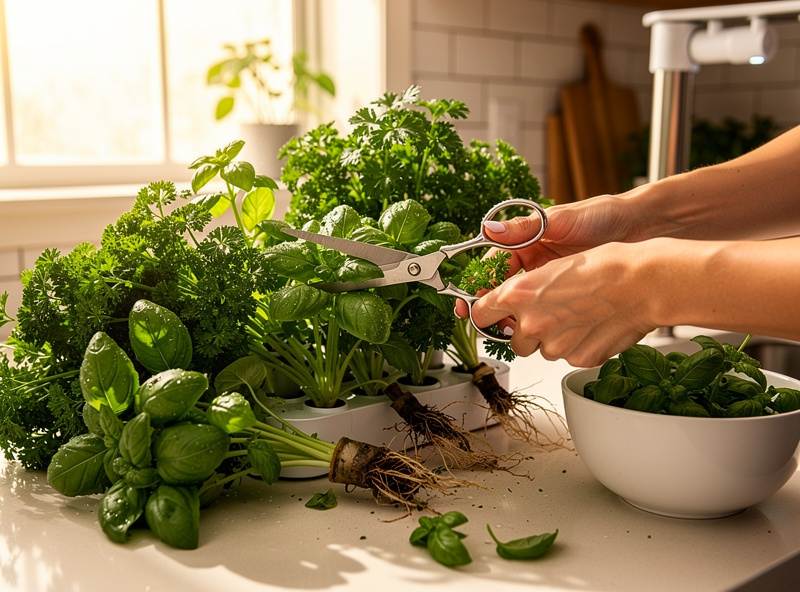
Fresh herbs represent the highest value-per-square-foot crops in hydroponics. A single basil plant produces a steady stream of leaves over its 4-6 month lifespan — on my own bench it’s the crop that most often has me wondering why I still buy plastic clamshells of basil at the store.
Basil thrives in hydroponics, growing 30-50% faster than in soil and producing larger, more aromatic leaves. Genovese and Thai varieties perform exceptionally well in NFT channels and DWC systems. Continuous harvesting—pinching top growth every 7-10 days—maintains productive plants for months.
Cilantro, parsley, and chives round out the essential herb collection, each offering unique advantages. Cilantro’s fast growth (21-28 days to first harvest) provides immediate gratification, while chives produce for 6+ months with minimal maintenance.
The hydroponic herbs vs soil comparison covers variety-specific nutrient requirements, light needs, and continuous harvesting techniques that maximize herb production from your indoor garden.
Fruiting Plants: Taking Your Garden to the Next Level
Once you’ve mastered leafy greens and herbs, fruiting plants offer the next challenge and reward level. Tomatoes, peppers, and strawberries require more attention but deliver harvests that justify the extra effort.
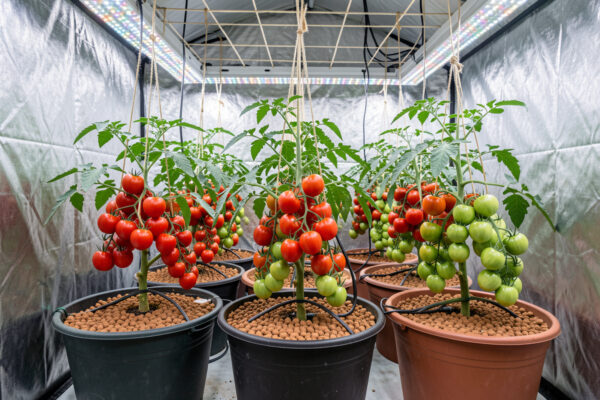
Cherry tomatoes are the ideal first fruiting crop for hydroponic growers. Compact determinate varieties like ‘Tiny Tim’ and ‘Micro Tom’ produce abundant fruit in 60-80 days, fitting easily into standard 5-gallon DWC buckets. Their manageable size and reliable production build confidence before tackling larger varieties.
Peppers—both sweet and hot varieties—thrive in hydroponic systems. Plants like ‘Lunchbox’ snack peppers and ‘Jalapeño M’ produce continuously for 4-6 months under proper lighting. The controlled environment eliminates the pest pressure that often devastates outdoor pepper crops.
For detailed fruiting plant guidance, see our specialized comparison guides: tomatoes, peppers, and strawberries. Each covers variety selection, pollination techniques, and nutrient scheduling specific to fruit production.
Matching Plants to Hydroponic Systems
Different plant types prefer different hydroponic delivery methods. Matching the right system to your chosen crops maximizes growth and minimizes maintenance headaches.
Best Systems for Leafy Greens
Lettuce, spinach, and herbs perform well in almost any system, but some methods offer particular advantages:
NFT (Nutrient Film Technique) channels provide the ideal environment for leafy greens. The thin film of nutrient solution flowing over roots delivers constant oxygen and nutrients while the shallow channels perfectly accommodate the compact root systems of lettuce and herbs. Commercial lettuce operations worldwide use NFT for its efficiency and clean harvests.
Kratky (Passive) systems work surprisingly well for short-cycle greens. Mason jars with net pots require no electricity while producing excellent lettuce and herbs for 4-6 weeks. The ultra-low cost and zero maintenance make Kratky perfect for testing hydroponics or growing small quantities. It’s the method I use as a zero-pump baseline on my own bench — the system I judge everything else against.
Learn more about system selection in our hydroponic systems explained guide, which breaks down every major system type with pros, cons, and crop compatibility.
Best Systems for Fruiting Plants
Tomatoes, peppers, and strawberries demand more support and stability than NFT channels typically provide:
Deep Water Culture (DWC) buckets offer fruiting plants the large water volume and stable root environment they need. The 5-gallon buckets common in home setups provide enough nutrient reservoir to support heavy-feeding fruiting plants through their entire lifecycle. Air pumps ensure oxygen delivery that passive systems cannot match for demanding crops.
Dutch bucket systems scale DWC principles to multiple plants, with each bucket feeding into a central reservoir. This approach supports the heaviest fruiting plants—full-size tomatoes, cucumbers, and eggplant—while maintaining manageable individual plant care.
For complete system setup guidance, see the hydro indoor garden setup guide and the essential equipment guide.
Nutrient Requirements by Plant Type
Understanding the nutritional needs of your chosen plants prevents the deficiency and toxicity problems that frustrate many hydroponic growers. Different plant types require different nutrient concentrations and ratios.
Leafy Greens and Herbs (Light Feeders)
These crops need moderate nitrogen for leaf production but minimal phosphorus and potassium since they are not producing fruit. A balanced hydroponic nutrient solution at half to three-quarter strength works perfectly.
Target EC: 0.8-1.2 mS/cm
Target pH: 5.5-6.5
Nutrient ratio: Balanced grow formula, no bloom phase needed
Start with quarter-strength nutrients for seedlings, increase to half-strength after establishment, and maintain through harvest. Over-feeding causes more problems than under-feeding with these forgiving crops.
Fruiting Plants (Heavy Feeders)
Tomatoes, peppers, and strawberries require higher nutrient concentrations and specific phase adjustments:
Vegetative phase: EC 1.2-1.6, balanced nutrients for leaf and stem development
Flowering/fruiting phase: EC 1.4-2.0, bloom formula with reduced nitrogen and increased phosphorus/potassium
The transition from grow to bloom nutrients typically occurs when plants show first flowers. Calcium-magnesium supplements prove essential for fruiting plants—strawberries and tomatoes are particularly sensitive to calcium deficiency, which causes blossom end rot and poor fruit development.
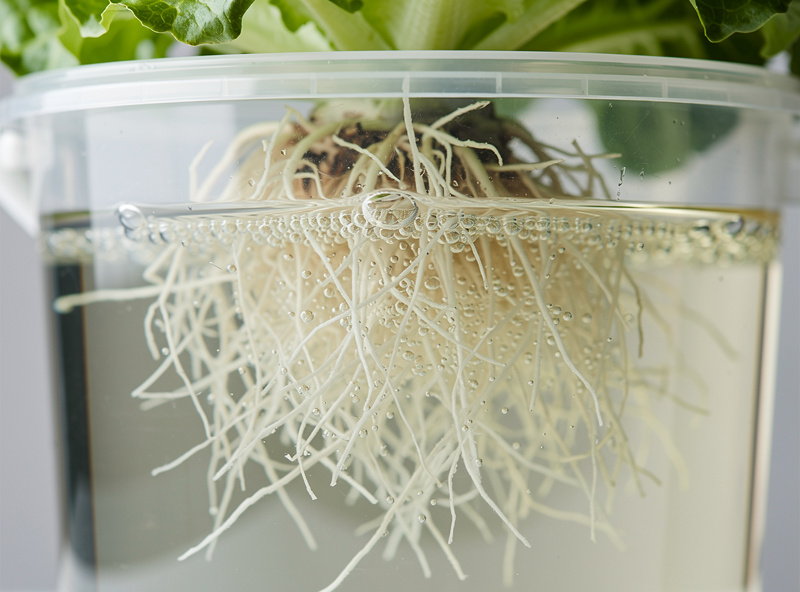
For detailed nutrient management guidance, including EC and pH monitoring techniques, see the common hydroponic mistakes guide—nutrient errors top the list of beginner failures.
Light Requirements for Different Plant Types
Matching light intensity to plant needs prevents leggy, weak growth or wasted electricity on excessive lighting. Different plant categories have dramatically different light requirements.
| Plant Type | Light Intensity (PPFD) | Daily Light Hours | LED Wattage (per sq ft) |
|---|---|---|---|
| Leafy greens | 150-250 | 12-14 hours | 20-30 watts |
| Herbs | 200-400 | 14-16 hours | 30-40 watts |
| Fruiting vegetables | 400-600 | 14-16 hours | 40-60 watts |
| Flowering/fruiting phase | 600-900 | 12-14 hours | 60-100 watts |
These values represent the light intensity needed at the plant canopy, not the output rating of your fixture. A PAR meter or smartphone PAR app measures actual intensity, which decreases with distance from the light source.
Full-spectrum LED grow lights provide the most efficient option for indoor hydroponics, delivering the exact wavelengths plants need while producing minimal heat. See the equipment guide for specific fixture recommendations.
Your First Hydroponic Plant: Where to Start
If you are beginning your hydroponic journey, plant selection significantly impacts your early success. Follow this progression for the best learning experience:
Week 1-4: Start with lettuce. Choose butterhead or looseleaf varieties for your first grow. Their forgiving nature and rapid harvest (30-45 days) builds confidence while teaching fundamental hydroponic principles—pH management, nutrient mixing, and harvesting techniques.
Week 4-8: Add basil. Once your lettuce system runs smoothly, add an herb like basil. Herbs teach continuous harvesting techniques and demonstrate how hydroponics produces higher-value crops than soil growing.
Month 3+: Try cherry tomatoes. With successful greens and herbs under your belt, graduate to fruiting plants. Compact cherry tomato varieties provide the satisfaction of fruit production without the complexity of full-size varieties.
For budget-conscious beginners, the DIY hydroponics on a budget guide shows how to build complete growing systems for under $50—perfect for testing lettuce and herbs without major investment.
Common Plant Problems and Solutions
Even well-chosen plants encounter problems. Recognizing and addressing these issues quickly saves crops and prevents discouragement.
Yellowing Leaves
Yellowing typically indicates nitrogen deficiency in leafy greens or iron deficiency in fruiting plants. Check pH first—nutrient lockout from pH drift (outside 5.5-6.5 range) is more common than actual nutrient deficiency. If pH is correct, increase nutrient concentration gradually. This was my own first hydroponic mistake — I kept adding nutrients to a yellowing lettuce plant for a week before I checked pH and found it had drifted out of range, locking out the nitrogen that was already in the reservoir.
Leggy, Stretched Growth
Tall, thin plants with wide internodes scream insufficient light. Increase light intensity or move fixtures closer to the canopy. Most leafy greens need minimum 150 PPFD; fruiting plants require 400+ PPFD for compact growth.
Brown Leaf Tips (Nutrient Burn)
Crispy brown tips indicate excessive nutrient concentration. Reduce EC by 20% and flush the system with pH-balanced water. Seedlings are particularly sensitive—start at quarter-strength nutrients and increase gradually as plants mature.
For comprehensive troubleshooting, the common hydroponic mistakes guide covers the seven most frequent errors and their fixes.
Harvesting and Continuous Production
Proper harvesting techniques maximize yields and extend production life, especially important for herbs and fruiting plants that produce over months.
Leafy Green Harvesting
Harvest outer leaves first, leaving the central growing point intact. This cut-and-come-again approach provides continuous harvests for 4-8 weeks from a single lettuce plant. Never remove more than 30% of the plant at once—over-harvesting shocks the plant and slows recovery.
Herb Harvesting
Pinch stem tips just above a leaf node, removing the top 2-3 inches of growth. This pruning technique encourages bushier growth and prevents flowering, which reduces leaf flavor. Harvest herbs in the morning after lights turn on but before full heat buildup—essential oils peak during this window.
Fruiting Plant Harvesting
Pick fruit when fully colored but still firm. Leaving overripe fruit on the plant signals reduced production—consistent harvesting encourages continuous fruit set. Use clean scissors to avoid tearing stems, which creates entry points for disease.
Advanced Plant Combinations
Once you have mastered individual plant types, combining compatible crops in shared systems increases efficiency and diversity.
Compatible Combinations
Lettuce + Herbs: Both are light feeders with similar pH (5.5-6.5) and EC (0.8-1.2) requirements. These crops share reservoirs and nutrient schedules without conflict.
Tomatoes + Peppers: Both are heavy-feeding fruiting plants requiring bloom nutrients and higher EC (1.4-2.0). They transition from vegetative to flowering on similar timelines.
Avoid These Combinations
Leafy greens + Fruiting plants: The different nutrient requirements (vegetative vs bloom formulas) make shared reservoirs problematic. Greens suffer in the high-EC solutions fruiting plants need.
Herbs + Fruiting plants: Herbs prefer moderate nutrients while fruiting plants demand high concentrations. Combined systems force compromise that satisfies neither plant type.
Seasonal Plant Rotation
Even indoor hydroponic gardens benefit from seasonal thinking. Adjusting your crop mix throughout the year maximizes productivity and prevents system burnout.
Winter (Dec-Feb): Focus on cold-loving greens—spinach, kale, and lettuce thrive in the cooler indoor temperatures common during winter months. Herbs like parsley and cilantro also prefer these conditions.
Spring (Mar-May): Transition to fast-growing warm-season crops. Arugula and basil explode with growth as temperatures rise. Start fruiting plant seedlings for summer production.
Summer (Jun-Aug): Heat-tolerant crops dominate—peppers, tomatoes, and basil handle warmer conditions better than cool-season greens. Monitor reservoir temperatures closely.
Fall (Sep-Nov): Return to leafy greens as temperatures moderate. This is the easiest growing season—plants thrive in the 65-75°F range typical of autumn.
Scaling Your Plant Production
As your skills grow, scaling plant production follows predictable patterns. Understanding these stages helps you expand without overwhelming yourself.
Stage 1 (1-4 plants): Single Kratky jar or small DWC bucket. Learn fundamentals with minimal investment.
Stage 2 (5-12 plants): NFT channel or multiple DWC buckets. Gain experience with shared reservoirs and nutrient batching.
Stage 3 (13-40 plants): Multi-channel NFT or Dutch bucket system. Requires environmental controls—ventilation, humidity management, and potentially CO2 supplementation.
Stage 4 (40+ plants): Commercial-scale considerations. At this level, automated pH dosing, environmental controllers, and professional-grade lighting become cost-effective.
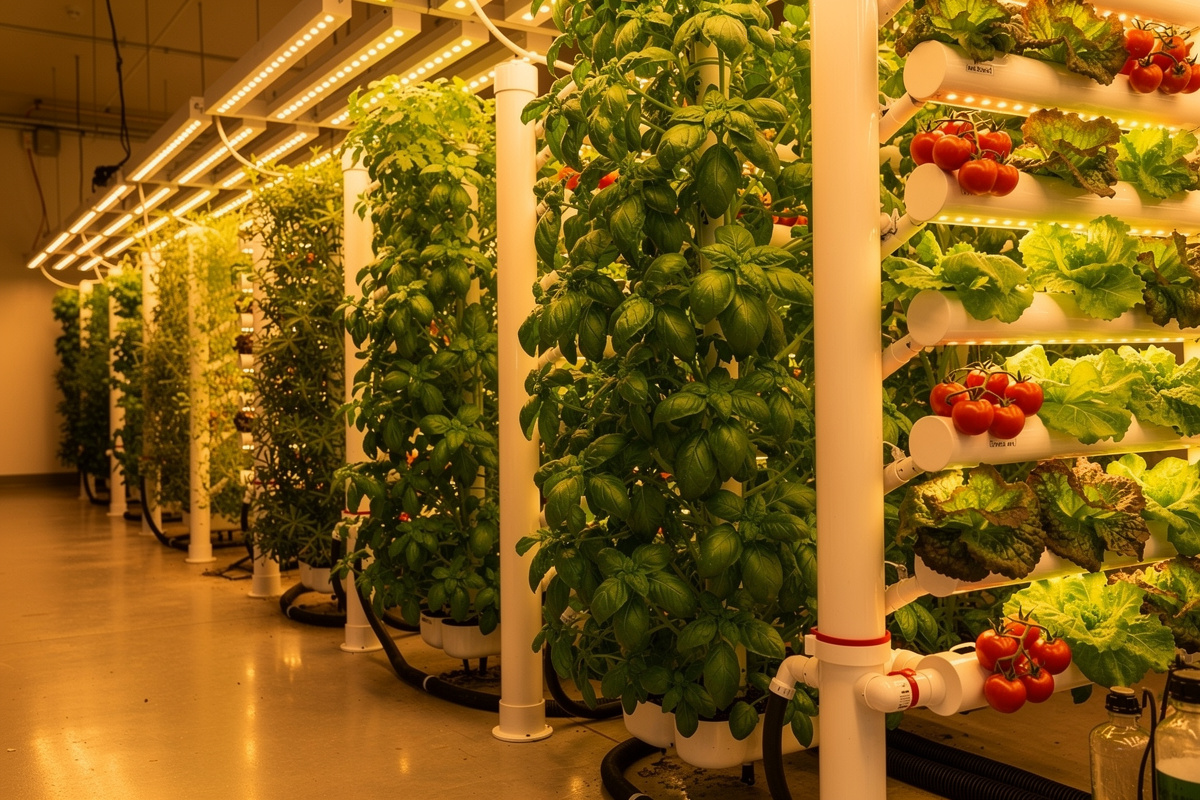
The vertical farming systems guide explores space-efficient scaling techniques for home growers expanding beyond single-level setups.
Next Steps: Choose Your First Plant
You now understand which plants thrive in hydroponics, how different categories perform, and what factors determine success. Your next step is choosing your first crop and starting your grow.
For variety-specific growing guidance, explore these detailed comparison guides:
- Hydroponic Lettuce vs Soil — Best varieties, nutrient schedules, and harvest timing for leafy greens
- Hydroponic Herbs vs Soil — Basil, cilantro, mint, and more: continuous harvesting techniques
- Hydroponic Tomatoes vs Soil — Cherry and full-size varieties, pollination, and nutrient phases
- Hydroponic Peppers vs Soil — Sweet and hot varieties, from seedling through harvest
- Hydroponic Strawberries vs Soil — Day-neutral varieties, runners, and long-term production
- Best Plants for Hydroponics — 15 recommended crops with days-to-harvest breakdown
Pick your plant, set up your system, and start growing. Your first hydroponic harvest is closer than you think.
What is the easiest plant to grow hydroponically?
Lettuce is the easiest hydroponic plant for beginners. Butterhead and looseleaf varieties germinate in 2-3 days, tolerate pH fluctuations between 5.5-7.0, grow to harvest in 30-45 days, and thrive in any hydroponic system from simple Kratky jars to NFT channels. Lettuce requires only half-strength nutrients and moderate light (150-250 PPFD), making it the most forgiving first crop.
How long does it take to grow plants hydroponically?
Hydroponic plant growth timelines vary by type: leafy greens harvest in 20-45 days, herbs in 28-40 days, cherry tomatoes in 60-80 days, peppers in 70-90 days, and strawberries in 90-120 days. This is 30-50% faster than soil-grown equivalents. Most beginners see their first harvest within 30 days starting with lettuce or arugula.
What plants grow best in hydroponics?
The best hydroponic plants are leafy greens (lettuce, spinach, kale, arugula), herbs (basil, mint, cilantro, parsley), and compact fruiting plants (cherry tomatoes, peppers, strawberries). These crops evolved in moist, nutrient-rich environments that match hydroponic conditions. Root vegetables like carrots and potatoes are poorly suited to most hydroponic systems.
Do hydroponic plants taste different than soil-grown?
Hydroponic plants typically have cleaner, more consistent flavor compared to soil-grown equivalents. The controlled nutrient delivery produces uniform taste without the variation caused by soil mineral content. However, some chefs note soil-grown herbs have more complex flavor profiles from diverse soil microorganisms. Leafy greens show minimal taste difference; tomatoes and peppers may taste slightly sweeter in hydroponics.
Can you grow tomatoes hydroponically indoors?
Yes, cherry tomatoes are excellent for indoor hydroponics. Compact determinate varieties like ‘Tiny Tim’ produce abundant fruit in 60-80 days using DWC or Dutch bucket systems. Tomatoes need strong lighting (600+ PPFD), bloom-phase nutrients once flowering begins, and hand pollination indoors. Start with cherry varieties before attempting full-size beefsteak tomatoes, which require more space and advanced care.
How much light do hydroponic plants need?
Hydroponic light requirements vary by plant type: leafy greens need 12-14 hours at 150-250 PPFD, herbs require 14-16 hours at 200-400 PPFD, and fruiting plants need 14-16 hours at 400-600 PPFD (600-900 PPFD during flowering). Full-spectrum LED grow lights provide the most efficient indoor lighting. Place lights 12-18 inches above leafy greens and 18-24 inches above fruiting plants.
What nutrients do hydroponic plants need?
All hydroponic plants need nitrogen, phosphorus, potassium, calcium, magnesium, and trace minerals delivered through water-based nutrient solutions. Leafy greens and herbs are light feeders (EC 0.8-1.2) using balanced grow formulas. Fruiting plants are heavy feeders requiring higher EC (1.4-2.0) and bloom nutrients during fruit production. pH must stay between 5.5-6.5 for optimal nutrient absorption.
Related Guides
- Hydroponic Lettuce vs Soil: Growing Comparison — Specific guidance for the easiest beginner crop
- Hydroponic Herbs vs Soil: Complete Guide — Basil, mint, cilantro and continuous harvesting techniques
- Hydroponic Tomatoes vs Soil: Indoor Comparison — Cherry and full-size varieties from seedling to harvest
- Hydroponic Peppers vs Soil: Growing Guide — Sweet and hot pepper varieties year-round
- Hydroponic Strawberries vs Soil: Complete Comparison — Day-neutral varieties and long-term production
- Best Plants for Hydroponics: 15 Easy Options — Detailed breakdown of beginner-friendly crops
- Hydroponic Systems Explained: DWC, NFT, Ebb and Flow — Match plants to the right growing system
- Essential Hydroponic Equipment Guide — What you need for successful plant growing
- Common Hydroponic Mistakes and How to Fix Them — Avoid the pitfalls that kill plants
- DIY Hydroponics on a Budget — Build affordable systems for your chosen plants
- Hydroponics vs Soil: Complete Comparison — Which method works best for your plants
- Hydro Indoor Garden Setup Guide — Complete walkthrough for first-time growers