Dechlorinating tap water for a hydroponic reservoir comes down to four methods that actually work: aging and aeration for free chlorine, a carbon stage for a permanent fix, vitamin C for fast batching, and Campden tablets for the chemistry route. The EPA allows up to 4.0 mg/L disinfectant at your tap, and which of those four you reach for depends on one thing — whether your utility uses chlorine or chloramine.
This is the hands-on companion to the chlorine versus chloramine piece. That one tells you what is in your water; this one tells you exactly how to get it out before it reaches a res. I have run every method on this page at my own bench, including the one I scorched a res with, and I will be honest about which ones earn their keep and which are theater. The upstream context for where dechlorination fits in the whole source-water workflow is in the water source and treatment guide.
Why Dechlorinate Before the Res, Not After
The order matters, and getting it backwards is the most common way growers waste money on biology. Disinfectant residual does its damage on contact with organic material — and your beneficial inoculants, your humic additions, your root exudates are all organic material. If you fill a res with chlorinated tap, add your bacillus, and then try to dechlorinate, the disinfectant has already reacted with the bacteria you just paid for. Dechlorination after the fact cannot un-kill your biology. The rule on my bench is simple: treat the water first, then add anything living.
The same logic applies to humic and fulvic additives, compost tea, and enzyme products. All of them are carbon-rich, which is exactly what disinfectants are designed to attack. A carbon-filtered, dechlorinated fill protects every dollar you spend on the biological layer of your grow. If you are running a purely mineral, sterile res with no biology at all, dechlorination matters less — but it still removes organics and odors and costs almost nothing, so I do it anyway. The disease-strategy context for why I lean on biology in the first place is in the root-rot prevention guide.
Method One — Aging and Aeration (Free Chlorine Only)
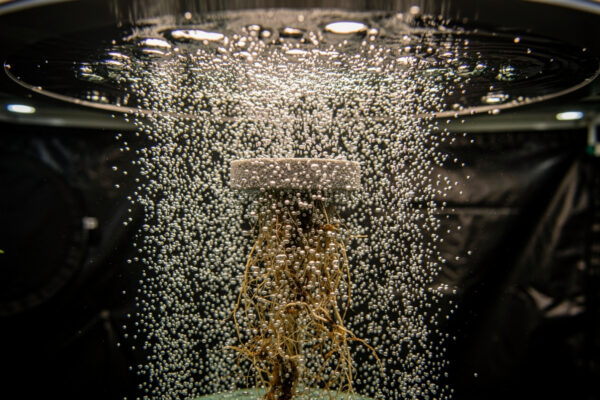
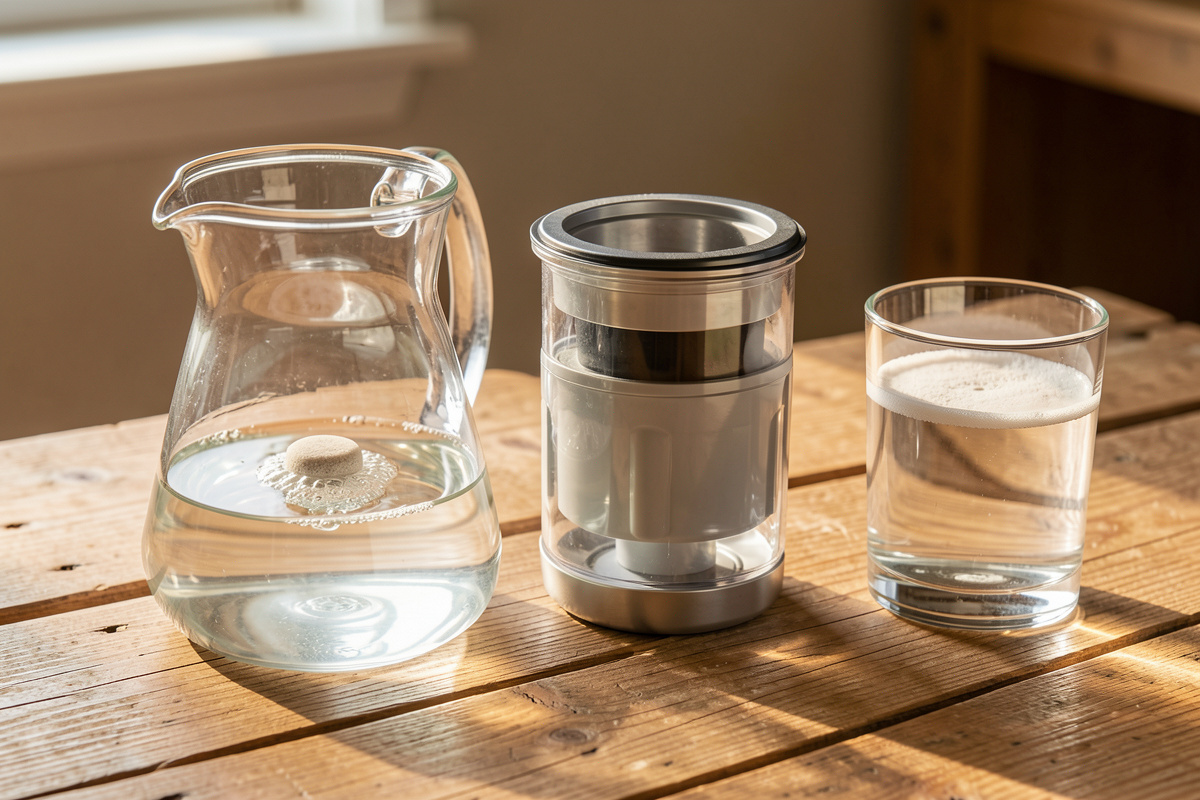
The oldest method in the book, and it works — but only for free chlorine. Fill a clean, open container with tap water and leave it 24 hours, and the free chlorine off-gasses into the air. Add an air stone and the same job finishes in a few hours instead of a day, because the bubbling strips the dissolved gas faster and the agitation helps it partition out. This costs essentially nothing if you already own an air pump, which most hydro growers do.
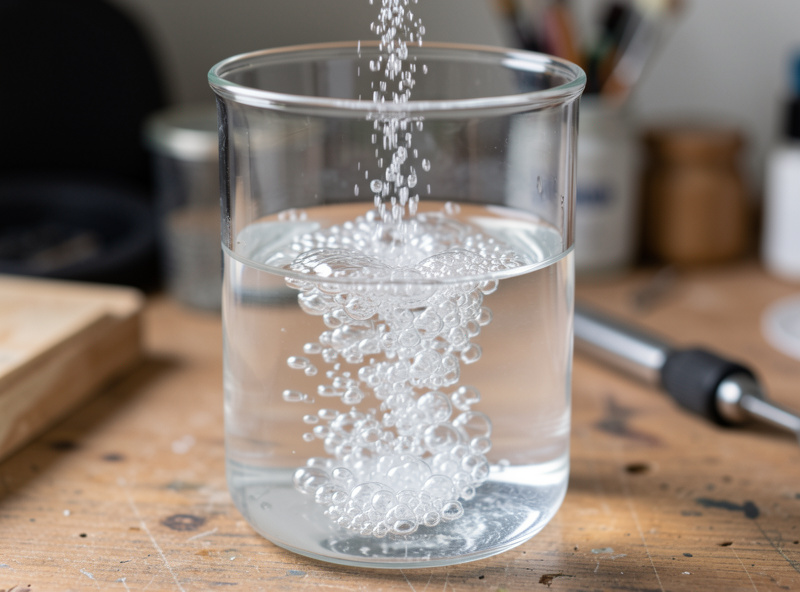
Here is the catch I already hit in the chlorine-versus-chloramine piece: aging does almost nothing to chloramine. I proved it on my bench with a 48-hour aerated sample that read the same total chlorine at the end as at the start. If your utility uses chloramine, skip this method entirely and go to carbon or a chemical route. Even on free chlorine, aging has a hidden cost — it ties up a vessel and an air stone for a day, which is fine at hobby scale and a pain at any kind of volume. For a single DWC bucket it is perfectly adequate. For my multi-tote bench it became a chore, which is why I eventually plumbed in a carbon stage.
Method Two — Activated and Catalytic Carbon (the Permanent Install)
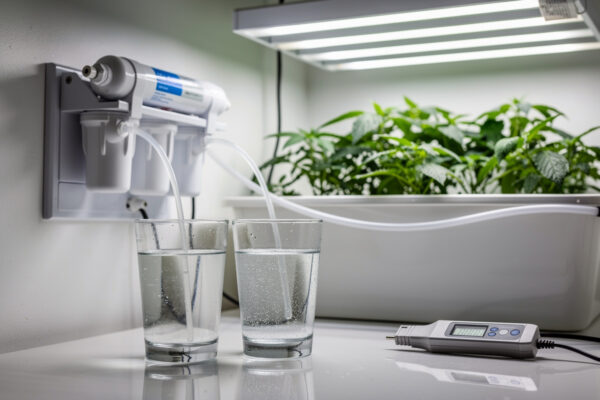
A carbon filter is the set-and-forget solution, and it is the method I recommend to almost everyone on municipal water. Water passes through a cartridge of porous carbon, and chlorine reacts with the carbon surface and is destroyed on contact — chemically consumed, not just trapped. For free chlorine, a standard activated-carbon block does the job with brief contact time. For chloramine, you want catalytic carbon, which is activated carbon processed to drive the slower reaction that breaks the chlorine-ammonia bond, and you want enough contact time that the water does not just splash past.
The install I run is a 10-inch catalytic carbon cartridge in a standard inline housing, plumbed onto a drinking-water line that fills my batching vessel. I replace the cartridge on a schedule based on gallons treated, not on a calendar, because carbon capacity is a throughput number — a cartridge that lasts a year at my use rate might last a month for a bigger grower. The upgrade cost was modest, and the payoff was that I stopped thinking about disinfectant at all. A good catalytic carbon cartridge also strips VOCs, off-tastes, and the occasional organic contaminant, so the res water tastes and smells neutral going in, which matters more than people realize for catching problems early — a res that suddenly smells different is a res telling you something.
Method Three — Vitamin C / Ascorbic Acid (Fast, for Batching)
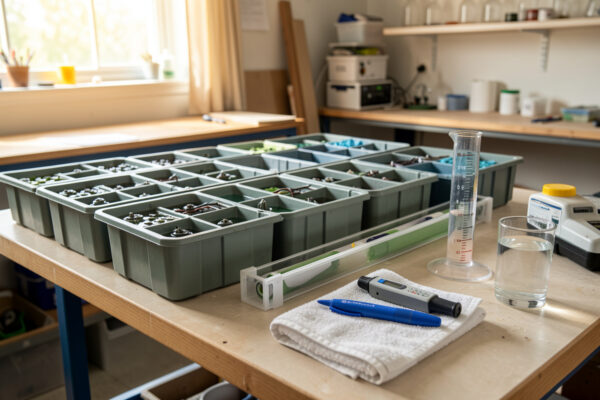
When I am batching a res and did not run the carbon stage, or when I need dechloraminated water in minutes, I reach for ascorbic acid. Vitamin C neutralizes both chlorine and chloramine quickly, and the chemistry is clean: the reaction converts ascorbic acid to dehydroascorbate and releases trace chloride and ammonium, all harmless at these doses. The dose I use is roughly 1 gram of pure ascorbic acid per 40 liters of water to neutralize typical municipal residuals of 1 to 2 mg/L. That is about 25 mg per liter, a small amount that is easy to measure on a cheap milligram scale.
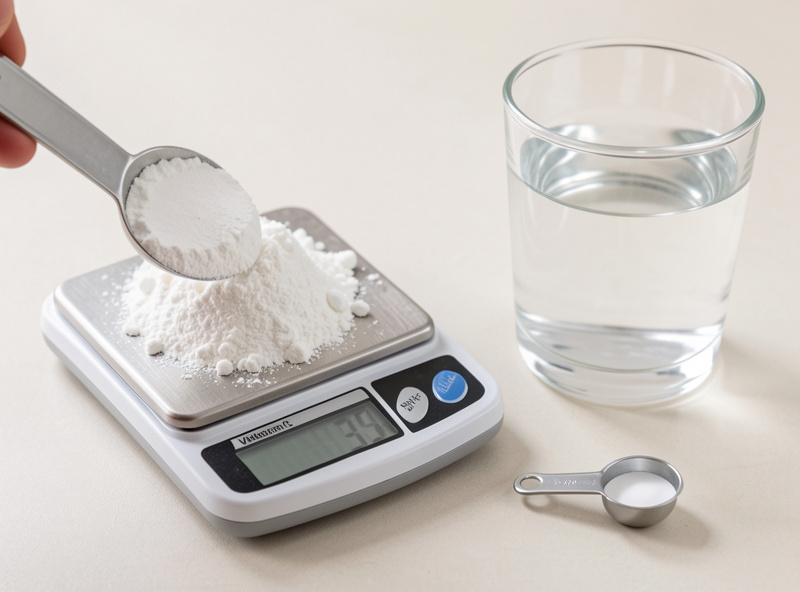
Vitamin C has two real virtues for a hydro grower. It works in minutes, not hours, so you can treat and mix in the same session. And the byproducts are benign, so there is no residue to worry about in a living res. The downside is that you are dosing by hand every time, which is fine for batching one res and tedious for a bench of them. It is also slightly acidic — ascorbic acid is, well, an acid — so a full dechlorination dose can nudge pH down a tenth or two, which I simply account for when I set pH at the end. The EPA sets the disinfectant residual limits documented at its Ground Water and Drinking Water resource, and the WHO guideline values sit in its drinking-water quality pages.
Method Four — Campden Tablets (Potassium Metabisulfite)
Before hydroponics borrowed vitamin C, winemakers and brewers had already solved this problem. Campden tablets are potassium metabisulfite, the same sanitizer-reducer used to dechlorinate brewing water and stabilize wine, and they take out both chlorine and chloramine. The dose I use is about a quarter of a crushed tablet per 80 liters for typical tap residuals, dissolved in a little water first and then stirred into the batch. The reaction is fast — minutes — and the sulfur dioxide smell is faint but unmistakable when you crush a tablet, that sharp mineral tang you also catch from a just-opened bottle of wine with sulfites.
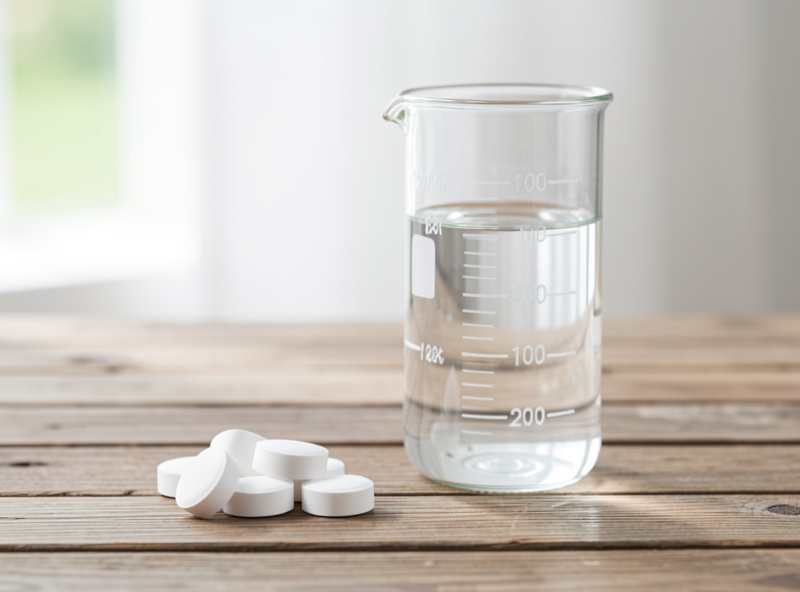
Campden works and is cheap and shelf-stable, which is why some growers prefer it to vitamin C. The trade-off is that it leaves a sulfite residue and a trace of potassium, which is fine for plants but means I would not use it in a res where I am simultaneously cultivating sensitive biology without letting the water rest a few minutes after dosing. For a mineral res or a brief settle before inoculation, it is a perfectly good option and arguably the most economical chemical route. The tablets last essentially forever in a sealed jar, which is more than I can say for a vitamin C powder that slowly oxidizes once opened.
UV and Boiling: Why I Do Not Bother
Two methods come up in searches that I want to talk you out of for dechlorination specifically. Boiling does drive off free chlorine — fifteen to twenty minutes of a rolling boil will reduce it substantially — but boiling away a reservoir’s worth of water is absurdly expensive in energy and it does nothing useful for chloramine. I mention it only so you do not waste an afternoon. UV sterilizers, which I do run on recirculating builds for pathogen control, are also sometimes pitched as dechlorinators; they will reduce chloramine with sufficient dose, but the contact time and intensity needed are far beyond what a hobby UV unit is sized for, and you would be using an expensive pathogen tool for a job a carbon cartridge does better and cheaper. Use UV for Pythium and bacteria, not for disinfectant. The role UV actually plays is covered in the dissolved oxygen and res health piece.
The Mistake I Made Dosing Vitamin C Too Hot
I will own this one because it is exactly the kind of error that catches a confident grower. Early in my vitamin C phase I did the math sloppily, misread my res volume, and dumped roughly four times the correct dose into a 60-liter res. Nothing catastrophic happened to the plants — ascorbic acid is benign enough that an overdose mostly just dropped pH a couple of tenths, which I corrected. The real cost was that the over-acidified, over-reduced water threw off my EC and pH logging for that cycle, and I spent a week not trusting my own numbers because I could not separate the nutrient signal from the dosing error I had introduced.
The lesson I took was procedural, not chemical: measure the dose with a scale, write down the volume, and treat the dechlorination step like a nutrient addition — logged, reproducible, and small. The other lesson was to stop hand-dosing once the volume grew. At a single bucket, vitamin C by hand is elegant. At a bench of totes, the cumulative chance of a math error on a tired evening is high, and a carbon stage that you cannot overdose starts to look like the rational choice. That is the real reason I migrated to a plumbed filter — not because the chemistry failed, but because my arithmetic did.
What I Would Do Starting Today
If I were setting up dechlorination from scratch, the decision tree is short. Confirm your disinfectant with a test strip. If you are on free chlorine and running one or two buckets, age the water overnight with an air stone and you are done — no money spent. If you are on chloramine, or you are running multiple reservoirs, spend the small amount on a catalytic carbon cartridge and plumb it inline so you never think about disinfectant again. Keep ascorbic acid and a milligram scale on the shelf as the fast batching backup, and Campden tablets as the long-shelf-life alternative. Skip boiling entirely, and reserve UV for pathogens. Treat the water before anything living goes in, every time, and log the dose the same way you log EC and pH. Do that and the disinfectant layer of source water stops being a problem you ever think about.
The whole point of dechlorination is that it is a solved problem with cheap tools, and the only real mistake is assuming it does not apply to you. It applies to everyone on municipal water — the only question is which of these four methods fits your scale and your disinfectant.
As an Amazon Associate I earn from qualifying purchases.