“Should I use RO or tap water for hydroponics?” is one of the most over-argued questions in the hobby, and the honest answer is anticlimactic: measure your tap first, then decide. Most growers in soft-water towns never need reverse osmosis, and most growers fighting hard water and stubborn pH would solve half their headaches by switching to it. The deciding number is your tap’s starting EC, and you cannot have this argument intelligently until you know it.
On my bench I have run both, and the case for each comes down to control versus convenience. This guide explains what is actually in your water, how to test it, when RO genuinely pays off, and how to remineralize a near-zero baseline so it does not backfire.
Do You Need RO Water for Hydroponics?
Not always. Tap water with a starting EC under about 200 ppm that is not heavily chlorinated works fine for most hydroponics. Reverse osmosis water gives a clean near-zero baseline for precise feeding and is worth it in hard-water areas. Always measure your tap’s starting EC and hardness before deciding — that number changes everything.
The whole debate hinges on what your tap already contains. Water that arrives at roughly 100–150 ppm with balanced minerals is a fine starting point — you simply account for it when mixing. Water that shows up at 300, 400, or higher, loaded with calcium and magnesium, eats into your nutrient budget and fights your pH adjustments before you have added a thing. RO strips all of that out, handing you a blank slate. Neither is universally right; the right answer is whichever your specific water makes necessary.
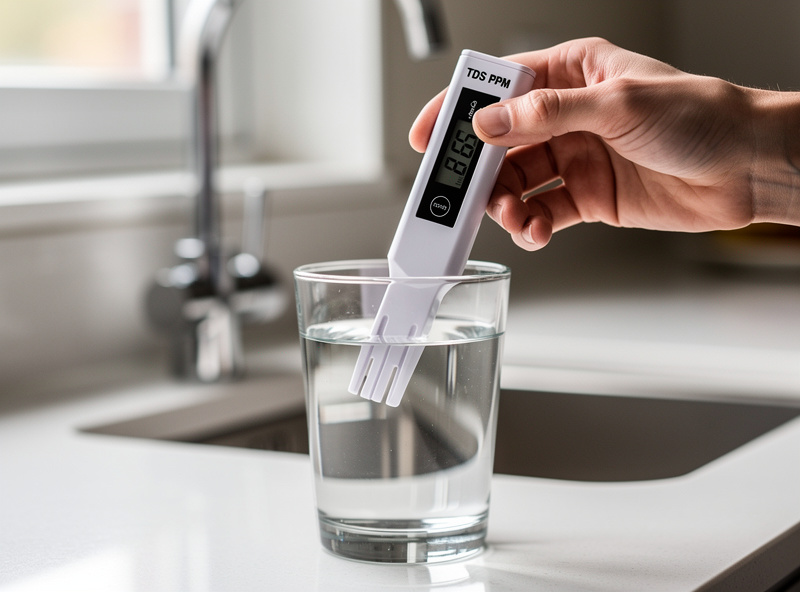
Test Your Tap Water First
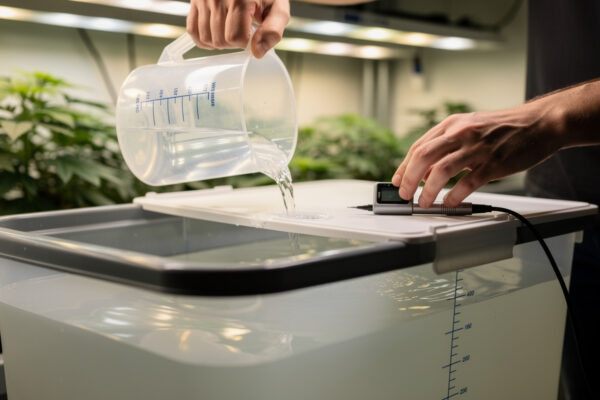
Measure your tap water’s EC or TDS (PPM) with a meter, and check your local water quality report for hardness, chlorine, and chloramine. A starting reading under 200 ppm is generally fine; above 300 ppm strongly favors RO. This single test tells you whether tap is workable or whether you are starting at a disadvantage.
This is step zero, and skipping it is why so many growers argue past each other — they are describing completely different water. A simple digital TDS/PPM meter reads your starting point in seconds, and your municipal water report fills in the rest: hardness (the calcium and magnesium load), and whether they use chlorine or the more stubborn chloramine. The same meter you use here is the one tracking your reservoir day to day, covered in my EC meter guide. Once you know your number, the decision mostly makes itself.
RO vs Tap: The Honest Comparison
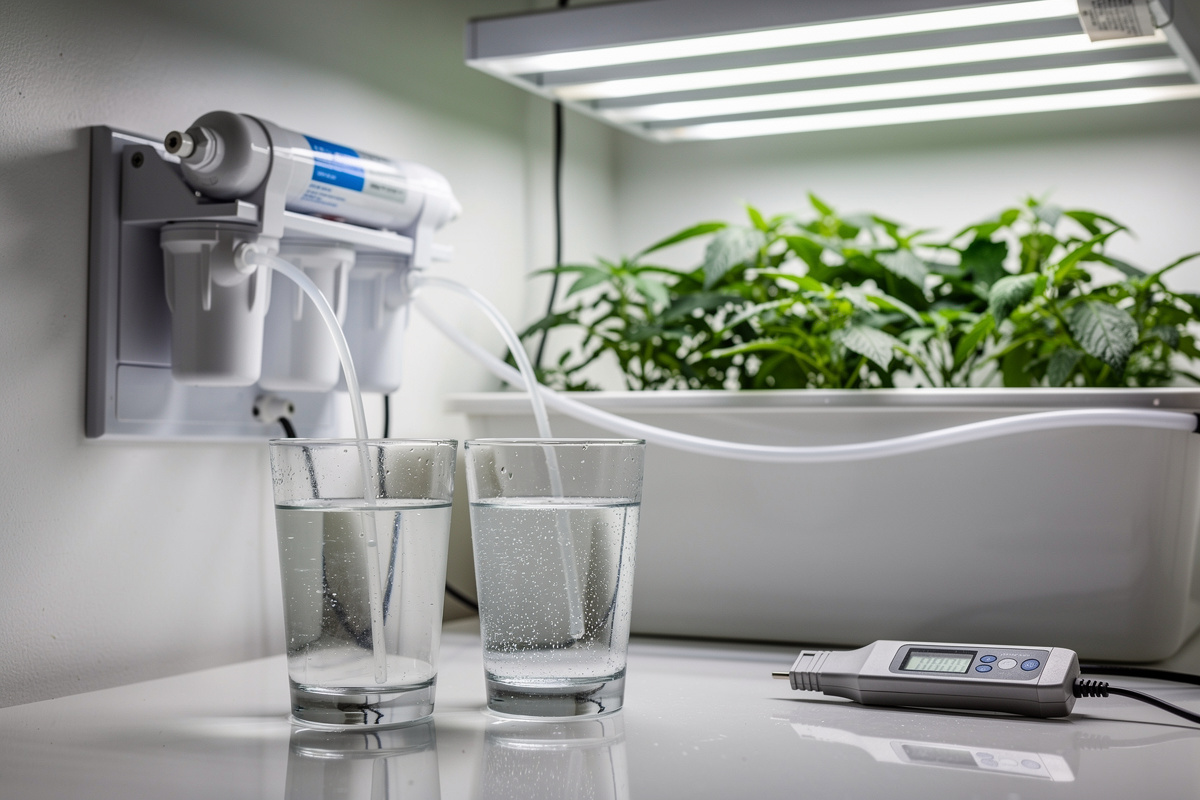
RO water offers a clean zero baseline, full control over your nutrient profile, and no pH-fighting minerals, at the cost of equipment, some water waste, and the need to add CalMag back. Tap water is free and simple but variable, can carry hardness and chlorine, and gives you less precise control. Match the choice to your water and your goals.
| Factor | RO Water | Tap Water |
|---|---|---|
| Starting EC | Near zero — clean slate | Variable (often 100–400+ ppm) |
| Nutrient control | Full and precise | Limited by background minerals |
| pH stability | Easy to dial in | Hard water resists adjustment |
| CalMag | Must add back | Often already present |
| Cost & effort | Filter system, some waste | Free, straight from the tap |
| Best for | Hard water, precision growers | Soft-water areas, simplicity |
I will not pretend RO is free of downsides. A reverse osmosis filter system costs money up front, wastes some water to drain, and strips out the calcium and magnesium your plants actually need — which you then add back. But for a precision grower, or anyone whose tap is genuinely hard, that control is transformative: every point on the EC pen comes from nutrients you chose, not from whatever the municipality is running this month. The flip side is real too — good soft tap water is free, already balanced, and one less thing to manage.
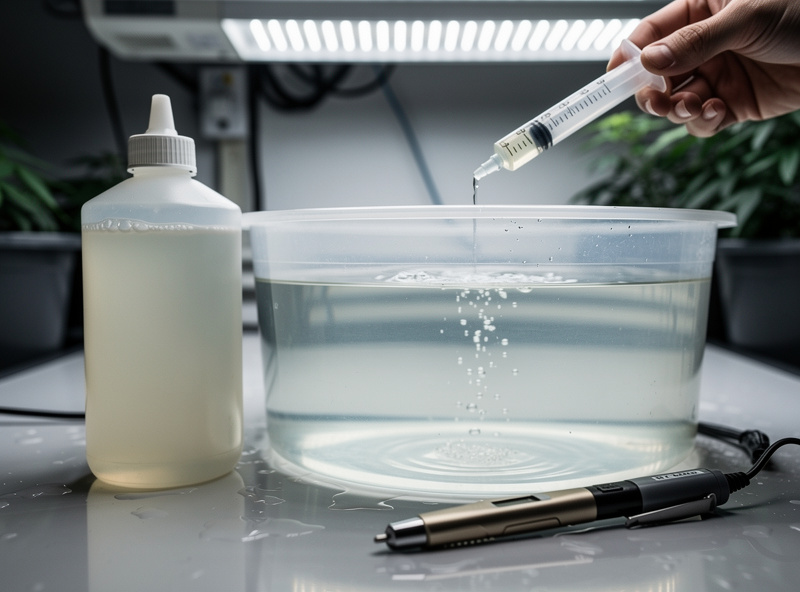
Remineralizing RO Water
Because RO strips out everything, including the calcium and magnesium plants need, you must add CalMag back before or with your nutrients when growing on RO. A typical approach is to dose CalMag to bring the base water up slightly, then mix nutrients to your target EC. Skipping this step causes calcium and magnesium deficiencies even with full feeding.
This is the trap that catches first-time RO users: they switch to a pure baseline, mix their nutrients, and then watch deficiency symptoms appear despite feeding correctly. The culprit is the missing calcium and magnesium that tap water would have supplied. The fix is a CalMag supplement added to the RO base. Many nutrient lines already include enough cal-mag for tap water but not for RO, which is exactly why RO growers run CalMag on tap as standard. The deficiency diagnosis side of this lives in my nutrient guide — this article is about the water choice that sets it up.
What I’d Tell a Beginner
If you are starting out, run your tap water through a meter and use it as-is when it reads under about 200 ppm and your plants look healthy — do not buy an RO system you do not need. Reach for RO only when your tap is genuinely hard, your pH refuses to hold, or you want lab-grade control. Start simple and upgrade if the water forces your hand.
I am wary of beginners spending money on RO before they have a reason to. The most common path is perfectly fine tap water plus a little CalMag if needed, and that gets people growing without an extra system to maintain. The signal to upgrade is concrete: a stubbornly high starting EC that eats your nutrient headroom, a pH you fight every single mix, or recurring lockout you cannot trace. When those show up, RO stops being optional. Until then, the meter and a bottle of pH Down — the same tools in my top-off guide — handle most tap water just fine. There is no prize for complexity; the goal is a stable reservoir, and plenty of growers reach it straight from the tap.
Dealing With Chlorine and Chloramine
Chlorine off-gasses if you let tap water stand uncovered for 24 hours or run an air stone in it briefly, but chloramine is stable and does not evaporate out. Both matter more for beneficial bacteria in recirculating systems than for the plants themselves. If your utility uses chloramine, a carbon filter or RO removes it.
For the plants, the chlorine levels in drinking water are generally low enough not to cause trouble. The bigger concern is biological: if you run a live Bacillus inoculant for root protection, chlorine and especially chloramine can knock it back. Letting water stand or aerating it clears chlorine, but chloramine is engineered to persist and needs a carbon filter or RO to remove. This is one more reason hard-water, chloraminated municipalities push growers toward RO — and it ties straight into the top-off habits in my reservoir guide, since your top-off water carries the same chemistry as your fill water.
Affiliate disclosure: some links above are Amazon affiliate links. I may earn a small commission at no extra cost to you. I only recommend gear I run on my own reservoirs.
Frequently Asked Questions
Do I need RO water for hydroponics?
Not always. Tap water under about 200 ppm starting EC that is not heavily chlorinated works fine for most hydroponics. RO is worth it in hard-water areas for a clean zero baseline. Measure your tap EC first before deciding.
Is tap water OK for hydroponics?
Often yes, especially soft tap water under 200 ppm. Account for its starting EC when mixing nutrients, and address chlorine or chloramine if you run beneficial bacteria. Hard tap above 300 ppm makes precise feeding and pH control harder.
How do I test my tap water for hydroponics?
Use a digital TDS or EC meter to read the starting PPM, and check your local water quality report for hardness, chlorine, and chloramine. Under 200 ppm is generally workable; above 300 ppm favors switching to RO water.
Do I need to add CalMag to RO water?
Yes. Reverse osmosis strips out calcium and magnesium that plants need, so you must add a CalMag supplement back when growing on RO. Skipping it causes calcium and magnesium deficiencies even when you feed full-strength nutrients.
Does chlorine in tap water hurt hydroponics?
Chlorine at drinking-water levels rarely harms plants and off-gasses if water stands a day or is aerated. It matters more for beneficial bacteria. Chloramine is stable and does not evaporate, needing a carbon filter or RO to remove.
Is RO water worth the cost for hydroponics?
It depends on your tap. For hard water above 300 ppm or precision growing, RO pays off through full nutrient and pH control. For soft tap under 200 ppm, the filter cost and water waste usually are not worth it.