The most common question I get from new hydro growers is not about nutrients or lights — it is “how big should my reservoir be?” And the honest answer, the one that saves the most crops, is: bigger than you think. A reservoir’s volume is your buffer against every swing in temperature, pH, and EC, so undersizing the tank is the single easiest way to make hydroponics harder than it needs to be.
On my bench I run reservoirs from single buckets up to large totes, and the pattern is consistent across DWC, NFT, Kratky and ebb-and-flow: the larger tanks are simply more forgiving. This guide gives you real per-crop numbers, the math behind the recommendation, and the climate factor most growing guides ignore.
How Big Should a Hydroponic Reservoir Be?
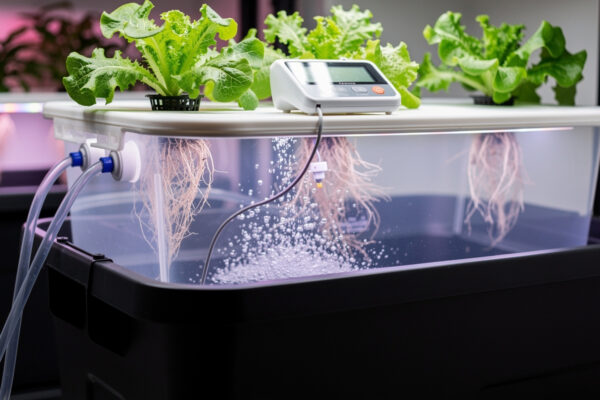
Plan for roughly 0.5 to 2.5 gallons of nutrient solution per plant: leafy greens and herbs at the low end (about 0.5–1 gallon each), and large fruiting crops like tomatoes and peppers at the high end (2–2.5 gallons each). A bigger reservoir drifts slower in temperature, pH and EC, so size up when uncertain.
Those numbers are a starting frame, not a law. A head of lettuce in a DWC raft is happy with around a gallon of standing solution behind it; a flowering pepper pulling hard in an ebb-and-flow bed wants several gallons so it does not drain the tank and spike EC between top-offs. The figure that actually matters is how much the volume swings between maintenance visits — if a single day of transpiration drops your level by a third, the tank is too small and every number you care about will yo-yo.
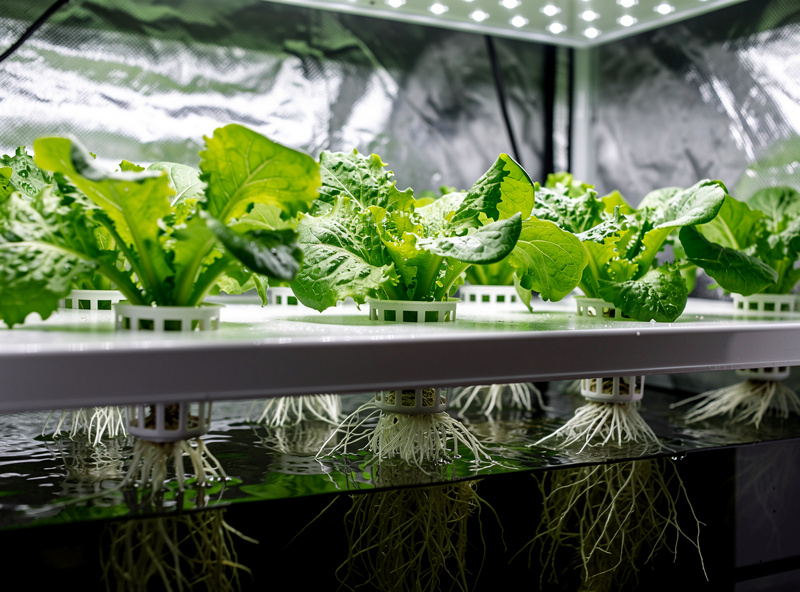
Why Bigger Reservoirs Are More Stable
Volume is thermal and chemical inertia. A large reservoir takes longer to heat up in a warm room, resists pH swings because there is more buffering solution, and holds EC steadier because plants drinking a fixed amount of water change the concentration of a big tank far less than a small one. More water equals a wider margin for error.
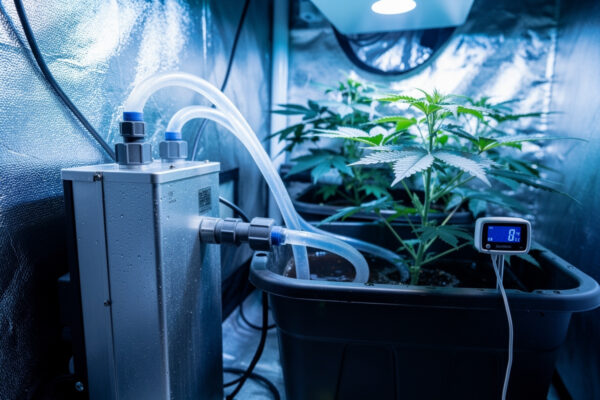
This is pure physics, and it is why I tell beginners to over-size rather than agonize. A 5-gallon bucket in a hot July tent can climb several degrees in an afternoon and crash its oxygen with it; a 27-gallon tote in the same room barely moves. The same logic applies to EC drift: when plants pull a half-gallon out of a 5-gallon res, the remaining salts concentrate sharply, but pull that same half-gallon from a 25-gallon res and the change is barely readable on the pen. If you want the deeper picture of how temperature, oxygen and EC interlock, the complete reservoir guide ties it together; this article is the sizing piece of that puzzle.
Reservoir Size Recommendations by Crop and System
Match reservoir volume to crop size and system type. Leafy greens in DWC want about 1 gallon per site; herbs slightly less; fruiting crops in ebb-and-flow or drip want 2–3 gallons each. NFT systems hold most water in the reservoir rather than the channels, and Kratky relies entirely on starting volume since there is no top-off pump.
| Crop / Setup | Solution per Plant | Typical Tank | Notes |
|---|---|---|---|
| Lettuce / leafy greens (DWC) | ~1 gallon | 5–20 gallon tote | Forgiving, low EC |
| Herbs (NFT or DWC) | 0.5–1 gallon | 5–15 gallon | Reservoir holds most volume in NFT |
| Tomatoes / peppers (ebb-flow, drip) | 2–2.5 gallons | 15–30+ gallon | Heavy drinkers, size up |
| Strawberries (vertical, drip) | 1–1.5 gallons | 15–25 gallon | Steady feeding matters |
| Kratky (passive) | Full grow in one fill | Sized to whole crop | No top-off — start large |
Kratky deserves its own note because it breaks the rule: there is no pump and no top-off, so the starting volume has to carry the plant through the entire grow as the water level deliberately drops. That means a passive jar or tote is sized to the whole crop, not to a maintenance window. For pumped systems, the opposite freedom applies — you can run a modest standing volume as long as your top-off discipline keeps it filled. Which method you run changes the sizing math, so if you are still deciding, my guide to all the hydroponic systems compares them head to head.
The Climate Factor Nobody Mentions
Evaporation and transpiration rates depend on your environment, so the same crop needs a bigger buffer in a hot, dry, bright grow space than in a cool one. Under a sealed summer tent a reservoir can lose a noticeable fraction of its volume in a single day; in my cool Nordic winter room the same tank holds for days. Size for your worst case.
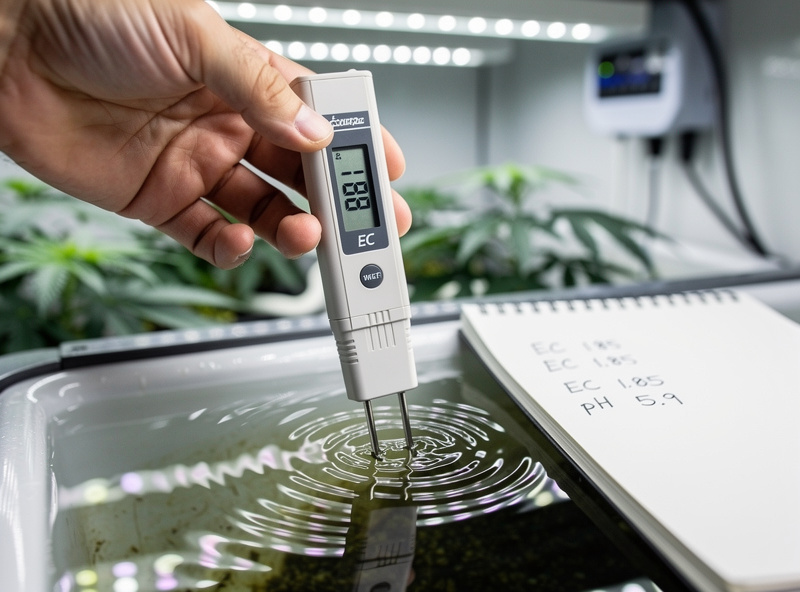
This is the variable warm-region guides quietly skip. I grow indoors in Sweden where short winter daylight keeps transpiration low and the room cool, so my reservoirs sit steady. Push the same plants under intense light in a hot, dry climate and they drink and breathe far faster, dropping the level and concentrating the salts much quicker. The practical rule: estimate your daily water loss on the hottest, brightest day you will run, and make sure your tank can absorb that loss without the level dropping enough to expose roots or spike EC. The downstream effects of that water loss — rising EC and the steady creep it causes — are part of the full picture in the reservoir management guide, and reading that drift accurately starts with a properly calibrated EC meter.
System Volume vs Reservoir Volume
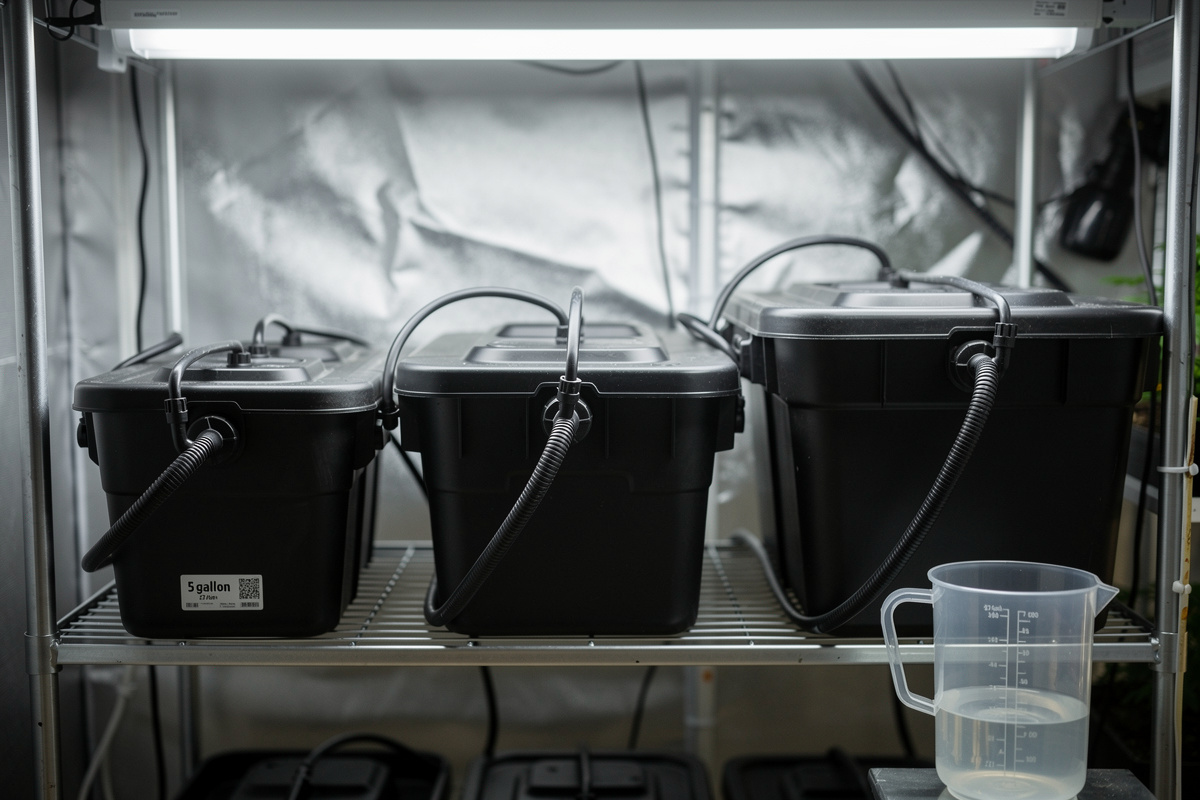
There is a difference between total system volume and standing reservoir volume, and it matters most in recirculating builds. In an NFT setup the channels hold only a thin film of solution, so almost all your volume — and all your buffering — lives in the reservoir. In a recirculating DWC, water moves between buckets and a central res, so the central tank is where you size for stability. Always count the reservoir as your buffer, not the plumbing.
This trips people up when they look at a system with lots of tubing and buckets and assume the volume is huge. The water in transit is not buffering anything — it is the standing pool in the reservoir that resists temperature and EC swings. If you connect six DWC buckets to a 10-gallon central res, your buffer is the 10 gallons plus whatever sits in the buckets, not some inflated total. When I plan a recirculating build, I size the central reservoir as if it had to stabilize the whole bank by itself, then treat the rest as bonus. For a single standalone tote, the math is simpler: the tank is the system, and what you fill is what you get. Either way, the principle from the main reservoir guide holds — volume is the cheapest stability you can buy.
Picking the Tank Itself
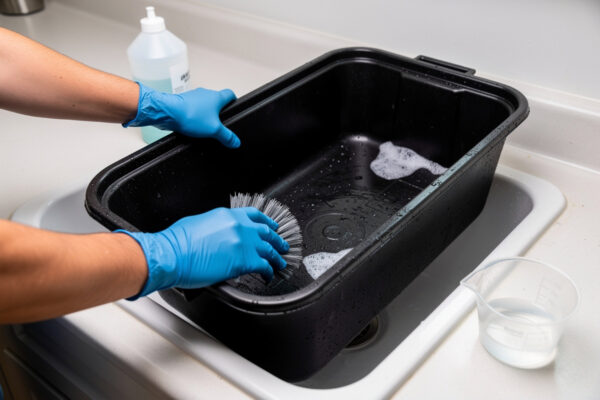
Choose an opaque, food-safe container with a tight lid. Opacity blocks light and stops algae; a sealed lid cuts evaporation and keeps light off the solution surface. Black storage totes and food-grade buckets are the cheap, reliable workhorses — clear containers need wrapping in reflective film to keep algae out.
I build most of my reservoirs from inexpensive opaque totes and food-grade buckets rather than purpose-sold “hydroponic” tanks that cost three times as much for the same plastic. A solid heavy-duty black storage tote with a lid is my default for a multi-plant DWC build. On top of the tank you want oxygen, so a capable air pump and air stone kit sized to the volume keeps roots breathing — bigger tanks simply need more air. And to actually size and manage the tank you need to read it, so a calibrated digital EC/TDS meter is the tool that tells you whether your chosen volume is holding steady or swinging. I drill my own lids and print net-pot collars to fit, but a tote, a hole saw, and standard net pots get you the same result. The gear that connects the tank to the plants is covered in the equipment buying guide.
Affiliate disclosure: some links above are Amazon affiliate links. If you buy through them I may earn a small commission at no extra cost to you — it helps fund the test bench. I only point to gear I would actually run on my own reservoirs.
Frequently Asked Questions
What size reservoir for 4 hydroponic plants?
For four leafy greens, a 5 to 10 gallon reservoir works well at about 1 gallon per plant. For four fruiting plants like tomatoes, step up to a 15 to 20 gallon tank since each heavy feeder wants 2 to 2.5 gallons.
Can a hydroponic reservoir be too big?
Not really for stability — larger tanks drift slower and are more forgiving. The only downsides are using more nutrient solution to fill, more space, and slightly higher cost. When uncertain, size up rather than down.
How much water per plant in DWC?
In deep water culture, allow about 1 gallon of solution per leafy plant and 2 to 2.5 gallons per large fruiting plant. The goal is enough standing volume that one day of drinking does not drop the level or spike EC.
Does reservoir size affect EC stability?
Yes, directly. When plants drink from a small tank, the remaining salts concentrate sharply and EC climbs fast. The same water loss from a large tank barely moves the reading, so bigger reservoirs hold EC much steadier.
What size Kratky reservoir do I need?
Size a Kratky reservoir to carry the entire grow, since there is no top-off pump and the level deliberately drops as the plant drinks. A single lettuce often needs a gallon or more; larger crops need proportionally bigger jars or totes.