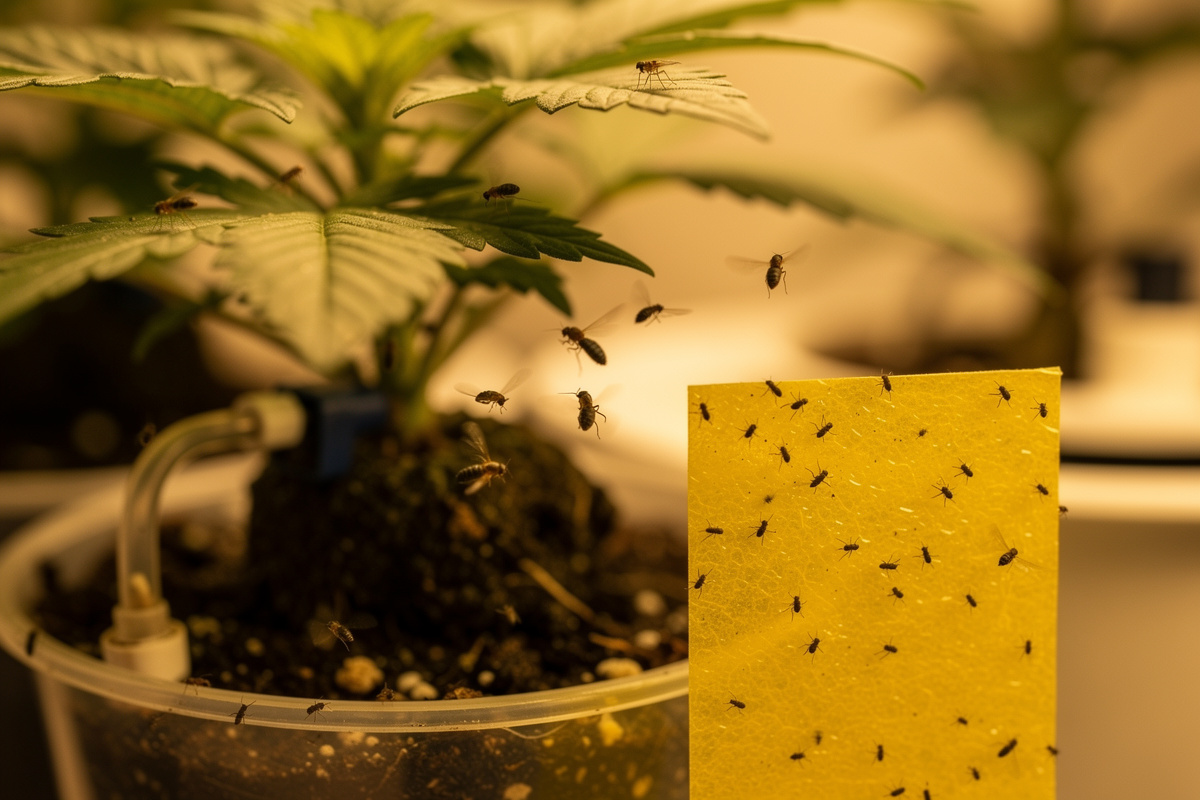
Fungus gnats in hydroponics are the tiny black flies hovering around your reservoir and plant bases. The adults are a nuisance, but the larvae in your media are the real threat — they feed on root hairs and open wounds that let root rot in. Beat them with a two-front attack: yellow sticky traps for the adults and BTI for the larvae, while you let the media surface dry out.
Fungus gnats are the pest I see catch new hydroponic growers off guard, because they arrive looking trivial — a few harmless-seeming flies — and quietly do root damage underneath. Across the systems I run, gnats almost always show up alongside two other problems: damp media surfaces and algae, which together make the perfect nursery. That linkage is the key to beating them, because if you only swat the adults you’ll be fighting them forever. This guide covers the full life cycle and the controls that actually break it, with the specific biological agents and rates I use. For where gnats fit among the other things that go wrong, see my complete hydroponic pests and diseases guide.
Disclosure: SmartHydroLab is reader-supported. As an Amazon Associate I earn from qualifying purchases made through links in this article, at no extra cost to you. I only point to gear I actually use or would buy for my own grow.
Why Fungus Gnats Are a Hydroponic Problem
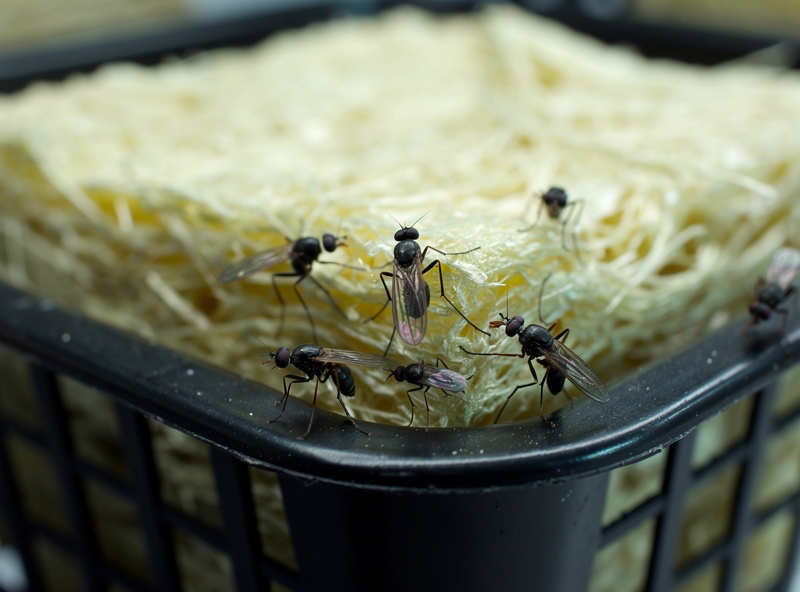
Fungus gnats are small dark flies, a few millimeters long, that you’ll spot drifting around the base of plants and across the reservoir lid. The adults don’t damage plants directly — they don’t bite or chew foliage — but they lay eggs in damp growing media, and it’s the larvae that cause harm. Those translucent, dark-headed larvae feed on organic matter, algae, and crucially on fine feeder roots and root hairs.
That root feeding is the real cost. By grazing on root hairs and opening small wounds, gnat larvae weaken nutrient uptake and create exactly the entry points that Pythium root rot exploits. A fungus gnat infestation and a root rot outbreak so often arrive together that I treat gnats as an early warning. The full life cycle — egg to larva to pupa to adult — runs in a few weeks, which means a small problem becomes a breeding population fast if you don’t interrupt it. Understanding that the larvae, not the adults, are the target shapes the entire control strategy.
Where Fungus Gnats Breed
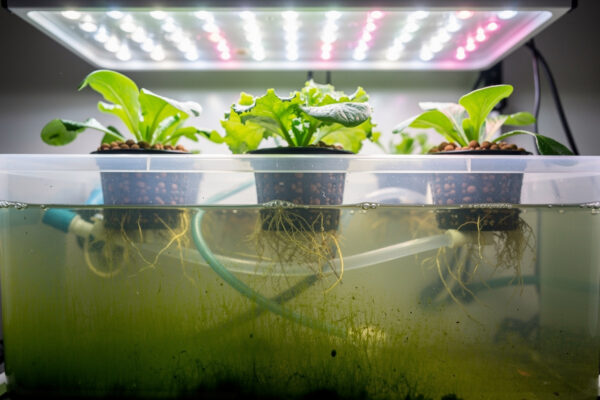
Gnats need a consistently damp surface with organic matter or algae to feed on. In hydroponics that means the top of your rockwool cubes, clay pebbles, or any media that stays wet, plus any algae film growing where light hits damp media. This is why gnats and algae are partners in crime — the same wet, lit surfaces feed both.
The single most effective preventive change is to let the media surface dry between top-ups. Larvae can’t survive in a dry top layer, so a surface that dries out breaks the breeding cycle without any product at all. Bottom-fed and recirculating designs that keep the surface drier are naturally more gnat-resistant; setups where the cube or media crown stays permanently wet are the ones that breed gnats. Block light to kill the algae, let the surface dry, and you’ve removed most of their nursery before reaching for any control.
Yellow Sticky Traps: Catch the Adults
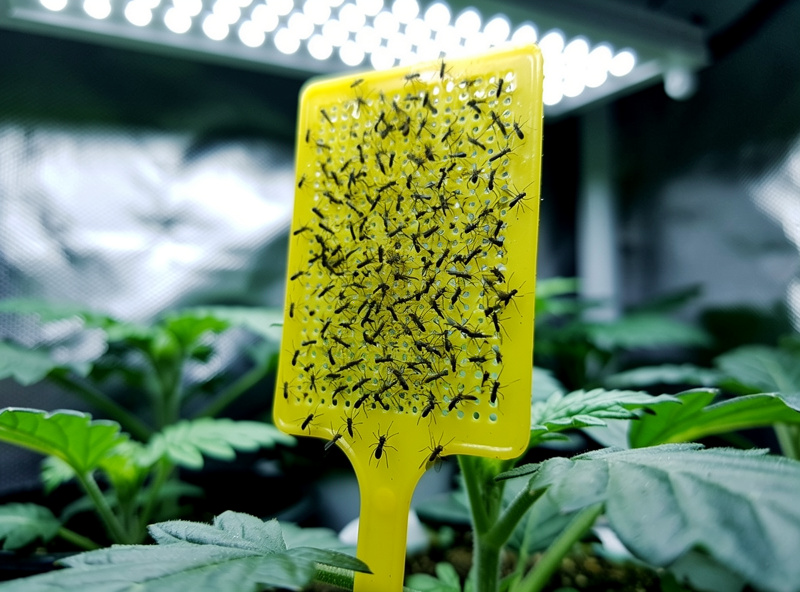
Yellow sticky traps are my first move and my permanent monitor. The color attracts adult gnats, which stick fast, so traps both reduce the egg-laying population and tell me how bad the problem is — the daily catch count is my scoreboard for whether I’m winning. Lay them flat near the media surface and stand a few upright among the plants, since adults stay low.
I keep yellow sticky traps in every grow space year-round, not just during an outbreak, because they catch the first few adults before a problem establishes. The honest limitation: traps only catch adults. They reduce egg-laying and give you a read on the population, but they do nothing to the larvae already in the media. That’s why traps alone never fully clear an infestation — they’re half of the two-front attack, and the larvae are the other half.
BTI and Nematodes: Kill the Larvae
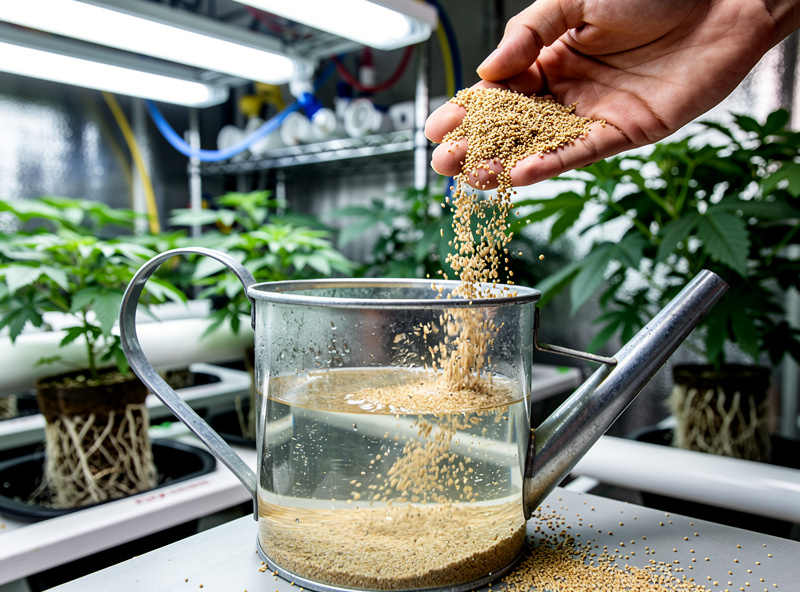
The larvae are where you win or lose, and the best tool is biological. BTI — Bacillus thuringiensis israelensis, the same bacterium sold as mosquito bits and dunks — produces a protein that’s lethal to gnat larvae but harmless to plants, pets, people, and your beneficial root bacteria. I steep mosquito bits in my top-off water so the BTI soaks into the media where the larvae live; repeat with each watering for two to three weeks to catch successive hatches.
For a stubborn or heavy infestation, beneficial nematodes (Steinernema feltiae) are the heavier artillery — microscopic worms that hunt and parasitize gnat larvae in the media. A 3% hydrogen peroxide drench (about one part 3% peroxide to four parts water, poured over the media) also kills larvae on contact and adds oxygen, though like always it knocks back beneficial microbes too, so re-inoculate afterward. Combine larvae control with sticky traps and a drying surface, and the population collapses within two to three weeks. Hit only one front and they persist.
Fungus Gnat Controls Compared
Here’s how the controls line up, separating what kills adults from what kills larvae so you can build the two-front attack that actually clears them.
| Control | Targets | How It Works | Key Caveat |
|---|---|---|---|
| Let media surface dry | Larvae and eggs | Removes the damp breeding layer | Hardest in always-wet setups |
| Yellow sticky traps | Adults | Attracts and traps egg-layers | Does nothing to larvae |
| BTI (mosquito bits) | Larvae | Bacterial toxin lethal to larvae only | Repeat with each watering |
| Beneficial nematodes | Larvae | Microscopic worms parasitize larvae | Keep media moist for them to move |
| 3% hydrogen peroxide drench | Larvae | Kills on contact, adds oxygen | Knocks back beneficial microbes |
| Block light, kill algae | Food source | Removes algae the larvae feed on | Prevention, not a quick fix |
Preventing Fungus Gnats
Once you’ve cleared an infestation, keeping gnats out is a matter of denying them the wet, food-rich surface they need. Let media surfaces dry between waterings. Block light from the reservoir and media to starve the algae they feed on. Keep sticky traps up permanently as an early-warning system. And quarantine new plants and bagged media — bought-in transplants and contaminated media are the most common way gnats enter a clean room in the first place.
Good sanitation closes the loop: clean up dropped leaves and plant debris, since decaying organic matter feeds larvae just like algae does. Gnats are listed among the common hydroponic mistakes precisely because they’re so preventable once you understand the breeding requirements. Your choice of system matters too — designs that keep the media surface drier breed far fewer gnats than ones that keep it permanently saturated. Build for a dry surface and good light discipline, and fungus gnats become a problem you rarely have to fight.
Frequently Asked Questions
Are fungus gnats harmful to hydroponic plants?
The adults are mostly a nuisance, but the larvae feed on root hairs and fine roots in the media. That feeding weakens nutrient uptake and opens wounds that let Pythium root rot in, so a gnat infestation often precedes a root rot problem.
How do I get rid of fungus gnats in hydroponics?
Use a two-front attack: yellow sticky traps catch the egg-laying adults, and BTI (mosquito bits) steeped in your water kills the larvae in the media. Let the media surface dry between waterings, and the population collapses within two to three weeks.
What kills fungus gnat larvae in hydroponics?
BTI, the bacterium in mosquito bits, is the safest and most targeted larvae killer. Beneficial nematodes (Steinernema feltiae) handle heavy infestations, and a 3% hydrogen peroxide drench kills larvae on contact but also knocks back beneficial microbes.
Why do I have fungus gnats in my hydroponic system?
Fungus gnats breed in damp media surfaces with organic matter or algae to feed on. Permanently wet rockwool or media crowns plus algae growth create the perfect nursery. Letting the surface dry and blocking light removes most of their breeding ground.
Do sticky traps get rid of fungus gnats?
Sticky traps reduce the adult population and monitor how bad the problem is, but they only catch adults, not the larvae already in the media. Use them alongside BTI or nematodes for the larvae, since traps alone never fully clear an infestation.
How long does it take to get rid of fungus gnats?
With a two-front attack, expect the population to collapse in two to three weeks. That covers the time for sticky traps to thin the adults while BTI kills successive larval hatches. Keep treating with each watering until trap counts drop to near zero.