Hydroponic nutrient deficiencies show up as yellowing, spotting, purpling, or curling leaves — and the pattern tells you which element is missing. The first question is always location: deficiencies in old lower leaves point to mobile nutrients like nitrogen and magnesium, while problems in new top growth point to immobile ones like calcium and iron. Before you blame a nutrient, check pH (5.5–6.0) and EC, because most “deficiencies” are actually lockout.
More than half the “my plant has a disease” messages I see are nutrient deficiencies in disguise, and the cure is the opposite of a fungicide. After years of logging EC and pH on every reservoir and watching exactly how each crop responds, I’ve learned that the plant writes the diagnosis on its own leaves — you just have to read the handwriting. This guide walks through how to identify each common deficiency by its visual pattern, and crucially how to rule out the pH and EC problems that mimic deficiencies before you start adding supplements. For where deficiencies sit alongside actual pests and diseases, see my complete hydroponic pests and diseases guide.
Disclosure: SmartHydroLab is reader-supported. As an Amazon Associate I earn from qualifying purchases made through links in this article, at no extra cost to you. I only point to gear I actually use or would buy for my own grow.
The First Question: Old Leaves or New Growth?
The single most useful diagnostic in nutrient troubleshooting is where the symptom appears, because it splits the elements into two groups. Mobile nutrients — nitrogen, phosphorus, potassium, and magnesium — can be relocated within the plant, so when they run short the plant strips them from old lower leaves to feed new growth. Deficiency therefore shows in the oldest leaves first. Immobile nutrients — calcium, iron, sulfur, boron, manganese — can’t be moved once deposited, so a shortage hits the newest top growth first while old leaves stay green.
This one observation cuts your suspect list in half before you’ve looked at anything else. Yellowing starting at the bottom of the plant? Think nitrogen or magnesium. Distorted, pale, or burnt new growth at the top? Think calcium or iron. From there, the specific look of the symptom — uniform yellowing versus yellow-between-the-veins versus brown margins — narrows it to the element. Train yourself to ask “old or new?” first and you’ll diagnose faster and more accurately than any generic chart can.
Check pH and EC Before Blaming a Nutrient
Here’s the mistake that sends growers chasing phantom deficiencies: the element is in the solution, but the plant can’t take it up. This is lockout, and it’s governed by pH. Hold pH between 5.5 and 6.0 for most hydroponic crops — drift above about 6.5 and iron, manganese, and other micronutrients lock out, producing textbook deficiency symptoms in a perfectly fed plant. Drift too low and calcium and magnesium availability suffers.
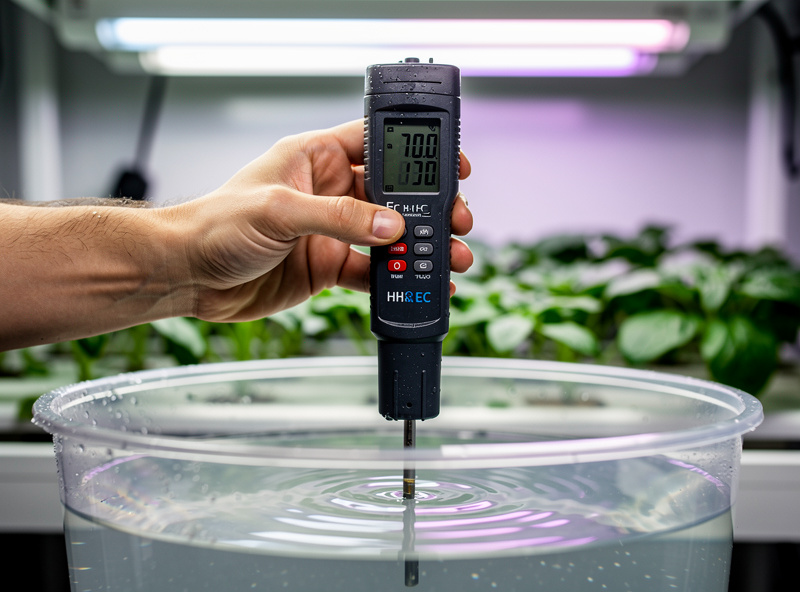
EC is the other half of the picture. Too low an EC and the plant is genuinely underfed across the board; too high and you get nutrient burn — crispy dark leaf tips that look like a problem but are actually an excess. So before you add anything, confirm two numbers with a calibrated pH and EC meter: is pH in the 5.5–6.0 band, and is EC right for the crop and stage? Correct those first. My EC meter guide and pH management guide cover the how, but the principle is simple: a deficiency symptom with bad pH is a pH problem until proven otherwise.
The Most Common Deficiencies and Their Patterns
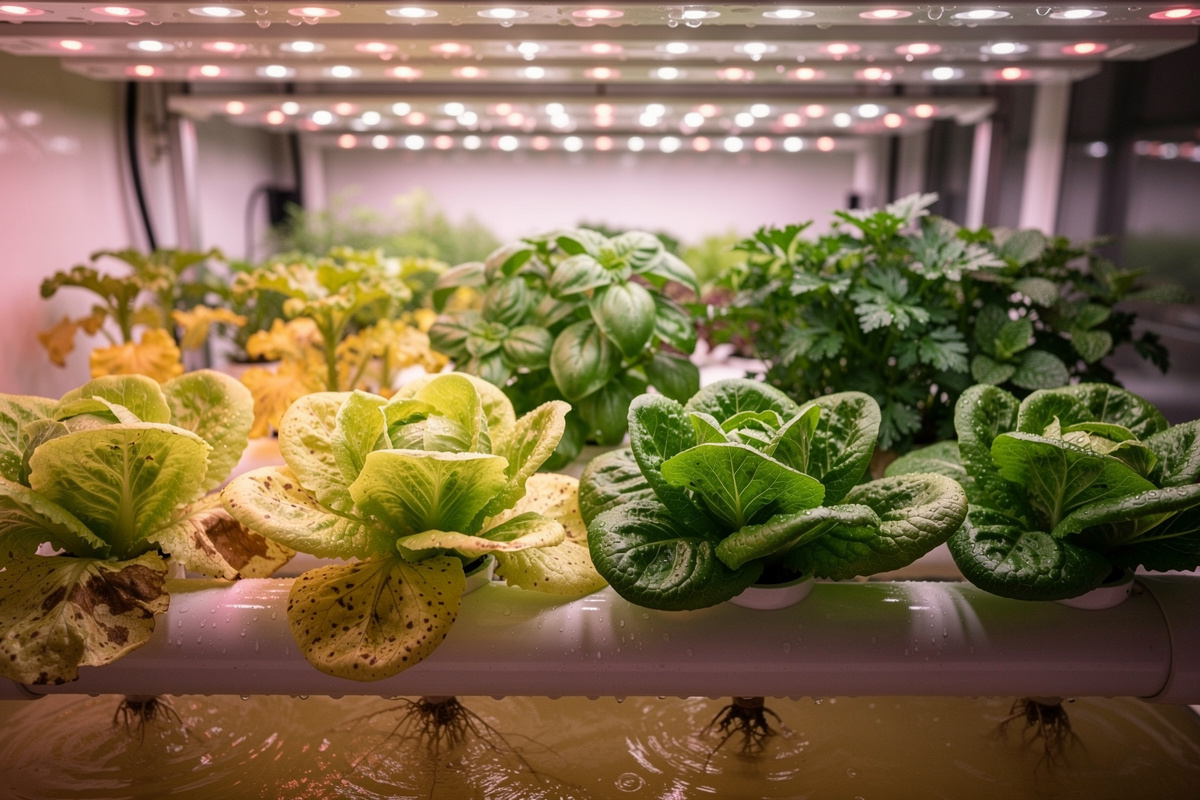
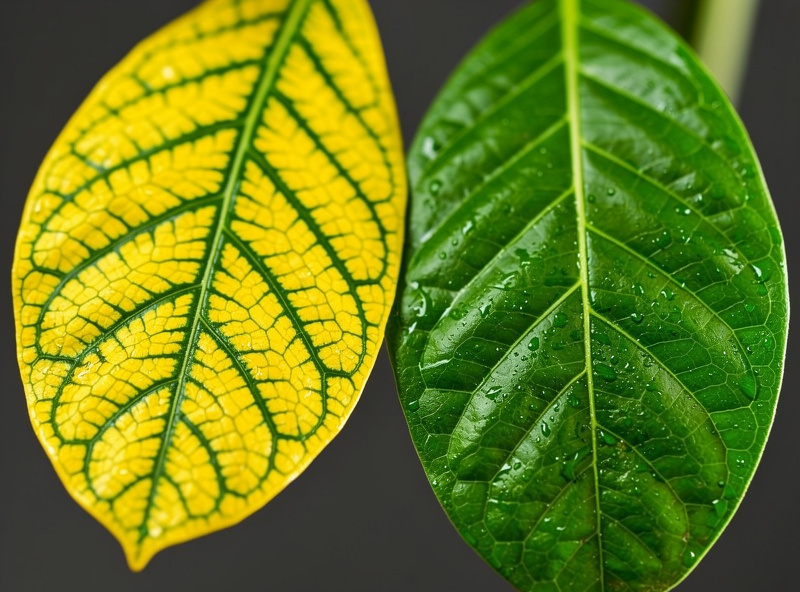
Once pH and EC check out, the visual pattern identifies the element. Nitrogen deficiency is the most common: uniform pale yellowing of the oldest, lowest leaves, working up the plant, with overall slow growth. Magnesium deficiency also hits old leaves but looks different — yellowing between the veins while the veins themselves stay green (interveinal chlorosis), often with the leaf edges curling up. Potassium shows as yellowing and browning along the margins of older leaves.
In the new growth, iron deficiency is the classic one: bright interveinal chlorosis on the youngest top leaves, veins staying sharply green — and it’s far more often a pH lockout than a true shortage, so check pH first every time. Calcium deficiency distorts and burns new growth: tip burn on lettuce, brown crispy edges on young leaves, and blossom end rot on fruiting crops, frequently driven by poor transpiration in low airflow as much as by low calcium. Phosphorus deficiency darkens older leaves and can tint stems and undersides purple or red. Each has a distinct signature once you know the old-versus-new split.
Hydroponic Nutrient Deficiency Chart
Use this to match the pattern to the element and the fix. Remember to confirm pH 5.5–6.0 and a sensible EC before treating any of these as a true shortage.
| Nutrient | Shows In | Symptom | Likely Fix |
|---|---|---|---|
| Nitrogen (N) | Old lower leaves | Uniform pale yellowing, slow growth | Increase feed EC, check N in formula |
| Magnesium (Mg) | Old leaves | Interveinal yellowing, veins stay green | Add Epsom salt or CalMag |
| Potassium (K) | Old leaves | Yellow then brown leaf margins | Increase feed, check pH |
| Phosphorus (P) | Old leaves | Dark leaves, purple stems and undersides | Increase feed, warm root zone |
| Iron (Fe) | New top growth | Bright interveinal yellowing, green veins | Lower pH below 6.2 first, then chelate |
| Calcium (Ca) | New top growth | Tip burn, distorted new leaves, end rot | Add CalMag, improve airflow |
| Sulfur (S) | New top growth | General yellowing of young leaves | Check formula, most feeds have enough |
How to Fix a Confirmed Deficiency
Once you’ve ruled out pH lockout and EC problems and identified the element, the fix is targeted. For magnesium, a dose of Epsom salt (magnesium sulfate) or a CalMag supplement corrects it quickly — CalMag is the one bottle I keep on tap because cal-mag shortfalls are so common, especially with RO or soft water that starts with little of either. For a clear magnesium-only shortage, plain Epsom salt at roughly 1 to 2 grams per liter does the job.
For iron, fix the pH first — bring it under about 6.2 so existing iron becomes available again — before adding a chelated iron supplement, because dumping more iron into high-pH water just precipitates it out. For nitrogen, potassium, and phosphorus shortages, the usual answer is that your overall feed EC is too low or your formula is unbalanced, so step up the strength or revisit the recipe. My guide to mixing nutrient solution and the full hydroponic nutrients reference cover dialing in to a target EC so you feed to a number rather than by guesswork. After any correction, watch new growth — old damaged leaves won’t recover, but fresh healthy leaves confirm the fix worked.
Deficiency or Disease? How to Tell
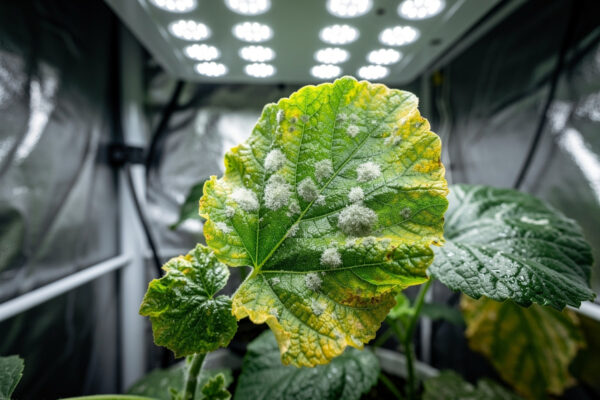
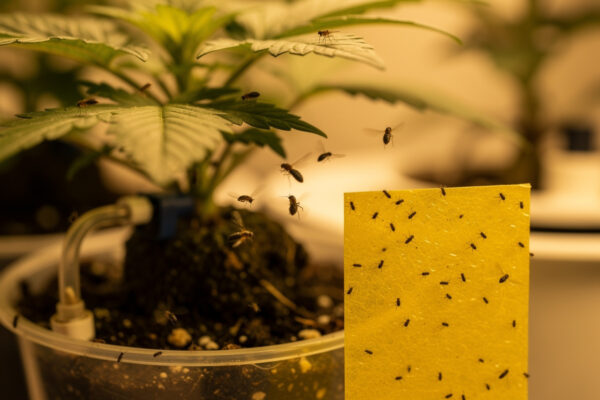
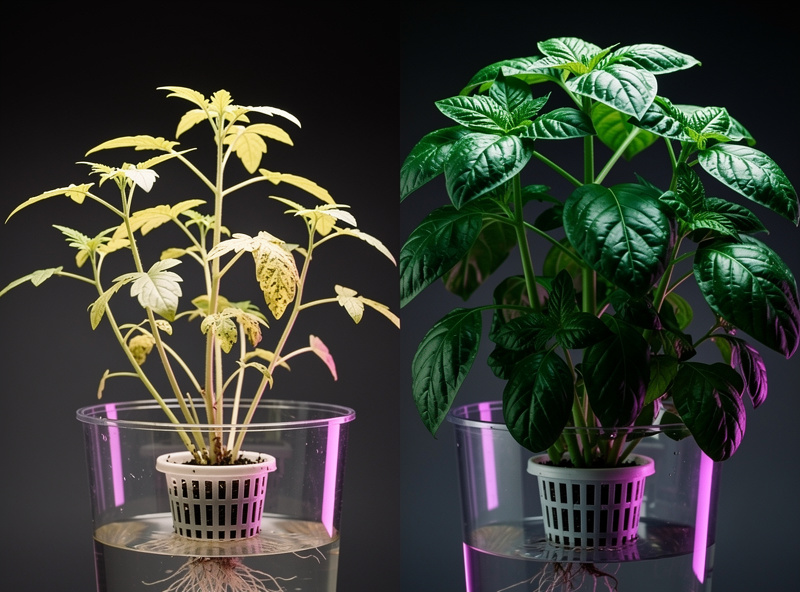
The reason this matters so much is that deficiencies and diseases call for opposite responses, and treating one as the other wastes time and can make things worse. Deficiencies follow a logical leaf pattern tied to mobility and improve when you correct the solution; they don’t spread like an infection and they respond to feeding changes. Diseases behave differently. Root rot shows brown slimy roots and midday wilting regardless of how well you feed. Powdery mildew is a spreading white surface growth. Pest damage from spider mites is fine stippling, not a yellowing pattern.
My rule of thumb: if the symptom maps cleanly onto the old-versus-new pattern and the roots are white and firm, it’s nutritional — check pH and EC and adjust the feed. If the roots are brown and slimy, the leaves have spreading patches, or you can see actual pests, it’s not a deficiency and no amount of CalMag will help. Getting this fork right is half of good hydroponic troubleshooting, and it’s why I always check the roots and the pH meter before reaching for a supplement bottle.
Frequently Asked Questions
How do I identify a nutrient deficiency in hydroponics?
Start by asking whether the symptom is on old lower leaves or new top growth. Old-leaf problems point to mobile nutrients like nitrogen and magnesium; new-growth problems point to immobile ones like calcium and iron. Then match the exact pattern to the element.
Why do my hydroponic plant leaves turn yellow?
Yellowing usually signals a nutrient issue or pH lockout. Uniform yellowing of old leaves suggests nitrogen; yellow between green veins on old leaves suggests magnesium; bright interveinal yellowing on new growth suggests iron, almost always a pH problem above 6.5.
Is it a nutrient deficiency or pH lockout?
Most apparent deficiencies are actually pH lockout, where the nutrient is present but unavailable. Always check pH first: keep it between 5.5 and 6.0. If symptoms appear with pH above 6.5, correct the pH before adding any supplement, especially for iron.
What is the most common hydroponic nutrient deficiency?
Nitrogen and calcium-magnesium shortfalls are the most common. Nitrogen shows as uniform yellowing of older leaves. Cal-mag issues are frequent with RO or soft water that starts low in both, causing tip burn on new growth and interveinal yellowing on old leaves.
How do I fix a magnesium deficiency in hydroponics?
Add a CalMag supplement, or for a magnesium-only shortage use Epsom salt (magnesium sulfate) at about 1 to 2 grams per liter. Confirm pH is in the 5.5 to 6.0 range first, since low pH also reduces magnesium availability and mimics a deficiency.
Will damaged leaves recover after I fix a deficiency?
No. Old leaves already yellowed or burned by a deficiency will not turn green again, even after you correct it. Judge success by new growth instead: fresh, healthy, properly colored leaves confirm the fix worked. You can remove badly damaged old leaves.