Powdery mildew in hydroponics is a fungal disease that coats upper leaf surfaces in dusty white patches, spreading fast in warm, humid, stagnant air. Because it’s airborne rather than waterborne, a spotless reservoir won’t protect your canopy — the cure is environmental. Get air moving, drop humidity below 60%, and hit active spots with a potassium bicarbonate spray.
Powdery mildew is the one disease where my clean-reservoir obsession buys me nothing, because it attacks above the waterline. Indoor and grow-tent setups are prime habitat: we run warm, we let humidity creep up, and we often skimp on airflow. After fighting it across the methods I run, I’ve learned that mildew is almost entirely an environment problem — the sprays are the tax you pay for skipping airflow, and airflow is the prevention you only buy once. This guide covers how to recognize it, why it spreads, and the controls that actually work, with the spray rate I mix on my own bench. For where mildew fits among the other things that go wrong, see my complete hydroponic pests and diseases guide.
Disclosure: SmartHydroLab is reader-supported. As an Amazon Associate I earn from qualifying purchases made through links in this article, at no extra cost to you. I only point to gear I actually use or would buy for my own grow.
What Powdery Mildew Looks Like
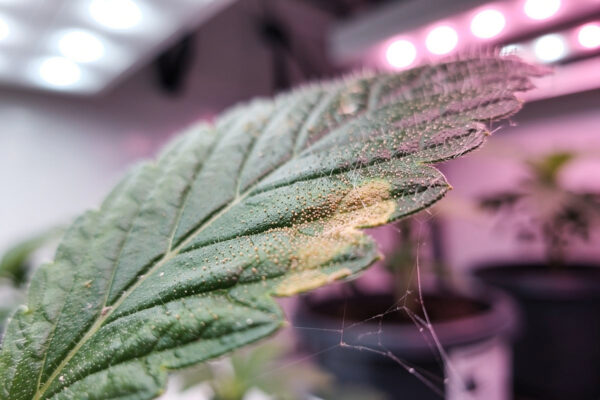
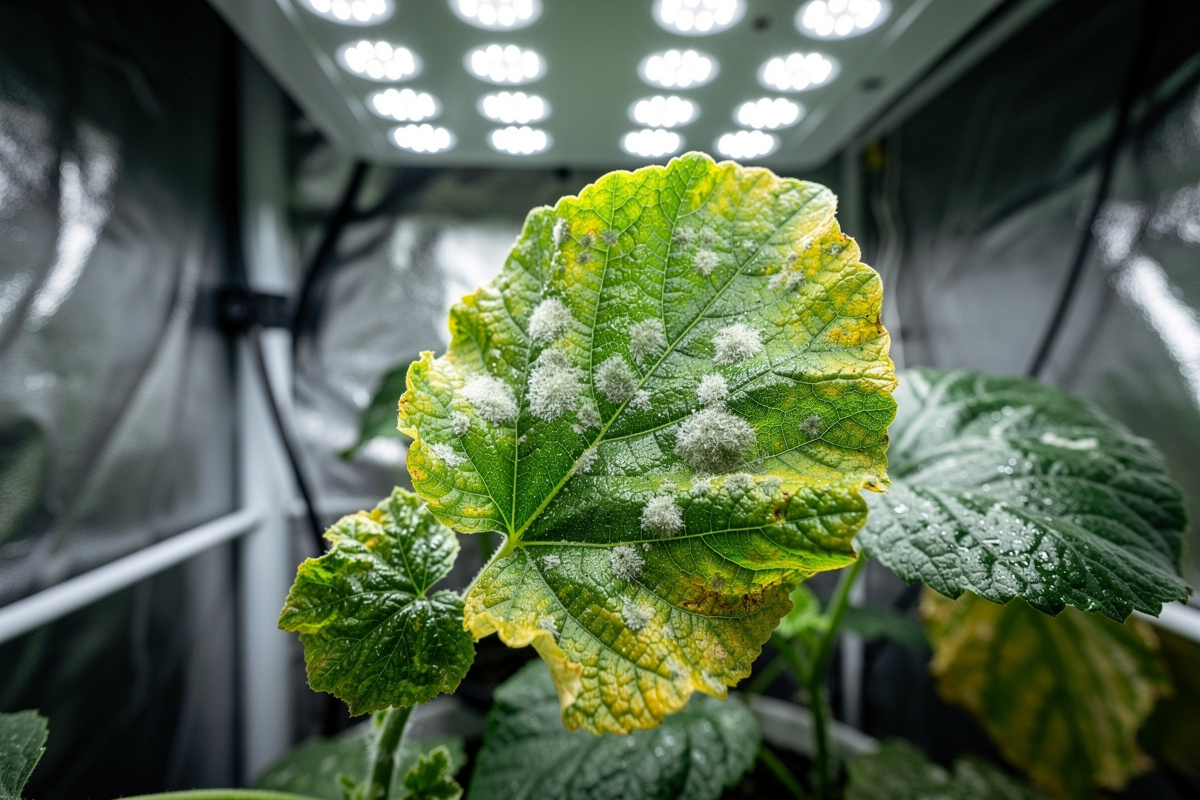
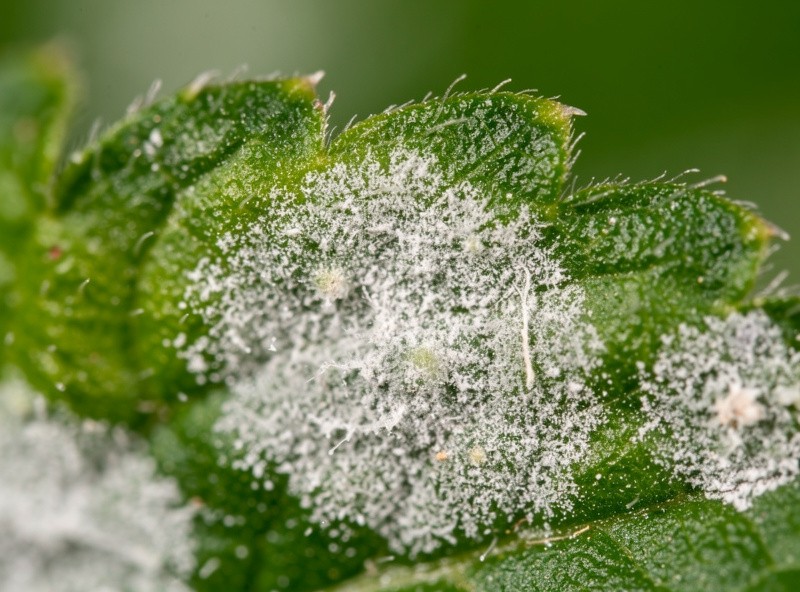
Powdery mildew is unmistakable once you’ve seen it: dusty white to grey patches on the upper surfaces of leaves, looking like someone dusted them with flour. It starts as small circular spots and spreads to cover whole leaves, which then yellow, curl, and drop. Unlike most fungal diseases, it attacks healthy tissue directly and is most visible on the topside of leaves rather than the underside.
Here’s the competence point most guides miss: powdery mildew doesn’t need leaf wetness to infect. Many fungi require a film of water on the leaf to germinate, but powdery mildew spores germinate in high humidity alone — which is exactly why it thrives in warm, humid grow spaces even when the foliage looks dry. That changes the prevention strategy: you’re managing ambient humidity and airflow, not just keeping leaves dry. Catch it early, when it’s a few small white spots, and it’s easy to stop; let it cover the canopy and you’re fighting an uphill battle.
Why It Spreads in Hydroponic Grows
Powdery mildew needs three conditions, and a typical indoor grow supplies all of them. First, high humidity — above roughly 60% relative humidity, spores germinate readily. Second, warm temperatures in the comfortable range we grow at. Third, and most overlooked, stagnant air: still air lets humid microclimates form around dense foliage and lets spores settle and establish. Pack plants tightly with no fan moving air through the canopy and you’ve built a mildew incubator.
This is why airflow is the master control. Moving air breaks up the humid boundary layer that forms right at the leaf surface, makes it physically harder for spores to land and stay, and dries the microclimate that mildew needs. An indoor grow runs warm and often humid by nature, so the variable you have the most leverage over is air movement. Crowded plants, a sealed tent with poor exhaust, and no oscillating fan are the recipe; spacing, ventilation, and a fan are the prevention.
Airflow and Humidity: The First Line of Defense
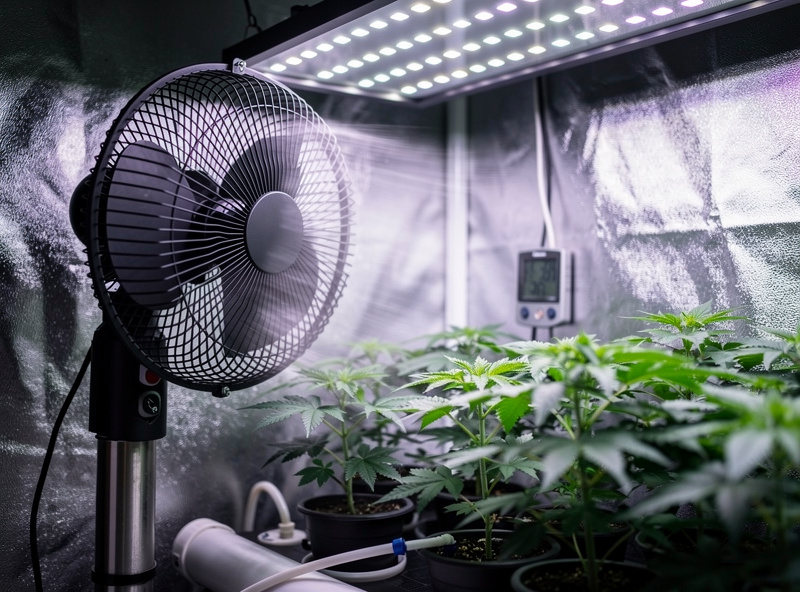
Prevention beats every spray, and it comes down to two dials. Get air moving with an oscillating fan so there’s a gentle, constant breeze rustling the whole canopy — not a gale, just enough that leaves are always moving. Pair it with adequate exhaust ventilation so humid air actually leaves the space rather than recirculating. Then manage humidity directly: aim to keep relative humidity below 60%, using a dehumidifier if your space runs damp.
Plant spacing is the quiet third dial. Crowded canopies trap humidity and block airflow no matter how good your fan is, so resist the urge to cram plants together. I keep a hygrometer in the grow space and treat 60% as the line I don’t want to cross for extended periods, the same way I treat reservoir temperature for root rot — a number I monitor rather than guess at. Nail airflow, ventilation, humidity, and spacing, and powdery mildew rarely gets started. These four habits prevent far more mildew than any fungicide cures.
Treating an Active Infection
If mildew has already appeared, act fast and on two fronts: remove and improve, then spray. First, cut off and bin the worst-affected leaves — don’t compost them indoors, where spores spread. Improve the airflow and drop the humidity immediately so you’re not fighting the spray and the environment at the same time. Then treat the remaining foliage.
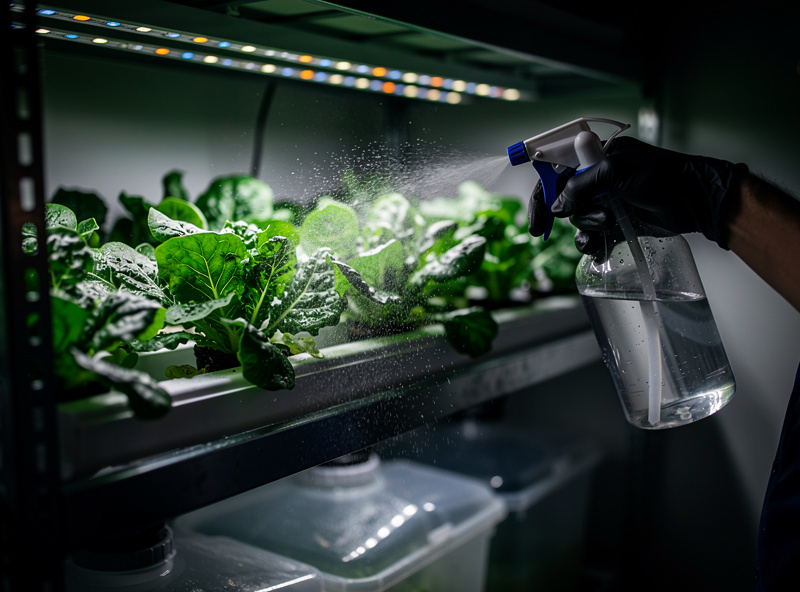
My go-to spray is potassium bicarbonate, which is more effective and less likely to scorch leaves than common baking soda — it shifts the leaf-surface pH against the fungus and even knocks back existing colonies. I mix about 1 teaspoon (roughly 5 grams) of potassium bicarbonate per liter of water with a single drop of mild soap as a wetting agent, and spray to cover the leaves. Neem oil at roughly a 0.5% solution works as a preventive and mild treatment too. The critical rule for either: spray with the lights off or in the evening, never on plants under hot direct light, or the combination of oil or solution plus heat will burn the foliage. Repeat every few days until new growth comes in clean.
Powdery Mildew Controls Compared
Here’s how the options stack up, separating the permanent environmental prevention from the sprays you reach for once it appears.
| Control | How It Works | Best Use | Key Caveat |
|---|---|---|---|
| Airflow (oscillating fan) | Breaks humid leaf boundary layer | Permanent prevention, always on | Gentle breeze, not a gale |
| Humidity below 60% | Stops spore germination | Prevention in damp spaces | May need a dehumidifier |
| Plant spacing | Prevents trapped humid pockets | Designed in at planting | Resist overcrowding the canopy |
| Potassium bicarbonate spray | Shifts leaf pH against fungus | Active infection treatment | Spray lights off to avoid burn |
| Neem oil (0.5%) | Preventive and mild treatment | Early or light infections | Lights off; can clog leaf pores |
| Remove infected leaves | Cuts spore source | First step of any treatment | Bin them, do not compost indoors |
Building a Mildew-Resistant Grow
The lasting fix is designing the environment so mildew can’t get comfortable. Run a constant gentle breeze across the canopy, keep humidity in check, space plants so air flows between them, and quarantine new plants — bought-in transplants are a common way spores enter a clean grow. Scout the upper leaf surfaces regularly so you catch the first few spots while they’re trivial to treat.
The cold-climate angle is real here: growing indoors in a Nordic winter, my room runs cool but I’m often adding humidity for the plants’ sake, and that’s precisely when mildew gets its opening if airflow lapses. So I never let the fan stop, even when the room feels dry. Powdery mildew is one of the common hydroponic mistakes that’s almost entirely an environment-management failure, and the same airflow discipline that prevents it also helps with the transpiration that prevents calcium tip burn. Different crops vary in susceptibility, which my plant growing guide covers, but airflow and humidity control protect them all. Unlike root rot, which you fight below the waterline, mildew is won or lost in the air around your plants.
Frequently Asked Questions
What causes powdery mildew in hydroponics?
Powdery mildew needs high humidity above 60%, warm temperatures, and stagnant air. Indoor grows supply all three. Unlike most fungi it does not need wet leaves to infect, so it spreads in humid, still air even when the foliage looks dry.
How do I get rid of powdery mildew on hydroponic plants?
Remove the worst leaves, improve airflow, and drop humidity below 60%. Then spray remaining foliage with potassium bicarbonate at about 5 grams per liter plus a drop of soap, lights off. Repeat every few days until new growth comes in clean.
What is the best spray for powdery mildew?
Potassium bicarbonate is more effective and less likely to burn leaves than baking soda. Mix about 1 teaspoon (5 grams) per liter with a drop of mild soap. Neem oil at 0.5% also works as a preventive. Always spray with lights off to avoid leaf burn.
Does powdery mildew need wet leaves to grow?
No. Unlike most fungal diseases, powdery mildew spores germinate in high humidity alone and do not need a film of water on the leaf. That is why it thrives in humid grow spaces even when foliage is dry, and why humidity control matters more than keeping leaves dry.
What humidity prevents powdery mildew?
Keep relative humidity below 60% to stop spores germinating. Pair that with constant gentle airflow from an oscillating fan and good plant spacing. Humidity, airflow, and spacing together prevent far more mildew than any spray can cure after it appears.
Will powdery mildew kill my hydroponic plants?
Left unchecked it can. Mildew covers leaves, blocks photosynthesis, and causes leaves to yellow and drop, weakening the plant over time. Caught early as a few white spots it is easy to stop, so scout upper leaf surfaces regularly and act fast.