The Kratky method is passive hydroponics: a plant sits in a net pot above a sealed reservoir of nutrient solution, and as it drinks the water down, the gap left behind becomes an air pocket that feeds oxygen to the upper roots — no pump, no electricity, no top-ups. It is the method I reach for when I want to teach the fundamentals stripped of every moving part, and the one I keep running as a zero-power control against my pumped systems. You fill it once, plant it, and walk away until harvest. That is not marketing — that is genuinely the whole operating procedure for a head of lettuce.
Because there is nothing to fail, Kratky is the most beginner-proof entry into soilless growing I know. But “no moving parts” is not the same as “no rules,” and the people who get a slimy, stalled jar instead of a crisp head of lettuce almost always broke one of three simple ones. Here is how the method actually works and how I run mine.
The One Idea Behind Kratky
Every active hydroponic system spends energy solving one problem: getting oxygen to roots that are sitting in water. DWC bubbles air through the solution; NFT runs a thin film so roots are never fully submerged. Kratky solves the same problem with geometry and patience instead of a pump.
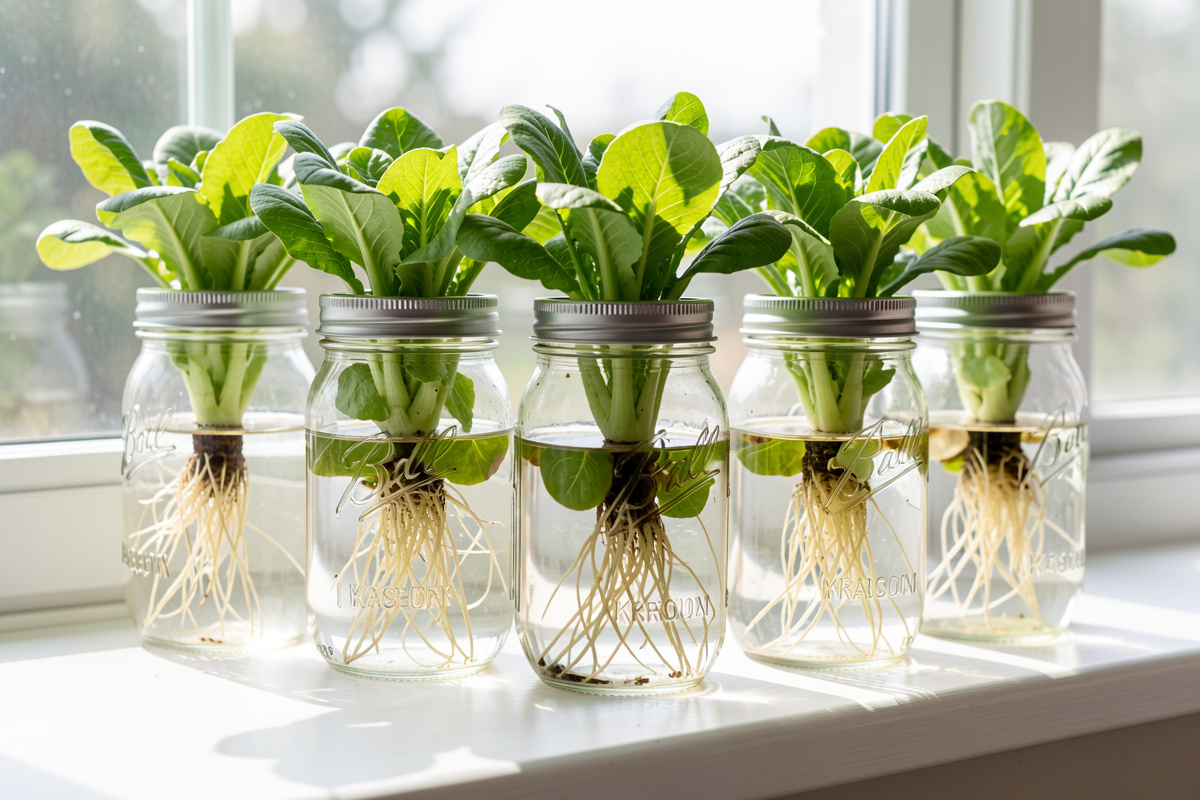
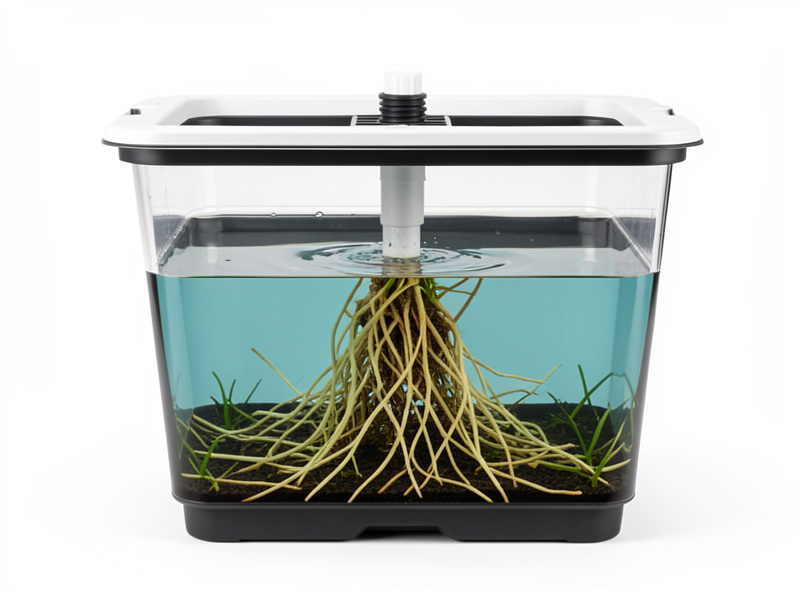
You start with the reservoir full enough that the net pot’s base just touches the solution. As the plant transpires and drinks, the water level falls. The roots, however, keep growing — so the system self-sorts into two zones: lower “water roots” that stay submerged and take up nutrients, and upper “air roots” that hang in the widening gap of humid air and take up oxygen directly. That descending waterline is not a flaw to be corrected; it is the entire mechanism. By the time the reservoir is nearly empty, the plant is mature and ready to harvest.
What makes this elegant rather than fragile is that the two root zones develop in proportion to the plant’s needs. A small seedling barely touches the water and forms few air roots because it does not need many. A maturing lettuce, drinking hard, drops the level fast and grows a thick mat of air roots to match its higher oxygen demand. The plant is, in effect, building its own life-support system as it goes — which is exactly why a method with no controls at all can keep a root system healthy for weeks.
What You Need (Almost Nothing)
The shortness of this list is the point:
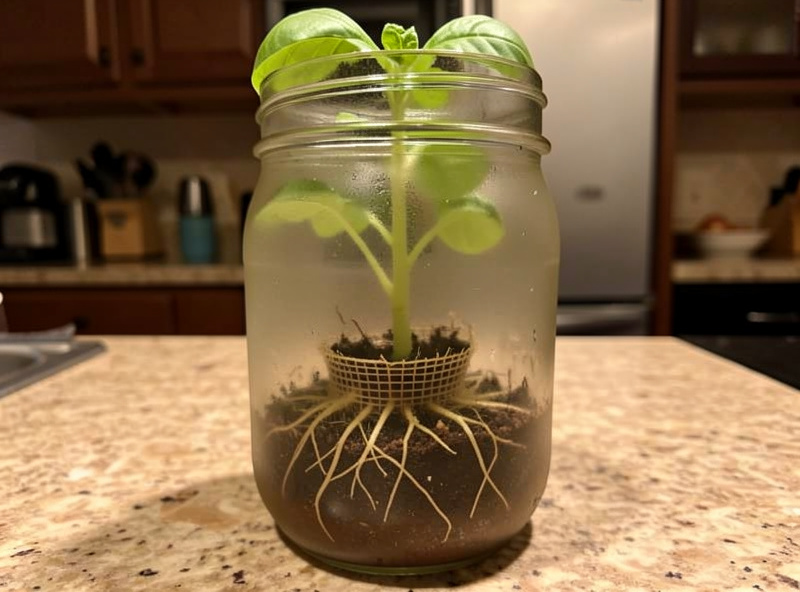
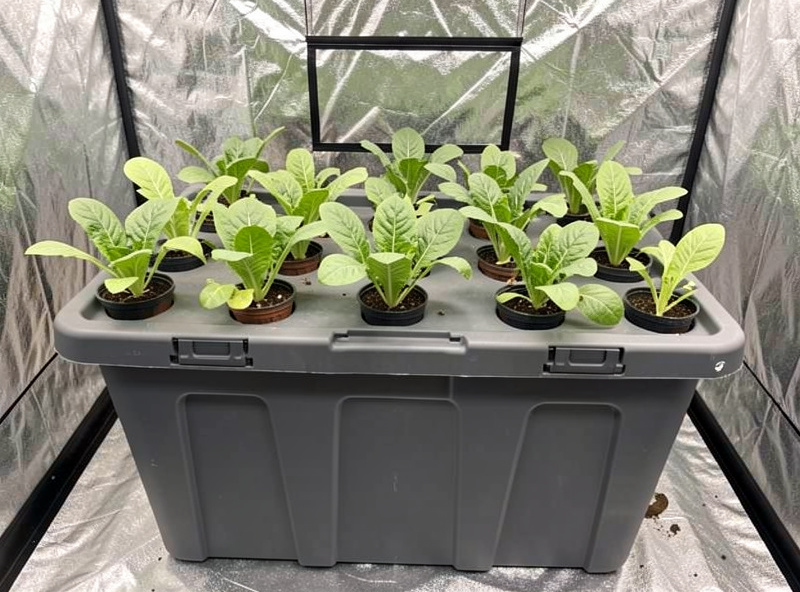
- An opaque container with a lid. A mason jar for a single herb, a storage tote for a row of lettuce. Opaque is non-negotiable — light in the reservoir grows algae, and algae is the number-one Kratky killer. I paint clear jars or wrap them.
- A net pot and a little medium. Clay pebbles or a rockwool cube to hold the seedling. 2-inch net pots for herbs and lettuce.
- Nutrient solution mixed to a target EC. This is where the “no babysitting” promise is earned or lost — you mix it once, correctly, for the whole grow.
- An EC pen and a pH pen. You only measure at fill time, but you still measure. Guessing the starting solution is the difference between a clean grow and a stalled one.
The only piece I would point a beginner toward buying with care is the meter, because everything downstream depends on that first reading being right. A reliable EC and pH meter combo for hydroponics pays for itself the first time it stops you from filling a reservoir at the wrong strength. As an Amazon Associate I earn from qualifying purchases.
The Numbers I Fill It To
Kratky gives you exactly one chance to get the solution right, so I treat the fill carefully:
- EC: I start lettuce and herbs around 1.0–1.2 mS/cm. Because the plant concentrates the remaining nutrients slightly as it drinks the water down, I keep the starting EC on the modest side rather than overshooting.
- pH: 5.5–6.0 at fill. You will not be adjusting it daily like a DWC res, so getting it into the band at the start matters more here, not less.
- Water level: fill so the net pot base touches the solution by a few millimetres at planting. Too high and you drown the young roots with no air gap; too low and a small seedling can never reach the water.
- Volume per plant: match the reservoir to the crop. A lettuce head wants a couple of litres to itself; cramming several into one small jar runs them out of water before they mature.
That is the entire setup discipline. There is no pump curve to tune, no timer to set. Get the fill right and the method does the rest on its own.
Kratky vs the Active Methods
I run Kratky alongside DWC, NFT and ebb-and-flow on the same crops, so this is a same-bench comparison. Kratky wins on simplicity and resilience and loses on scale and crop range.
| Factor | Kratky (passive) | DWC (active) |
|---|---|---|
| Power required | None | Air pump runs 24/7 |
| Ongoing maintenance | None until harvest | Top-ups, pH checks, monitoring |
| Best crops | Lettuce, leafy greens, herbs | Greens plus fruiting crops |
| Long-season fruiting crops | Poor (water runs out) | Good (you top off and feed) |
| Resilience to neglect | Excellent | Fails fast if the pump stops |
The honest dividing line is crop duration. A fast leafy green finishes before the reservoir empties, so Kratky is perfect. A tomato that wants three months of feeding will drink a passive reservoir dry and stall — that crop belongs in DWC or ebb-and-flow where you can keep topping off and feeding. Knowing which side of that line your crop falls on is the whole decision.
The Three Ways People Ruin a Kratky Grow
When a passive jar goes wrong, it is almost always one of these:
- Light in the reservoir. A clear, unwrapped jar on a windowsill grows a green algae film that competes with roots and fouls the water. Block the light and the problem disappears.
- No air gap. Topping the reservoir back up “to help” defeats the method — you submerge the air roots and suffocate them. Resist it. The falling water level is supposed to fall.
- Wrong crop. Trying to run a long-season fruiting plant passively. It outgrows its water budget and stalls. Match the method to fast crops, or move up to an active system.
Get those three right and Kratky is almost impossible to fail. The roots tell you everything: white and feathery in the air gap means it is working; brown and slimy means light got in or the gap never formed.
Who Kratky Is Really For
Kratky is the method I recommend to anyone nervous about hydroponics, anyone without a convenient outlet, and anyone who wants to understand why active systems do what they do. It is also genuinely useful long after you have outgrown it — I keep a jar or two running as a no-power control, and there is something clarifying about a system with literally nothing to adjust. Start here, grow a clean head of lettuce on water and patience alone, and the rest of hydroponics makes far more sense.
Frequently Asked Questions
Do you ever add water to a Kratky system?
No, not during a normal grow. The dropping water level creates the air gap that feeds oxygen to the upper roots. Topping it up submerges those roots and suffocates the plant. You fill once at planting and harvest when the reservoir is nearly empty.
What can you grow with the Kratky method?
Fast leafy crops are ideal: lettuce, kale, chard, spinach and herbs like basil all finish before the reservoir runs dry. Long-season fruiting crops such as tomatoes and peppers run out of water before maturing, so they belong in an active system like DWC.
Why does my Kratky reservoir have green slime?
That is algae, caused by light reaching the nutrient solution. Use an opaque container or paint and wrap clear jars so no light hits the water. Algae competes with roots for oxygen and fouls the solution, so blocking light prevents it entirely.
What EC and pH should I fill a Kratky reservoir to?
Start lettuce and herbs around 1.0 to 1.2 mS/cm EC and set pH to the 5.5 to 6.0 band at fill. Because you mix the solution only once, getting these readings right at the start matters more than in a system you adjust daily.
How long does a Kratky grow take?
A head of leafy lettuce typically matures in roughly four to six weeks from transplant, finishing about the time the reservoir empties. Herbs can be harvested progressively. Matching the crop’s growing time to its water budget is the core of the method.
Is Kratky better than DWC for beginners?
For a first leafy-green grow, yes. Kratky has no pump to fail and no daily upkeep, so it is more forgiving. DWC grows a wider range of crops faster but needs reliable power and monitoring. Many growers start with Kratky and move up to DWC.