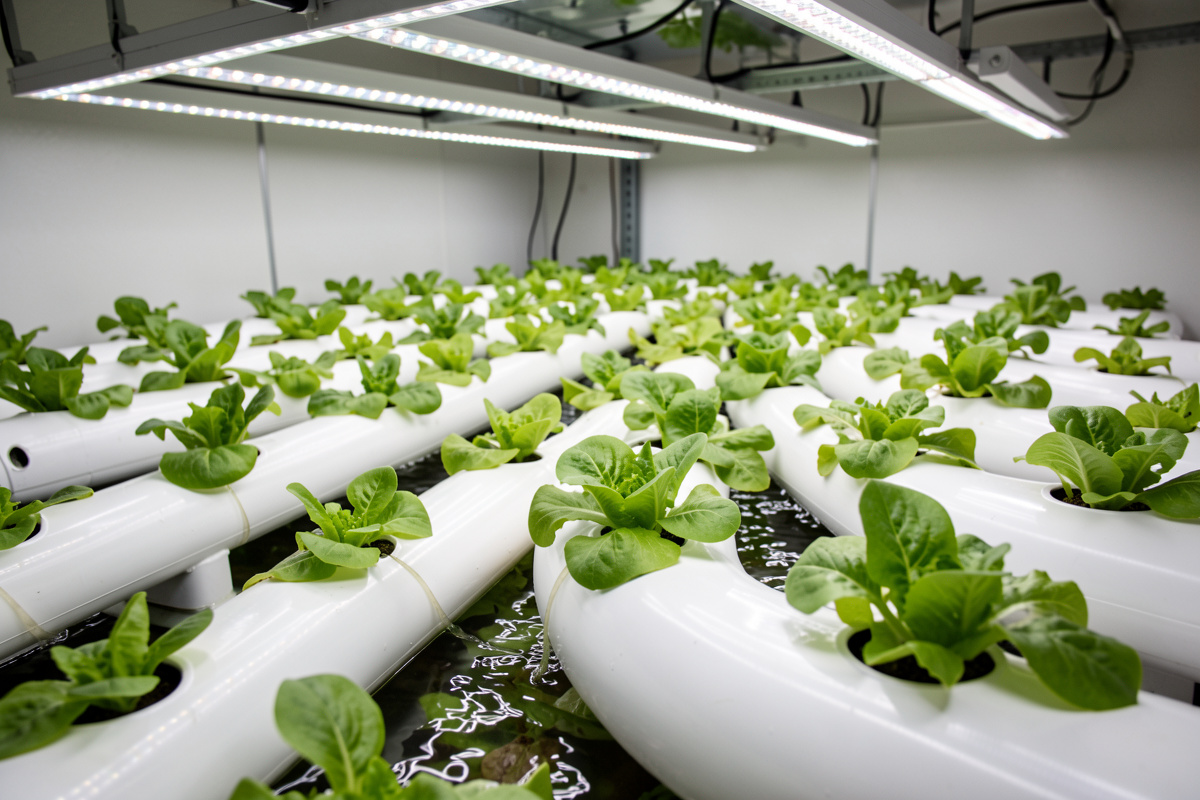
The nutrient film technique (NFT) runs a continuous, shallow film of nutrient solution down a gently sloped channel, so the bottom of the root mat is always wet and fed while the bulk of the roots sit in moist air. It is the system you have seen in every commercial lettuce photo — long white channels, rows of identical heads — and for good reason: NFT is superb at growing leafy greens and herbs in volume. On my bench I run modest gutter and channel runs for exactly that, and once it is dialled in, an NFT run is one of the most productive and water-efficient setups in the room.
It is also the method with the least margin for a pump failure, because the entire thing depends on that film never stopping. Understand the slope, the flow rate, and the film depth, and NFT is reliable and prolific. Get any of the three wrong and you get dry spots, pooling, or stalled plants. Here is how it actually works and how I tune mine.
How the Nutrient Film Works
An NFT channel is set at a slight downhill slope. A pump in the reservoir lifts solution to the top end; it flows as a thin film across the channel floor, runs the length of the run, and drains back into the reservoir to be pumped up again. It is a recirculating loop, so you mix and measure one body of water for the whole system.
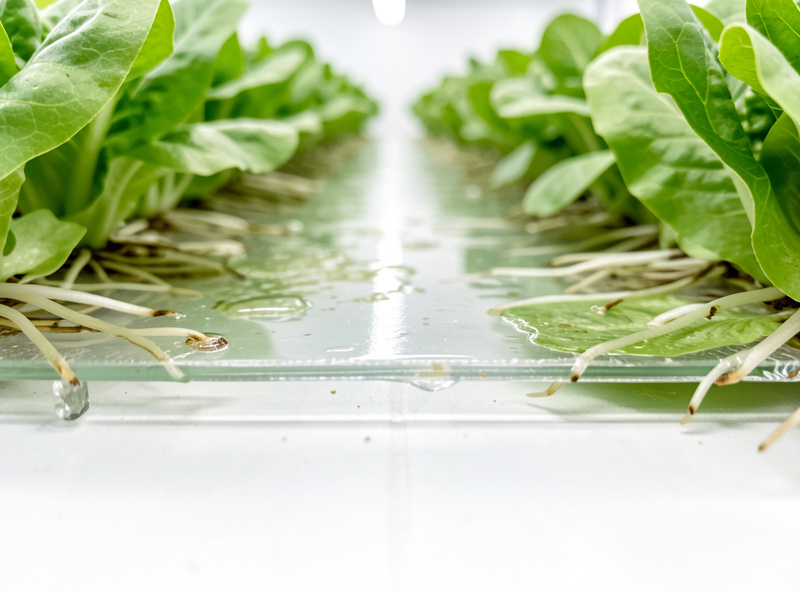
The clever part is the film. It is shallow on purpose — only the bottom millimetre or two of the root mat sits in flowing solution. The rest of the roots hang in the humid, oxygen-rich air of the channel. That is how NFT gets oxygen to roots without an air pump: the roots are never fully submerged, so they breathe from the air gap while the film keeps them fed and watered. A healthy NFT channel develops a flat white mat of roots lying along the floor, wicking from the film above and breathing below.
Building an NFT Run
NFT has more parts than a passive system, but none of them are exotic:
- Channels. Purpose-made NFT gutter, or square PVC fence post and downpipe. Square-bottomed channels beat round pipe because the film spreads flat instead of pooling in a curved trough.
- A slope. Roughly a 1-in-30 to 1-in-40 fall along the run — gentle, but enough to keep the film moving without it racing through.
- A reservoir and a submersible pump. The pump runs continuously and is the single point of failure, so I size it with headroom and keep the inlet screened against root debris.
- Return plumbing. The drain end pipes back to the reservoir. Keep it generous so it never backs up.
- Net pots and a small medium. Just enough to hold a seedling at the top of the channel until its roots reach the film.
One detail that catches first-time builders out is start-up. A brand-new seedling at the top of the channel has roots too short to reach the film, so for the first week or two I run the film slightly deeper, or sit the net pot a touch lower, so the medium stays damp from below while the roots stretch down into the channel. Once the root tips are clearly riding the film, I drop back to a true shallow film. Skip that and a young plant can sit at the inlet, dry, while everything downstream of it grows fine — a confusing failure until you realise the roots simply never made contact.
The pump is where I spend attention, because in NFT a stopped pump means the film dries out within minutes and the root mat follows. A dependable submersible hydroponic water pump sized with margin is the one component I will not run cheap, and a spare on the shelf has saved more than one crop. For the channels themselves, a set of NFT hydroponic channels takes the guesswork out of slope and spacing on a first build. As an Amazon Associate I earn from qualifying purchases.
The Numbers That Make or Break a Channel
NFT is the most tuning-sensitive of the hobby methods, and three readings matter most:
- Flow rate: aim for roughly one to two litres per minute per channel. Too little and the far end of the run starves and develops dry spots; too much and you get a deep stream instead of a film, which drowns the lower roots.
- Slope: the 1-in-30 to 1-in-40 range keeps the film thin and moving. A flat channel pools; too steep and the film races past before roots can feed.
- EC and pH: because NFT recirculates, the solution concentrates as plants drink, so EC tends to climb — I check it more often than I do on a standalone DWC tote. I hold leafy crops around 1.2–1.8 mS/cm and pH in the 5.5–6.0 band.
The honest truth from my logs is that NFT rewards observation. Once you can read the channel — flat white mat, thin moving film, no pooling — you stop chasing numbers and just keep the film right.
NFT vs DWC and Ebb-and-Flow
Running these side by side on the same lettuce, the trade-offs are clear: NFT scales beautifully for greens but is the least forgiving of a power cut.
| Factor | NFT | DWC | Ebb & flow |
|---|---|---|---|
| Best crop fit | Leafy greens, herbs | Greens and fruiting | Fruiting in a pebble bed |
| Scales to many plants | Excellent (long channels) | Moderate | Good |
| Pump-failure tolerance | Very low (film dries fast) | Low | Medium (medium stays damp) |
| Water efficiency | High | Moderate | Moderate |
| Tuning required | High (slope, flow) | Low | Medium |
The deciding question for most people is crop and scale. If you want a steady production line of lettuce, kale, basil and other leafy crops, NFT is purpose-built for it and uses water efficiently. If you want to grow fruiting crops, or you cannot guarantee uninterrupted power, DWC or ebb-and-flow give you more resilience. NFT is a specialist, and it is excellent at its specialty.
The Failures to Watch For
Most NFT problems trace back to the film:
- A stopped pump. The fastest killer. With no film, the thin root mat dries out in minutes. A spare pump and, if you can, a battery-backed circulation plan are worth it.
- Dry spots at the far end. Flow too low, or the channel not level side-to-side. Increase flow or re-level so the film spreads across the full width.
- Pooling and deep stream. Slope too flat or flow too high — the lower roots sit submerged and lose oxygen. Steepen slightly or dial the flow back to a true film.
- EC creep. Because it recirculates, EC climbs as water is consumed. Check it regularly and top off with plain pH-adjusted water before adding more nutrient.
- Root mat blocking the channel. Over a long leafy run the root mat can thicken enough to dam the film and back it up, flooding plants upstream and starving those below. Stagger plantings or harvest before the mat gets that dense, and keep the channel width generous enough that a mature mat still leaves the film a clear path.
Is NFT Right for You?
If your goal is volume leafy-green production and you have reliable power, NFT is hard to beat — it is efficient, scalable, and genuinely satisfying once the channel reads right. If you are after fruiting crops, growing at small scale, or worried about outages, it is probably not your first system. I would not hand NFT to a complete beginner as their very first build, but it is the natural next step once you understand EC and pH and want to grow more greens than a few buckets can hold.
Frequently Asked Questions
What flow rate should an NFT system run?
Aim for roughly one to two litres per minute per channel. Too little and the far end develops dry spots; too much and the film becomes a deep stream that drowns the lower roots. The goal is a thin, continuously moving film, not a pool.
How much slope does an NFT channel need?
A fall of about 1 in 30 to 1 in 40 along the run works well. That is gentle enough to keep the film shallow and moving without it racing past the roots. A flat channel pools, while too steep a slope starves the root mat of contact time.
What happens if the pump stops in an NFT system?
The film dries out within minutes because the thin root mat has no water reservoir to fall back on. NFT is the least pump-failure-tolerant hobby method. Size the pump with headroom, keep a spare, and consider a backup power plan for the circulation.
What can you grow in an NFT system?
NFT excels at fast leafy greens and herbs such as lettuce, kale, chard and basil. Heavy fruiting crops like tomatoes are a poor fit because their large root mass and weight overwhelm a shallow channel, and they are better suited to DWC or ebb and flow.
Why is EC climbing in my NFT reservoir?
Because NFT recirculates, plants remove water faster than nutrients, so the remaining solution concentrates and EC rises over time. Check EC regularly and top off with plain pH-adjusted water before adding more nutrient, then do a full change when it drifts too far.