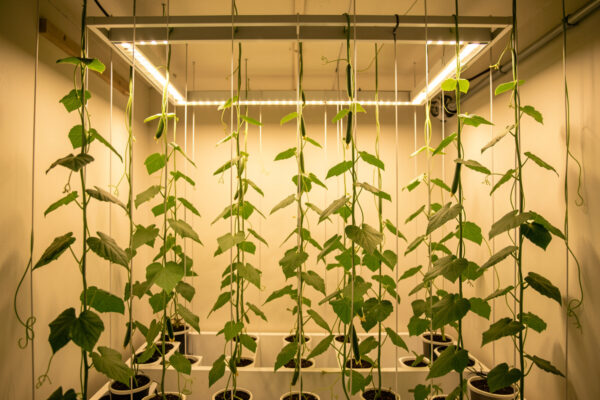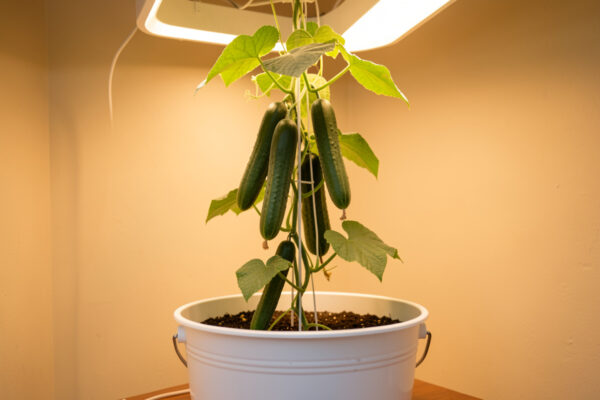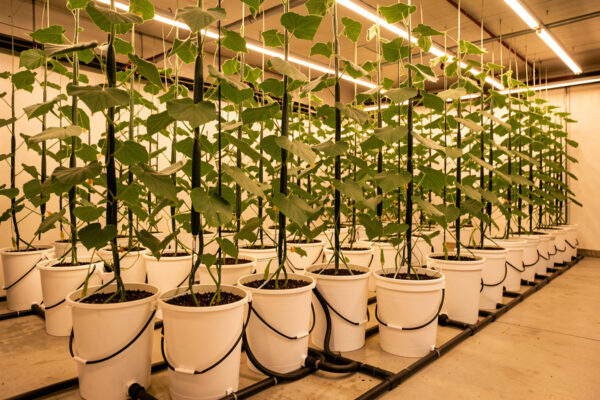
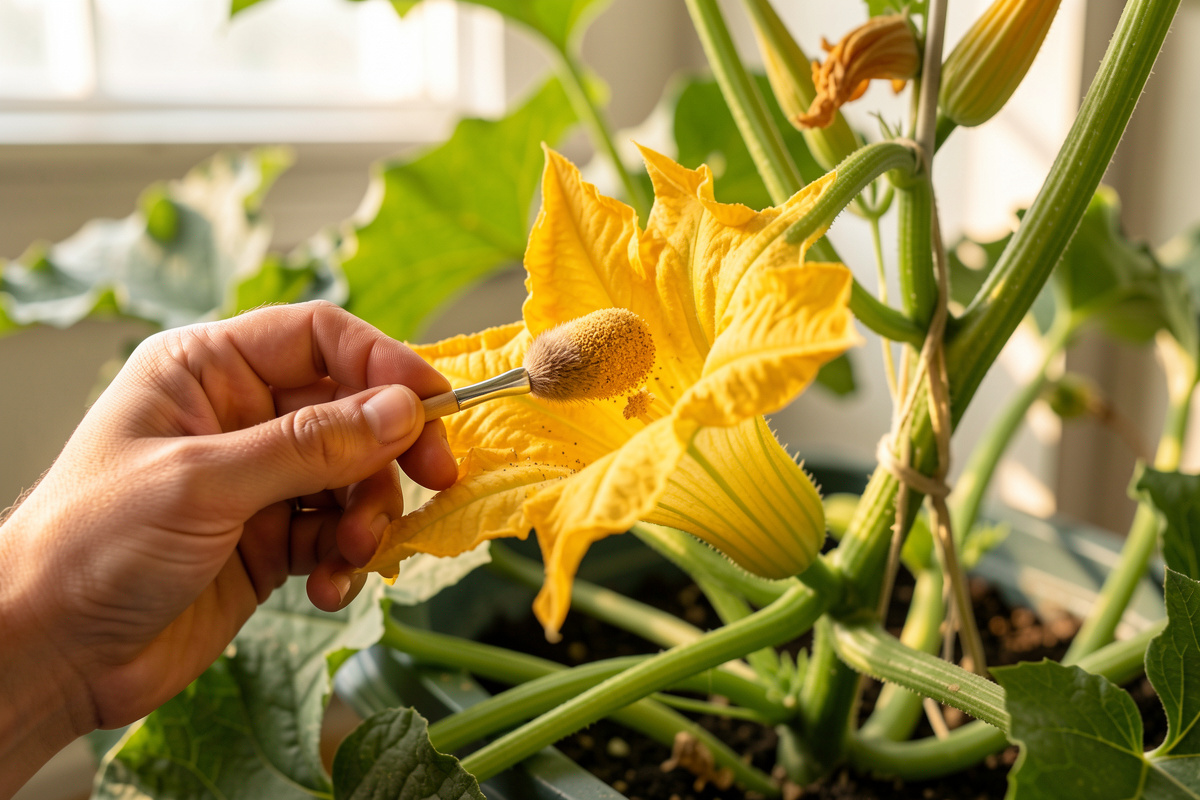
Indoor fruiting vines usually need hand pollination, because there are no bees in your grow room to move pollen from male to female flowers. Skip it and squash, melons and standard cucumbers will flower beautifully, set nothing, and drop tiny aborted fruit. The job takes minutes a day: identify the female flower (it has a miniature fruit behind the bloom), transfer pollen from a male with a soft brush or the picked male flower itself, and do it in the morning when pollen is freshest.
This is the single most common reason a healthy, well-fed indoor vine produces zero — people assume the plant will fruit on its own the way it does outdoors, and it simply won’t without a pollinator standing in for the bee. That pollinator is you. Once you can tell male from female at a glance and you’ve got the timing down, it becomes a thirty-second habit on your morning walk-through. Here’s exactly how I do it across every fruiting vine on my bench, and the one crop that lets you skip it entirely.
Why Do Indoor Vines Need Hand Pollination?
Indoor vines need hand pollination because cucurbits — cucumbers, squash and melons — carry separate male and female flowers, and moving pollen between them is normally a bee’s job. In a sealed grow room there are no pollinators, so unpollinated female flowers abort their tiny fruit within days.
The mechanism is worth understanding because it tells you exactly what to do. A cucurbit’s female flower already has a miniature fruit — a tiny cucumber, squash or melon — formed at its base, behind the petals. If pollen from a male flower reaches the female’s stigma while the flower is open and receptive, that miniature fruit is fertilized and begins to swell into a real one. If no pollen arrives, the plant reads the flower as a failure, the little fruit yellows and shrivels, and it drops. Outdoors a bee visits dozens of flowers an hour and this happens invisibly; indoors, nothing moves the pollen unless you do. This is why so many first-time indoor growers report a lush vine covered in flowers and not a single cucumber — the plant is doing everything right except the one step that requires an insect. The controlled-environment programs at the University of Arizona CEAC and the pollination guidance from University of Florida IFAS both describe the same requirement for greenhouse cucurbits. The full crop-by-crop context sits in the hydroponic vining crops guide.
How Do You Tell Male From Female Flowers?
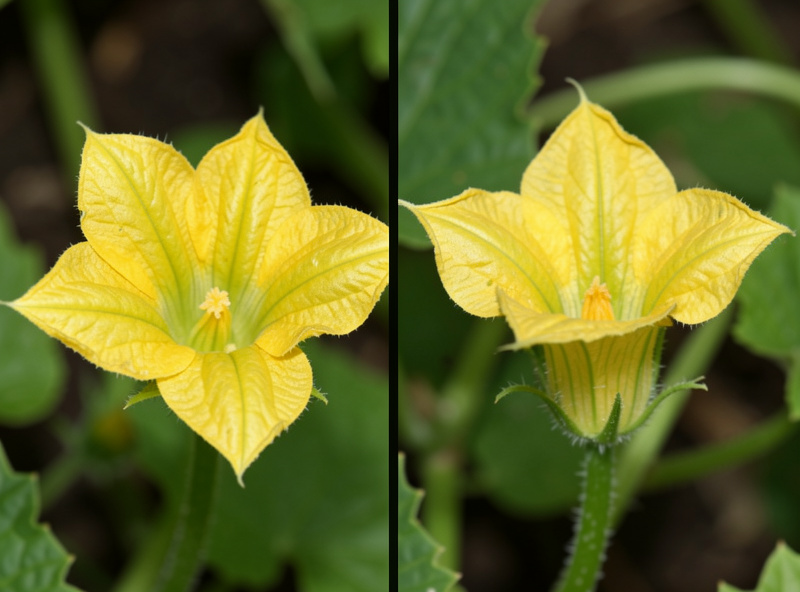
The female flower has a tiny immature fruit — a swollen bulge shaped like a miniature cucumber, squash or melon — directly behind the petals. The male flower sits on a plain thin stem with nothing behind it. That bulge is the whole tell, and once you’ve seen it you’ll never confuse the two.
On most cucurbits the males appear first and in greater numbers, which panics beginners who see flower after flower drop with no fruit — those are just males, doing their job and finishing. The females come a little later and are less numerous, each one carrying that unmistakable baby fruit at its base. Inside, the structures differ too: the male carries a central stamen loaded with powdery pollen, while the female has a stigma, often lobed and sticky, at the center. When you brush a fingertip inside a ripe male flower it comes away dusted yellow — that powder is what you’re moving. I keep a small soft artist’s brush clipped to the trellis bar for exactly this, and the first thing I do each morning is glance along the vines for open females, because their window is short. Learning this distinction is genuinely the hardest part of hand pollination, and it takes about one session of looking closely before it’s second nature.
What Is the Best Way to Hand Pollinate?
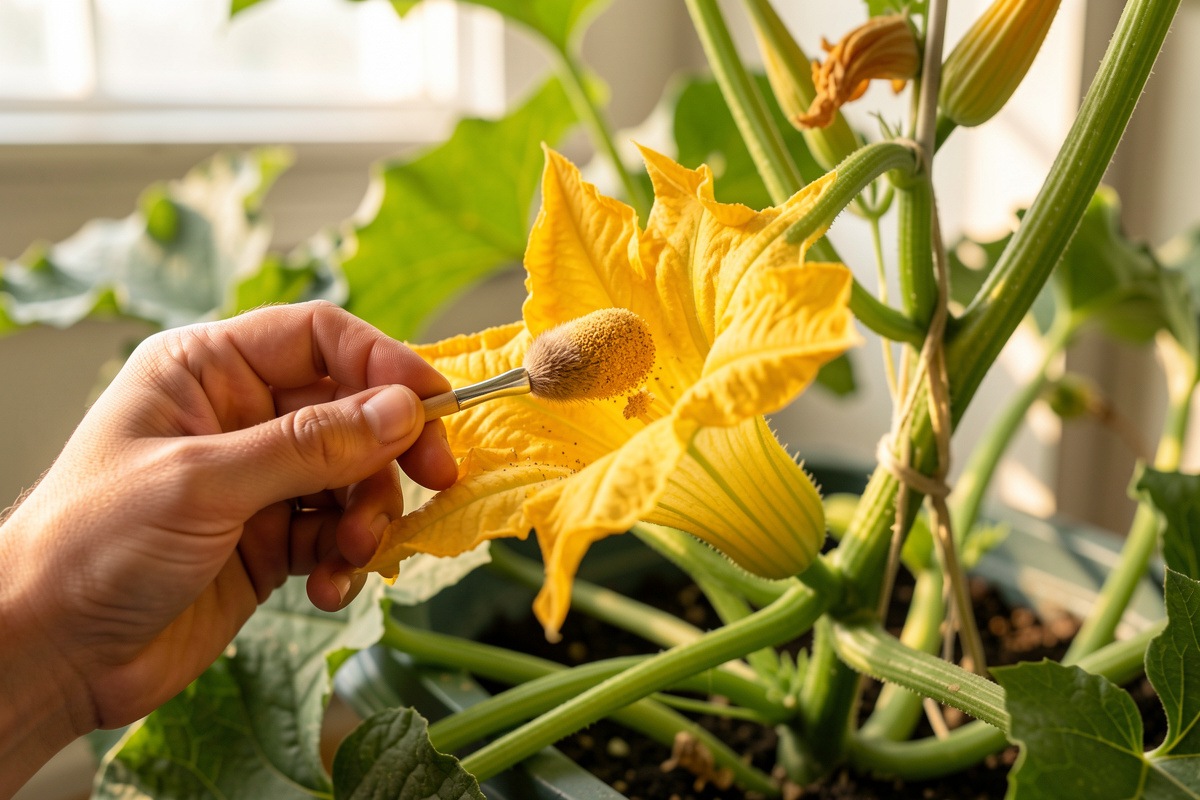
Two methods work: brush pollen from several males onto each female’s stigma with a soft brush, or pick a male flower, peel back its petals, and dab its pollen-loaded center directly into the open female. I use the picked-flower method for squash and melons and a brush for smaller cucumber flowers. Do it in the morning, when pollen is most viable.
The picked-male method is my favorite for the big cucurbit flowers because it’s foolproof — you’re pressing pollen-covered anther directly against the stigma, no transfer step to lose pollen. Pick a freshly opened male, strip the petals to expose the central stamen, and gently swab it around the inside of one or more open females. One healthy male can pollinate several females. For the smaller, more delicate flowers I use a soft brush: dip it into a male to load it with pollen, then paint the center of each female, moving male-to-female-to-female so every open flower gets a share. Timing matters more than technique. Flowers are most receptive and pollen most viable in the morning, and on melons especially the window is short — the flowers open for essentially one morning and pollen viability drops fast once the room warms. So I pollinate first thing, while the res and the room are still cool, before I do anything else on the bench. Here’s how the crops differ:
| Crop | Needs hand pollination? | Best method | Timing note |
|---|---|---|---|
| Squash / zucchini | Yes | Picked male flower | Morning; big obvious flowers |
| Melon | Yes (fussiest) | Picked male or brush | Short one-morning window; do first |
| Standard cucumber | Yes | Soft brush | Daily; small flowers |
| Parthenocarpic cucumber | No — keep pollen away | None | Sets seedless fruit alone |
| Beans | Mostly self-pollinating | Airflow / gentle shake | A fan usually suffices |
Which Crops Don’t Need Hand Pollination?
Two big exceptions save you the chore: parthenocarpic cucumbers, which set seedless fruit with no pollen at all (and should be kept away from it), and beans, which are largely self-pollinating and just need a bit of airflow. If you grow only these, you can skip hand pollination entirely.
Parthenocarpic cucumbers are the easy button for anyone who doesn’t want to fuss with flowers. These greenhouse and beit-alpha types develop fruit from the female flower with no pollination, and crucially you must NOT pollinate them — stray pollen can make the fruit bitter and misshapen, which is why I grow them isolated from any pollen source. That’s the whole argument for choosing them, laid out in hydroponic cucumbers indoors. Beans are the other freebie: they’re self-pollinating, with each flower carrying both parts and typically setting before it even fully opens. All they usually need is a little air movement to jostle the pollen into place, so a small clip fan running over the plants does the job — no brush required. Everything else in the vining group — squash, melons, standard cucumbers — needs your hand. Know which camp your crop is in before you plant, and you’ll never be surprised by a flowering vine that won’t fruit.
Why Did My Pollination Fail?
The usual culprits are timing (pollinating a female that’s already closed or past its window), heat killing pollen viability, or the fruit aborting for reasons that only look like pollination failure — mainly too little light. If flowers set fruit that then yellows and drops, suspect light or heat before you blame your technique.
I’ve chased this exact ghost. Early on my melons kept setting tiny fruit that shriveled a week later, and I assumed my pollination was sloppy — I redoubled the brushing and it made no difference. The real problem was light: melons are a high-light crop, and a vine starved below roughly 20 mol/m²/day of DLI will flower, set, and then abort fruit it can’t support, which is visually identical to a pollination failure. Once I raised the PPFD and confirmed the DLI with a meter, the fruit held. Heat is the other trap — pollen viability drops fast in a warm room, so a hot afternoon pollination often fails where a cool morning one succeeds. And sometimes it’s simply timing: a female flower is receptive for a short window, so if you pollinate one that’s already closing, nothing happens. The lesson I keep relearning across every crop is instruments over vibes — check the light and temperature numbers before you second-guess your brush. If the environment is right and you pollinate open females in the cool morning, fruit set is reliable.
How Many Flowers Should You Pollinate at Once?
Pollinate every open female you find each morning, but let the plant self-thin — it will only carry as much fruit as its light and nutrients allow. On melons especially, I pollinate all the females and then let the vine keep the strongest few, rather than trying to ripen everything it sets.
There’s a temptation, once you’ve learned the technique, to obsess over pollinating perfectly and then feel cheated when the plant drops some of the fruit you carefully set. Don’t. A vine is constantly doing its own math: it sizes fruit against the energy it’s collecting from your lights and the nutrient it’s pulling from the res, and it will abort whatever it can’t finish. That’s healthy, not failure. My job is to give it options — pollinate every receptive female so the plant has a full slate to choose from — and then support the fruit it commits to. On a heavy crop like melon, one vine under good light might ripen only a handful of fruit no matter how many flowers you pollinate, and pushing it to hold more just gives you a lot of small, mediocre fruit instead of a few excellent ones. Pollinate generously, then trust the plant to self-regulate; if it’s dropping nearly everything, the problem is upstream in light or feeding, covered in the vining crops guide.
What Tools Make Hand Pollination Easier?
You need almost nothing: a small soft artist’s brush, or just your fingers and the picked male flowers themselves. Some growers use an electric toothbrush to buzz-pollinate self-fertile crops, but for cucurbits a brush and good timing are all I’ve ever needed.
I keep a single soft-bristled brush clipped to the trellis bar so it’s always to hand on the morning walk-through — that’s genuinely the entire tool kit for cucumbers. For the big squash and melon flowers I skip the brush and just pick a male, because the flower itself is the perfect applicator and there’s no pollen lost in transfer. The one gadget worth mentioning is buzz pollination for self-fertile crops like tomatoes and peppers, where a gentle vibration shakes pollen loose inside the flower — an electric toothbrush touched to the stem does it — but that’s for the self-pollinating crops covered elsewhere on the site, not the cucurbits here, which need pollen physically moved between separate flowers. Keep it simple: a brush, your eyes trained to spot the female’s baby fruit, and the discipline to do it every cool morning. That’s the whole craft.
Frequently Asked Questions
How do you hand pollinate indoor cucumbers and squash?
Identify the female flower by the tiny fruit behind its petals, then transfer pollen from a male flower using a soft brush or by picking the male, peeling its petals and dabbing the pollen-loaded center into the female. Do it in the morning when pollen is most viable.
How do you tell male from female cucurbit flowers?
The female flower has a miniature fruit, a swollen bulge shaped like a tiny cucumber, squash or melon, directly behind the petals. The male sits on a plain thin stem with nothing behind it and carries powdery pollen on a central stamen.
Which hydroponic crops do not need hand pollination?
Parthenocarpic cucumbers set seedless fruit with no pollen and should be kept away from it. Beans are largely self-pollinating and only need a little airflow. Squash, melons and standard cucumbers all need hand pollination indoors.
Why do my indoor vines flower but not set fruit?
Usually no pollination or not enough light. Cucurbits abort fruit without pollen transfer, and a vine starved of light will set fruit and then drop it, which looks identical to a pollination failure. Check both the pollination step and your DLI.
What time of day is best to hand pollinate?
Morning, while the grow room is still cool. Flowers are most receptive and pollen most viable early in the day, and melon flowers in particular open for essentially one morning before closing, so pollinate them first thing.
Further Reading
Pollination is one step in the vining-crop routine. Get the whole picture in the vining crops guide, choose your system, set up trellising, and if you’d rather skip the brush entirely, grow parthenocarpic cucumbers.