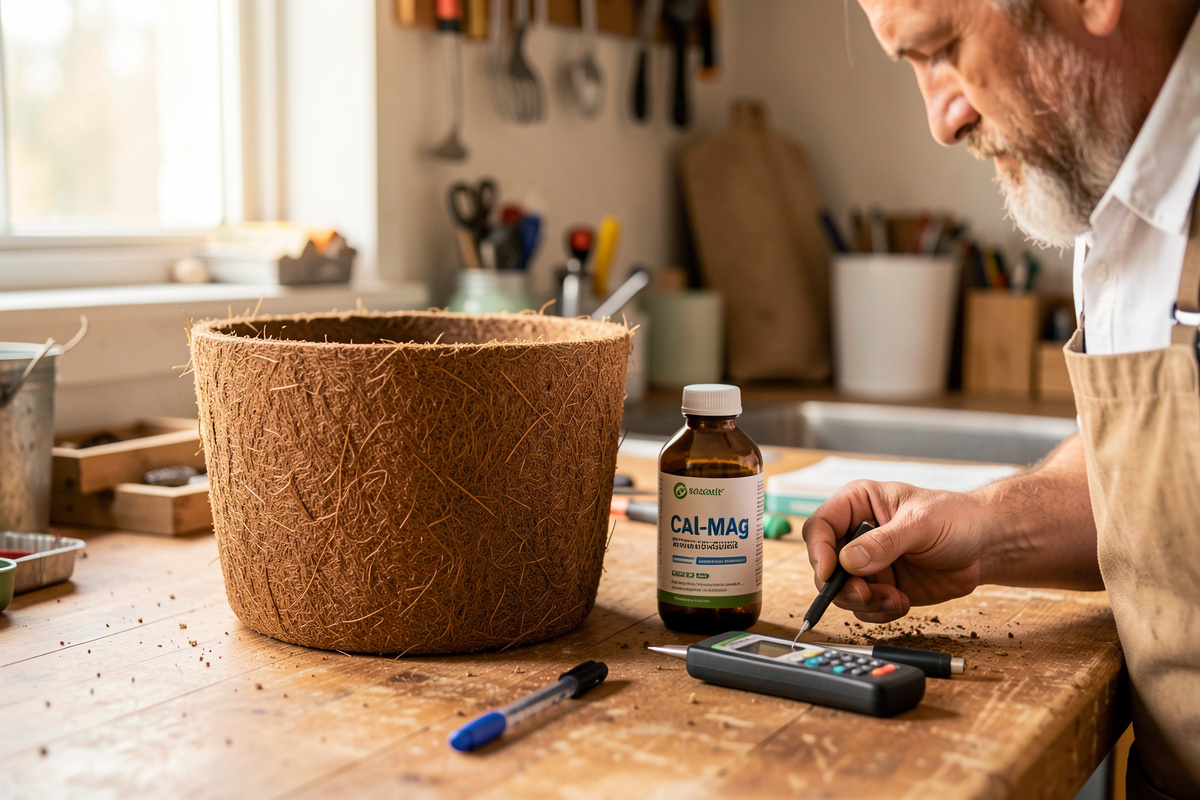
To buffer coco coir for hydroponics you soak the expanded coir in a strong calcium-magnesium solution, let it sit for several hours, then rinse and drain it — this saturates the coir’s exchange sites so it stops stealing calcium and magnesium from your nutrient feed. Skip this step and you will fight calcium and magnesium deficiency for the first few weeks of every grow, even with a complete nutrient mix.
Buffering is the single most important habit for growing in coco, and it takes about an afternoon of mostly waiting. I buffer every batch on my bench, including bags labeled pre-buffered, because the cost of a CalMag soak is trivial next to the cost of a stalled crop. Here is exactly how I do it.
Why Coco Needs Buffering at All
Coco coir is not inert. Its fibers carry a large load of potassium and sodium and have cation exchange sites — chemical parking spots that hold positively charged nutrients. Calcium and magnesium bind to those sites more strongly than potassium does, so when you feed fresh coir, the coir grabs your calcium and magnesium and releases potassium and sodium instead. The plant gets a feed that is short on CalMag and long on salt, and within a couple of weeks you see the result: rusty interveinal spotting and yellowing on new growth, the classic calcium-magnesium deficiency.
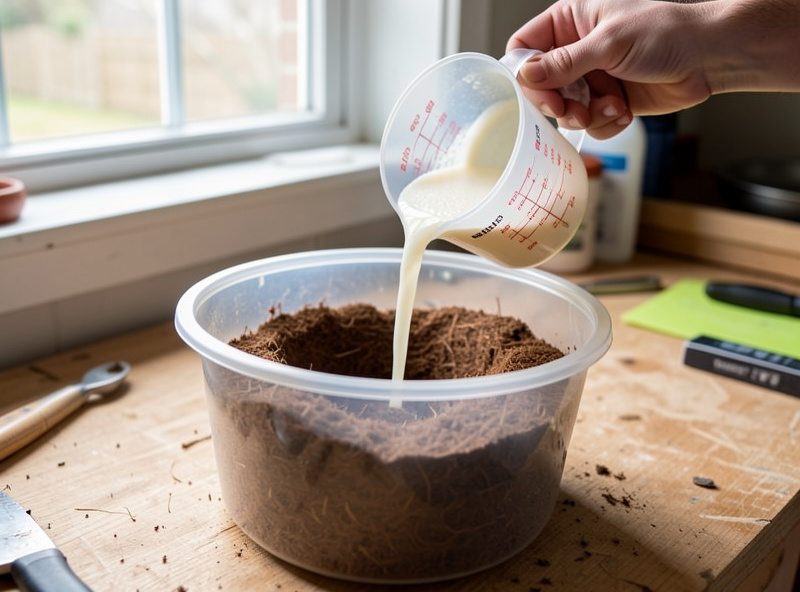
Buffering pre-loads those exchange sites with calcium and magnesium before the roots arrive, so the coir is already saturated and leaves your feed alone. It also flushes out some of the excess sodium. Once buffered, coco behaves like the forgiving, near-neutral medium it is reputed to be — the full medium overview is in the coco coir for hydroponics guide.
What You Need
The kit is simple, and most of it is already on a hydro grower’s bench:
- A bag or brick of coco coir, expanded with water
- A calcium-magnesium supplement (CalMag)
- A tub large enough to submerge the coir
- pH Down and a pH meter to set the soak
- An EC meter to check the rinse
- Clean water for the final rinse
Step-by-Step: How I Buffer Coco
Here is the routine that works on my bench. Treat the timings as comfortable minimums — longer never hurts.
| Step | What to Do | Why |
|---|---|---|
| 1. Expand | Hydrate the brick with water until fully fluffed | Opens the fibers so solution reaches every site |
| 2. Mix CalMag | Make a strong CalMag solution, pH adjusted to ~5.8 | Provides the calcium and magnesium to load the sites |
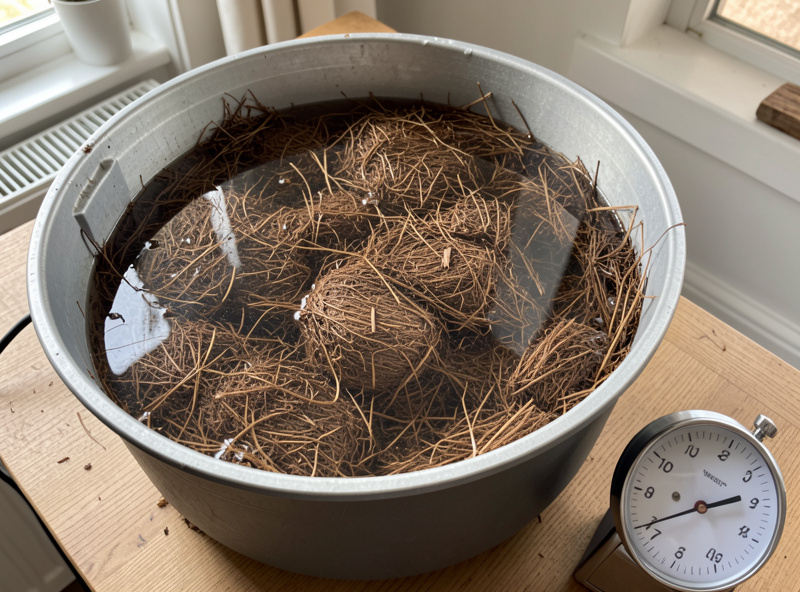
| 3. Soak | Submerge the coir and soak several hours, ideally overnight | Lets calcium and magnesium displace sodium and potassium |
| 4. Drain | Drain off the spent solution | Removes displaced salts |
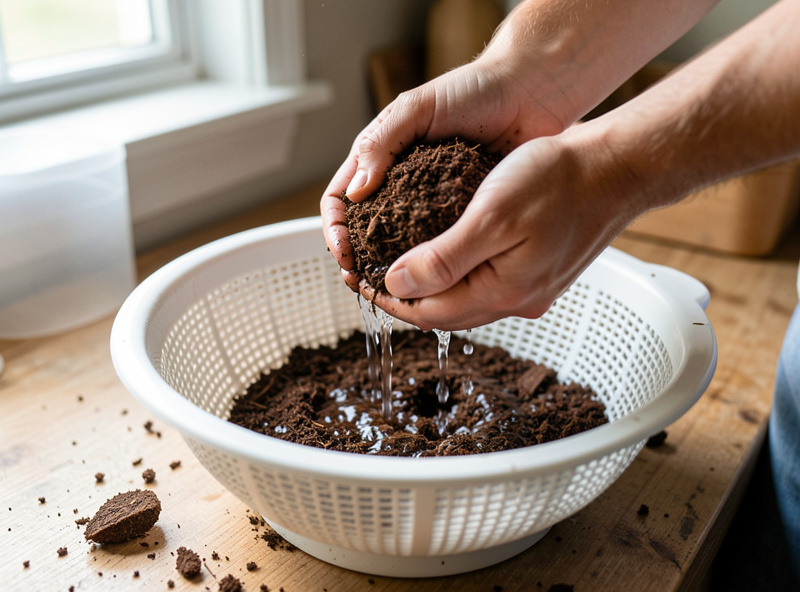
| 5. Rinse | Flush with clean water until runoff EC is low | Clears excess sodium and leftover salts |
| 6. Final drain | Squeeze to moist, not soaked | Leaves air in the medium, ready to plant |
The key numbers I watch are pH and EC. I set the CalMag soak to around pH 5.8 so the calcium stays available, and I rinse at the end until the runoff EC drops close to my source water — that tells me the displaced sodium has washed out. Once the runoff reads clean, the coir is buffered and ready.
Do You Still Need CalMag After Buffering?
Yes. Buffering loads the exchange sites once, but coco still runs best with calcium and magnesium in the ongoing feed, because the medium has no nutrient reserve of its own and the plant draws CalMag continuously. I keep CalMag in my coco feed throughout the grow, on top of buffering. Think of buffering as setting the medium to neutral and CalMag in the feed as keeping it there. The full feeding picture is in the nutrients guide.
Pre-Buffered Coir: Trust but Verify
Quality coir sold as pre-buffered or RHP-certified has had this process done at the factory, and good brands are reliable. But coir quality varies, storage can undo buffering, and a cheap bag may not have been treated at all. I treat every bag as if it needs at least a CalMag-rich first feed, and I buffer outright if I see deficiency creeping in early. It costs an afternoon to be sure, and that is cheap insurance for a whole crop. Buffered coir is also easier to bring back for a second grow — the reuse process is covered in reusing growing media, and where coco sits among the other substrates is laid out in the growing media guide and the media comparison.
Common Buffering Mistakes
The first mistake is a soak that is too short or too weak. A quick rinse in plain water is not buffering — without enough calcium and magnesium in the solution, and enough time for it to displace the sodium, the exchange sites never load and the coir still strips your feed. Use a genuinely strong CalMag soak and give it hours, not minutes.
The second is skipping the final rinse. The soak displaces sodium into the solution, and if you plant straight into the drained-but-unrinsed coir, that salty water sits in the medium and pushes your reservoir EC around. I flush with clean water until the runoff EC settles near my source water before I trust the batch. The third mistake is planting into soaked, dripping coir — saturated coir has no air, and that is how you trade a deficiency problem for a root-rot problem. Squeeze the buffered coir to moist, not wet.
The last one is assuming a pre-buffered bag never needs attention. I have seen pale, deficient seedlings in coir straight from a premium bag, because storage and handling can undo factory buffering. Watch your new growth in the first two weeks regardless of the label; the plant tells you fast whether the buffering held. Catch it early and a corrected CalMag feed pulls it back within a week.
Frequently Asked Questions
How long do you soak coco coir to buffer it?
Soak the expanded coir in a strong calcium-magnesium solution for several hours, ideally overnight. Longer never hurts. After soaking, drain off the spent solution and rinse with clean water until the runoff EC drops close to your source water, then squeeze to moist before planting.
What do you use to buffer coco coir?
A calcium-magnesium supplement, known as CalMag, dissolved in water and pH-adjusted to around 5.8. The calcium and magnesium load the coir’s exchange sites so it stops stripping those nutrients from your feed. Plain CalMag and pH-adjusted water are all you need.
Do I still need CalMag after buffering coco?
Yes. Buffering loads the exchange sites once, but coco has no nutrient reserve of its own, so the plant draws calcium and magnesium continuously. Keep CalMag in your ongoing feed throughout the grow, on top of the initial buffering soak.
Is pre-buffered coco coir worth it?
Good pre-buffered or RHP-certified coir is reliable and saves a step, but quality varies and storage can undo buffering. Treat every bag to at least a CalMag-rich first feed, and buffer outright if you see deficiency creeping in early. It is cheap insurance for a whole crop.
What happens if you do not buffer coco coir?
Unbuffered coir grabs calcium and magnesium from your nutrient solution and releases potassium and sodium instead. Within a couple of weeks you get classic calcium-magnesium deficiency, with rusty spotting and yellowing on new growth, even though you are feeding a complete nutrient mix.