Hydroponic cucumbers are the fastest, most rewarding vining crop you can grow indoors: in a Dutch bucket with a good trellis, a single vine will crop for months and out-produce a whole soil row. The keys are a parthenocarpic (seedless, no-pollination) variety, an EC schedule that stays lean early and climbs to about 2.2–2.6 mS/cm in fruiting, and a reservoir you keep below 68°F. Get those three right and cucumbers are almost embarrassingly productive.
They’re also the crop that taught me the most, because they punish sloppiness fast. A cucumber pulling well over a liter a day will expose every weakness in your system — a warm res, a drifting pH, a support that can’t hold the weight — within a week, not a season. This is the whole method off my own bench: the variety choice that removes the pollination headache entirely, the exact EC I run at each stage, the single-leader training, and the mistakes that cost me my first indoor crop so they don’t cost you yours.
What Is the Best System for Hydroponic Cucumbers?
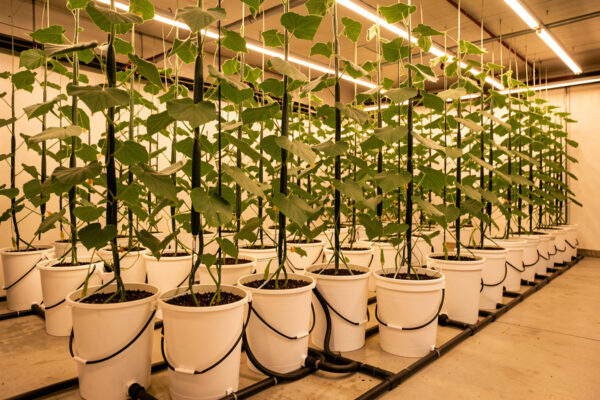
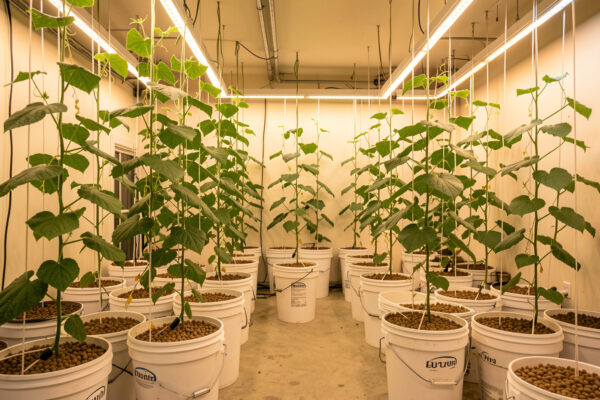
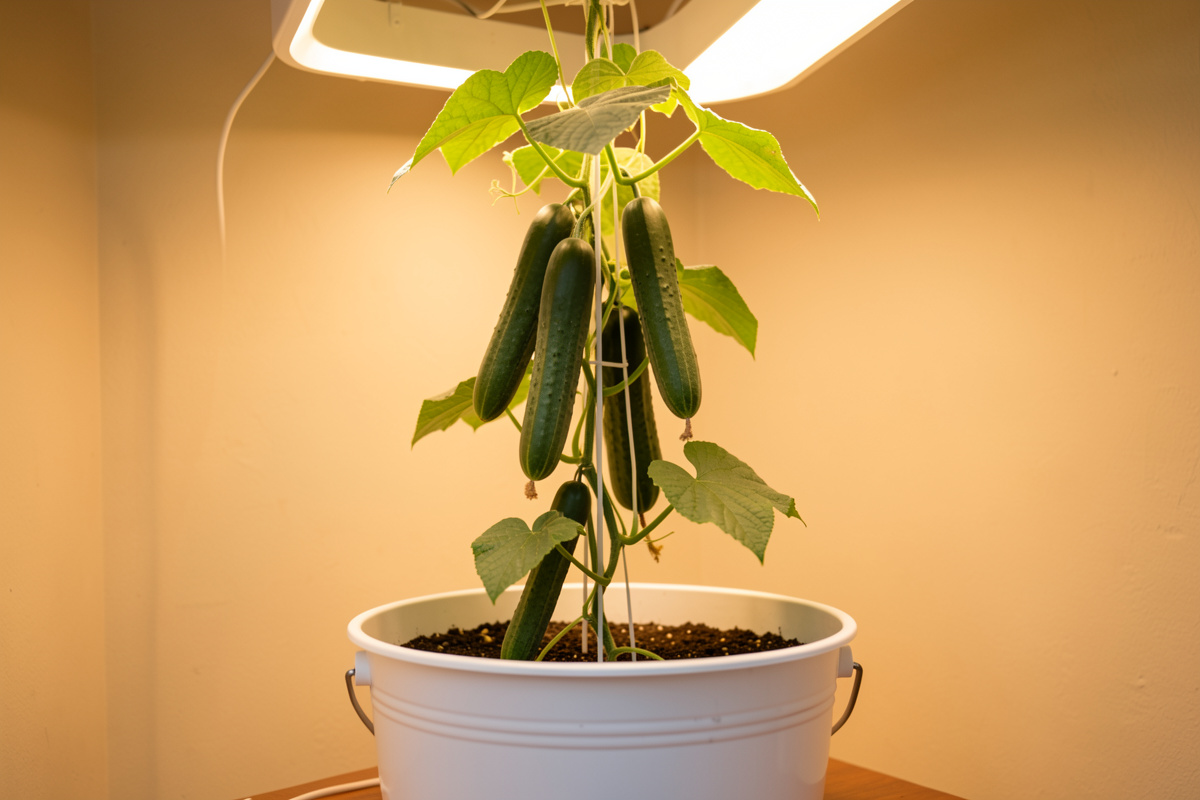
Dutch buckets are the best system for indoor cucumbers, hands down. The large clay-pebble media volume and shared recirculating reservoir feed a two-liter-a-day drinker without violent EC swings, and the drip-and-drain cycle keeps a huge root mass oxygenated. I run every cucumber I grow this way.
The reason comes down to matching the reservoir buffer to the plant’s thirst. A cucumber is the thirstiest crop in the vining group, transpiring more than a liter on a warm day under bar lights, and that water loss concentrates the salts left behind so your EC climbs on its own. In a big shared Dutch bucket reservoir that swing is a rounding error; in a small tote it’s a crisis every afternoon. The clay pebbles hold almost no water themselves but leave enormous air space around the roots, and each drip cycle drains through the bucket’s siphon elbow to pull fresh air down — that’s the drain-and-breathe rhythm that keeps a cucumber’s dense root mass from suffocating. I explain the full ranking against DWC, NFT, ebb-and-flow and Kratky in the best system for vining crops, and the plumbing in the Dutch bucket setup guide. If you only have a big DWC tote and relentless aeration you can make it work, but the bucket is the calmer path.
Which Cucumber Varieties Work Indoors?
Grow parthenocarpic cucumber varieties indoors — the seedless types that set fruit without pollination. Because there are no bees in your grow room, a standard monoecious variety needs hand pollination to fruit, while a parthenocarpic one just fruits. This single choice removes the biggest indoor cucumber headache.
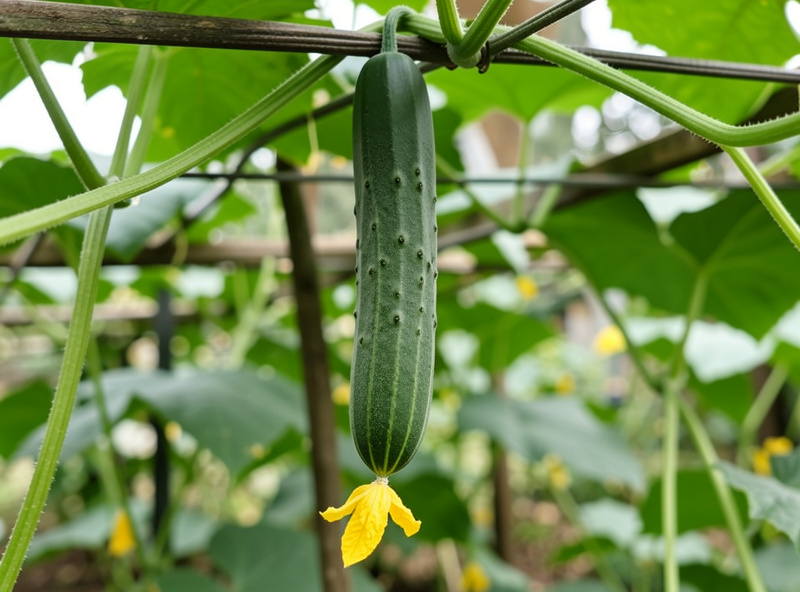
Understanding the flower biology makes the choice obvious. Standard cucumbers carry separate male and female flowers and need pollen moved between them; indoors, with no pollinators, that means you hand-pollinate daily or you get bitter, misshapen, half-set fruit. Parthenocarpic types — the greenhouse and “beit alpha” style cucumbers — develop fruit from the female flower with no pollination at all, and crucially, they must NOT be pollinated, because stray pollen can make them bitter and misshapen. That’s why greenhouse growers keep the two types apart. For an indoor grower the takeaway is simple: buy seed explicitly labeled parthenocarpic or “greenhouse,” and you skip the whole hand-pollination chore. Here’s how the types compare for indoor growing:
| Type | Needs pollination? | Indoor fit | Notes |
|---|---|---|---|
| Parthenocarpic / greenhouse | No (keep pollen away) | Excellent | Seedless, thin skin, reliable indoors |
| Beit alpha (mini) | No | Excellent | Small, snack-size, heavy yielding |
| Standard monoecious (slicing) | Yes — by hand indoors | Fair | Bitter/deformed if under-pollinated |
| Pickling | Often yes | Fair | Compact but usually needs pollination |
I default to a parthenocarpic beit-alpha type on my bench because they crop like mad and never need a paintbrush. The one time I grew a standard slicer indoors, half the fruit came out fat at one end and pinched at the other — the classic tell of incomplete pollination — and I switched back the next round.
What EC and pH Do Hydroponic Cucumbers Need?
Run cucumbers lean at about EC 1.8 mS/cm while they’re building leaf and root, then push to EC 2.2–2.6 once they’re flowering and sizing fruit. Hold pH between 5.8 and 6.0. These are the numbers I hold on my own pens, and they’re the biggest single lever on fruit quality and yield.
The reason EC is a moving target is that the plant’s demand changes across its life. A young cucumber kept too rich gets salt-stressed and sulks; keep it lean and it invests in roots and canopy. Once it flips to heavy fruiting it’s hauling nutrient hard, so I raise the EC and hold it there — under-feed at that stage and the fruit stalls. I mix to a target EC with the Masterblend 4-18-38 recipe plus calcium nitrate and Epsom, and keep CalMag on tap because cucumbers are calcium-hungry and show it fast — the tell is crispy new-growth margins and blossom-end trouble, both in this deficiency guide. The pH band is narrow and non-negotiable: drift below 5.5 or above 6.2 and you lock out calcium and magnesium even though they’re in the water. I cross-check my EC pen against a pH pen and drops every time, because a probe that reads 5.8 when the water is really 6.4 will quietly starve a crop for a week before you notice.
How Do You Trellis and Prune a Cucumber Vine?
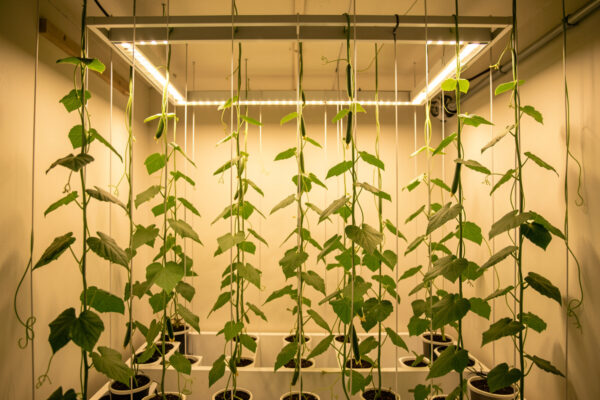
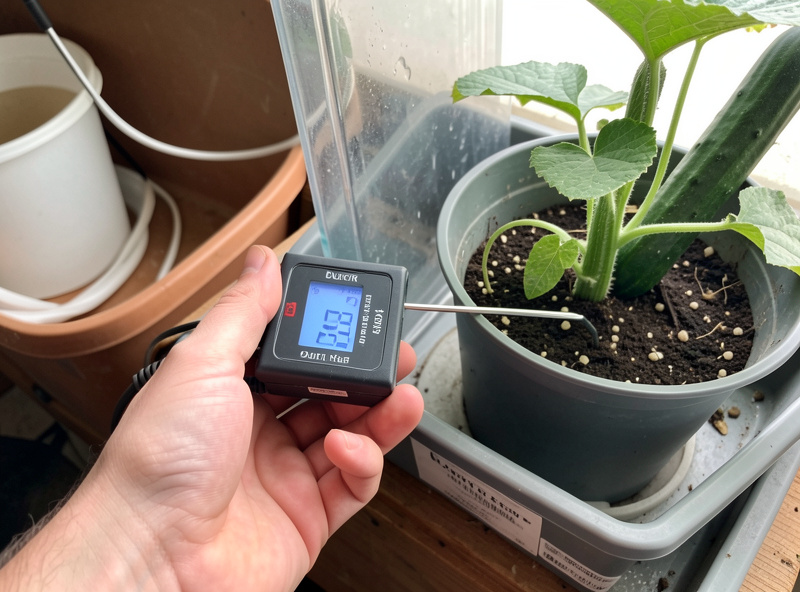
Train a cucumber to a single leader up a vertical string, clip it every 10–12 inches, pinch out every side shoot and tendril, and strip the lowest leaves as they yellow. This open, single-stem architecture channels energy into fruit, lights every leaf evenly, and keeps powdery mildew off the canopy.
A cucumber left to its own devices becomes a tangled bush that shades its own fruit and traps damp, still air — a mildew nursery. So I run one clean stem up the twine and remove the forks: every lateral shoot pinched at the node while it’s small enough to snap between finger and thumb, every tendril removed before it wraps the string and the clips into a knot I can’t lower later. The lowest leaves come off once they’ve yellowed and stopped earning their keep, opening the base for airflow. When the vine reaches my overhead bar I lower the whole string and let the spent lower section drape, keeping the productive top at working height — the full geometry is in the drape method I use. The sensory check I trust: reach into the plant and it should feel airy, not like a warm damp towel. A small clip fan moving air across the canopy does as much for mildew as any spray.
How Much Light Do Indoor Cucumbers Need?
Cucumbers are a high-light crop wanting a daily light integral (DLI) around 20–30 mol/m²/day to fruit well — far more than lettuce. In a Swedish winter you hit that with full-spectrum LED bars run at a measured PPFD, or the vine flowers and then aborts fruit, mimicking a pollination failure.
This is the edge of growing at high latitude, and it’s why I measure rather than guess. I run LED bars at a distance I’ve verified with a PAR/PPFD meter, then do the DLI math — PPFD times photoperiod seconds, converted to moles — to confirm the canopy actually gets what the crop needs, not what the fixture’s box claims. A cheap light hung too high delivers a fraction of its rated output at leaf level, and a cucumber starved of light will set fruit and then drop it, which looks exactly like an under-pollination problem and sends people chasing the wrong fix. The controlled-environment research groups at Cornell CEA publish the DLI targets I sanity-check mine against. I run the photoperiod on a smart plug so the day length is identical every day — a hydroponic system is the same control loop as a smart-home rig: sensors, schedules, and intervention only when the loop fails.
What Goes Wrong With Hydroponic Cucumbers?
The three killers are root rot from a warm reservoir, calcium/magnesium lockout from drifting pH, and bitter or deformed fruit from either heat stress or the wrong (pollinated) variety. All three are preventable with instruments and the right variety choice up front.
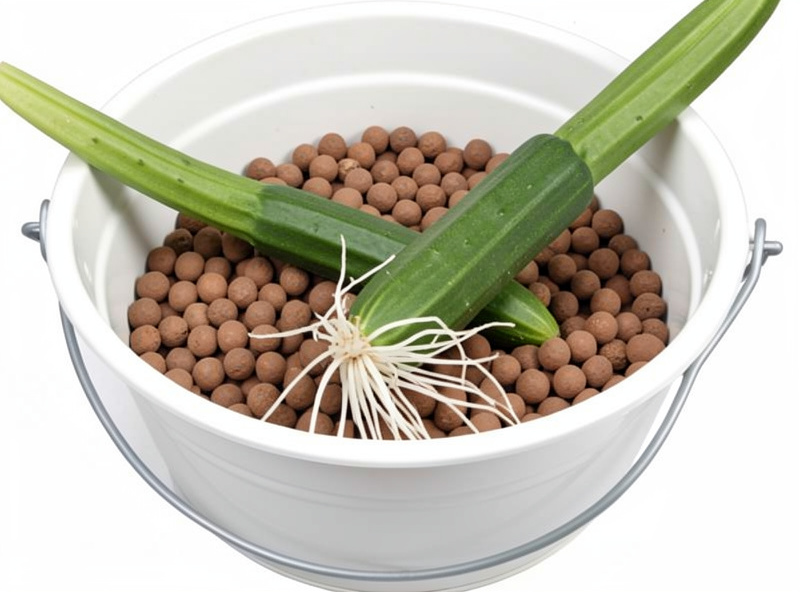
Root rot is the one I watch hardest, because a cucumber’s big root mass demands a lot of oxygen and warm water can’t supply it. My rule is identical across every crop: keep the res at or below 68°F (20°C) and treat anything over 72°F (22°C) as a danger zone, run air stones continuously, and dose a beneficial Bacillus inoculant every res change — full protocol in how to prevent root rot and the science of why in dissolved oxygen. I learned this the expensive way: my first indoor cucumber went into an undersized DWC tote, I let the room warm through a summer week without checking the res thermometer, and I came back to slimy brown roots and a sour smell you never forget. The plant was finished. Now the thermometer reading goes in the log before I touch anything else. Bitter fruit is usually heat stress or, as I said, growing a standard variety that got partially pollinated — the fix is a cooler room and a parthenocarpic seed choice. None of these problems are mysterious once you’re measuring; they’re all instruments-over-vibes failures.
When Do You Harvest Hydroponic Cucumbers?
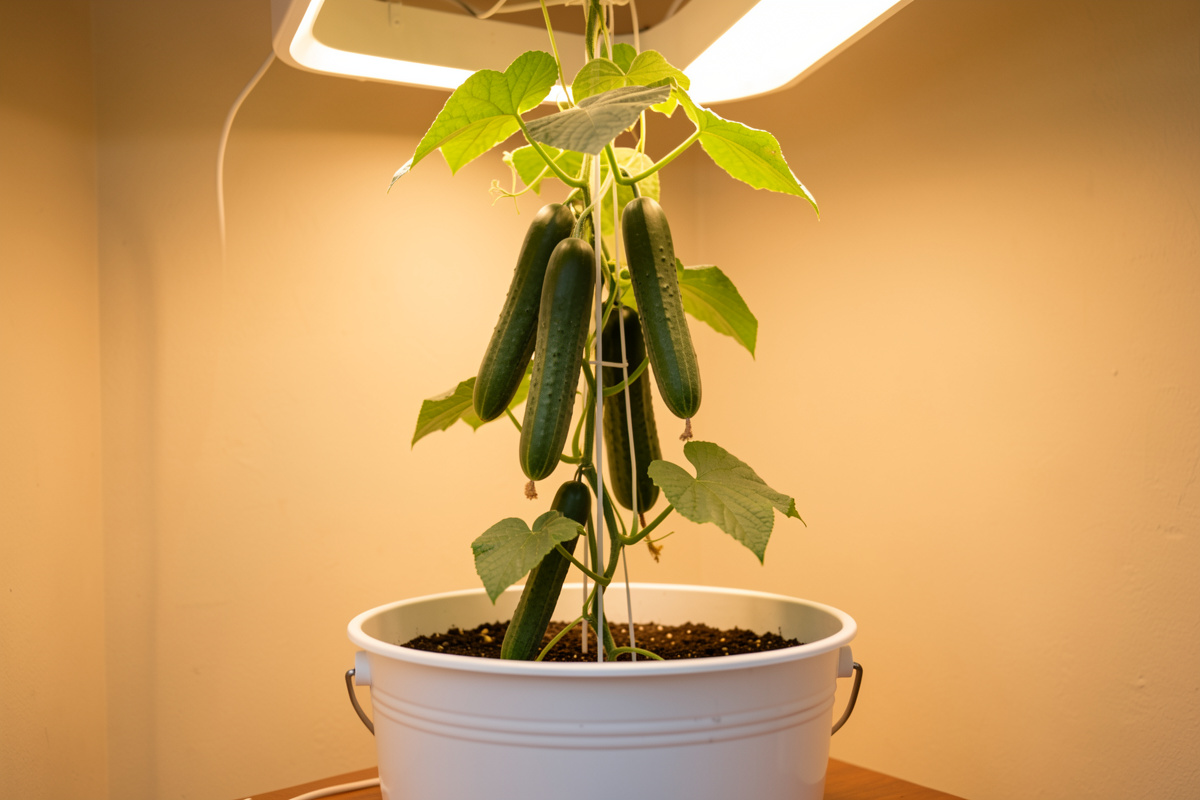
Harvest cucumbers young — most slicing and beit-alpha types at 6–8 inches, picked daily. Regular picking tells the plant to keep setting fruit; leaving one to yellow and bloat tells it to quit, and production stalls within days.
This runs against a beginner’s instinct to let fruit get big, but a cucumber left on the vine pulls energy the plant would otherwise spend flowering. I pick mine every morning at 6 to 8 inches and a healthy vine just keeps coming for months. The fruit should be firm and evenly green; the snap of cutting a crisp cucumber off the vine at dawn, still cool, is one of the small pleasures that makes the whole measuring-and-logging discipline worth it. Keep the harvest cadence tight, hold the res cool, feed to a rising EC, and a single indoor cucumber vine will keep your kitchen supplied far past what its little bucket footprint suggests.
Frequently Asked Questions
What EC should hydroponic cucumbers run at?
Keep them lean at about EC 1.8 mS/cm while vegetative, then raise to 2.2 to 2.6 during flowering and fruiting when demand peaks. Hold pH between 5.8 and 6.0, and mix to a target EC rather than by feel. Under-feeding during fruiting stalls the crop.
Do indoor hydroponic cucumbers need pollination?
Only if you grow a standard variety. Parthenocarpic or greenhouse cucumbers set seedless fruit with no pollination and should be kept away from pollen, which can make them bitter. Standard monoecious types need daily hand pollination indoors, which is why parthenocarpic is the easy choice.
What is the best system for growing cucumbers hydroponically?
Dutch buckets. The large clay-pebble media and shared recirculating reservoir feed a thirsty cucumber and buffer EC swings, while the drip-and-drain cycle keeps the big root mass oxygenated. A large DWC tote with constant aeration also works but swings harder.
Why are my hydroponic cucumbers bitter or misshapen?
Bitterness is usually heat stress or a standard variety that got partially pollinated. Misshapen, pinched fruit is the classic sign of incomplete pollination. The fix is a cooler grow room and switching to a parthenocarpic seedless variety that needs no pollination.
How often should you harvest hydroponic cucumbers?
Daily. Pick most types at 6 to 8 inches while firm and evenly green. Frequent harvest signals the plant to keep setting fruit, while letting a cucumber bloat and yellow tells the plant to stop, and production stalls within days.
What reservoir temperature do cucumbers need?
Keep the reservoir at or below 68°F (20°C) and treat over 72°F (22°C) as a danger zone. A cucumber’s large root mass needs a lot of oxygen, and warm water holds less, inviting Pythium root rot. Run air stones continuously and cool the res in summer.
Keep Building
Cucumbers are the on-ramp to the whole vining cluster. Next, read the full vining crops guide, lock in your system choice, and set up trellising. Dial the water with the EC meter guide and keep it clean with root rot prevention.
As an Amazon Associate I earn from qualifying purchases. Two things I’d tell any cucumber grower to buy first: parthenocarpic cucumber seeds and a calibrated EC/TDS meter.