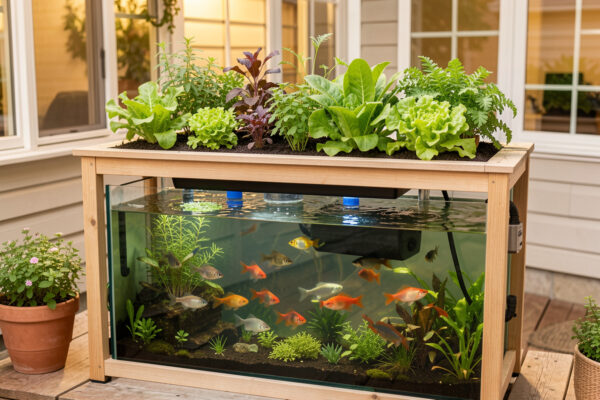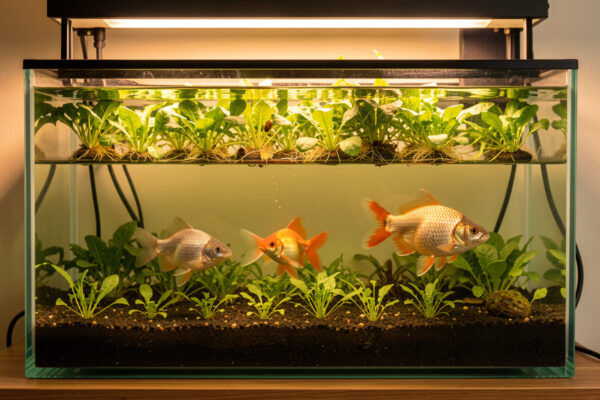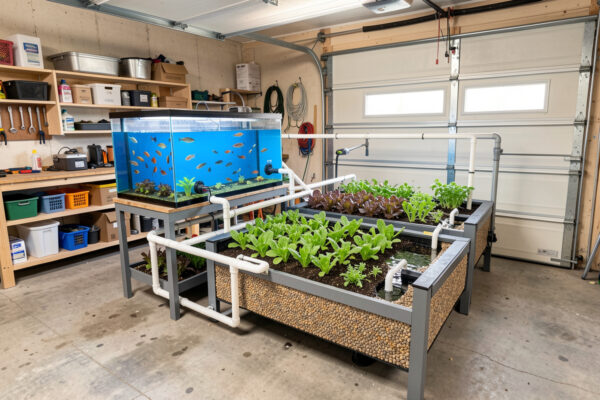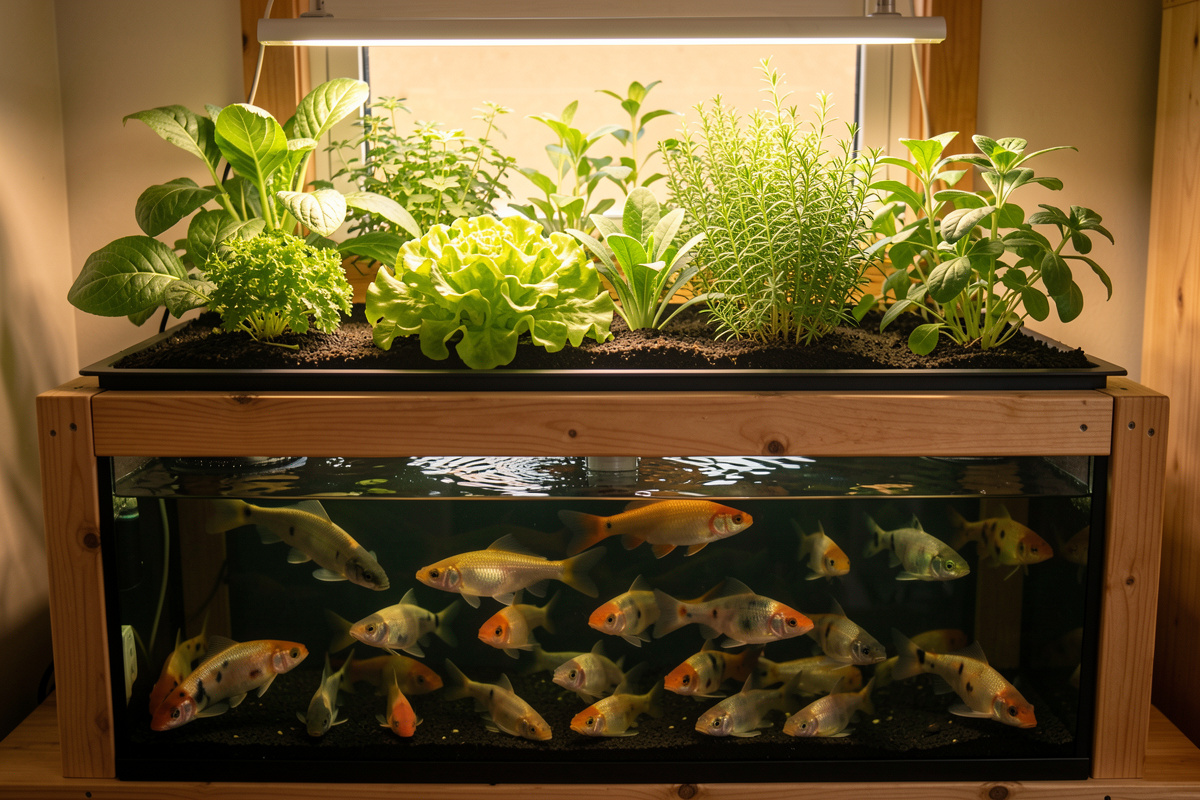
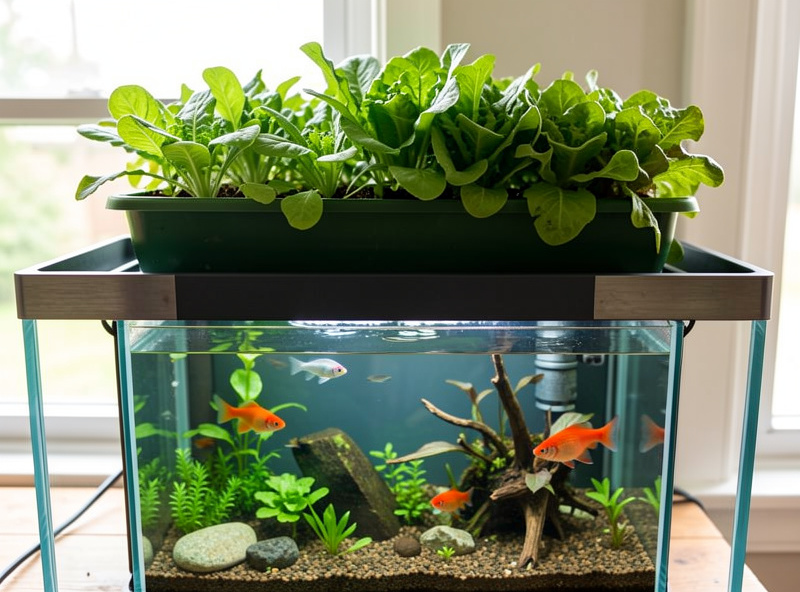
The fish-to-plant ratio in aquaponics is really a feeding-rate balance, not a headcount. The crude starting rule is about 1 lb of fish per 5-7 gallons of tank water, but the rigorous metric serious growers use is feed rate: roughly 60-100 grams of fish feed per square metre of grow area per day for leafy greens, and 100-140 grams for hungry fruiting crops. Too many fish and the plants can’t strip the nitrate fast enough; too few and the plants starve.
This is the part of aquaponics where my measurement habit pays off, because the ratio isn’t a number you set once and forget — it’s something you read off your water tests as the fish grow and the plants mature. I come at this as a hydroponics grower who balances nutrient input against plant demand on every reservoir; the aquaponics version swaps my measured feed for a living one, but the logic of matching supply to demand is identical. The fish husbandry I still defer on, but the input-output balance is a chemistry problem, and that I can walk you through honestly.
Why Headcount Is the Wrong Metric
People want a simple “X fish per Y plants” answer, and it doesn’t exist — because a fingerling and a full-grown fish produce wildly different amounts of waste from the same tank. What actually determines how much nitrogen enters your system is how much the fish eat, not how many there are. A handful of large, well-fed fish can out-fertilise a crowd of small ones. That’s why the feeding rate, measured as grams of feed per square metre of grow area per day, is the metric the research-driven side of aquaponics settled on decades ago.
The logic is clean: fish feed is the nitrogen input, plant grow area is the nitrogen sink, and you balance the two. Feed more than your plants can absorb and nitrate (plus ammonia and nitrite) climbs until the fish suffer. Feed less and your plants go hungry and pale. The headcount and gallon rules are useful only as a rough starting point to get you in the right ballpark before your test kit takes over — exactly how I treat a starting nutrient recipe before my EC pen tells me the real story.
The Feed-Rate Ratio in Practice
The feed-rate guideline most home growers borrow from commercial research is straightforward to apply. For a grow area planted in leafy greens, aim to feed roughly 60-100 grams of fish feed per square metre per day. For fruiting crops like tomatoes and peppers, which demand far more nutrient, the figure rises to about 100-140 grams per square metre per day. You weigh what your fish eat, divide by your grow area, and see where you land.
If your feed rate is below the range for your crops, your plants will tell you — slow growth, pale leaves, the look of a hungry system. If it’s above the range, your water tests will warn you first, with nitrate climbing and possibly ammonia or nitrite creeping up because the plants and bacteria can’t keep pace. The beauty of the feed-rate approach is that it scales: as your fish grow and eat more, you add grow area to match, keeping the balance as the system matures.
Ratio Reference Table
Here’s how the common balance metrics line up. Treat the gallon and grow-area figures as starting points; the feed rate is the one to converge on as you learn your system.
| Balance Metric | Leafy Greens | Fruiting Crops |
|---|---|---|
| Fish feed per grow area | 60-100 g/m²/day | 100-140 g/m²/day |
| Starting stocking guide | ~1 lb fish / 5-7 gal water | ~1 lb fish / 5-7 gal water |
| Grow bed to fish tank volume | ~1:1 to start | ~2:1 (more plants) |
| Key limiting nutrient | Iron (supplement) | Potassium & calcium |
| Nitrate comfort zone | Present, stable | Higher demand, watch lows |
Read the Balance Off Your Water Tests
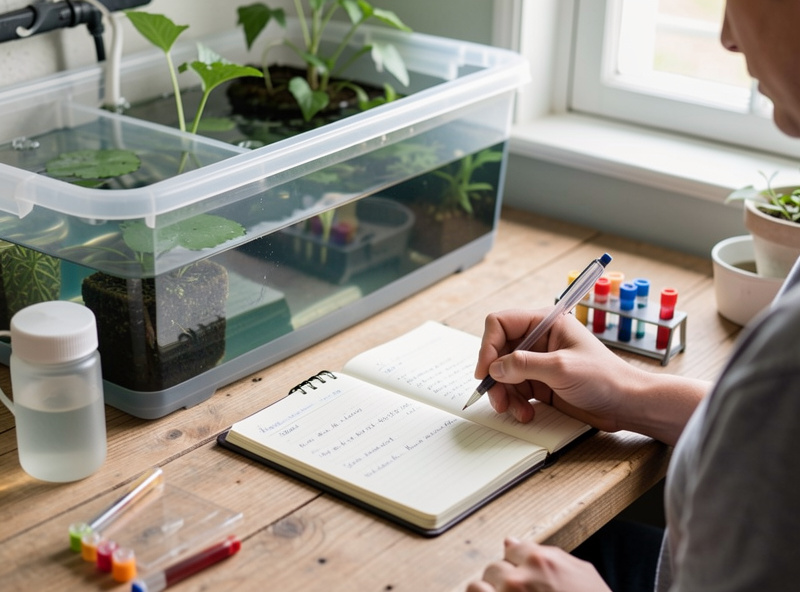
Your test kit is the honest arbiter of the ratio, and this is pure chemistry I’m happy to stand behind. In a balanced, mature system, ammonia and nitrite sit at or near zero (the bacteria are keeping up) and nitrate is present and reasonably stable (the plants are eating what’s produced). That equilibrium is the target. Reading it weekly tells you which way to adjust long before plants or fish show visible stress.
Rising nitrate with healthy fish means you have spare nutrient capacity — you can add plants, or the system can carry slightly more fish. Ammonia or nitrite that won’t clear means you’re overstocked relative to your bacteria and plants, or the system isn’t fully cycled — back off feeding and revisit cycling the system. Persistently low or undetectable nitrate with hungry-looking plants means you’re under-fed: more fish, or more feed, or fewer plants. It’s the same diagnostic loop I run with EC on a hydroponic reservoir, just read through a different set of numbers.
Let the Ratio Mature
The mistake is treating the ratio as a fixed setup number. A new system with small fish produces little waste, so it supports fewer plants than it eventually will; pack it with greens on day one and they’ll starve. As the fish grow over months, their feed intake rises and the system’s plant-carrying capacity rises with it. The right approach is to start conservative — fewer plants, lightly stocked, lightly fed — and expand the plant side as the fish and the bacterial colony mature.
This patience is the same discipline cycling demands, and it pays off the same way: a system you grow into balance is stable, while one you force into balance on day one lurches between hungry plants and stressed fish. For the wider context of how fish, plants and bacteria interlock, the complete aquaponics guide is the hub, and the species side — what those fish should be — is in best fish species for aquaponics. Day-to-day, the balance is held through the routine in the maintenance guide.
The Five-Minute Feeding Rule
There’s a practical bridge between the feed-rate math and daily life, and it’s the rule the whole hobby leans on: feed your fish only what they’ll eat in about five minutes, once or twice a day, and remove anything left over. Uneaten feed doesn’t just waste money — it rots in the water, spiking ammonia and fouling the system exactly when you don’t want it. The fish themselves become your meter: if they eat eagerly and clear the feed fast, you’re in range; if food drifts to the bottom uneaten, you’re overfeeding for that moment.
This is where the abstract grams-per-square-metre figure meets the tank. Over a week, the feed your fish actually consume should land near your target feed rate for the grow area you’re running. If they’re consistently eating more than the range suggests, your plants will eventually need expanding; if less, scale your planting back. It’s the same closed loop I run everywhere — measure the input, watch the output, adjust one variable at a time — just with a living appetite standing in for my measuring scoop.
Frequently Asked Questions
What is the ideal fish-to-plant ratio in aquaponics?
It is a feeding-rate balance, not a headcount. Aim for roughly 60-100 grams of fish feed per square metre of grow area per day for leafy greens, and 100-140 grams for fruiting crops. A common starting guide is 1 lb of fish per 5-7 gallons of water.
Why is feed rate better than counting fish?
Because a small fingerling and a full-grown fish produce very different amounts of waste from the same tank. Feed rate measures the actual nitrogen input, so it balances supply against plant demand far more accurately than a simple fish count.
How do I know if I have too many fish for my plants?
Your water tests warn you first: nitrate climbs and ammonia or nitrite may creep up because the plants and bacteria cannot process the waste fast enough. Reduce feeding, add grow area, or lower the fish load to restore balance.
What if my plants look hungry but the fish are fine?
You are likely under-fed for your plant load. Nitrate will read low or undetectable. Add more fish, increase feeding within healthy limits, or reduce the number of plants. Aquaponics also often needs supplemental iron regardless of ratio.
Does the ratio change as the system matures?
Yes. A new system with small fish supports fewer plants than it will later. As the fish grow and eat more, the system carries more plants. Start conservative and expand the plant side gradually as the fish and bacteria mature.