Cycling an aquaponics system means growing the colony of nitrifying bacteria that converts toxic fish waste into plant-safe nitrate, and it takes four to six weeks. You can’t rush it and you shouldn’t add a full fish load until it’s done — the system is cycled when you can add ammonia and watch it convert to zero ammonia and zero nitrite within 24 hours, with nitrate present in the water.
This is the one corner of aquaponics where my hydroponics background isn’t a hedge — it’s a direct advantage, because cycling is pure nitrogen chemistry and that’s the same chemistry I manage in every reservoir on my bench. The bacteria don’t care whether the ammonia came from a fish or a bottle; they care about food, oxygen and temperature. So while I’ll keep deferring to the community on fish husbandry, the bacterial side below is something I can explain with confidence and a clear conscience. Get cycling right and almost every later problem gets easier; get it wrong and you’ll be diagnosing dead fish instead of harvesting lettuce.
What Cycling Actually Does
Fish excrete ammonia, which is toxic to them above roughly 0.25-0.5 ppm. Two groups of bacteria fix this. First, Nitrosomonas oxidise ammonia into nitrite — still toxic. Then Nitrobacter and Nitrospira oxidise nitrite into nitrate, which is relatively harmless to fish and is exactly the nitrogen your plants want to absorb. Cycling is the process of establishing both groups so the conversion happens continuously and fast enough to keep up with your fish.
These bacteria are slow to colonise compared with the algae or fungi you might fight elsewhere — they double on the order of every 15 hours to a couple of days under good conditions, which is why a colony large enough to support a full fish load takes weeks to build, not days. They live on every wet surface: grow media, pipe walls, the biofilter. You’re not adding them so much as inviting them to multiply, and your job during cycling is to keep feeding and housing them until there are enough to do the work invisibly.
Fishless Cycling: The Method I’d Choose
Fishless cycling is the humane, controllable way to do it, and it’s the method that best suits a measurement-minded grower. Instead of putting fish in to produce ammonia, you add ammonia yourself and feed the empty system until the bacteria establish. The ammonia source is either pure household ammonia (no detergents, no perfume, no surfactants — just ammonia and water) or simply fish food left to decay, which breaks down into ammonia.
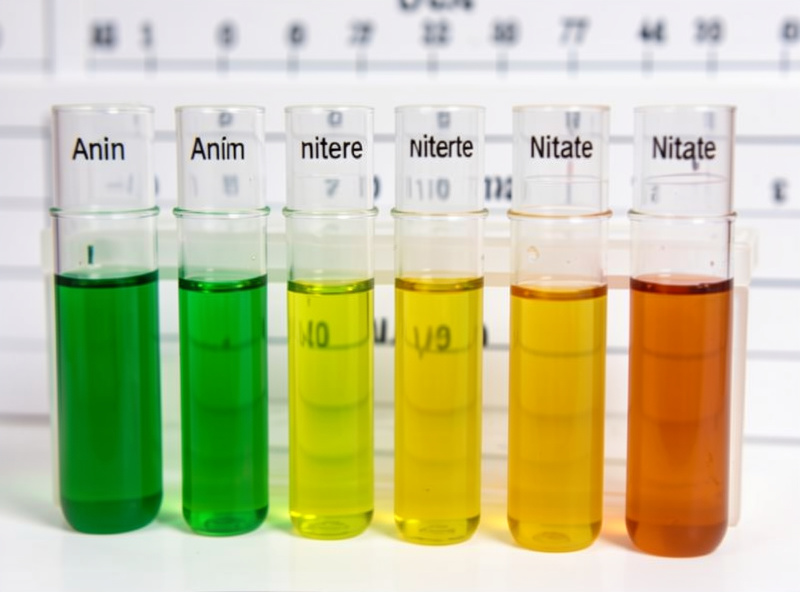
The process is straightforward: dose the system to about 2-4 ppm ammonia and keep it topped up there, testing daily. Over the first week or two you’ll see nitrite appear as Nitrosomonas get to work. Over the following weeks nitrite will spike and then fall as the nitrite-eaters establish, while nitrate steadily climbs. Because no fish are at risk, you can hold the system at the warm, slightly alkaline conditions bacteria love without worrying about fish stress. A liquid test kit reading ammonia, nitrite and nitrate is mandatory here — this entire process is invisible without it, the same way EC and pH are invisible without a pen on my reservoirs.
The Three Stages to Watch
Cycling moves through three readable stages, and tracking them is how you know where you are. Stage one (roughly week one to two): ammonia is present and nitrite begins to appear — the first bacteria are working. Stage two (roughly week two to four): nitrite spikes, sometimes alarmingly high, then begins to fall as the second group of bacteria catches up, and nitrate starts to register. Stage three (roughly week four to six): you dose ammonia and within 24 hours both ammonia and nitrite read at or near zero while nitrate is clearly present — the colony is mature.
That 24-hour conversion test is the real finish line, not the calendar. If you add ammonia to 2-4 ppm in the evening and both ammonia and nitrite are back to zero by the next evening, your bacteria can handle that ammonia load continuously — and only then is it safe to start adding fish, gradually, building up to your target density covered in the fish-to-plant ratio guide.
Temperature and pH Drive the Speed
This is where the same physics I track for reservoirs decides how fast you cycle. Nitrifying bacteria work fastest in warm water — around 77-86°F (25-30°C) — and slow dramatically below about 64°F (18°C), nearly stalling as it approaches freezing. In my cold Swedish setup that’s a real factor: cycling a system in an unheated winter room can take far longer than the textbook six weeks, so warming the water during cycling is one of the few genuine accelerators.
pH matters too, and it catches people out. The bacteria prefer a pH of 7.0-8.0, and cycling can stall if the water turns acidic (below about 6.5). During cycling it’s fine — even helpful — to keep pH at the higher end of the range; you can bring it down toward the 6.8-7.0 operating compromise once fish go in. Dissolved oxygen is the third lever: these are aerobic bacteria, so run air stones 24/7 from day one, exactly as I argue in dissolved oxygen in hydroponics. Starve them of oxygen and the cycle crawls.
How to Speed It Up Safely
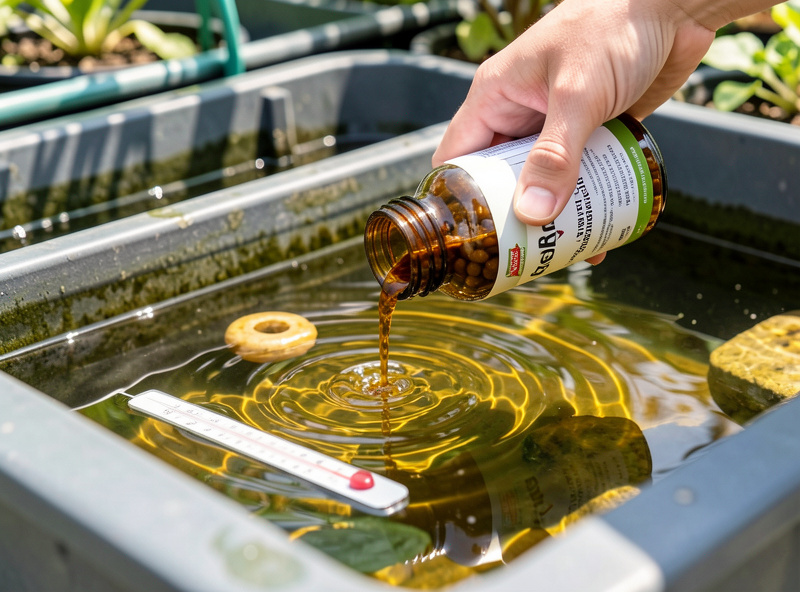
You can’t skip cycling, but you can shorten it. The biggest accelerator is seeding: a handful of media, a used filter sponge, or gravel from an established, healthy aquarium or aquaponics system brings live bacteria with it and can cut weeks off the process. Bottled nitrifying bacteria products do the same in a bottle, with mixed but generally positive results — they give the colony a head start rather than building it from nothing. Warmth, steady ammonia, good aeration and stable pH all stack on top.
What doesn’t work is impatience dressed up as a shortcut: adding fish to “get it going faster” just dumps ammonia in faster than the tiny early colony can process, harming the fish and not meaningfully speeding the bacteria. The honest path is the boring one — feed the bacteria, hold the conditions, test daily, and wait for the 24-hour conversion. It’s the same discipline that separates a clean grow from a crashed reservoir: the system tells you when it’s ready, and your only job is to read it correctly. The full sequence sits inside the beginner guide, and the wider context is in the complete aquaponics guide.
Frequently Asked Questions
How long does it take to cycle an aquaponics system?
Four to six weeks under good conditions. It is finished when you can add ammonia to 2-4 ppm and both ammonia and nitrite return to near zero within 24 hours, with nitrate present. Cold water and low pH slow it down considerably.
What is fishless cycling?
Adding ammonia yourself, from pure household ammonia or decaying fish food, to feed the bacteria before any fish are present. It is humane and controllable, letting you establish the colony without risking fish to toxic ammonia and nitrite spikes.
How do I know when my system is cycled?
When you dose ammonia to 2-4 ppm and both ammonia and nitrite drop to zero within 24 hours while nitrate is clearly present. That 24-hour conversion, not the calendar, is the real signal that the bacteria can support fish.
Can I speed up cycling?
Yes. Seed the system with media, a filter sponge or gravel from an established healthy aquarium, or use bottled nitrifying bacteria. Warm water, steady ammonia, 24/7 aeration and a pH of 7.0-8.0 all accelerate the process.
Why has my nitrite stopped dropping?
Usually low pH or low temperature stalling the bacteria, or not enough dissolved oxygen. Nitrifying bacteria prefer pH 7.0-8.0 and warm water above 64F, and they need constant aeration. Correct those and the nitrite should begin converting to nitrate.