For most home aquaponics systems the best fish is tilapia where the climate and law allow it — hardy, fast-growing and tolerant of swings, but needing warm water around 72-86°F (22-30°C). For ornamental no-eat systems, goldfish and koi are nearly indestructible, and for cold water, trout. The single biggest beginner mistake isn’t the species you pick; it’s stocking too many before the bacteria can keep up.
I’ll be upfront about my footing here, because it matters more on this page than anywhere else in the cluster. I’m a hydroponics grower — DWC, NFT, Kratky and ebb-and-flow run side by side on my bench in Sweden, and I measure EC, pH and dissolved oxygen on every reservoir. I don’t keep a stocked fish tank. So everything below about fish is the aquaponics community’s settled consensus, filtered through someone who understands the water chemistry deeply but defers on fish husbandry. I’d rather hand you the honest outsider’s summary than a confident anecdote about a tilapia harvest I never ran. Where I can speak with authority — the water the fish swim in — I’ll say so.
Tilapia: The Default Choice
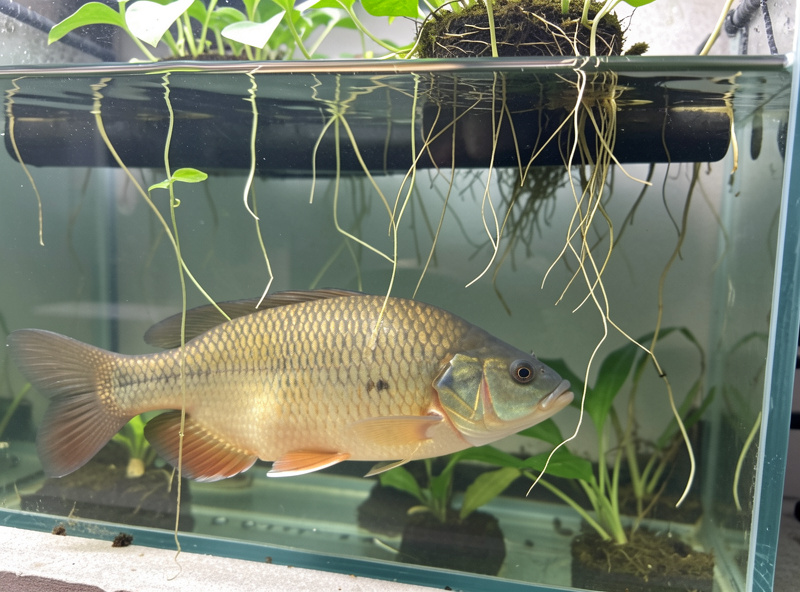
Tilapia are the workhorse of home aquaponics for good reasons the community agrees on: they grow fast, they eat readily, they tolerate crowding and water-quality swings better than most species, and they’re edible. The trade-off is temperature — they want warm water, roughly 72-86°F (22-30°C), and they stop growing or die as it drops toward the low 50s°F. In a cold climate like mine, that means heating the tank through winter, which is a real running cost, not a footnote.
The other catch is legal. Tilapia are an invasive risk in many regions and are regulated, permit-only, or outright banned in parts of the US, Australia and Europe. This is the one piece of fish advice I’ll give firmly: check your local regulations before you buy, because the rules are real and enforced. If tilapia are off the table where you live, the species below cover most situations.
Goldfish and Koi: The Ornamental Route
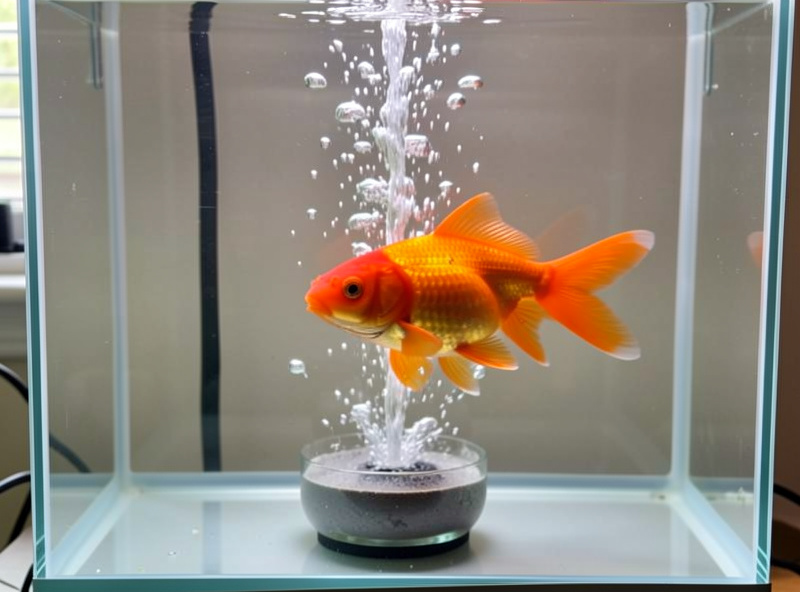
If you’re not planning to eat your fish, goldfish and koi are the most forgiving choice in the hobby. They tolerate a wide temperature range, survive water-quality mistakes that would kill more delicate species, and produce plenty of the ammonia your plants ultimately feed on. For a beginner who wants to learn the system without the pressure of keeping food fish alive, an ornamental build is genuinely the lowest-stress way in.
The community’s honest caveat is that goldfish and especially koi can grow large and are messy, heavy waste producers — which is fine for feeding plants but means you watch your filtration and stocking density carefully. They’re a long-lived pet as much as a nutrient source, so go in expecting a multi-year commitment. The chemistry you manage is identical regardless: the same nitrogen cycle, the same compromise pH near 6.8-7.0 covered in the main aquaponics guide.
Trout, Catfish, Perch and Others
Beyond the big three, several species suit specific situations. Trout are the cold-water answer — they thrive at 50-65°F (10-18°C), making them a natural fit for unheated systems in cool climates, though they demand cleaner, more oxygen-rich water than tilapia and are less forgiving of mistakes. Catfish are hardy, fast-growing warm-water food fish that tolerate poor conditions well. Perch (including jade perch and yellow perch) are popular food species in some regions. Carp and barramundi appear in larger or warmer setups.
The pattern across all of them, as the community reports it, is a trade between hardiness and water demands: the tough species (tilapia, catfish, goldfish) forgive beginner errors, while the prized eating fish (trout, perch, barramundi) want better water and more attention. For a first system, hardiness wins — you can graduate to the fussier fish once your testing routine is second nature.
Comparing the Common Aquaponics Fish
Here’s how the popular species stack up. Treat the temperature and difficulty columns as the community’s consensus; the water-quality logic underneath them is the part I’ll stand behind directly.
| Fish | Water Temp | Edible? | Hardiness | Best For |
|---|---|---|---|---|
| Tilapia | 72-86°F (22-30°C) | Yes | Very high | Warm-climate food systems |
| Goldfish | 50-78°F (10-26°C) | No | Extremely high | Beginners, ornamental |
| Koi | 59-77°F (15-25°C) | No | Very high | Ornamental, long-term |
| Trout | 50-65°F (10-18°C) | Yes | Moderate | Cold-climate food systems |
| Catfish | 75-86°F (24-30°C) | Yes | High | Warm food systems |
| Perch | 68-79°F (20-26°C) | Yes | Moderate | Intermediate growers |
Matching Fish to Your Climate
This is where my cold-climate, measurement-first perspective is actually useful. The temperature math is the same discipline I apply to grow lights and reservoirs: know your real numbers before you commit. In a warm climate, tilapia or catfish run with little or no heating. In a cold climate like Sweden, you either heat the tank year-round for warm-water fish — a continuous energy cost — or you choose trout and work with the cold instead of against it. There is no universally best fish; there’s the fish that suits your water temperature and the energy you’re willing to spend holding it there.
Dissolved oxygen ties into this directly, and it’s pure chemistry I can speak to: warm water holds less oxygen, so warm-water fish in a hot summer tank are doubly stressed — exactly the dynamic I cover in dissolved oxygen in hydroponics. Cold-water trout get more oxygen for free but punish you faster if circulation fails. Run air stones 24/7 regardless of species, and keep a thermometer in the tank the way I keep one in every reservoir.
What the Fish Eat Becomes What Your Plants Eat
Here’s a connection the fish-first guides often miss but my nutrient-focused brain can’t ignore: in aquaponics, the fish feed is your fertiliser. Whatever the fish don’t use comes out as waste, gets converted by bacteria, and ends up feeding your plants. That means feed quality directly drives plant nutrition. A good-quality fish feed with balanced protein produces a more complete nutrient profile in the water; a cheap, low-grade feed gives you weaker plants downstream.
This is also why aquaponics almost always runs short on a few specific elements no matter how well you feed. Fish feed supplies nitrogen generously but tends to fall short on iron, potassium and calcium relative to what hungry plants want — the same elements I’d dial in deliberately when mixing a hydroponic nutrient solution. That’s the structural reason aquaponic growers keep chelated iron on hand and often supplement potassium for fruiting crops: the fish simply can’t deliver everything the plants demand, and the compromise pH near 6.8-7.0 locks some of it away. Feed the fish well and supplement the gaps, and the plant side behaves predictably.
How Many Fish? Stock Light First
Whatever species you choose, the number matters more than the name. The community’s planning figure is roughly 1 lb of fish per 5-7 gallons of tank water in a mature system, and far less while it’s young. A freshly cycled system has a small, fragile bacterial colony, and dumping in a full fish load produces ammonia faster than the bacteria can process it — which is how beginners lose fish in the first weeks regardless of how hardy the species is.
Add fish gradually: a few at a time, let the bacteria catch up, test the water, then add more over weeks. The fish load and the plant load have to balance, and that balance is driven by feeding rate, not headcount — I work through the full math in the fish-to-plant ratio guide. And before any fish go in at all, the system has to be cycled, which is its own four-to-six-week step covered in cycling the aquaponics system.
Frequently Asked Questions
What is the best fish for a beginner aquaponics system?
Goldfish for an ornamental no-eat build, or tilapia if you want food fish and can keep the water warm (72-86F). Both are hardy and forgive beginner mistakes. The species matters less than stocking conservatively while the bacteria establish.
Can I eat the fish from a home aquaponics system?
Yes, if you choose an edible species like tilapia, trout, catfish or perch and keep the water healthy. Goldfish and koi are kept as ornamental fish, not eaten. Always follow local food-safety guidance for home-raised fish.
What fish work in a cold climate without heating?
Trout are the standard cold-water choice, thriving at 50-65F. Goldfish and koi also tolerate cool water well. Warm-water species like tilapia and catfish need year-round heating in a cold climate, which is an ongoing energy cost.
Why are tilapia banned in some places?
Tilapia are an invasive risk in many regions, so they are regulated, permit-only, or banned in parts of the US, Australia and Europe. Always check your local regulations before buying, because the rules are real and enforced.
How many fish can I put in my aquaponics tank?
A common mature-system figure is about 1 lb of fish per 5-7 gallons of tank water, and far less while the system is young. Add fish gradually so the bacterial colony can keep pace with the rising ammonia load.