The beginner path that actually works in aquaponics is boringly conservative: build a media bed, cycle it for 4-6 weeks before a single fish goes in, stock hardy fish at half your eventual density, and test the water every day for the first month. Rush any of those four steps and you’ll lose fish in week two — that’s the most common beginner failure, and it’s entirely avoidable.
I should say plainly where I’m standing, because it changes how you should read this. I run hydroponics, not a stocked fish loop — my bench is DWC totes, an NFT channel and a flood-and-drain bed, and I log EC and pH on every one of them. So the plant side and the water chemistry below are things I do every week and write with full confidence. The fish-keeping side I treat as a serious neighbouring hobby: I’ll give you the conservative consensus the aquaponics community has converged on, not a tale about the tilapia I personally overwintered. For an absolute beginner that’s the safer voice anyway, because the people who lose fish are almost always the ones who got a confident shortcut from someone who’d only done it once.
Start With the Right System
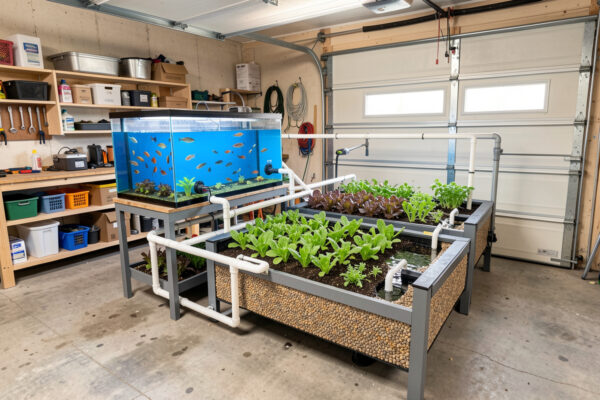
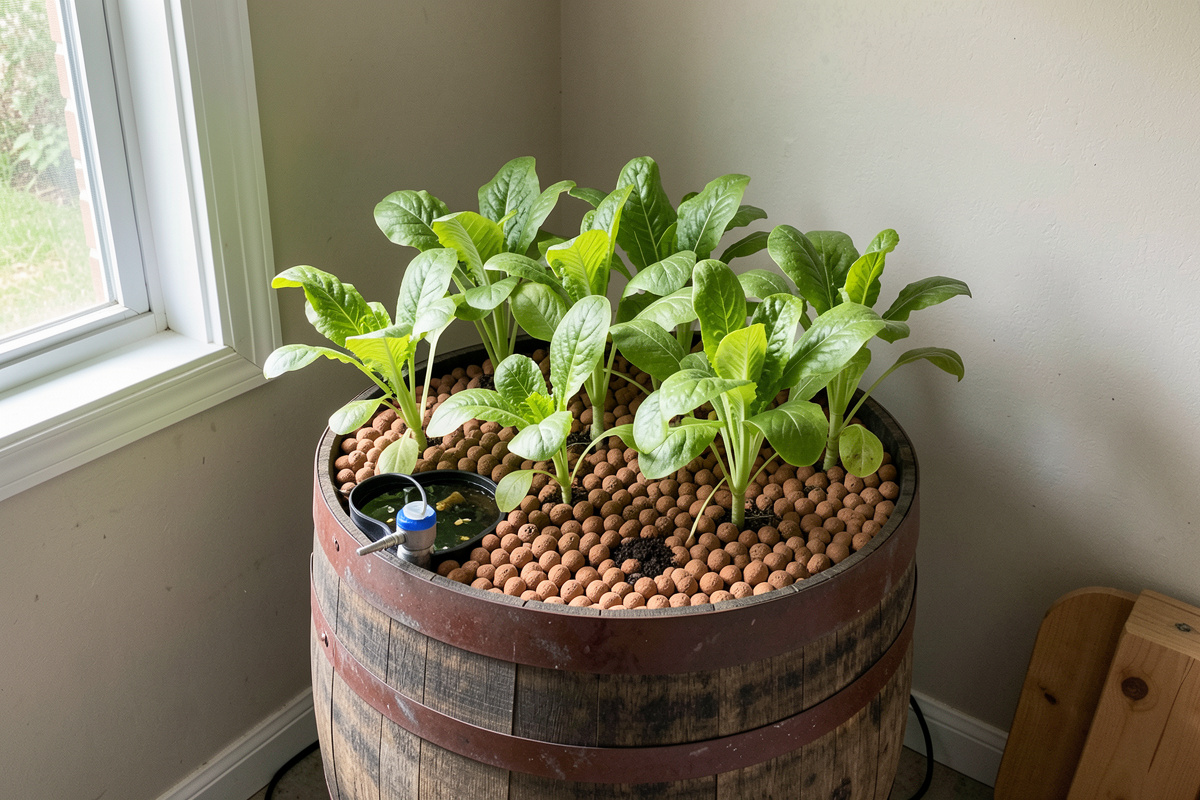
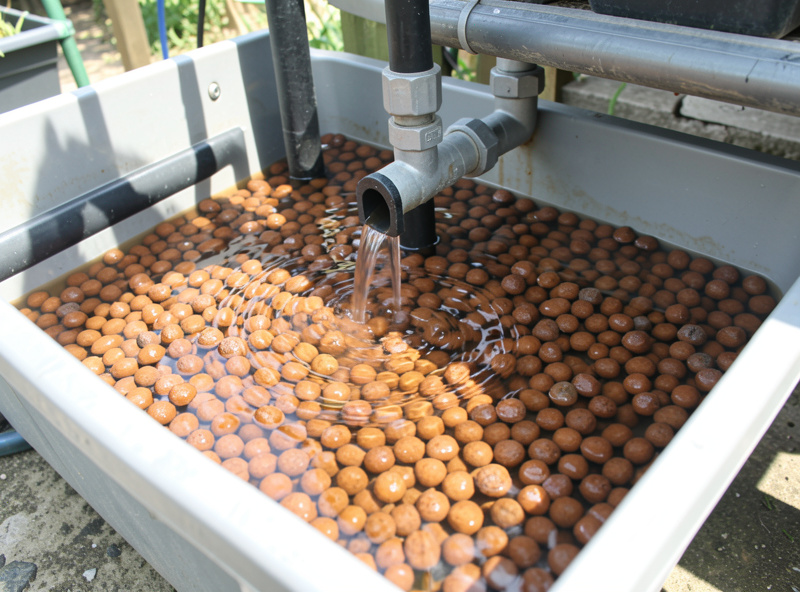
For your first build, choose a media-bed flood-and-drain system. There is no real debate here. A media bed fills a container of clay pebbles or gravel with water and drains it on a cycle, and that bed of media does three jobs at once: it grows the plants, it filters solid waste, and it houses the nitrifying bacteria that make the whole thing work. Raft (deep water culture) and NFT systems are elegant, but they need a separate biofilter and they punish beginners who haven’t built the filtration habit yet.
The mechanical design is lifted straight from ebb-and-flow hydroponics, which I run on my own bench — a pump floods the bed, a siphon or timer drains it, and the cycle repeats. The difference is simply that your nutrient source is a fish tank plumbed below instead of a reservoir of mixed nutrients. If you want to compare media beds against rafts and channels before you commit, I lay all three out in aquaponics system design options, but for a first system, trust me and build the media bed.
Cycle the System Before Any Fish
This is the step beginners skip and the reason their fish die. Cycling is the process of growing the bacterial colony that converts toxic fish waste (ammonia) into plant-safe nitrate via the nitrogen cycle, and it takes four to six weeks because those bacteria multiply slowly. You cannot shortcut it by buying more fish — adding fish to an uncycled system just floods it with ammonia faster than there are bacteria to process it.
The kindest way to cycle is fishless: you add a source of ammonia yourself (household ammonia or fish food left to rot) and feed the empty system until your tests show ammonia and nitrite rising and then falling to near zero while nitrate climbs. When ammonia and nitrite both read at or near zero and nitrate is present, the colony is established and the system is safe to stock. I walk through the full process, including the exact test readings to watch for, in cycling the aquaponics system. Do not skip it.
Choose Hardy Fish and Stock Light
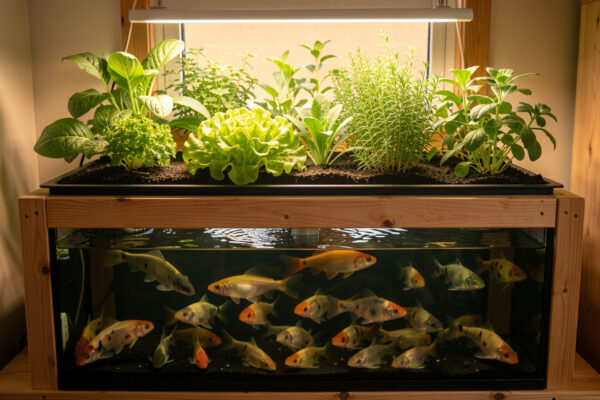
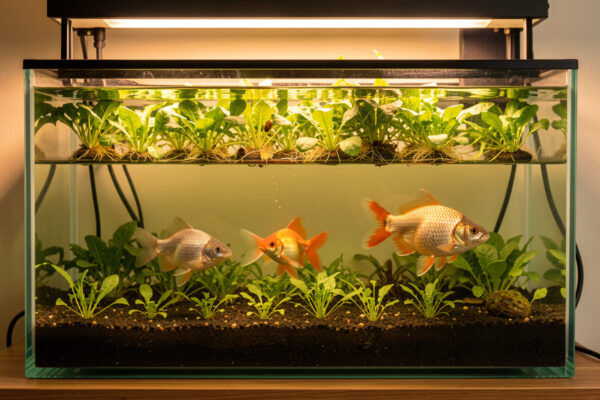
Here is where I lean fully on community consensus rather than personal claim. Beginners do best with hardy, forgiving fish: tilapia where the climate and law allow them (they want warm water, roughly 72-86°F / 22-30°C), or goldfish and koi for an ornamental no-eat system because they tolerate almost anything. The universal beginner advice is to stock well below your target density at first — a freshly cycled system has a young, fragile bacterial colony, and a full fish load can overwhelm it.
The planning figure most home builders use is roughly 1 lb of fish per 5-7 gallons of tank water once mature, and half that or less when you’re starting. Don’t add all your fish at once; add a few, let the bacteria catch up, then add more over weeks. I’ve pulled together the climate-by-climate fish options — again, from an informed-outsider stance — in best fish species for aquaponics.
The Water Chemistry You Must Watch
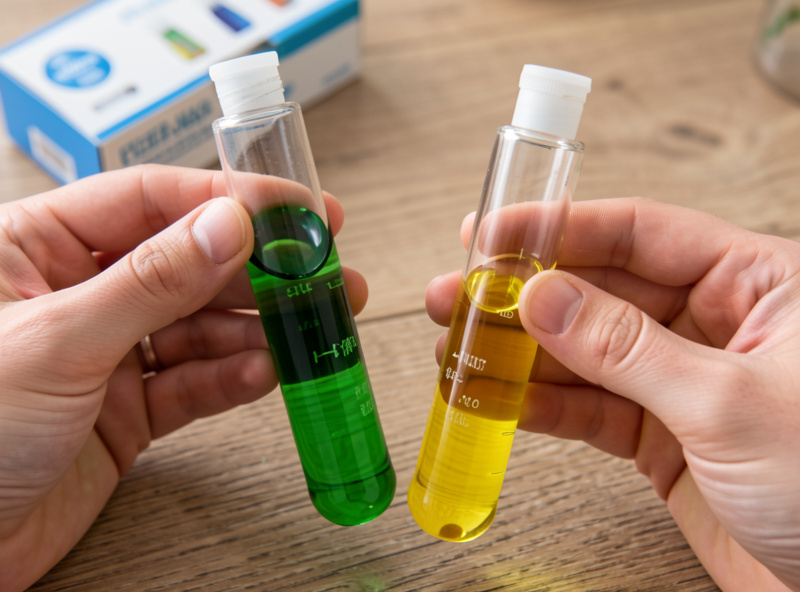
This part is squarely my wheelhouse, because aquaponics chemistry is the same nitrogen and pH chemistry I manage in every hydroponic reservoir. You hold the whole system at a compromise pH of about 6.8-7.0 — higher than the 5.5-6.5 I run in pure hydroponics, because fish and bacteria need it there. You watch four numbers: ammonia (should be near zero in a cycled system), nitrite (near zero), nitrate (present and feeding plants), and pH (steady at 6.8-7.0).
Dissolved oxygen underlies all of it. Fish breathe it, bacteria need it, and roots rot without it — exactly the lesson from dissolved oxygen in hydroponics. Run an air pump and air stones 24/7, and never let warm water quietly suffocate the system. Because aquaponics water runs lean, plants often show iron deficiency (pale new leaves, green veins); supplemental chelated iron fixes it. If you’ve used an EC meter on a hydroponic reservoir, you’ll notice aquaponics reads far lower — that’s normal, because fish feed is the only input.
Grow Easy Crops First
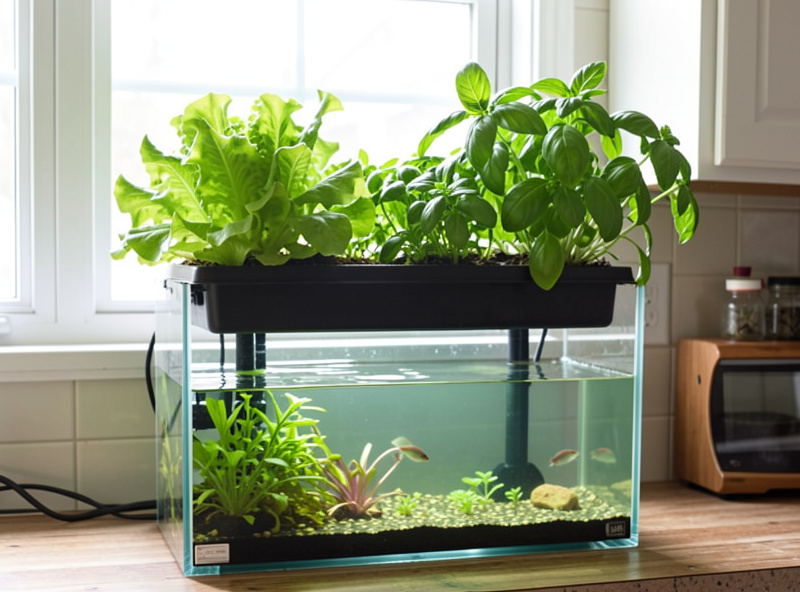
Match your ambition to your system’s maturity. For a first season, grow leafy greens and herbs: lettuce, kale, chard, basil and mint thrive on the nitrate-rich, low-EC water and don’t demand the heavy potassium and phosphorus that fruiting crops need. They’re the same forgiving first crops I recommend for new hydroponic growers, and they’ll be ready in weeks rather than months.
Hold off on tomatoes, peppers and cucumbers until you’ve run a clean season of greens. Fruiting crops need a mature, well-stocked system and almost always need supplemental potassium and calcium — they’re the advanced tier, not the starting line. If you want the broader picture of how the plant, fish and bacteria all balance, the complete aquaponics guide is the hub that ties every piece together.
The Mistakes That Kill First Systems
Almost every beginner failure is one of a short list, and all of them are impatience. Adding fish before the system is cycled tops it. Overstocking is second. Chasing pH with harsh acid and shocking the fish is third. Ignoring water temperature — letting a summer afternoon cook a stocked tank — is the one that kills fastest, sometimes within hours. And not testing daily in the first month, so you don’t see ammonia climbing until fish are already gasping.
None of these require expertise to avoid — they require a thermometer, a test kit, and the discipline to wait. That’s the same discipline that separates a clean hydroponic grow from a crashed one: the system tells you what it needs before it fails, but only if you’re measuring. Treat the daily glance-and-test as the price of admission, and aquaponics becomes one of the most rewarding systems you can run at home.
Frequently Asked Questions
How long before I can add fish to a new aquaponics system?
Four to six weeks. The system must finish cycling first, meaning the nitrifying bacteria are established and your tests show ammonia and nitrite at near zero with nitrate present. Adding fish sooner floods the system with ammonia and kills them.
What is the easiest aquaponics system for a beginner?
A media-bed flood-and-drain system. The bed of clay pebbles grows the plants, filters solids, and houses the bacteria all at once, so there is no separate biofilter to manage. Raft and NFT systems need extra filtration and are harder to start.
What fish should a beginner start with?
Hardy, forgiving species: tilapia where climate and law allow warm water, or goldfish and koi for an ornamental no-eat system. Stock well below your target density at first, since a freshly cycled system has a young, fragile bacterial colony.
What should I grow first in aquaponics?
Leafy greens and herbs such as lettuce, kale, chard, basil and mint. They thrive on the nitrate-rich, low-EC water and are ready in weeks. Save tomatoes, peppers and cucumbers for a mature, well-stocked system.
How often should I test the water as a beginner?
Every day for the first month, then a few times a week once stable. Watch ammonia, nitrite, nitrate and pH. Daily testing is how you catch rising ammonia before it harms fish, which is the most common beginner failure.
Why are my aquaponic plants pale and yellowing?
Most often iron deficiency, shown as pale new growth with green veins. Aquaponics runs at a higher pH and lower nutrient strength than hydroponics, which limits iron availability. Adding chelated iron usually fixes it.