There are three core aquaponics designs — media bed, deep water culture (raft), and nutrient film technique (NFT) — plus hybrids that combine them. The media bed is the right first build for almost everyone because the bed of clay pebbles does three jobs at once: it grows plants, filters solids, and houses the bacteria. Rafts and NFT scale better for leafy greens but demand a separate biofilter, which is the design decision that trips up most home builders.
Design is the part of aquaponics I’m genuinely comfortable with, because it’s plumbing and water movement — the same logic I apply building hydroponic rigs and 3D-printing the parts that make them work. The fish are a separate hobby I treat as an outsider, but how you lay out tanks, beds, pumps and filters is a systems problem, and that’s home turf. Below I’ll walk through each design, the components every system shares, and how to size them, so you can pick a layout that matches your space and ambition instead of copying a video build that may not suit either.
Media Bed: The Default Build
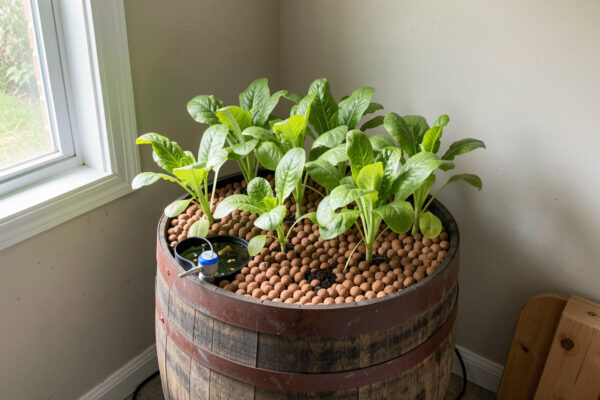
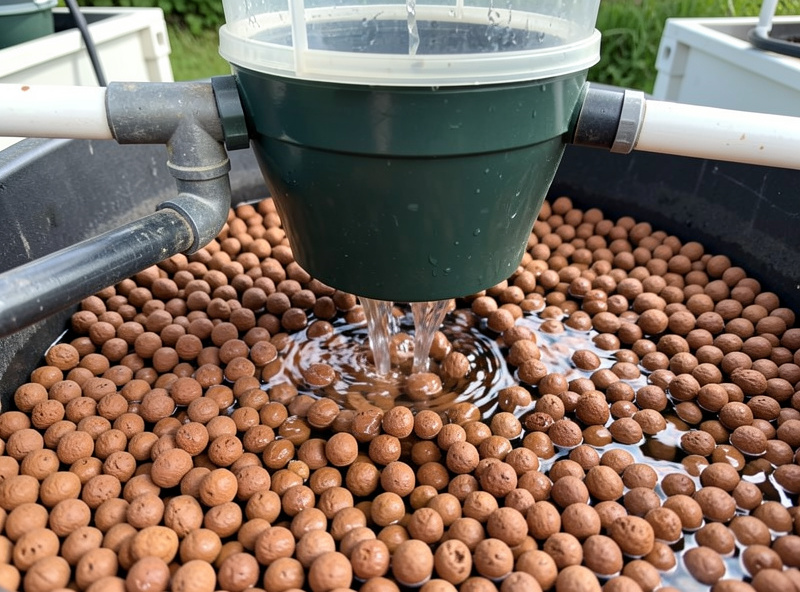
A media-bed system grows plants in a container filled with an inert medium — usually expanded clay pebbles (hydroton) or gravel — that is flooded with fish-tank water and then drained on a cycle. The medium is the heart of the design: its huge surface area hosts the nitrifying bacteria, it physically traps solid fish waste, and it anchors plant roots. Because all three functions live in the bed, a media system needs no separate biofilter, which is exactly why it’s the most forgiving starting point.
The flood-and-drain action comes from either a timer-controlled pump or, more elegantly, a bell siphon that fills the bed and then auto-drains it when the water reaches a trigger height — the same flood-and-drain principle I run in ebb-and-flow hydroponics. A grow bed around 12 inches (30 cm) deep handles almost any crop including fruiting plants, and the periodic draining pulls fresh air down to the roots, which keeps dissolved oxygen high where it matters. The trade-off is weight — a flooded gravel bed is heavy — and that the media slowly accumulates solids and needs occasional cleaning.
Deep Water Culture (Raft): Scaling Leafy Greens
In a raft system, plants sit in net pots set into floating foam boards, with their roots dangling directly into a channel of deep, aerated, nutrient-rich water. It’s the same principle as the DWC I run on my own bench, scaled into long troughs. Raft systems shine for leafy greens and herbs grown in volume because the large water mass is thermally stable and the plants have constant access to water and nutrients.
The catch — and it’s the one beginners underestimate — is that the raft channel itself does almost no filtering. Solid fish waste would foul the roots and rob oxygen, so a raft system requires dedicated mechanical filtration (a swirl or radial-flow filter to drop out solids) and a separate biofilter to host the bacteria, both plumbed before the water reaches the rafts. Get that filtration train right and a raft system is a leafy-green machine; skip it and you get root rot and crashing oxygen. Heavy aeration along the channel is non-negotiable.
NFT: Channels for Lightweight Crops
Nutrient film technique runs a thin film of water down sloped channels, with plant roots sitting in the channel and wicking what they need — the design I cover in NFT hydroponic systems. In aquaponics, NFT suits lightweight, fast leafy crops and makes excellent use of vertical and wall space. It uses very little water in the channels themselves, which keeps the system light.
NFT is the least beginner-friendly of the three for two reasons. Like rafts, the channels can’t host enough bacteria, so it needs full external filtration and biofiltration. And the thin film is unforgiving: a clog or a pump failure dries the roots within hours, and aquaponic water carries more solids than clean hydroponic solution, so channels clog more readily. I’d only point a beginner at NFT after they’ve run a media bed and built the filtration habit.
The Components Every System Shares
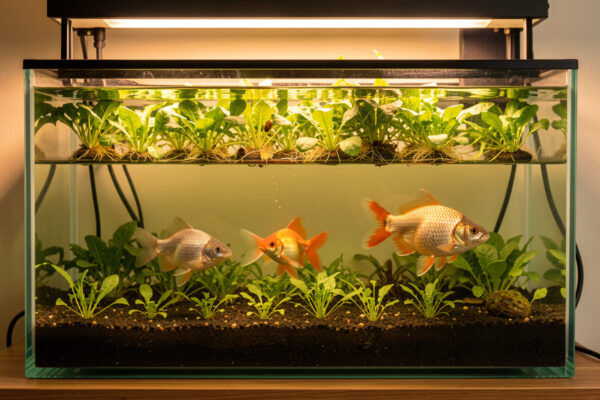
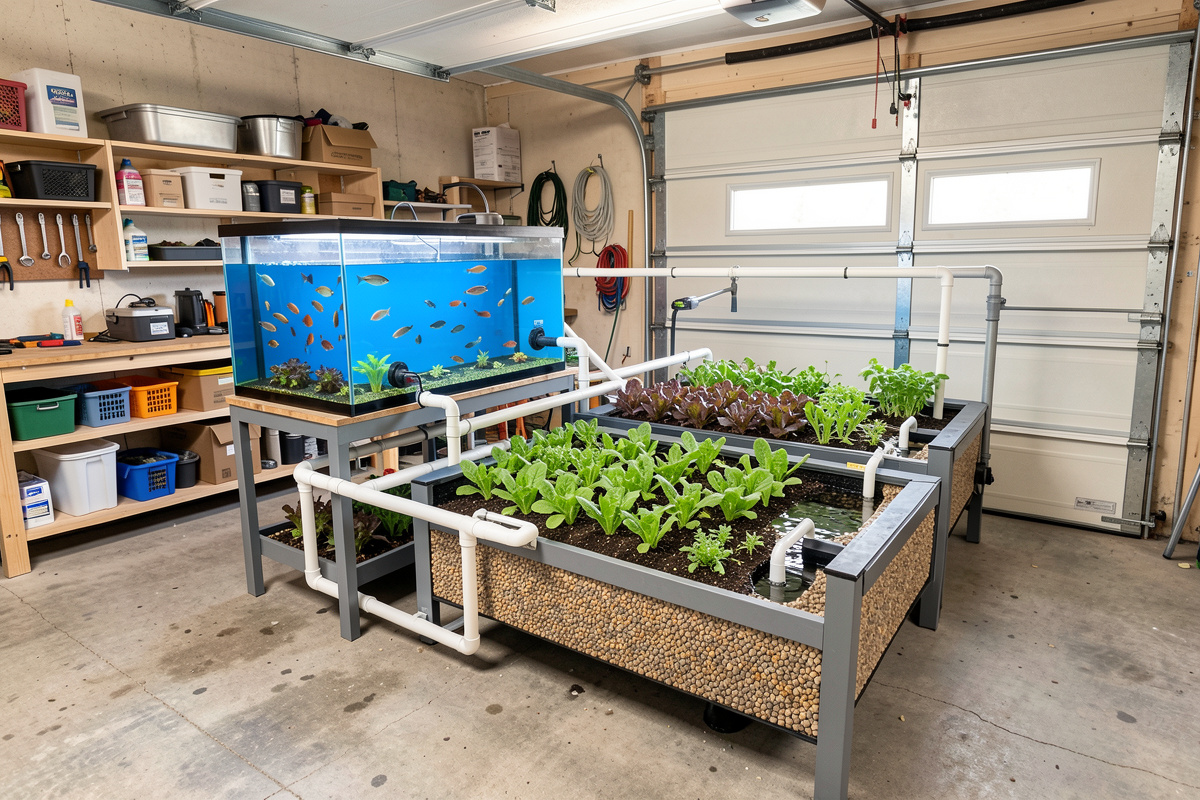
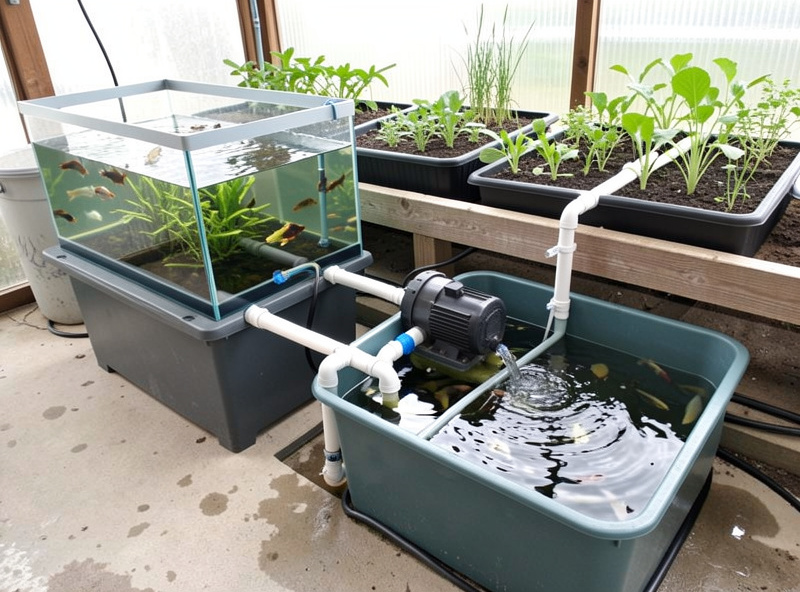
Whatever the growing method, an aquaponics system is built from the same parts, and understanding them is what lets you design rather than copy. The fish tank holds the livestock and most of the water. The grow bed or channel holds the plants. A mechanical filter removes solid waste (essential for raft and NFT, built into media beds). A biofilter hosts the bacteria (again, built into media beds). A sump tank, in many designs, collects water at the lowest point so a single pump can lift it back up. The pump moves water; air pumps and air stones keep it oxygenated.
The most robust home layouts use a sump-based recirculating design — often called CHOP or CHIFT-PIST (Constant Height In Fish Tank, Pump In Sump Tank). The idea is simple and reliable: water gravity-feeds from the fish tank through the grow beds to a sump, and one pump lifts it from the sump back to the fish tank, keeping the fish tank level constant. A constant water level is easier on the fish and means a pump failure drains into the sump rather than emptying the fish tank. It’s the kind of fail-safe plumbing logic I appreciate as a maker — the design itself protects you from the worst failure mode.
Comparing the System Designs
Here’s how the designs compare on the decisions that actually matter when you’re choosing one. The plumbing and filtration logic is mine to stand behind; match it to your crop and your patience.
| Design | Filtration Needed | Best Crops | Water Use | Beginner Fit |
|---|---|---|---|---|
| Media Bed | None — built into the bed | Anything, incl. fruiting | Higher (media holds water) | Best |
| Raft / DWC | Mechanical + biofilter | Leafy greens, herbs in volume | High (large water mass) | Moderate |
| NFT | Mechanical + biofilter | Light leafy greens | Lowest | Hardest |
| Hybrid (media + raft) | Partial — media pre-filters | Mixed garden | High | Moderate |
Sizing the System
Sizing is where measurement beats guesswork. A common starting ratio for media beds is roughly equal grow-bed volume to fish-tank volume (about 1:1), increasing toward 2:1 grow bed to tank as the system matures and the fish load grows. For pump flow, a good rule is to turn over the entire fish-tank volume roughly once per hour — enough to keep solids moving to the filter and water oxygenated without blasting the fish.
The real sizing constraint, though, is the balance between fish and plants, and that’s driven by feeding rate rather than tank dimensions — I work through the numbers in the fish-to-plant ratio guide. Design the plumbing to be generous and flexible: oversize the sump, leave room to add grow beds, and plan for more aeration than you think you need. Every system I’ve ever built, hydroponic or otherwise, I’ve wished I’d left more headroom in. Start with the complete aquaponics guide for how the whole loop fits together, and the beginner guide for the build-and-cycle sequence.
Vertical and Small-Space Designs
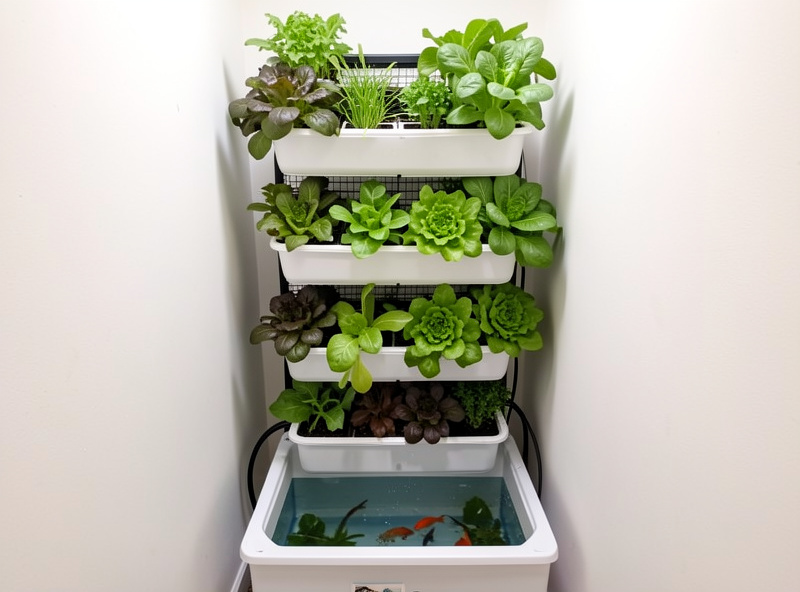
Not everyone has floor space for a barrel and a grow bed, and aquaponics adapts to tight rooms better than people expect — a constraint I know intimately, growing indoors through a Swedish winter where every square foot of lit space is precious. Vertical aquaponics stacks growing area above a compact fish tank: water is pumped to the top and trickles down through stacked towers, NFT channels, or media-filled vertical columns, returning to the tank at the bottom. It multiplies your growing area per square foot of floor, which is exactly the math that matters when space, not water, is your limiting resource.
The honest trade-offs are real. Vertical designs lean toward lightweight leafy crops and herbs because the towers can’t carry heavy fruiting plants, and they depend completely on the pump — gravity does the watering, so a power cut stops everything. They also need careful attention to even water distribution so the top plants don’t starve the bottom ones, or vice versa. For a small flat or a spare-room corner, though, a compact tank feeding a vertical tower or a short wall of NFT channels is a genuinely smart use of space. This is also where the maker side earns its keep: I print tower segments, channel brackets and net-pot collars to fit the exact space I have, rather than forcing the space to fit an off-the-shelf kit.
A Hybrid Worth Considering
One layout I think is underrated for home growers is the media-bed-plus-raft hybrid: water flows from the fish tank through a media bed first, where the media strips solids and hosts bacteria, then on to a raft channel for leafy greens. The media bed does the filtering the raft would otherwise need, so you get the raft’s leafy-green productivity without bolting on a separate filter train. It’s more plumbing to balance, but it’s an elegant way to grow both fruiting crops (in the bed) and volume greens (on the rafts) in one loop. If you enjoy the design and maker side the way I do, it’s a satisfying second system once a simple media bed has taught you the fundamentals.
Whatever you build, the design serves one goal: keep the water clean, oxygenated and moving so the fish, the bacteria and the roots all stay healthy. Get the layout right and the day-to-day care, covered in the maintenance guide, becomes a quiet routine rather than a constant rescue. For the bigger picture of how aquaponics stacks up against running clean hydroponics instead, see aquaponics vs hydroponics.