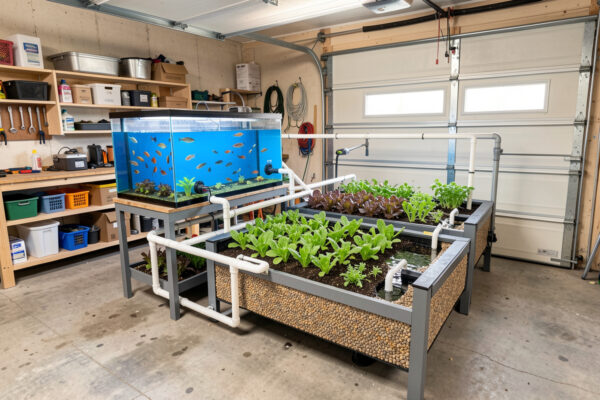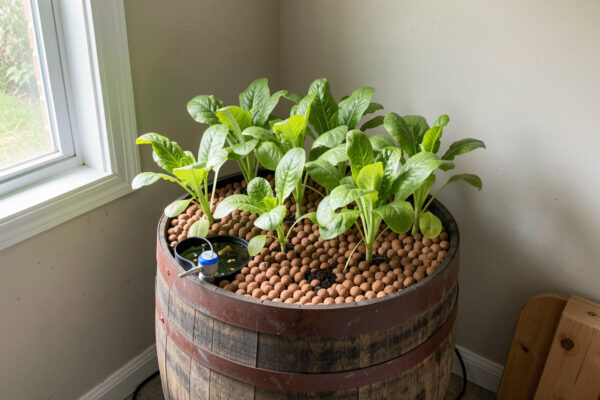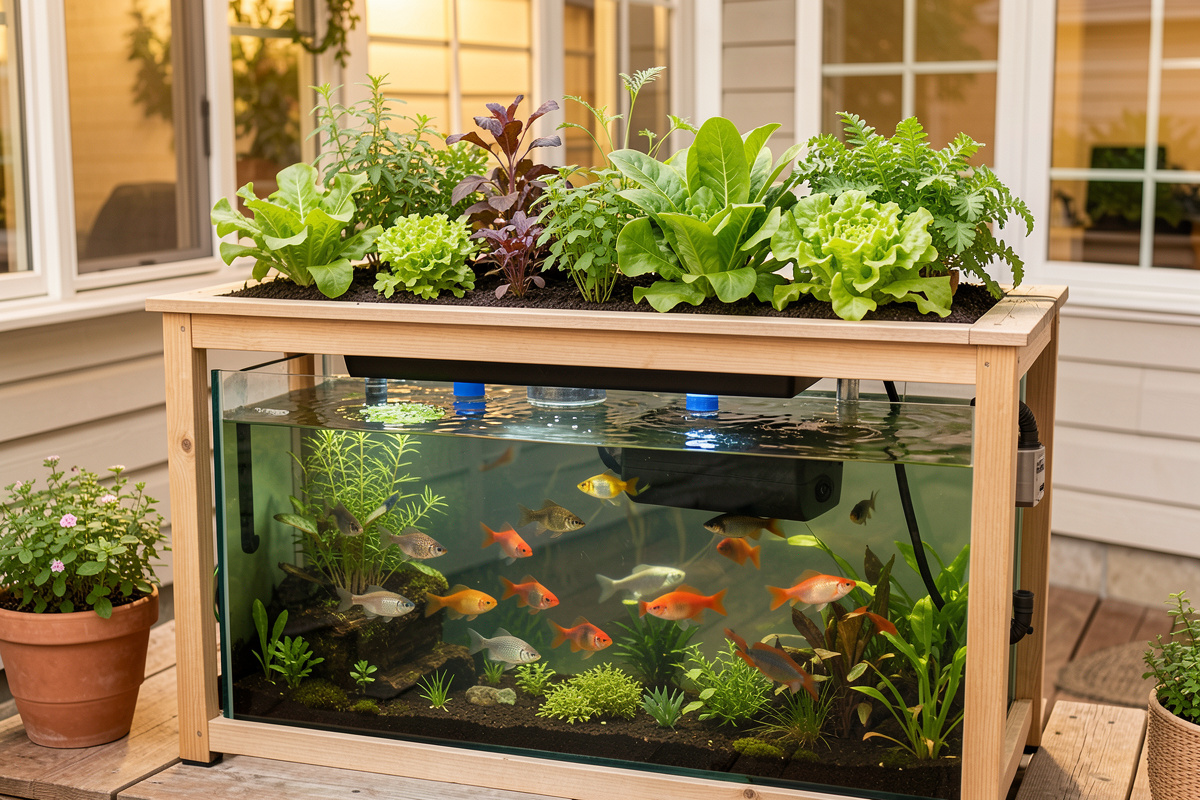
A mature aquaponics system is mostly hands-off, but “mostly” hides a real rhythm: feed the fish daily and watch them, test the water weekly, clean solids before they clog, and top up evaporation with dechlorinated water. The one thing you almost never do is a full water change — that would dump the bacteria you spent six weeks growing. Maintenance here is gentle correction, not the periodic reset I run on a hydroponic reservoir.
This is the day-to-day side of aquaponics, and it’s where my measurement habit and the fish-keeping I defer on meet in the middle. The water chemistry and the system care are squarely mine to explain; the fish-health judgement calls I’ll keep flagging as the community’s domain. What I can tell you with confidence is the routine that keeps the water clean, oxygenated and balanced — because that routine is the same discipline I apply to every system on my bench, just tuned for a tank with livestock in it.
The Daily Rhythm
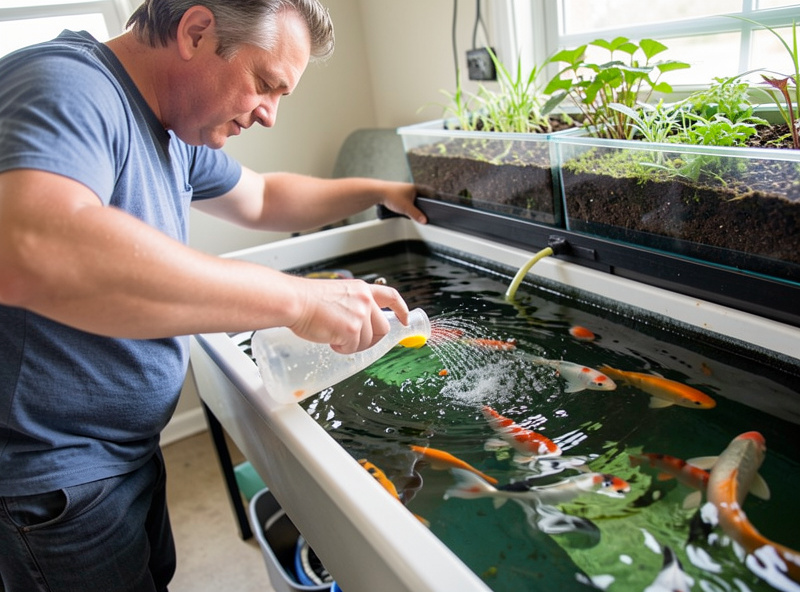
Daily aquaponics care takes only a few minutes, and most of it is observation. Feed the fish what they’ll eat in about five minutes, once or twice a day, and remove any uneaten food before it rots and spikes ammonia. While you’re there, actually look: are the fish behaving normally, swimming and feeding, or gasping at the surface (a dissolved-oxygen warning)? Are the plants perky? Is the water clear? Is the pump still moving water and are the air stones still bubbling?
That last check is the one that saves systems. A failed pump or air pump is the fastest way to lose fish, because oxygen crashes within hours in a stocked tank — the same dissolved-oxygen physics I cover in dissolved oxygen in hydroponics, except here it’s lethal to livestock, not just roots. A daily glance at flow and aeration is thirty seconds that prevents the worst failure mode in the hobby.
The Weekly Tests and Cleaning
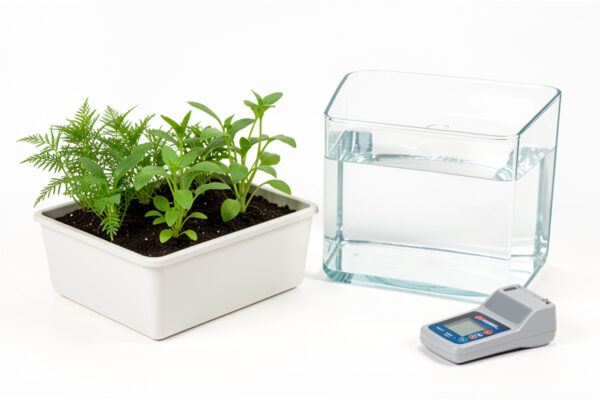
Once a week, you put numbers to what your eyes have been telling you. Test ammonia, nitrite, nitrate and pH. In a healthy mature system ammonia and nitrite read at or near zero, nitrate is present, and pH sits near the 6.8-7.0 compromise. This is the same instrument-first habit I bring to every reservoir — your eyes lie, your test kit tells the truth, and weekly testing catches drift long before it becomes a crisis.
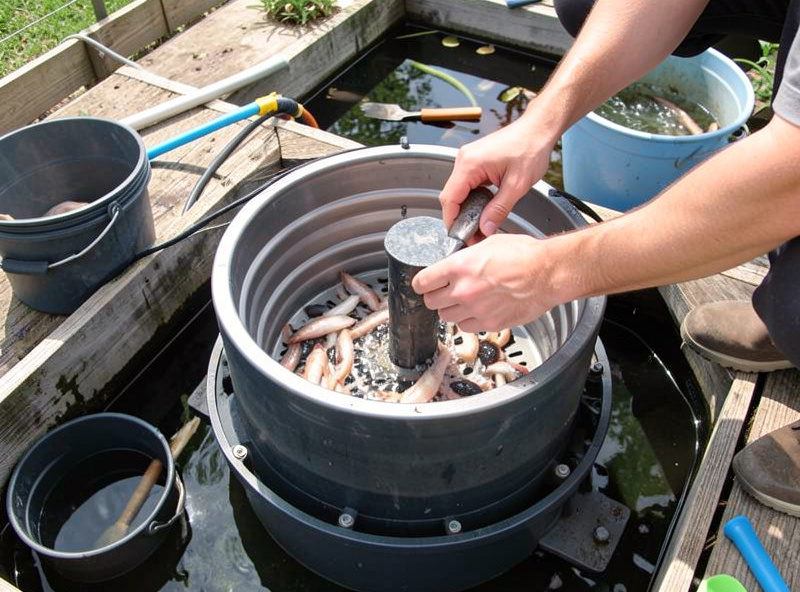
Weekly cleaning is mostly about solids. Clean or rinse the mechanical filter (the swirl or radial-flow filter that drops out fish waste) so it doesn’t clog and rob the system of flow. Check that grow beds aren’t accumulating sludge, and glance at the roots for the brown, slimy look of root rot — the same Pythium risk I manage in DWC, prevented the same way: cool, oxygenated water. Top up water lost to evaporation and transpiration with dechlorinated water, because chlorine kills your bacteria as readily as it would in any biofilter.
Why You Top Up Instead of Changing Water
This is the cleanest break from how I run hydroponics. On my hydroponic reservoirs I periodically dump and remix the whole solution to reset EC and nutrient balance. In aquaponics you must not do that, because the water is alive — it carries your nitrifying bacteria and the established nutrient balance. A full water change throws that away and can crash the system back toward an uncycled state.
Instead, you top up. As water evaporates and plants transpire, you add dechlorinated water to keep levels steady, and the dissolved minerals and bacteria stay put. The system self-regulates its nutrient balance through the fish-feeding loop rather than through your remixing — which is exactly why getting the fish-to-plant ratio right matters so much. You’re maintaining an equilibrium, not resetting a solution.
Managing pH the Slow Way
Here’s a counterintuitive bit of chemistry that catches hydroponic growers off guard: in aquaponics, pH tends to drift down over time, not up. The nitrification process itself produces acid, so an established system slowly acidifies and you find yourself needing to raise pH, not lower it. That’s the opposite of my usual reach for pH Down on the hydroponic bench.
The elegant part is that you raise aquaponic pH with buffers that double as nutrients. Calcium carbonate (or calcium hydroxide) lifts pH and supplies calcium; potassium carbonate or bicarbonate lifts pH and supplies potassium. Many growers alternate the two, which both stabilises pH and quietly supplements the calcium and potassium that fish feed runs short on. And whatever you do, nudge slowly — a fast pH swing stresses fish far more than plants, so you correct gently over days, never in one harsh dose.
Supplementing the Nutrient Gaps
Fish feed is a good nitrogen source but a deliberately incomplete fertiliser, so part of routine maintenance is topping up what it can’t supply. The classic gap is iron: aquaponic plants frequently show iron deficiency — pale new growth with green veins — because the higher pH limits availability and the system carries little to begin with. Chelated iron, added in small amounts, fixes it. Fruiting crops often need supplemental potassium and calcium too, which is where the pH buffers above earn double duty.
The discipline is the same one from hydroponic nutrients: watch the plants, read the deficiency in the leaves, and correct the specific element rather than dumping in everything. Aquaponics asks for less supplementing than hydroponics overall — the fish do most of the work — but the few gaps it leaves are predictable, and a grower who knows them keeps plants healthy with small, targeted additions.
Pests, Temperature and Seasons
Pest control is genuinely harder in aquaponics than in pure hydroponics, because the chemical treatments I might reach for would poison the fish. That rules out most pesticides outright. Instead you lean on physical and biological controls — yellow sticky traps, manual removal, beneficial insects, and careful environmental control — and you keep the fish water entirely separate from any leaf treatment. It’s a real constraint, and it’s one reason a clean, well-run system that avoids pests in the first place beats one you’re constantly rescuing.
Temperature is the seasonal job, and in my cold Swedish setup it’s the big one. Your fish set the target range, and holding it costs energy — heating for warm-water species in winter, watching for dangerous warmth and oxygen loss in summer. The same water-temperature logic from hydroponics applies, now with fish welfare layered on top. Plan for the season your climate actually has, not the one the warm-climate tutorials assume.
The Maintenance Schedule at a Glance
Here’s the routine condensed. Treat it as the backbone; your own system’s tests will tell you where to lean in harder.
| Frequency | Task | Why It Matters |
|---|---|---|
| Daily | Feed fish, observe behaviour, check pump & aeration | Catches oxygen and equipment failures fast |
| Daily | Remove uneaten food, top up evaporation | Prevents ammonia spikes; keeps levels stable |
| Weekly | Test ammonia, nitrite, nitrate, pH | Catches chemistry drift before it harms fish |
| Weekly | Clean mechanical filter, check roots | Prevents clogs and root rot |
| Monthly | Deep-clean filters, inspect pump & plumbing | Avoids slow flow loss and surprise failures |
| As needed | Add chelated iron, buffer pH, supplement K/Ca | Fills the nutrient gaps fish feed leaves |
| Seasonal | Adjust heating or cooling for fish range | Holds fish health and dissolved oxygen |
Frequently Asked Questions
How often should I do a water change in aquaponics?
Almost never a full one. A complete water change would dump the nitrifying bacteria and crash the system. Instead, top up evaporation with dechlorinated water and let the system self-regulate. Only partial changes are used to dilute a specific problem.
Why does my aquaponics pH keep dropping?
Nitrification naturally produces acid, so an established system slowly acidifies over time. You raise pH gently using buffers like calcium carbonate or potassium bicarbonate, which also supply calcium and potassium the fish feed runs short on.
How often should I test aquaponics water?
Weekly for a stable mature system, and daily during cycling or after any change. Test ammonia, nitrite, nitrate and pH. In a healthy system ammonia and nitrite read near zero, nitrate is present, and pH sits near 6.8-7.0.
Can I use pesticides in an aquaponics system?
No, most pesticides would poison the fish. Rely on physical and biological controls such as sticky traps, manual removal and beneficial insects, and keep any leaf treatment away from the fish water entirely. Prevention through a clean system is the best approach.
Keep Building
Maintenance is where aquaponics rewards the patient grower: get the routine right and the system runs quietly for months between any real intervention. If you’re still building your foundation, the complete aquaponics guide ties the whole loop together, the beginner guide covers the build-and-cycle sequence, and cycling the system is the step that makes all of this maintenance possible in the first place.