Yield in hydroponics is set long before you pick up the scissors. On my bench, the heads that came off heavy were the ones where light, dissolved oxygen, EC and timing all lined up — get those four right and a head of butterhead lettuce hits harvest weight in roughly 30 to 35 days from transplant under a measured 16-hour photoperiod. Everything else is fine-tuning.
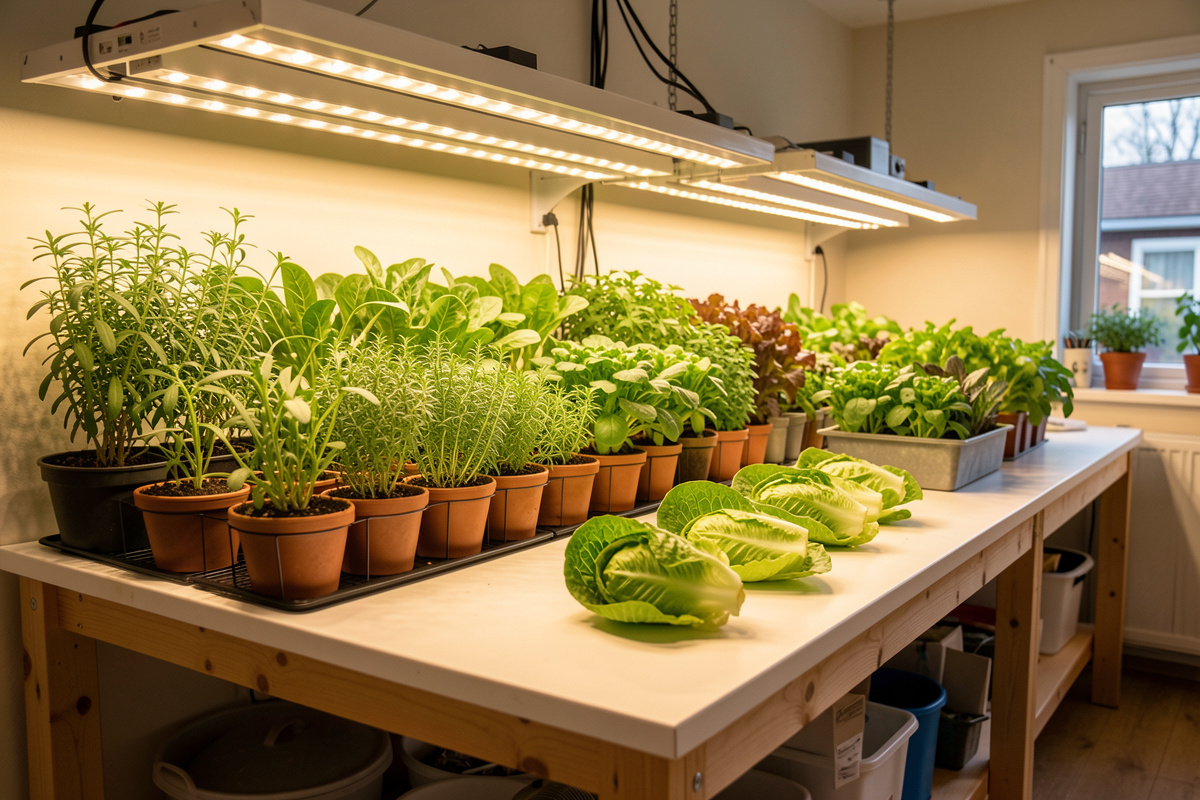
I run DWC, NFT, Kratky and ebb-and-flow side by side under one roof in Sweden, where short winter daylight forces me to do the light math instead of guessing at it. That side-by-side setup is the whole reason this guide exists: I’m not reporting what one system does, I’m comparing what four of them do on the same crops with the same meters. This page is the map. It pulls together everything that touches harvest and yield — when to cut, how to cut for a continuous supply, how to push yield without crashing the res, how to prune and train, how light intensity sets the ceiling, and what to do with the produce once it’s off the plant.
What “yield” actually means once you start logging it
Yield is harvested edible mass per unit of space and time — grams of usable leaf, fruit or herb per square foot per week. That last part, per week, is what most hobby content drops, and it’s the number that matters in a Nordic indoor grow where bench space and electricity both cost something. A system that gives me a 400-gram lettuce head in 45 days is beaten by one that gives me 300 grams in 28.
The way I dial mine in is to log three things every res cycle: EC at mix and EC at top-off (so I can see how hard the crop is feeding), res temperature, and PPFD at canopy height. When yield drops, the answer is almost always sitting in one of those three columns. I’ve never once found a yield problem that wasn’t visible in the logs first — the plant was telling me through its feeding rate or its leaf colour days before the harvest weight confirmed it. If you take one habit from this whole guide, take that one: weigh your harvests and write the number down next to that cycle’s EC and PPFD. Three crops in, you’ll have your own data instead of mine.
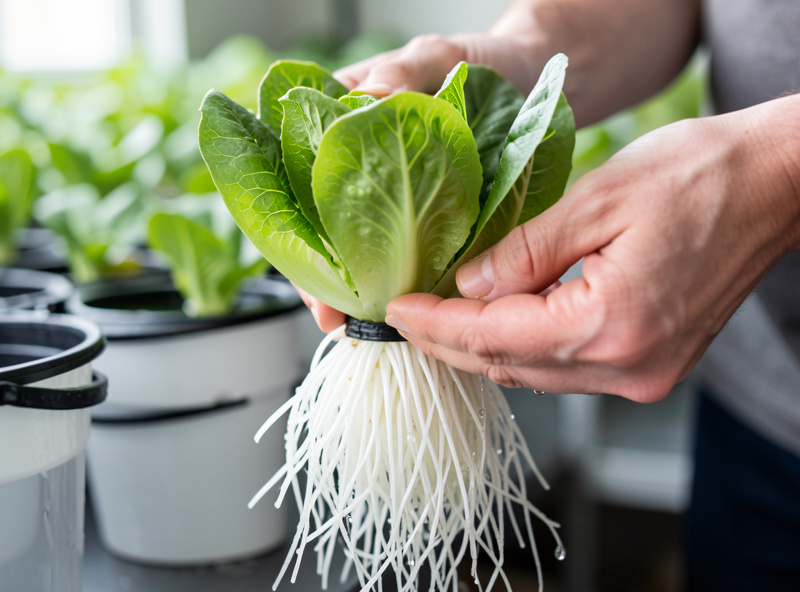
The six levers that actually move yield
After enough cycles you stop chasing magic additives and start working a short list of levers that genuinely change the harvest weight. There are six, and each one has its own deep-dive in this cluster:
- Harvest timing — cutting at the right developmental point, not the calendar date. Cut too early and you leave mass on the plant; too late and lettuce bolts, basil flowers, fruit splits. See when to harvest hydroponic plants.
- Harvest method — single clean-out versus cut-and-come-again. The right choice can double the total mass off one transplant. See the continuous harvest method.
- Light intensity — the hard ceiling on photosynthesis. No nutrient trick beats more usable PPFD up to the crop’s saturation point. See how grow light intensity affects yield.
- Pruning and training — moving the plant’s energy into the parts you eat and opening the canopy to light and air. See pruning and training in hydroponics.
- Root-zone health — dissolved oxygen, EC and temperature. A choking root zone caps everything upstream of it.
- Post-harvest handling — yield you grew but then let wilt in a warm kitchen is yield you lost. See post-harvest storage for hydroponic produce.
If you want the full overview of pushing all of these together, the dedicated maximize hydroponic yield guide is the deep version of this section. The rest of this page walks each lever in turn.
Knowing when to cut
Harvest timing is the cheapest yield gain there is — it costs nothing and most growers leave 15 to 25 percent of their potential weight on the plant by cutting on a hunch. The signal differs by crop. Leafy greens are ready when the outer leaves reach full size but before the core stretches and the leaf margins turn bitter; for butterhead that’s a firm hand-sized head, usually day 30 to 35 from transplant on my bench. Basil wants its first cut as soon as it has three to four sets of true leaves, taken above a node so it branches. Fruiting crops are the opposite of leaf crops — patience pays, because a tomato that finishes colouring on the vine carries more sugar and weight than one picked at first blush.
The mistake I made early was treating “days to harvest” on the seed packet as gospel. Those numbers assume soil and field light. Under measured indoor light my crops run faster or slower than the packet depending on the DLI I’m actually delivering — which is exactly why I log PPFD. The full breakdown of timing cues, crop by crop, lives in the when-to-harvest guide, and it pairs with the hydroponic crops guide for what each plant wants in the first place.
One big cut, or a continuous supply?
There are two ways to take a harvest, and choosing the wrong one for your crop quietly halves your output. A single harvest clears the whole plant at once — the model for head lettuce, a finished tomato truss, or a crop you’re rotating out to reset the system. A continuous (cut-and-come-again) harvest takes the outer leaves or upper growth and leaves the plant in the system to regrow, which on loose-leaf lettuce, kale, chard and most herbs gives me three to five pickings off a single transplant before the plant tires.
Across the methods I run side by side, continuous harvesting is where NFT and ebb-and-flow earn their keep for greens — the plants stay put for weeks and I’m pulling salad every few days instead of in one glut. Kratky, by contrast, is fundamentally a single-harvest method: once the reservoir draws down there’s no clean way to keep feeding a regrowing plant, so I treat each Kratky jar as one-and-done. The full strategy, including how to stagger transplants so something is always ready, is in the continuous harvest guide.
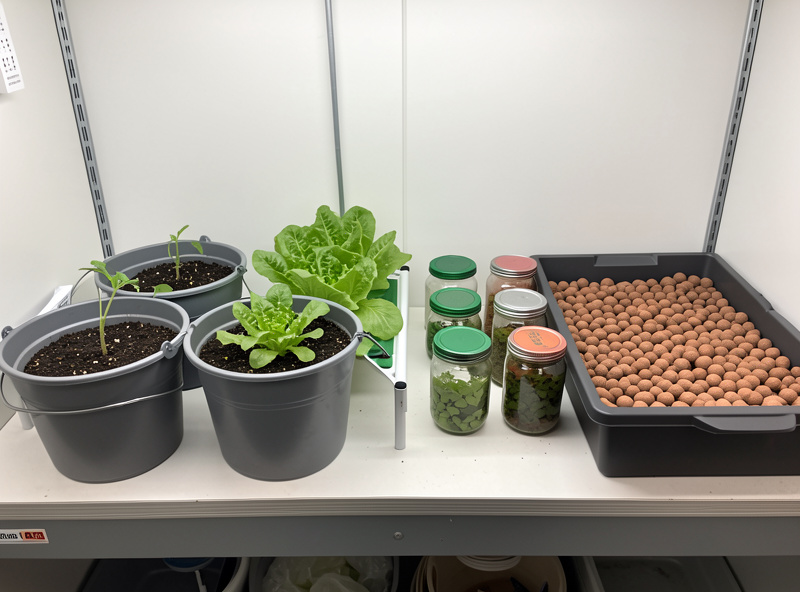
Light is the ceiling — everything else is the climb
You cannot out-feed a light deficit. I’ve watched a perfectly mixed reservoir at textbook EC produce thin, pale, low-weight lettuce simply because the canopy was sitting at 120 µmol/m²/s when it wanted closer to 250. Photosynthesis is rate-limited by usable light up to the crop’s saturation point, and below that point nutrients pile up unused — which is how a light problem disguises itself as a feeding problem.
The numbers I work to: leafy greens and herbs are happy at roughly 200–300 µmol/m²/s PPFD delivering a daily light integral (DLI) of about 14–17 mol/m²/day; fruiting crops want 400–600 µmol/m²/s and a DLI in the low-to-mid 20s. In a Swedish winter, sunlight contributes almost nothing to that, so the fixture has to deliver the whole DLI on a measured photoperiod — this is the math warm-climate growers never have to do. I cover the targets in the PPFD and DLI guide and the practical scheduling in the grow light schedule, but the yield-specific version — how raising intensity actually translates to harvest weight, and where it stops paying off — is in how grow light intensity affects yield.
Pruning and training: moving energy to the parts you eat
Pruning feels counterintuitive — you’re cutting off growth to get more harvest — but on indeterminate tomatoes and peppers it’s one of the biggest yield levers I have. Removing the suckers on a tomato concentrates the plant’s energy into the main stem and the fruit trusses I’m keeping, and lollipopping the lower leaves opens airflow that keeps Pythium and powdery mildew off the canopy. Training — lowering and tying stems, or running them along a trellis — keeps every leaf in the productive light zone instead of shading itself out.
For leafy greens the “pruning” that matters is mostly the continuous harvest itself: taking outer leaves is pruning that you also get to eat. The detail — which growth to cut, when, and how it interacts with the open-canopy airflow that keeps disease down — is in pruning and training in hydroponics. It connects directly to the disease side covered in the pests and diseases guide, because an open, pruned canopy is your first line of IPM.
The root zone sets the upstream limit
Light and pruning are wasted if the root zone is choking. Three things have to hold: dissolved oxygen, EC, and temperature. Roots respire, and they need oxygen in the water to do it — starve them and you get the brown, slimy, sweet-smelling onset of root rot that caps growth before you ever see it in the leaves. I run air stones 24/7 and keep my res below 68°F (20°C); above about 72°F (22°C) the water holds less oxygen and Pythium gets aggressive, a double hit. The full reasoning is in dissolved oxygen in hydroponics, hydroponic water temperature, and the recovery playbook in hydroponic root rot.
EC is the feeding lever. Too low and the plant is undernourished; too high and you hit osmotic lockout where the roots can’t pull water and the plant wilts in a full reservoir. I mix to a target EC rather than by feel — lettuce around 1.2–1.6 mS/cm, fruiting crops climbing to 2.2–2.8 mS/cm as they set fruit. The mixing method is in how to mix nutrient solution and the full feeding picture in the complete nutrients guide. When leaves tell you something’s off, the deficiency identification guide is the diagnostic.
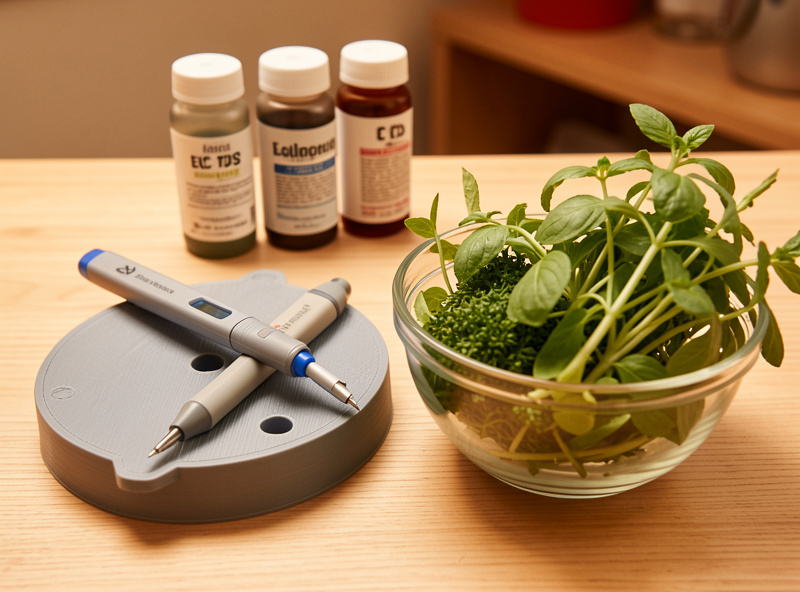
After the cut: don’t lose what you grew
Harvest weight you grew and then let wilt is harvest weight wasted. Hydroponic greens come off clean and hydrated, which is an advantage — no soil grit to wash — but they also have no field-heat buffer and degrade fast if you leave them warm. My routine is to harvest in the cooler part of the day, get the produce to refrigerator temperature quickly, and keep leafy greens lightly humid rather than sealed wet. Done right, hydroponic butterhead holds in the fridge a good deal longer than store lettuce because it never sat in a warm supply chain. The crop-by-crop method — what to wash, what to leave dry, what to refrigerate and what to keep on the counter — is in post-harvest storage for hydroponic produce.
Yield by method: what the four systems actually give me
People want a single “best” system and there isn’t one — there’s a best system for a given crop, space and goal. Here’s how the four I run compare specifically on harvest and yield, not on novelty. This is the comparison I wish someone had handed me before I built four rigs to find it out.
| Method | Best yield fit | Continuous harvest? | Relative yield density | Main yield risk |
|---|---|---|---|---|
| Deep Water Culture (DWC) | Fast leafy greens, single large heads | Yes, with care | High — strong root oxygenation drives fast growth | Res temp / oxygen crashes in summer |
| NFT (Nutrient Film) | Loose-leaf greens, herbs, continuous cropping | Excellent | High per square foot — dense channel packing | Pump failure dries the film fast |
| Kratky (passive) | Single-harvest lettuce, herbs | No — one-and-done | Moderate — no active oxygenation | Reservoir runs dry before harvest |
| Ebb & Flow | Fruiting crops, mixed beds | Yes | High for fruiting crops in pebble beds | Timer/flood failure, salt build-up in media |
On my bench the pattern is consistent: for the fastest weight of leafy greens, well-run DWC and NFT lead because oxygen-rich roots grow fast; Kratky trades a little yield and speed for zero pumps and zero power, which in a winter where I’m already paying for lights is sometimes the right call; ebb-and-flow is my fruiting-crop workhorse where the pebble bed and timed flood suit tomatoes and peppers. If you’re still choosing a system, the how to choose a hydroponic system guide walks the decision, and each method has its own deep build: DWC, NFT, Kratky, ebb and flow, and Dutch buckets for larger fruiting plants.
A realistic yield expectation by crop
Numbers help, as long as you treat them as my bench under my light, not a promise. Under a measured 14–17 DLI, butterhead lettuce gives me a harvestable head in about 30–35 days from transplant; loose-leaf cut-and-come-again keeps producing usable leaf for six to eight weeks off one plant. Basil and most soft herbs hit first cut in three to four weeks and then keep giving for months if I prune above nodes. Fruiting crops are the long game — a hydroponic tomato runs 60+ days to first ripe fruit but then produces for months, and that’s where the per-week yield math swings decisively toward keeping the plant healthy and trained rather than rushing it.
For the crop specifics, the growing lettuce guide and the broader plant growing guide carry the stage-by-stage detail. And if your weights are coming in low across the board, walk the common mistakes guide first — most yield disappointments trace back to one of those, not to anything exotic. Space-limited? A vertical system raises yield per square foot by stacking, which in a small indoor footprint is its own lever.
Putting it together: my harvest-and-yield workflow
The way it runs in practice: I transplant on a staggered schedule so something is always finishing; I hold the root zone cool and oxygenated and feed to a target EC; I deliver the full DLI on a timer because winter sun won’t; I prune and train fruiting crops to keep energy and light where I want them; I harvest at the developmental signal rather than the calendar, using continuous picking on anything that regrows; and I get the produce cold fast so the weight I grew is the weight I eat. None of it is a secret. It’s just six levers, logged and worked one cycle at a time — which is exactly how each guide in this cluster is built.
Frequently Asked Questions
What single factor increases hydroponic yield the most?
Usable light intensity, measured as PPFD and accumulated as DLI. Photosynthesis is rate-limited by light up to the crop’s saturation point, so below that point no nutrient adjustment beats simply delivering more light. Leafy greens want a DLI around 14-17 mol per square meter per day; fruiting crops want low-to-mid 20s.
Does harvesting outer leaves give more total yield than cutting the whole plant?
For loose-leaf greens and most herbs, yes. Cut-and-come-again harvesting of outer leaves leaves the plant in the system to regrow, giving three to five pickings off one transplant versus a single clear-out. Head lettuce and finished fruit are exceptions that are harvested once.
How long does hydroponic lettuce take to reach harvest?
On a measured 14-17 DLI photoperiod, butterhead lettuce reaches a firm harvestable head in roughly 30 to 35 days from transplant. Loose-leaf types can be cut continuously starting around three weeks and keep producing for six to eight weeks off a single plant.
Why are my hydroponic plants growing slowly even with good nutrients?
Usually light or root zone, not nutrients. If canopy PPFD is below the crop’s target the plant cannot use the nutrients it has. If the reservoir is warm or under-oxygenated, the roots choke and cap growth. Check PPFD at canopy and keep the reservoir below 68F with constant aeration before adjusting feed.
Which hydroponic system gives the highest yield?
It depends on the crop. For fast leafy greens, well-run DWC and NFT lead because oxygen-rich roots grow quickly. For fruiting crops, ebb-and-flow and Dutch buckets suit the longer cycle. There is no single best system, only the best fit for a given crop, space and goal.
How do I keep hydroponic produce fresh after harvest?
Harvest during the cooler part of the day, get the produce to refrigerator temperature quickly, and store leafy greens lightly humid rather than sealed wet. Because hydroponic greens never sit in a warm supply chain, they often hold longer than store-bought when cooled promptly.