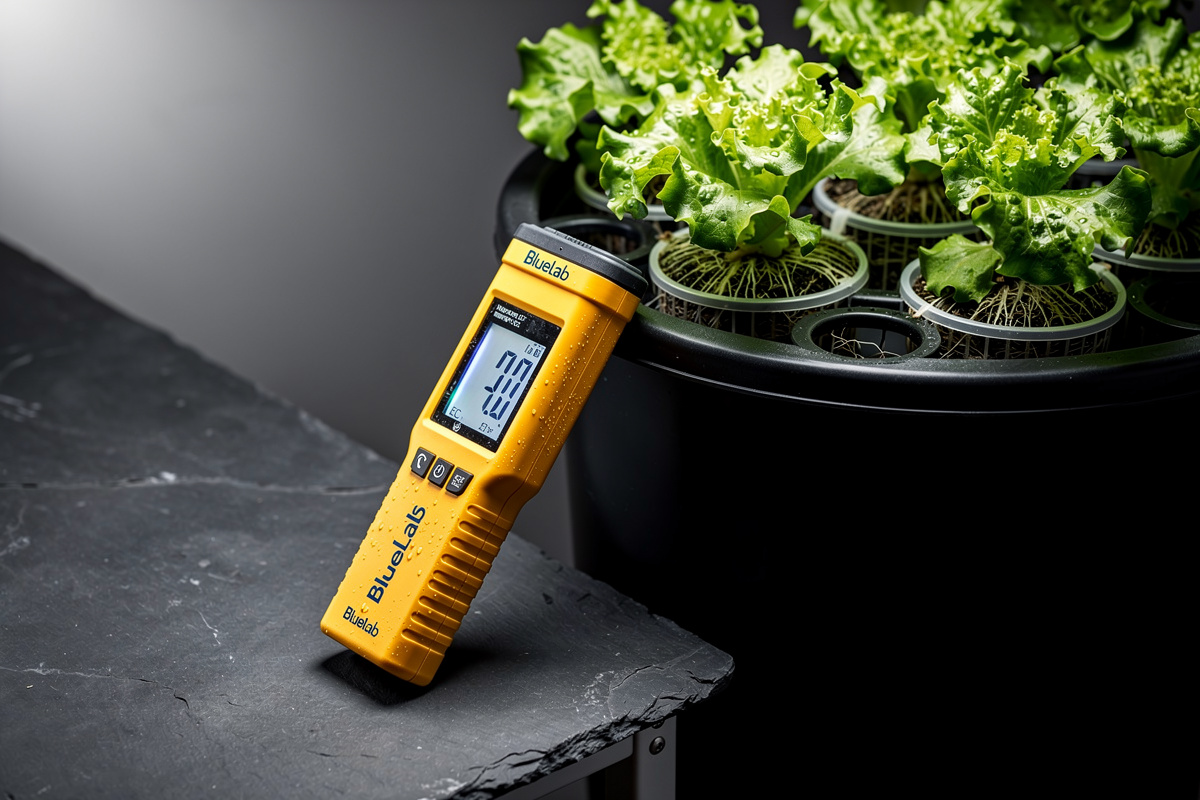
The Bluelab Truncheon is a $130 to $180 EC meter built like a hand tool — no buttons, no settings, no calibration solution required for the first 5 years of use. It is the meter most commercial hydroponic operators reach for, and it’s the one I moved my main DWC row to after chasing calibration drift on a cheap pen twice in one week.
As an Amazon Associate I earn from qualifying purchases.
This buyer’s guide covers what makes the Truncheon different from a budget pen, who actually benefits from the price difference, the trade-offs to consider, and how it fits into a complete hydroponic monitoring setup. I’m assuming you already understand basic EC measurement — if not, start with my EC meter for hydroponics guide first.
What the Bluelab Truncheon Actually Is
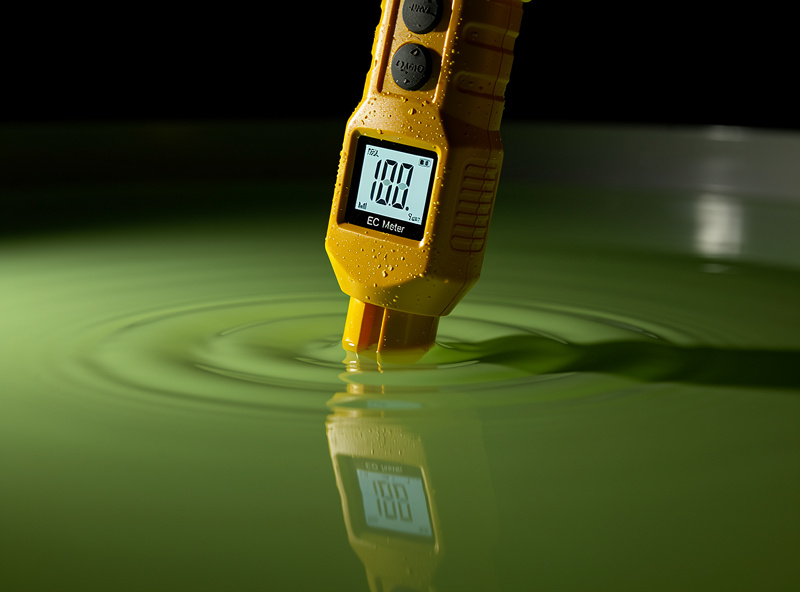
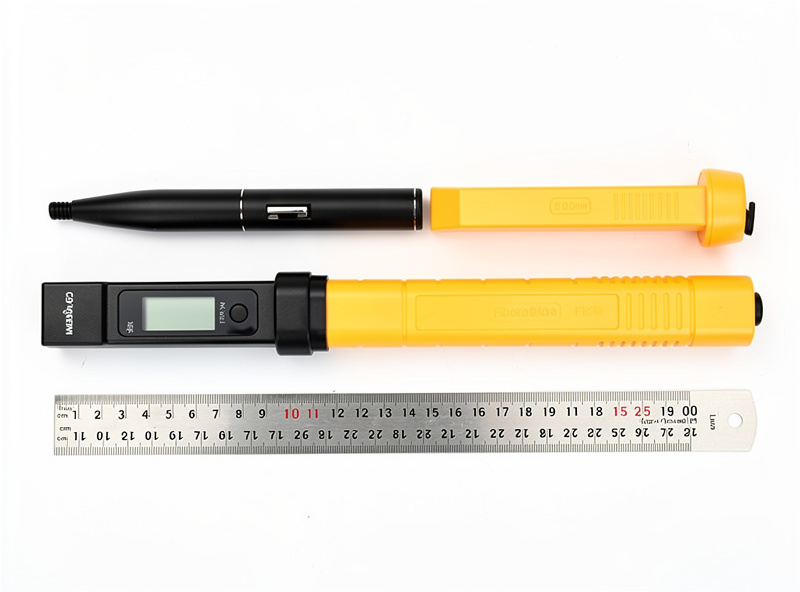
The Truncheon is a 16-inch handheld EC meter shaped like a baton (40.7cm, per Bluelab’s own spec sheet) — longer in hand than it looks in most photos next to a pen meter. The probe sits permanently inside a plastic shell with the LCD readout on top. There are no buttons. To use it you press the only switch on the side, dip the probe into your reservoir until the marked depth line is submerged, wait for the LED bar graph to settle, and read the EC value. Current-production units display EC, CF, PPM 500, and PPM 700 simultaneously — no scale to pick, which is the detail I actually like most about the one I run.
The probe is factory calibrated and the manufacturer claims a 5-year service life before recalibration is needed — a claim that holds up reasonably well in practice for home use. The unit ships with a calibration check pouch that you can use to verify accuracy without buying a separate solution.
What it does not do: it does not measure pH, temperature, or dissolved oxygen. It only measures EC (and converts to PPM internally). For a combo unit with pH measurement, the Bluelab Combo Meter or Bluelab Guardian fills that role. I compare the alternatives in my broader hydroponic equipment buying guide.
Why the Truncheon Differs from a $30 Pen
Three engineering choices separate the Truncheon from cheap pen-style meters. None are exotic, but each addresses a real problem with budget meters.
Sealed, deeply-socketed probe. A $30 pen has a probe at the very tip with two exposed metal contact points. These contacts oxidize, gather biofilm, and physically chip from rough handling. A pen probe typically lasts 12 to 24 months under home-grower conditions. The Truncheon’s probe sits inside a recessed shell that protects it from physical damage and limits biofilm exposure. Manufacturer-rated 5-year probe life — and field reports from commercial growers confirm 5 to 8 years of continuous use.
No-button operation. A standard pen requires you to power on, wait for it to register, dip, wait for stabilization, then read. The Truncheon’s single side switch is held while measuring — push, dip, read, release. Three seconds end-to-end. For a grower checking five reservoirs daily, this saves significant cumulative friction.
Indestructible build. The Truncheon’s plastic shell is built heavy enough that on my own bench it’s survived getting knocked off a res lip onto a concrete floor more than once without so much as a hairline crack — I can’t point you to a manufacturer drop-test spec for that, Bluelab doesn’t publish one, but the shell is thick enough that I stopped worrying about it. The LCD is recessed behind a thick polycarbonate window. The casing is designed to be sprayed clean with a hose. None of this matters until the day you knock a $30 pen off the workbench and watch the screen crack.
Who Actually Benefits from the Truncheon
The price-to-benefit math comes down to how often you check EC and how many reservoirs you manage. Three groups see clear ROI; everyone else is fine with a $30 pen.
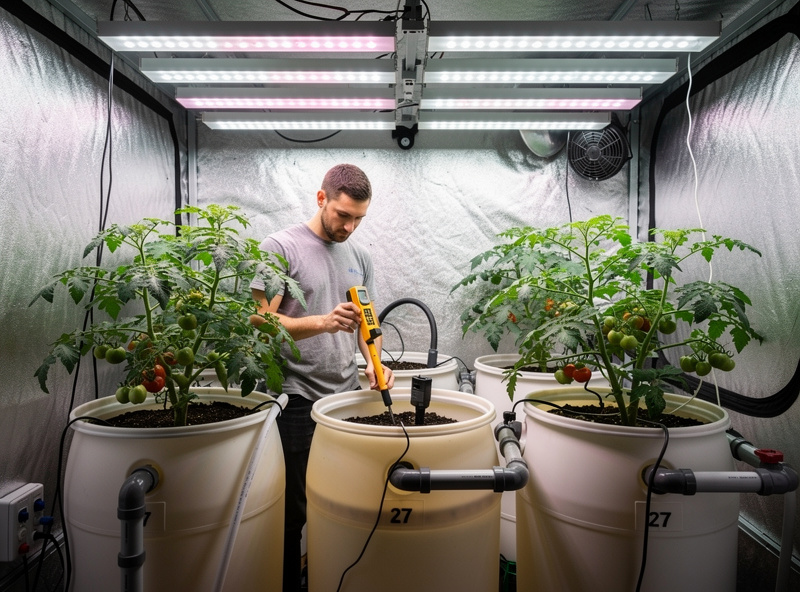
Commercial and serious hobby growers (clear win). If you check EC daily across multiple reservoirs, the time savings alone justify the cost within a year — this is the group I’d put myself in. I mix and check EC on four systems running side by side, so five-second measurements instead of thirty add up fast. The 5-year probe life means you replace one Truncheon every 5 years instead of a cheaper pen every 12 to 24 months — net cost is similar but with much better daily ergonomics.
Growers tired of pen failures (clear win). If you have already burned through two or three pen meters, the Truncheon’s durability is the real value. Pen probes fail in predictable ways: oxidized contacts, snapped tips, dead batteries that corrode the battery compartment. The Truncheon avoids most of these failure modes by design.
Beginners with one DWC bucket (skip it). If you have a single small system and only check EC twice a week, a budget EC pen like the Apera EC60 (roughly $70 to $110) covers the same need for meaningfully less than the Truncheon. Put the difference toward calibration solution, a pH meter, and a second air pump. The Truncheon becomes worthwhile when your operation grows past one reservoir.
How to Use the Truncheon
Setup is essentially nothing. Out of the box, install the included batteries (three AA cells, hidden inside the screw-off battery cap — Bluelab specifically warns against mixing old and new cells or using rechargeables, which is worth heeding since a weak cell is the most common cause of a flaky reading), confirm the LCD lights up when you press the side switch, and you are ready to measure. There are no calibration steps required for the first use.
Daily measurement procedure: rinse the probe with clean water and shake off excess. Press and hold the side switch. Lower the probe into the reservoir until the engraved depth line on the shell is submerged. Wait 5 to 10 seconds for the LED bar graph to settle. Read the EC value from the LCD. Release the side switch. Rinse the probe with clean water and store the unit horizontally in its included carrying tube.
The depth line matters — too shallow and the probe is not fully submerged, producing low readings. Too deep does not hurt accuracy but can let solution wick into the seam where the shell meets the cap, which over years of daily use can shorten the meter’s life. Match the depth line and the meter lasts the full 5+ years.
Calibration and Long-Term Care
The Truncheon is factory-calibrated and Bluelab claims no recalibration is required for at least 5 years of normal use. In practice, accuracy drift after 3 years is typically less than 0.05 EC — well within the tolerance most home growers care about. There is no calibration button to press because there is no easy way for a user to recalibrate; if accuracy drifts beyond useful, the meter is replaced.
To verify accuracy, you can dip the Truncheon into a fresh bottle of 2.77 mS/cm Bluelab calibration solution (sold as the “conductivity standard” pouch). The displayed value should match within ±0.1 EC. If it does not, the meter is at end of life — there is no field-serviceable adjustment. I still run this check every season out of habit even though Bluelab says I don’t need to — old reflexes from years of chasing drift on cheaper pens die hard.
Day-to-day care: rinse with clean water after every reservoir check (especially if checking organic or bacteria-heavy nutrient solutions). Store in the included tube to protect the LCD. Keep batteries fresh — dead alkaline cells leak and corrode the battery compartment, which is the most common end-of-life failure for the unit. Store with the batteries removed if not used for 30+ days.
Truncheon vs Other Bluelab and Competitor Options
| Meter | Price | Measures | Probe Life | Best For |
|---|---|---|---|---|
| Bluelab Truncheon | $130-180 | EC only | 5+ years | Multi-reservoir hobbyists, commercial growers |
| Bluelab Combo Meter | $300-350 | EC, pH, temperature | 5+ years (separate replaceable probes) | Single all-in-one tool buyers |
| Bluelab Guardian Monitor | $400-460 | EC, pH, temp (continuous wall-mount, Wi-Fi) | 2-3 years per probe | Always-on reservoir monitoring |
| Bluelab pH Pen | $95-125 | pH only | 2-3 years | Pairs with Truncheon for pH coverage |
| Apera EC60 (budget alt) | $70-110 | EC only | 1-2 years | Single small system, tighter budget |
| Hanna HI98129 (combo alt) | $200-250 | EC, pH, temp combo pen | 1-2 years | Mid-range all-in-one, cheaper than Combo Meter |
Pairing the Truncheon with a pH Meter
Because the Truncheon is EC-only, most growers pair it with a separate pH device. Two pairings work well at different price points.
The premium combo is Truncheon + Bluelab pH Pen ($225 to $305 total). Same brand ergonomics, same long probe life, total tool kit covers EC and pH with two purpose-built meters. It’s the pairing I run on my own bench, mostly for that ecosystem consistency — same calibration routine, same rinse-and-store habit for both.
The lighter-on-the-wallet combo is Truncheon + Apera PH60 pen (roughly $195 to $290 total, depending on retailer). The Apera pen typically runs somewhat less than Bluelab’s own pH Pen and produces accurate readings when calibrated monthly. The trade-off: the Apera probe lasts about 2 years versus the Bluelab pen’s 4 to 5. For most home growers, that gap is acceptable. My guide to pH Down for plants covers what to do once you have the meter and need to actually adjust pH.
If you are running tight on budget but want a single device that handles everything, skip the Truncheon entirely and look at the Bluelab Combo Meter (roughly $300 to $350). It reads EC, pH, and temperature in one unit with the same probe quality. The Combo Meter has buttons rather than the Truncheon’s switch, but the ergonomic loss is small for home-grower use.
Honest Downsides
Three things to know before buying. First, the price is real. $130 to $180 buys a serious EC meter, but a beginner growing one bucket of lettuce does not need it. Spend that money on calibration solution, a backup air pump, and quality nutrients first.
Second, no calibration option means no field service. If the meter drifts after 4 years, you cannot recalibrate it back to spec — you replace it. For most growers this is a feature (no fiddling) but for technical-minded growers who want full control over their tools, it can feel limiting.
Third, it’s a read-it-yourself tool, not a connected sensor. Older Truncheons used an internal jumper to pick between 500-scale and 700-scale PPM; the current TRUNV2 model displays EC, CF, PPM 500, and PPM 700 simultaneously so there’s nothing to switch — genuinely an improvement, not a downside. What it still doesn’t do is log readings or feed into an automated dosing setup. If you want remote monitoring or data logging, that’s the Guardian Monitor’s job, not the Truncheon’s. The full strategy for choosing the right meter for your setup is in my hydroponic nutrients complete guide.
Frequently Asked Questions
Is the Bluelab Truncheon worth the price?
Yes for serious hobby growers running multiple reservoirs, commercial growers, and anyone tired of replacing cheap pens every 18 months. The 5-year probe life and indestructible build deliver real ROI. For beginners with one small system, a budget EC pen like the Apera EC60 (roughly $70-110) covers the same need for meaningfully less.
Does the Bluelab Truncheon need calibration?
Not for at least 5 years of normal use. The unit is factory calibrated and there is no user calibration option. Accuracy drift after 3 years is typically less than 0.05 EC. To verify, dip in fresh 2.77 mS/cm Bluelab calibration solution — if reading drifts beyond ±0.1 EC, the meter is at end of life.
Does the Bluelab Truncheon measure pH?
No, EC only. For pH measurement, pair it with a separate Bluelab pH Pen (roughly $95-125) or Apera PH60 pen (roughly $65-110). If you want a single device that handles both EC and pH, the Bluelab Combo Meter at roughly $300-350 is the better single purchase.
How long does the Bluelab Truncheon last?
5 to 8 years of continuous home-grower use is typical. The probe is sealed and protected by a recessed shell that prevents most failure modes. The most common end-of-life issue is corroded battery contacts from leaked alkaline cells — store with batteries removed if not used for 30+ days to prevent this.
Truncheon vs Bluelab Combo Meter: which is better?
The Truncheon if you want EC ergonomics and will pair separately for pH. The Combo Meter if you want EC, pH, and temperature in a single device. Combo Meter costs roughly $120-220 more and has buttons that the Truncheon does not. For multi-reservoir setups, many growers prefer the Truncheon for speed.
Can I use the Bluelab Truncheon for soil testing?
Not directly. The Truncheon is designed for liquid hydroponic reservoirs. To use it on soil you would need to extract a soil slurry by mixing soil with distilled water 1:2, letting it settle, and dipping the probe in the supernatant. This works but is awkward — a dedicated soil EC meter is better for soil work.