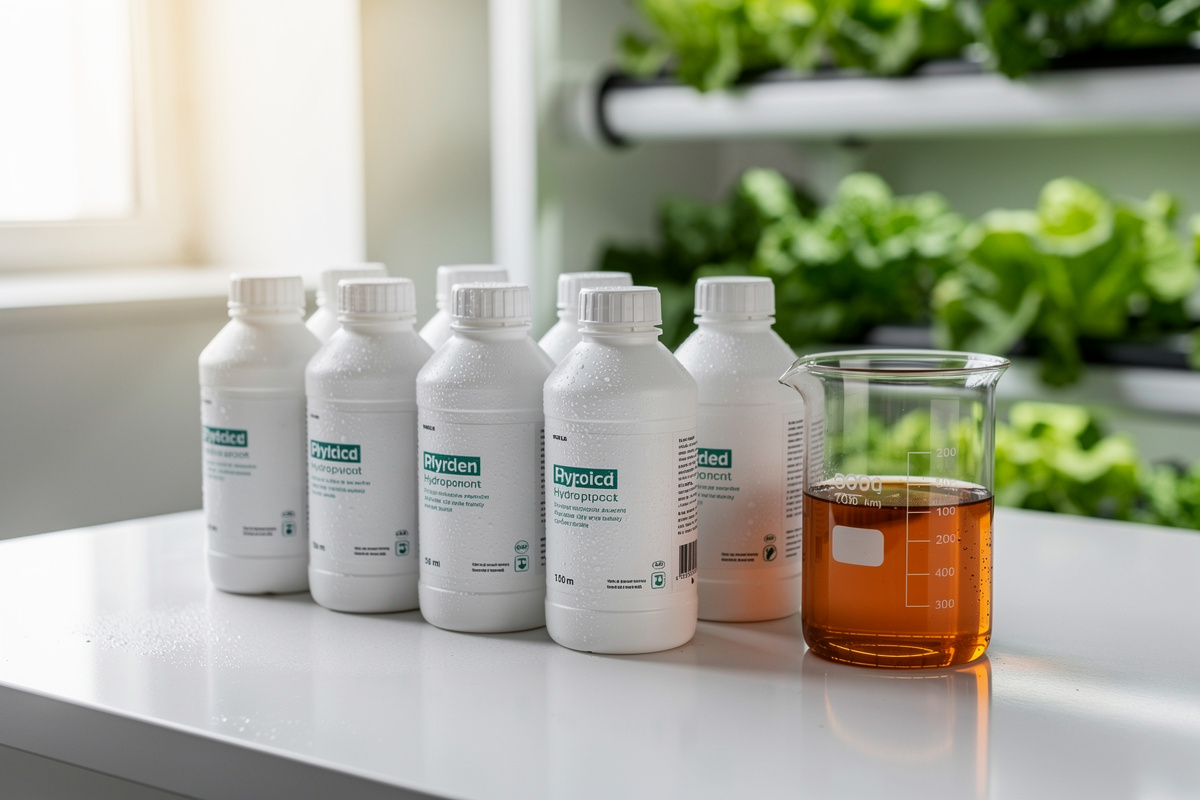
Hydroponic nutrients are water-soluble mineral blends that supply the 17 essential elements plants normally pull from soil. They are the entire food source for a hydroponic crop, mixed at concentrations measured in EC (typically 0.8 to 3.5) and balanced to a pH of 5.5 to 6.5 for proper uptake.
Get the nutrient solution wrong and plants stall, yellow, or collapse within a week — even under perfect lights. Get it right and on my bench a head of lettuce hits harvest weight in around 30 days, noticeably faster than the same variety I’ve grown in soil — the general pattern is backed up by published hydroponic growth-rate research, though the exact gap depends on variety and light. This guide walks through what hydroponic nutrients actually contain, how to choose a brand for your setup, how to read EC and pH numbers without a chemistry degree, and how to mix and maintain a working reservoir. If you are still deciding whether hydroponics is the right approach at all, start with my breakdown of hydroponics versus soil growing first.
What Are Hydroponic Nutrients?
Hydroponic nutrients are concentrated mineral salts dissolved in water that deliver every element a plant needs to grow. Unlike soil, which holds and slowly releases nutrients through microbial activity, a hydroponic reservoir feeds plants directly through their root system in real time.
Plants require 17 essential elements to complete a life cycle. Three of these — carbon, hydrogen, and oxygen — come from air and water. The remaining 14 must come from the nutrient solution. These break down into six macronutrients (nitrogen, phosphorus, potassium, calcium, magnesium, sulfur) and eight micronutrients (iron, manganese, zinc, copper, boron, molybdenum, chlorine, nickel). A complete hydroponic nutrient supplies all 14 in the right ratios for the crop you are growing.
The label on most hydroponic nutrients shows three numbers like 3-2-4 or 5-0-1. These are the N-P-K percentages — nitrogen, phosphorus, and potassium by weight. Vegetative crops like lettuce and basil use higher nitrogen ratios; fruiting crops like tomatoes and peppers shift to higher phosphorus and potassium during bloom.
How Hydroponic Nutrients Differ from Soil Fertilizer
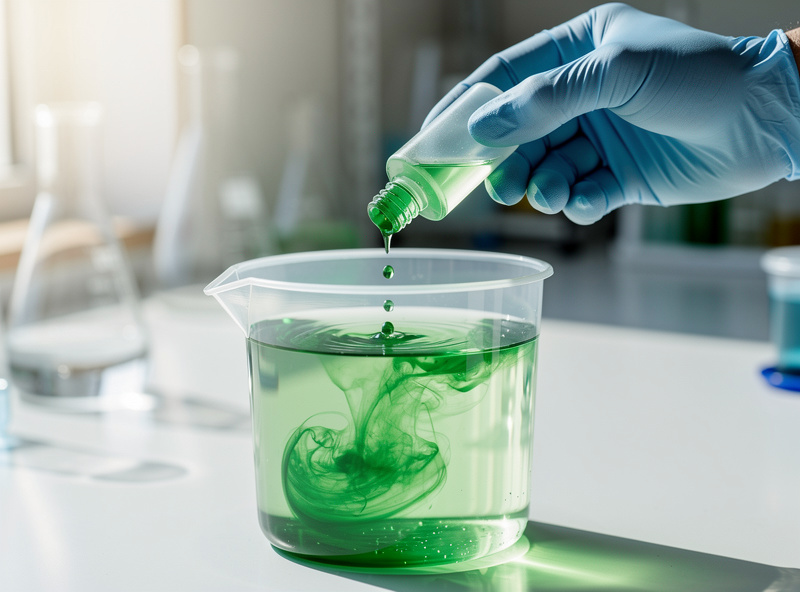
You cannot use Miracle-Gro or any standard soil fertilizer in a hydroponic system. Soil fertilizers assume the soil itself supplies missing micronutrients and pH buffering. Hydroponic nutrients carry the full nutrient package and are formulated to stay dissolved in water without precipitating out as sediment.
Three practical differences matter most. First, hydroponic nutrients include calcium and magnesium in plant-available forms, which most soil fertilizers leave out because soil supplies them naturally. Second, hydroponic mixes use chelated micronutrients — iron, manganese, and zinc bonded to organic carriers that keep them soluble across the pH range plants can actually absorb. Third, the salt index is calibrated for direct root contact, so concentrations that would burn a soil-grown plant in dry granular form work fine when diluted into a constantly circulating reservoir.
Using the wrong product almost always shows up the same way: leaves yellow between the veins (iron lockout from precipitated micros), root tips brown and slime over (salt burn from undissolved fertilizer), or plants stop growing entirely while the reservoir turns cloudy. If you suspect your fertilizer is the problem, my guide to common hydroponic mistakes that kill plants covers the diagnostic steps.
Macronutrients vs Micronutrients in Hydroponics
Macronutrients are needed in gram-per-liter quantities; micronutrients are needed in milligram quantities. Both are essential — a deficiency of 1 ppm of zinc stalls a plant the same way a deficiency of 100 ppm of nitrogen does.
The six macronutrients break down into primary and secondary. Nitrogen, phosphorus, and potassium are primary — these drive leaf growth, root and flower development, and overall vigor respectively. Calcium, magnesium, and sulfur are secondary — they build cell walls, sit at the center of every chlorophyll molecule, and form essential amino acids. Skip the secondary group and you get blossom end rot on tomatoes (calcium), purple-bottomed leaves on basil (magnesium), and pale yellowing across young growth (sulfur). Penn State Extension’s rundown of essential nutrients and deficiency symptoms is a good reference table to keep bookmarked while you’re diagnosing.
The eight micronutrients each have a single dominant role: iron and manganese drive photosynthesis, zinc and copper run enzyme reactions, boron builds new tissue, molybdenum converts nitrate into usable nitrogen, chlorine balances cellular water pressure, and nickel activates urease. A quality hydroponic nutrient supplies all of these in the right proportions, so you should never need to dose them individually unless you are diagnosing a specific lockout.
One-Part vs Two-Part vs Three-Part Nutrient Systems
Hydroponic nutrients come in three main formats. One-part systems are a single bottle that contains everything; two-part systems split the formula into A and B bottles to keep calcium separate from sulfates and phosphates that would otherwise precipitate; three-part systems split further into Grow, Micro, and Bloom for full ratio control across the plant life cycle.
The right choice depends on what you are growing and how much control you want.
| System Type | Bottles | Best For | Price Range | Mixing Complexity | Ratio Control |
|---|---|---|---|---|---|
| One-part liquid | 1 | Beginners, single-crop systems, leafy greens | $15-30 / quart | Easiest — single dose | None — fixed ratio |
| One-part dry powder (e.g., MaxiBloom, Masterblend) | 1-2 (powder + Cal-Mag) | Budget growers, larger reservoirs | $20-40 / 2 lb | Easy — weigh and dissolve | |
| Two-part A+B | 2 | Tomatoes, peppers, mixed crops | $25-60 / pair | Moderate — mix in order | Some — adjust A:B ratio |
| Three-part (e.g., GH Flora Series) | 3 | Full life cycle control, fruiting crops, advanced growers | $30-80 / set | Higher — three separate doses | Full — independent N, P, K control |
| Organic single-bottle | 1-2 | Soil-style growers transitioning to hydro | $20-50 / quart | Easy but cloudy reservoirs | None — fixed ratio |
For a first system growing lettuce or herbs, a one-part liquid is the right call — there is nothing to mess up and the cost difference is negligible at small reservoir volumes. For fruiting crops or anyone planning to push yields, a three-part system pays back the extra mixing time. I cover specific brand picks in my companion guide on the best hydroponic fertilizer for 2026.
How to Read EC, PPM, and pH Numbers
EC (electrical conductivity) measures the total dissolved nutrient concentration. PPM (parts per million) is the same measurement converted to a different scale. pH measures how acidic or alkaline the solution is. All three numbers determine whether your plants can actually absorb the nutrients you mixed in.
Target EC ranges depend on the crop and growth stage. Lettuce and most leafy greens want EC 0.8 to 1.2. Tomatoes during fruiting want EC 2.5 to 3.5. Strawberries sit around 1.4 to 2.0. The reason for these specific ranges is osmotic pressure — too high an EC and roots cannot pull water across their membranes, too low and plants get inadequate feed. New growers should aim for the bottom of each range until they have a meter reading they trust — on my bench I still start every new lettuce reservoir at the low end of that 0.8-1.2 window and only push the EC up once the plants tell me they want more, not before. UF/IFAS HS1422 covers why pH and EC monitoring matters at every growth stage for small hydroponic lettuce systems in more depth.
The PPM scale is where confusion creeps in. Two conversion standards exist: the 500 scale (used by HM Digital and many cheap pens) multiplies EC by 500, while the 700 scale (used by Bluelab and most European brands) multiplies EC by 700. The same solution at 1.5 EC reads either 750 PPM or 1,050 PPM depending on which pen you bought. Always check which scale your meter uses before comparing numbers across guides.
pH controls nutrient availability. The sweet spot for hydroponics is 5.5 to 6.5 — within this range all 14 mineral nutrients stay soluble and root-accessible. Drift above 7.0 and iron, manganese, and phosphorus precipitate out, locking your plants out of nutrients that are physically present in the reservoir. Drift below 5.0 and calcium and magnesium become unavailable. My deep dives on EC meters for hydroponics and on pH Down for plants walk through meter selection, calibration, and adjustment dosing.
Choosing the Right Nutrient for Your System
The right nutrient depends on what you grow, the system you grow it in, and your water source. Match these three variables and you will pick correctly the first time.
For leafy greens (lettuce, spinach, kale, herbs) in a Deep Water Culture, NFT, or Kratky setup, a one-part liquid like General Hydroponics MaxiGro or a single-bottle leafy formula at EC 0.8 to 1.2 covers the whole crop cycle. For fruiting crops (tomatoes, peppers, cucumbers, strawberries) in any recirculating system, use a two-part or three-part nutrient that lets you shift from a vegetative ratio in early growth to a higher-P-and-K bloom ratio once flowers set. For mixed gardens, pick a three-part system and set it to a balanced middle ratio.
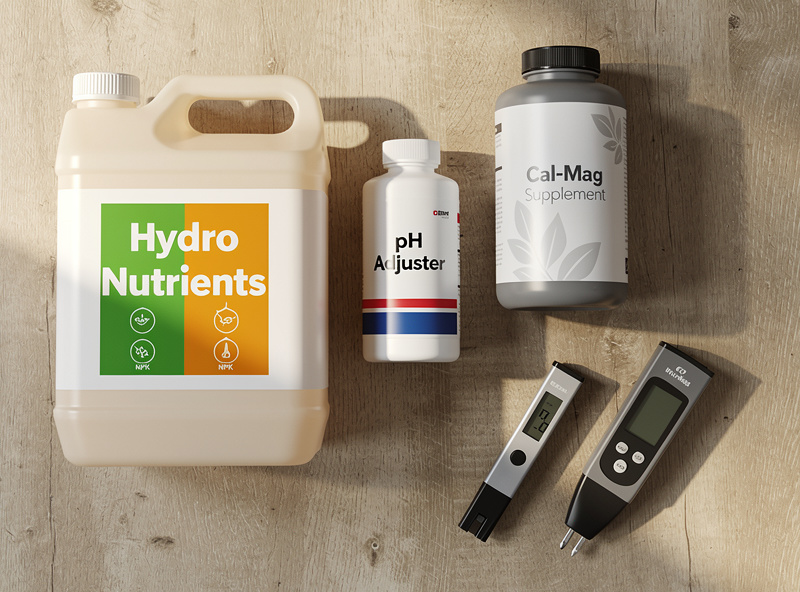
Water source matters more than most beginners realize. If your tap water is hard (above 200 PPM background) or chlorinated, you may already be supplying significant calcium and magnesium — adding more on top can cause lockouts. If you use reverse osmosis or distilled water, you must add a Cal-Mag supplement at 1 to 2 ml per gallon, since the water has been stripped of these elements. I cover specific system pairings in my breakdown of DWC, NFT, and Ebb-and-Flow systems and which crops match each.
Brand reputation matters at the margin but not nearly as much as marketing suggests. General Hydroponics, Botanicare, Advanced Nutrients, MaxiBloom, and FloraNova have all produced healthy crops on my bench — the differences between them show up as minor at best once you’re mixing to a target EC rather than trusting the bottle-label scoop. Your reservoir maintenance habits will affect yields more than brand choice. For a deep dive into one specific catalog — Flora Series, FloraNova, MaxiSeries, and the supplement lineup — see my complete General Hydroponics brand and product guide.
Common Nutrient Mistakes That Kill Plants
Most failed hydroponic setups trace back to one of five nutrient mistakes. None of them are exotic — they are routine errors that cost beginners entire crops and that take five minutes to prevent.
Mixing too strong. The most common failure mode. New growers assume more nutrient equals faster growth. The opposite is true above the crop’s tolerance — a lettuce reservoir at EC 2.0 will burn root tips within 48 hours and stunt the plant for the rest of its life. Always start at the low end of the recommended EC range and only push higher if growth seems slow.
Mixing nutrients in the wrong order. With multi-part systems, dumping all the bottles into the reservoir together creates instant precipitate — you will see white crystalline sludge form at the bottom of the jug. The first reservoir I ever mixed, I did exactly that: all three GH Flora bottles poured in together before I’d diluted anything, and the cloudy mess that formed in under a minute taught me the order the hard way. Mix one part at a time into the full water volume, agitate fully, then add the next part. With GH Flora, the standard order is Micro first, Grow second, Bloom third.
Ignoring pH for the first week. Fresh nutrients usually mix at pH 5.8 to 6.2, right in the sweet spot. As plants feed, pH drifts upward — sometimes a full point per day in fast-growing crops. A reservoir that sat at 5.8 on Monday can read 7.4 by Friday with iron locked out and yellowing leaves to prove it. Check pH daily and adjust as needed.
Using soil fertilizer. Already covered above, but worth repeating because it kills more first systems than any other mistake. If the bottle does not say “hydroponic” on the front, do not put it in your reservoir.
Never changing the reservoir. Plants take up some nutrients faster than others, which means your EC reading slowly stops reflecting the actual nutrient ratio. After 10 to 14 days, even a stable EC reading hides a wildly imbalanced nutrient profile. Full reservoir changes prevent this.
Mixing Your First Nutrient Solution
Mixing a working hydroponic nutrient solution takes about 10 minutes and requires four things: clean water, your nutrient bottles, a measuring syringe or graduated cup, and pH adjusters. Below is the exact sequence for a beginner DWC bucket.
Start with a clean reservoir filled with the volume of water you plan to use. If you have hard tap water, let it sit for 24 hours to off-gas chlorine, or use a dechlorinator. Test the starting pH and starting EC of plain water — write these numbers down so you know your baseline.
If using a one-part liquid, measure the recommended dose (typically 5 to 8 ml per gallon for vegetative crops). Pour into the reservoir and stir for 30 seconds. Wait two minutes for full dissolution, then test EC. If using a multi-part system, add the parts one at a time in the manufacturer’s specified order, stirring between each addition.
Test pH last. Most fresh hydroponic mixes land between 5.5 and 6.5 naturally. If pH reads above 6.5, add pH Down one drop at a time, stirring and re-testing every 30 seconds. If pH reads below 5.5, add pH Up the same way. Never dump in a teaspoon at once — pH adjusters are concentrated enough that a single overshoot can crash a reservoir to pH 4 in seconds.
My companion article on mixing hydroponic nutrient solution step-by-step covers crop-specific recipes, dose tables for one-part and three-part systems, and the exact equipment list.
When and How to Change Your Reservoir
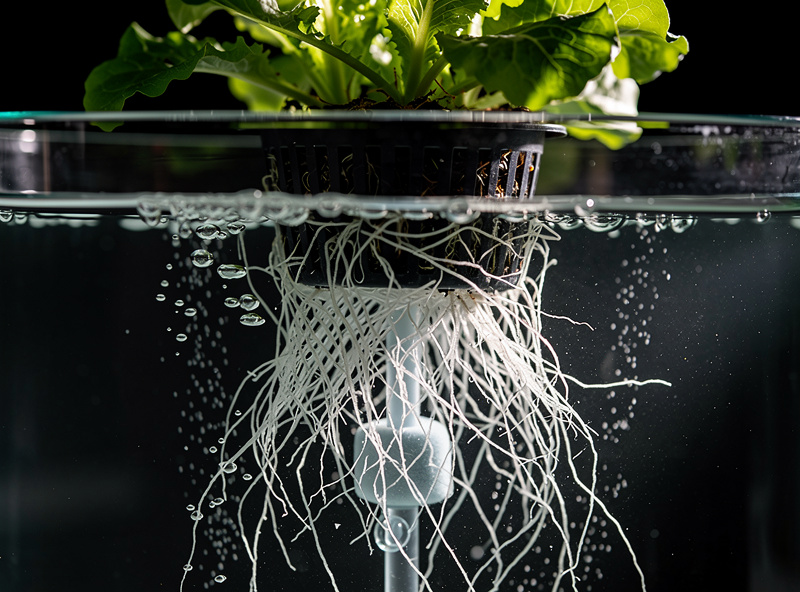
Most home growers should fully change their reservoir every 10 to 14 days. Top off with fresh nutrient solution between changes to maintain volume, but a full drain-and-refill resets the nutrient ratio that selective uptake gradually distorts.
The reasoning comes down to plant chemistry. Plants take up some elements faster than others — in my res logs, nitrogen and potassium are consistently the first to fall off, while calcium and sulfur uptake stays comparatively flat week to week. After two weeks, even a reservoir that still reads at EC 1.2 may be wildly low on nitrogen and saturated with calcium that the plant cannot use efficiently. Topping off with fresh nutrient compounds the imbalance because it adds more of everything in the original ratio.
To change a reservoir, drain the existing solution (use it on outdoor plants or compost it — it is not waste, just imbalanced for hydroponics). Wipe down the inside of the reservoir with a damp cloth to remove biofilm, but do not scrub aggressively or use soap. Refill with fresh water, mix in nutrients, adjust pH, and put the plants back. The whole process takes about 20 minutes for a typical home setup.
Three signs mean it is time to change earlier than scheduled: pH that will no longer hold steady (drifting more than 0.5 points per day), water that smells sour or earthy (anaerobic bacteria are growing), or visible cloudiness or sediment. Any of these indicates a reservoir that is past its useful life. For deeper troubleshooting, see my guide to common hydroponic mistakes that kill plants.
Next Steps: Build Your System Around Good Nutrients
Nutrient management is the single biggest lever in hydroponics — bigger than lighting choice, bigger than system type, bigger than plant variety. A grower with mediocre lights and excellent nutrient discipline will out-yield one with the reverse every time. The fastest way to internalize this is to build a small system, run it for one full crop cycle while measuring EC and pH daily, and pay attention to how plant health correlates with the numbers.
If you do not yet have a system, start with my complete hydroponics for beginners guide and pick a setup that matches your space. The DIY hydroponics on a budget guide covers three working systems for under $50 each. For ready-to-buy options, the best hydroponic growing kits for beginners compares plug-and-play units. And once you have plants growing, my 15 best plants for hydroponic growing shows you what to plant for fastest results.
Frequently Asked Questions
Can I use regular plant fertilizer in hydroponics?
No. Regular soil fertilizers lack the calcium, magnesium, and chelated micronutrients that hydroponic plants need, and they often fall out of solution as sediment. You must use a fertilizer labeled specifically for hydroponics. Using soil fertilizer is the most common cause of failed first systems.
How often should I change hydroponic nutrient solution?
Most home growers should fully change the reservoir every 10 to 14 days. Top off with fresh nutrient solution between changes to maintain volume, but a complete drain-and-refill resets the nutrient ratio that plants distort through selective uptake.
What EC should hydroponic nutrient solution be?
Target EC depends on the crop. Lettuce and leafy greens want 0.8 to 1.2. Tomatoes and peppers in fruiting want 2.5 to 3.5. Strawberries sit at 1.4 to 2.0. New growers should aim for the bottom of each range until they trust their meter reading.
What pH is best for hydroponic nutrients?
5.5 to 6.5 is the universal target range. Within this range, all 14 mineral nutrients stay soluble and accessible to roots. Above pH 7.0 iron, manganese, and phosphorus lock out. Below pH 5.0 calcium and magnesium become unavailable.
Are organic hydroponic nutrients better than synthetic?
Not for yields or plant health. Synthetic hydroponic nutrients deliver elements in their most plant-available mineral form. Organic alternatives work but tend to cloud reservoirs, foster bacterial blooms, and require more frequent changes. Most commercial growers use synthetic for consistency.
Do I need to add Cal-Mag to hydroponic nutrients?
Only if you use reverse osmosis or distilled water, or if your tap water tests below 50 PPM background. RO water has been stripped of calcium and magnesium that the nutrient formula assumes is present. Add 1 to 2 ml of Cal-Mag per gallon to compensate.
How long does mixed hydroponic nutrient solution last?
In a clean covered reservoir with active aeration, mixed nutrient solution stays usable for 10 to 14 days. Without aeration or in warm conditions above 75 degrees Fahrenheit, expect 5 to 7 days before bacterial growth and pH instability force a change.