Indoor hydroponic gardens are countertop or freestanding units that grow herbs, lettuce, and small vegetables in a soil-free, self-watering setup. The 2026 market spans $90 starter kits to $1,200 vertical towers — Lettuce Grow Farmstand, AeroGarden, Click and Grow, and Gardyn Home dominate. This guide covers what indoor hydroponic gardens actually grow well, sizing by household, the four product categories, smart features that matter, what these appliances hide from an instrument-driven grower’s perspective, and the total annual cost compared to grocery-store equivalents.
As an Amazon Associate I earn from qualifying purchases.
Quick Answer: Best Indoor Hydroponic Garden 2026
For first-time growers and most kitchens, the AeroGarden Harvest 2.0 (around $90) is the value pick — 6 pods, smart wifi, app + Alexa. For larger families wanting real harvest volume, the Lettuce Grow Farmstand 24 (roughly $600 to $900 depending on whether you add the Glow Rings light kit) produces several pounds of greens a week during peak production from a 2 sqft floor footprint. For design-forward users, Click and Grow Smart Garden 9 (around $250) hits the design-meets-function sweet spot. For premium 30-plant capacity, Gardyn Home 3.0 ($899 to $999) ships with 30 pre-seeded plants and runs a vertical 5-foot tower.
What These Gardens Actually Grow
All countertop hydroponic garden systems do the same job: support 3 to 30 small plants in a water-based nutrient solution under LED lights, with automated water and feeding cycles. They excel at fast-cycle leafy crops and herbs — the same crops that do well in my own Kratky jars and NFT channels, for the same underlying reason: shallow root zones, fast turnover, and forgiving of the small nutrient-strength swings a sealed pod system can’t fully control.
| Plant Category | Success Rate | Time to Harvest | Yield Reality |
|---|---|---|---|
| Lettuce, kale, arugula, spinach | Excellent | 3-5 weeks | 1-2 heads per pod, continuous if cut-and-come |
| Basil, parsley, cilantro, dill, mint | Excellent | 3-4 weeks | Monthly harvest for 3-6 months per pod |
| Cherry tomatoes | Good | 10-14 weeks | 1-3 lbs per plant over 4-6 months |
| Strawberries | Moderate | 10-16 weeks | Limited — light intensity and pollination challenges |
| Peppers (small) | Moderate | 14-20 weeks | Worth attempting only on Farmstand or Gardyn — too tall for AeroGarden |
| Cucumbers, zucchini, full-size tomatoes | Poor | — | Don’t try — too large |
| Root vegetables (carrots, radishes) | Don’t even try | — | Hydroponic root crops require deep media and specialty systems |
The honest expectation: these gardens replace the herb section of your grocery list ($30-60/month), supplement your salad-green budget, and produce occasional cherry tomatoes. They do not replace a full vegetable garden. On my own bench, fruiting crops like tomatoes and peppers only really work once you move to a real reservoir with EC control — a sealed countertop pod system doses a fixed nutrient concentration and can’t ramp it up for fruit set the way I do on an ebb-flow bed.
For a deeper view on hydroponic plants in general, see my Hydroponic Plant Growing Guide and Best Hydroponic Plants for Beginners.
The Four Product Categories
Before comparing individual models, it helps to know which shelf you’re actually shopping. The category has consolidated around four distinct form factors over the past few years, and picking the right one narrows a confusing 20-product market down to two or three realistic options fast.
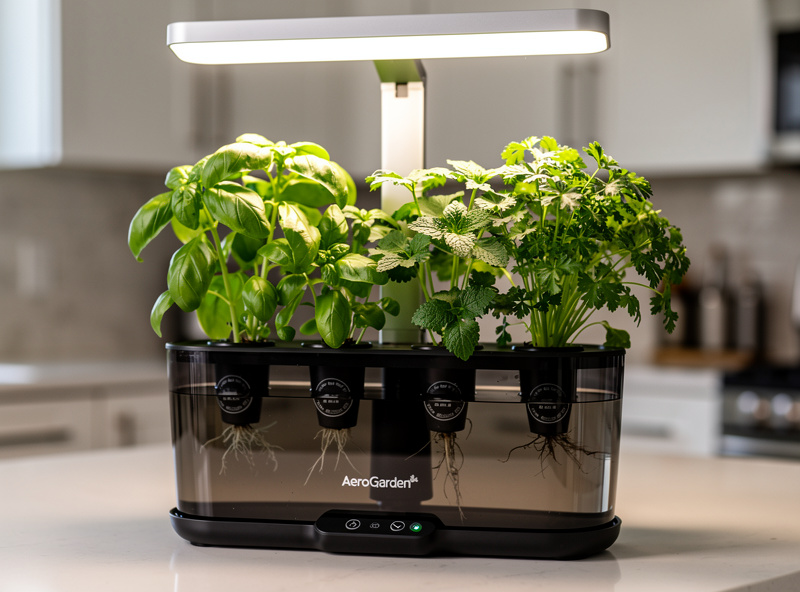
1. Countertop Pod Systems (3-9 plants)
Examples: AeroGarden Harvest, AeroGarden Bounty, Click and Grow Smart Garden 3 and 9, iDoo, VegeBox.
Footprint: 12 to 18 inches wide, fits on any kitchen counter or shelf. Capacity: 3 to 9 plants. Price: $90 to $400.
Best for: small kitchens, herb-focused growers, beginners testing the category. Limitations: not enough volume to make a meaningful dent in salad budget.
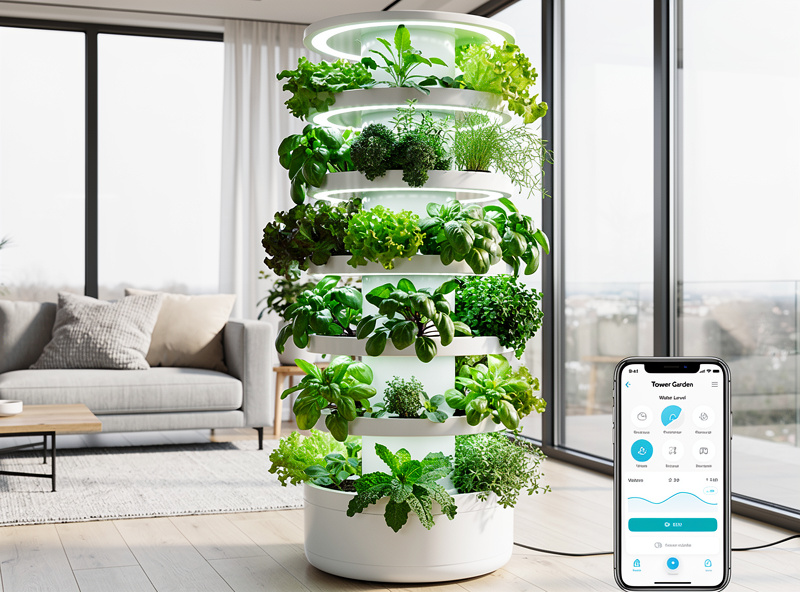
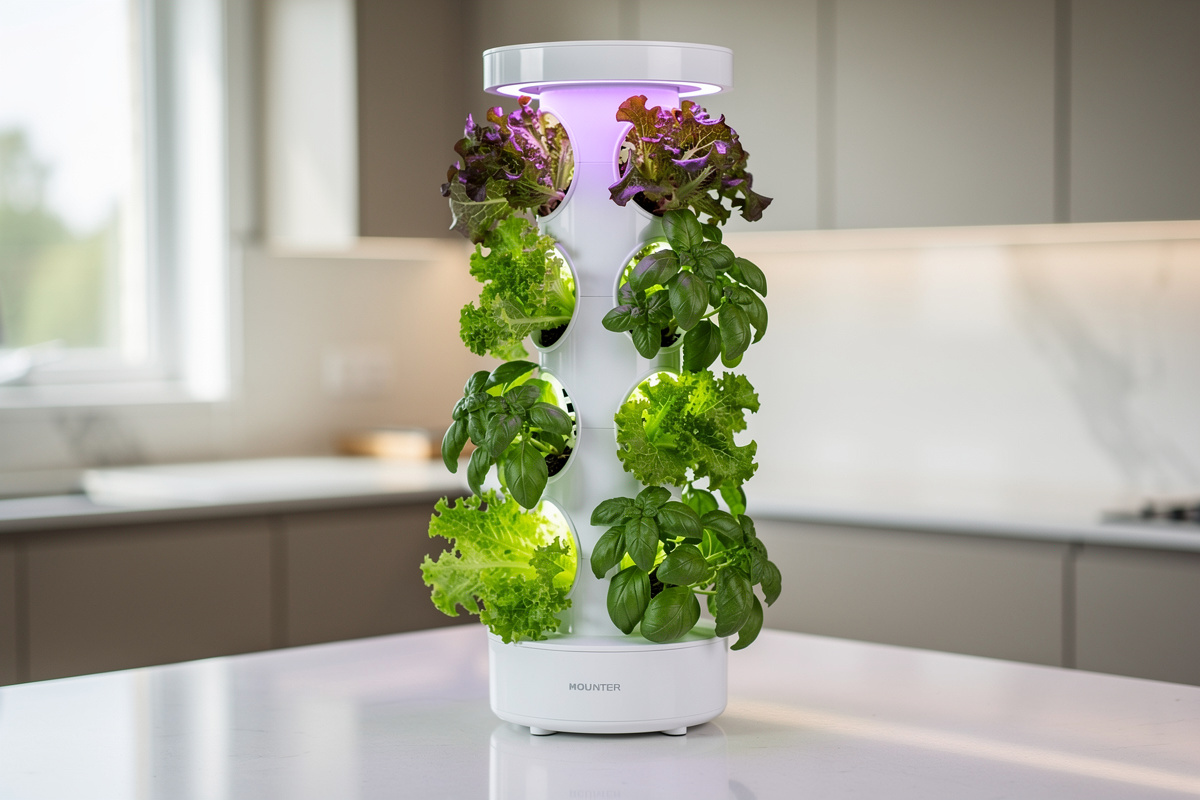
2. Vertical Tower Systems (20-30 plants)
Examples: Lettuce Grow Farmstand, Gardyn Home, Tower Garden FLEX.
Footprint: 1 to 2 sqft floor space, 4 to 6 feet tall. Capacity: 20 to 36 plants. Price: $600 to $1,200.
Best for: families wanting real harvest volume, urban gardeners with limited horizontal space, anyone serious about growing weekly salads.
3. Cabinet / Standalone Systems (12-25 plants)
Examples: Rise Gardens, AeroGarden Farm 24, AeroGarden Farm 36.
Footprint: 24 to 36 inches wide, 4 to 6 feet tall, often on casters. Capacity: 12 to 25 plants. Price: $600 to $1,500.
Best for: dedicated growing space (basement, garage), smart-home enthusiasts who want a polished cabinet design over a kitchen tower.
4. Counter-Sized Specialty (3-12 plants)
Examples: VegeBox, iDoo C5, Plantaform.
Footprint: 12 to 24 inches. Capacity: 3 to 12 plants. Price: $90 to $250.
Best for: budget shoppers, gift purchases, college dorms or RV use. Quality varies wildly — stick to brands with 3+ year reputation.
Top Picks 2026
Prices below are current retail as of this update — every consumer hydroponics brand runs frequent sales, so treat these as the price you should expect to pay at MSRP, not a floor. I’ve checked each against the manufacturer’s own listed specs rather than repeating older marketing numbers that have drifted out of date, which is a real problem in this category — several of the figures that circulate for these products online are two or three years stale.
AeroGarden Harvest 2.0 — $89.99
The category’s bestseller for a decade. 6 pods, a redesigned 15-watt detachable LED grow light with an automatic timer, app + Alexa + Google (per AeroGarden’s own launch specs — the newer light is lower-wattage than older Harvest models, not higher). Slim profile fits any kitchen counter. AeroGarden has the largest seed pod ecosystem (Salad Greens Mix, Heirloom Tomato Mix, Italian Herbs Mix) and the most solid app track record.
Pod cost: $20 for 9 pre-seeded pods. Annual pod replacement: $80 to $120. Annual nutrient cost: $25.
Best for: most home growers. The AeroGarden Bounty (9 pods, $300) scales up if 6 isn’t enough.
Lettuce Grow Farmstand 12 / 18 / 24 / 36 — $600-$900 (with Glow Rings)
The Farmstand is the affiliate-revenue powerhouse — vertical tower in 5-tier increments, 12 to 36 plant slots, self-watering, app-controlled. The 24-plant model produces real weekly volume — one independent 18-month test logged 3 to 5 lbs of mixed greens per week during peak production months, well above what a countertop pod system can manage, though your own mileage depends heavily on light, crop mix, and season.
Seedling cost: roughly $3 each (or $2.49 in grow packs) direct from Lettuce Grow. Annual seedling cost: $300 to $500 if you replant on a rolling 6-to-8-week cycle. Annual nutrient cost: $100. Annual electricity: $70 to $90 — the optional Glow Rings LED kit alone is rated at 96 watts, so a fully-lit indoor tower pulls noticeably more than the bare outdoor unit.
Best for: families, serious salad-eaters, anyone with vertical floor space. The plant subscription model (Lettuce Grow ships pre-seeded transplants monthly) is the convenience killer feature.
Click and Grow Smart Garden 9 — $249.95
The design pick. Estonian company, beautifully engineered. 9 plant capsules, smart pump, app, no over-watering possible. Per Click and Grow’s own spec sheet, the whole unit draws about 13 watts total. Capsule ecosystem includes herbs, leafy greens, peppers, tomatoes, and decorative flowers.
Pod cost: $9 per 3-pack. Annual pod replacement: $80 to $120. Annual electricity: $15 to $20.
Best for: users who care about how the device looks on the counter. Output is similar to AeroGarden Harvest 2.0 at roughly 2.5x the price — you’re paying for design.
Gardyn Home 3.0 — $899 to $999
30-plant vertical tower with built-in cameras (yes, plant cameras), AI plant identification, and automated watering. 5-foot-4-inch tall vertical column on a roughly 2 sqft floor footprint. Includes pre-seeded plants in the starter kit.
Pod cost: refill kits sold separately. Membership is $39 a month (cancel anytime after a 30-day trial), which includes 10 plant credits and free shipping — cheaper prepaid annual and 2-year plans exist if you know you’re keeping it. Annual cost without a membership runs a few hundred dollars for replacement plants and nutrients bought à la carte.
Best for: tech-forward households, busy professionals who want maximum yield with minimum hands-on, anyone willing to pay subscription pricing for convenience.
iDoo C5 — $90
Budget pick. 5 pods, basic LED, no smart features. Quality is “fine for $90” — works, lasts 2-3 years, replaceable parts hard to source. Good first hydroponic experience without big commitment.
The Instrumentation Gap: What These Gardens Don’t Tell You
I run EC and pH pens on every reservoir I keep, and that’s the lens I can’t turn off when I look at this category. None of these units — not the AeroGarden, not the Farmstand, not Gardyn’s camera-and-AI setup — give you an EC or pH readout. You’re trusting a pre-mixed nutrient pod and a sealed reservoir to stay in range, and most of the time it does, because the manufacturers have tuned the dose to forgive a wide margin of user error. That’s the actual product: not the hydroponics, the margin for error.
The tradeoff shows up the moment you push past leafy greens. A fixed-concentration pod that’s fine for lettuce at EC 1.0-1.4 is often starving a fruiting tomato that wants EC 2.5-3.5 by bloom (see my breakdown of hydroponic nutrients by crop stage for why that ramp matters). None of these consumer units let you dial that up — you get the one formula the pod ships with. That’s the ceiling on the tomato and pepper results in the table above, not the light or the root space.
It also means these units can fail silently. A DWC bucket on my bench tells me something’s wrong the moment my EC meter drifts outside range — I catch a problem in a day. A sealed pod system just grows a slightly weaker plant for three weeks until the leaves start yellowing, and by then you’re troubleshooting blind. If you want to see what full instrumentation looks like once you’re ready for it, my guide to EC meters worth owning and my walkthrough of mixing a nutrient solution to a target EC cover the step up from pod-and-app to reservoir-and-meter.
None of this makes these gardens a bad buy — it makes them a specific tool for a specific job: consistent herbs and lettuce with near-zero attention, not a path to serious yield on demanding crops.
Reservoir Size and How Often You’ll Actually Refill
This is the maintenance question buyers underestimate, and it varies more between these units than the marketing photos suggest. The AeroGarden Harvest 2.0’s water tank holds about a quart — small enough that in a warm kitchen with the light running full cycles, you’re topping it off every 5 to 10 days, more often once the plants fill out and start pulling real volume. Click and Grow’s Smart Garden 9 holds roughly 4 liters (just over a gallon), which stretches the refill interval closer to 2 to 3 weeks under normal conditions — one of the quieter reasons it costs more than the AeroGarden for the same 9-ish plant capacity.
The tower systems don’t publish tank size the same way because they’re not really one tank — Farmstand and Gardyn both recirculate through a base reservoir that’s sized to the whole column, and the practical refill cadence for both runs closer to weekly, sometimes twice a week in a warm room with a full plant load. That’s a genuinely different rhythm from a countertop unit, and it’s worth factoring in before you commit to a 5-foot tower in a spot that’s inconvenient to reach with a watering can.
On my own bench this is exactly the variable I track hardest — a reservoir that goes dry unnoticed is the single fastest way to lose a crop, hydroponic appliance or DWC bucket alike. If you’re buying any of these units for someone less attentive than you, the app reminders aren’t optional — they’re the only thing standing between a full reservoir and a dead plant two weeks later.
Smart Features Worth Paying For
App-based water and nutrient reminders. The single most useful smart feature. Indoor hydroponic gardens fail when owners forget to refill water or add nutrients. App push notifications eliminate this failure mode.
Light scheduling. Most pre-set 16 hours on, 8 hours off. Smart units let you customize — e.g., simulate sunrise from 6 to 7 AM if your garden is in a bedroom. It’s the same photoperiod-timer logic I run on my own grow lights, just with a nicer app wrapped around it.
Voice control. Marginal value; useful for “Alexa, turn off kitchen garden lights” at bedtime.
Plant tracking and harvest timing. AeroGarden, Click and Grow, and Gardyn track planting dates and remind you when each plant is ready to harvest.
Camera-based plant identification (Gardyn only). Cool but unnecessary for most users.
For broader smart-home routines, the timer and plug hardware behind all of this is covered in the Best Smart Plugs buyer guide — the same category of gear I use to run photoperiod timing on my own grow lights and reservoir pumps.
Cost Reality: Annual Total Over 3 Years
| System | Initial | Annual Pods | Annual Nutrients | Annual Electric | 3-Year Total |
|---|---|---|---|---|---|
| AeroGarden Harvest 2.0 (6 pods) | $90 | $100 | $25 | $10 | ~$495 |
| Click and Grow 9 (9 pods) | $250 | $120 | $0 (in pods) | $18 | ~$664 |
| Lettuce Grow Farmstand 24 (with Glow Rings) | ~$700 | $400 | $100 | $85 | ~$2,455 |
| Gardyn Home 3.0 (no membership) | ~$950 | $300 | $80 | $50 | ~$2,240 |
| Gardyn Home 3.0 (with $39/mo membership) | ~$950 | (included) | (included) | $50 | ~$2,504 |
| iDoo C5 (5 pods) | $90 | $60 | $15 | $10 | ~$345 |
Compare to grocery store: a household that eats $50/month in herbs and salad greens spends $1,800 over 3 years. The Farmstand at roughly $2,455 is still more expensive than the grocery store — but produces a better quality, more local product, and that 3-to-5-lbs-a-week peak figure means it’s genuinely displacing store trips, not just supplementing them. Most buyers don’t justify these on pure cost; they justify on freshness and convenience.
The Real Use Cases
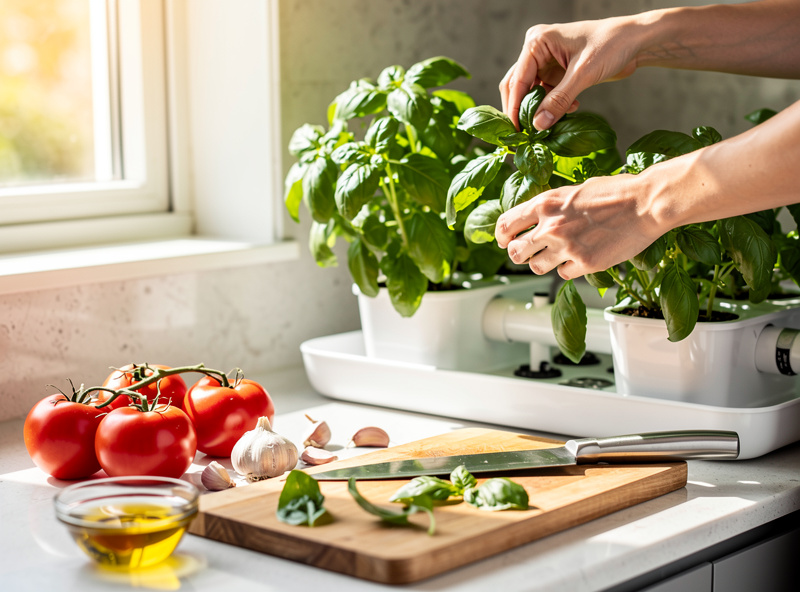
Herb-heavy cooking household: AeroGarden Harvest 2.0 with 6 herb pods. Always-fresh basil, cilantro, dill, parsley pays back in flavor and reduces $30/month herb spend.
Salad-eating family: Lettuce Grow Farmstand 24 or 36. Real volume, real cost savings on $80+/month organic salad spend.
Urban apartment with limited light: Click and Grow Smart Garden 9 or Gardyn Home — vertical, design-forward, no exterior light needed.
Beginner testing the category: AeroGarden Harvest 2.0 or iDoo C5. Low commitment, broad pod ecosystem.
Tech-forward / set-and-forget: Gardyn Home 3.0 with membership. Plants ship monthly, cameras monitor, app tracks.
If none of those quite fits, work backward from two questions instead of the product list: how many minutes a week are you actually willing to spend on it, and what’s the failure mode you’re least willing to tolerate. Someone who travels often and hates dead plants should weight the app reminders and the larger reservoir higher than the yield numbers — that points toward Click and Grow or Gardyn over the smaller-tank AeroGarden. Someone cooking daily who wants near-zero cost per harvest should weight the per-plant economics higher, which is where the Farmstand’s math actually wins out over a 3-year horizon despite the higher sticker price. The category rewards matching the maintenance rhythm to your own habits more than it rewards chasing the highest plant count.
Short, dark Nordic winters: this is the one case where I’d actually push someone toward the countertop category over a DIY build. My own grow-light DLI math for indoor Swedish winters is a genuine hassle — sunrise at 9am, sunset by 3pm for weeks at a stretch — and a sealed unit with a fixed 16-hour photoperiod timer takes that variable off the table entirely for someone who just wants fresh basil, not a hobby.
For DIY-minded growers, the DIY Hydroponics on a Budget guide shows how to build similar capacity from scratch for under $50.
Common Mistakes
Most of the failures I see reported for this category aren’t hardware problems — they’re the same handful of habits that also sink a first-time DWC bucket or Kratky jar, just at a smaller, more forgiving scale. Fix these and almost any unit in this guide performs close to its advertised results.
Buying too big to start. A 30-plant Gardyn for one person is mostly wasted. Match capacity to actual eating habits.
Skipping nutrient refill. Without nutrients, plants stop growing within 2 weeks. Manufacturer-supplied nutrients work — third-party may save money but risk damaging the system.
Mixing transplants from soil into hydroponic system. Soil-grown roots clog the system and introduce pathogens. Use only pre-seeded pods or hydroponic-started transplants.
Placing in low-light or sunny window. Indoor hydroponic gardens have their own LED — extra sun causes algae growth in the water reservoir. Place out of direct sun.
Not cleaning between plant cycles. Reservoir cleaning at every 2-3 month plant turnover cycle prevents bacteria buildup and root rot in successor plants — the exact same failure mode I chase on my own DWC totes with a scheduled reservoir change, just at kitchen-appliance scale instead of a 5-gallon bucket.
Ignoring tap water hardness. These sealed units mix nutrients into whatever comes out of your tap, and hard water changes how far a pod’s dose actually goes — the same issue I deal with on my own hard Swedish tap water, where I default to a calcium-adjusted nutrient line rather than the standard one. Most consumer units don’t give you that option, which is another reason results vary more between households than the marketing admits.
Hydroponic root rot diagnosis and prevention is covered in my Common Hydroponic Mistakes guide.
When You’ve Outgrown the Countertop Unit
Every one of these systems has a ceiling, and it’s usually the same one: you want more control than a sealed pod gives you, or you want to grow something the unit was never built for — a full-size tomato, a proper pepper harvest, a second reservoir running a different crop entirely. That’s the point where it’s worth looking at a real hydroponic system instead of a bigger appliance.
The jump isn’t as big as it looks from the outside. A basic DWC bucket or a Kratky jar costs less than a countertop pod system and gives you full control over what goes into the reservoir — my own hydroponic systems guide breaks down which method suits which goal, and my hydroponics vs soil comparison is a fair starting point if you’re not sure hydro is even the right call for what you’re trying to grow. On the nutrient side, moving off a sealed pod means picking an actual feed — my best hydroponic fertilizer shortlist and my equipment buying guide cover what to buy first and what to skip.
None of this is a knock on the appliance category — a Farmstand or an AeroGarden is still the right call for a huge share of households that just want reliable greens without a hobby. But if what got you interested in hydroponics in the first place is the growing itself, not just the harvest, a real reservoir is where that itch actually gets scratched.
Frequently Asked Questions
What is the best indoor hydroponic garden for 2026?
For value and most home growers, the AeroGarden Harvest 2.0 (about $90) — 6 pods, app, Alexa, broad seed ecosystem. For real harvest volume, the Lettuce Grow Farmstand 24 (roughly $600-900 with Glow Rings) can produce 3 to 5 lbs of greens a week during peak production. For design, Click and Grow 9 (about $250).
Are indoor hydroponic gardens worth the money?
For herb-heavy cooks and serious salad eaters, yes. A Lettuce Grow Farmstand 24 can save $30 to $50 per month in grocery greens after the initial setup, based on independent long-term testing. An AeroGarden Harvest 2.0 pays back in well under a year on herb savings alone.
What can you grow in an indoor hydroponic garden?
Excellent: lettuce, kale, arugula, spinach, basil, parsley, cilantro, dill, mint, chives. Good: cherry tomatoes, peppers (only on tower systems). Don’t try: full-size tomatoes, cucumbers, zucchini, root vegetables, or anything over 2 feet tall.
How much electricity does an indoor hydroponic garden use?
Small countertop units are surprisingly light — AeroGarden Harvest 2.0’s LED draws 15 watts, Click and Grow 9 draws about 13 watts total, costing roughly $10 to $20 per year. Tower systems draw more once you add a light kit — Lettuce Grow’s Glow Rings alone are rated at 96 watts — pushing annual electric cost toward $70 to $90 at average US rates.
Do indoor hydroponic gardens need sunlight?
No. The built-in LED grow lights provide enough PPFD for leafy greens and herbs. Direct sunlight actually causes algae growth in the water reservoir. Place the unit out of direct sun, ideally in a shaded area of a kitchen or designated growing room.
How long do plants last in an indoor hydroponic garden?
Lettuce and salad greens: 3-5 weeks per cycle, then replace. Herbs: 3-6 months per pod with continuous harvest. Cherry tomatoes: 4-6 months per plant. Most growers replant every 2-3 months on countertop units, every 6-8 weeks on tower systems.
Can you use your own seeds in AeroGarden or Click and Grow?
Yes with seed-starting baskets sold separately by both brands. AeroGarden’s grow anything kit ($20) lets you grow from any seed. Click and Grow’s pods are sealed proprietary capsules — third-party seeds void the warranty but work mechanically.
How often do I need to refill the water reservoir?
Countertop units are the most demanding — AeroGarden Harvest 2.0’s roughly one-quart tank needs topping off every 5 to 10 days, while Click and Grow 9’s larger 4-liter tank stretches to 2 to 3 weeks. Tower systems like the Farmstand and Gardyn recirculate through a larger base reservoir and typically need attention weekly, sometimes twice a week for a fully loaded tower in a warm room. App reminders on the smart models catch most missed refills before plants suffer.
Indoor Hydroponic Garden Cluster Deep Dives
For specific products and decisions, the four spoke articles cover what most buyers research:
- AeroGarden Harvest 2.0 Review: 6-Pod Setup Honest Take — 12 weeks of testing, what grows well, real costs.
- Lettuce Grow Farmstand: Complete Sizing and Setup Guide — 12, 18, 24, 36 sizes, LED Glow Rings, 3-year cost math.
- Click and Grow vs AeroGarden: Smart Garden Showdown — design, ecosystem, app, side-by-side test results.
- Best Hydroponic Herb Garden Kits for Countertops — herb-focused setups, the best 6 herbs, fastest payback in the category.