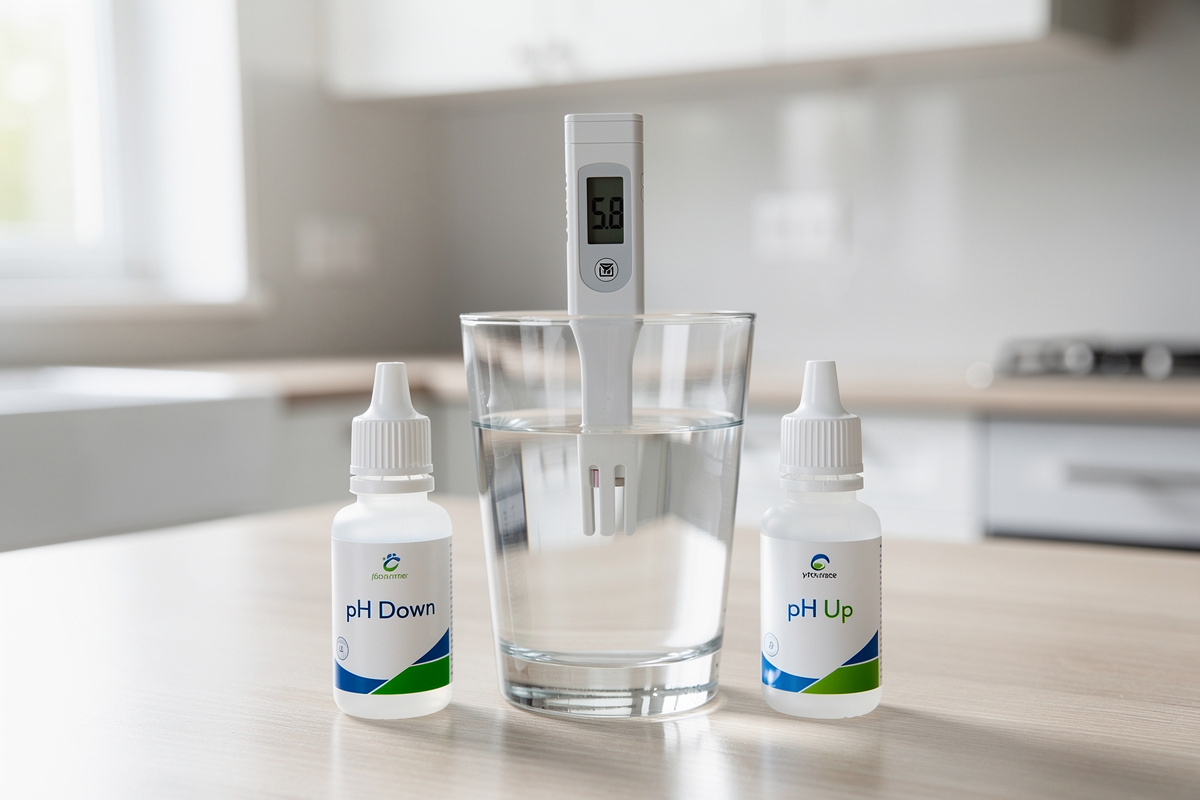
pH Down is a concentrated acid solution used to lower the pH of plant water and hydroponic nutrient reservoirs to the 5.5 to 6.5 range plants actually absorb nutrients in. Most commercial pH Down is phosphoric-acid based — manufacturers rarely publish the exact dilution, but it’s concentrated enough that a single drop can move a 5-gallon reservoir noticeably, so on my bench dosing is always done one drop at a time.
This guide covers what pH Down is chemically, the safe dosing method that prevents root crashes, the household alternatives that work (and the ones that do not), and how often you actually need to use it. I’m assuming you already have a calibrated pH meter — if not, my EC meter for hydroponics guide covers the combo meters that read both EC and pH.
As an Amazon Associate I earn from qualifying purchases.
Why pH Matters for Plants
pH determines whether the nutrients dissolved in your water are physically available for roots to absorb. The same reservoir mixed identically can produce a thriving plant or a yellow stunted one based on a single number — and that number drifts every day as plants feed and bacteria grow.
The sweet spot for hydroponics is pH 5.5 to 6.5, the range UF/IFAS extension research on hydroponic lettuce confirms as the nutrient-availability window most crops are grown in. Within this range, all 14 mineral nutrients (calcium, magnesium, phosphorus, iron, manganese, zinc, and the rest) stay in soluble forms that roots can absorb through their cell membranes. Above pH 7.0 iron, manganese, and phosphorus precipitate out of solution and lock onto reservoir surfaces — your meter still reads a normal EC because the salts are dissolved as different compounds, but plants cannot use them. Below pH 5.0 calcium and magnesium become unavailable through the same precipitation problem, just on the acidic side.
For soil-grown plants the tolerable range is wider (roughly 6.0 to 7.5) because soil microbiology buffers pH actively. Hydroponic systems lack this buffer, so the tolerance window is narrower and pH drift happens faster. A reservoir that read 5.8 on Monday can read 7.4 by Friday with iron locked out and yellowing leaves on every plant.
What pH Down Actually Contains
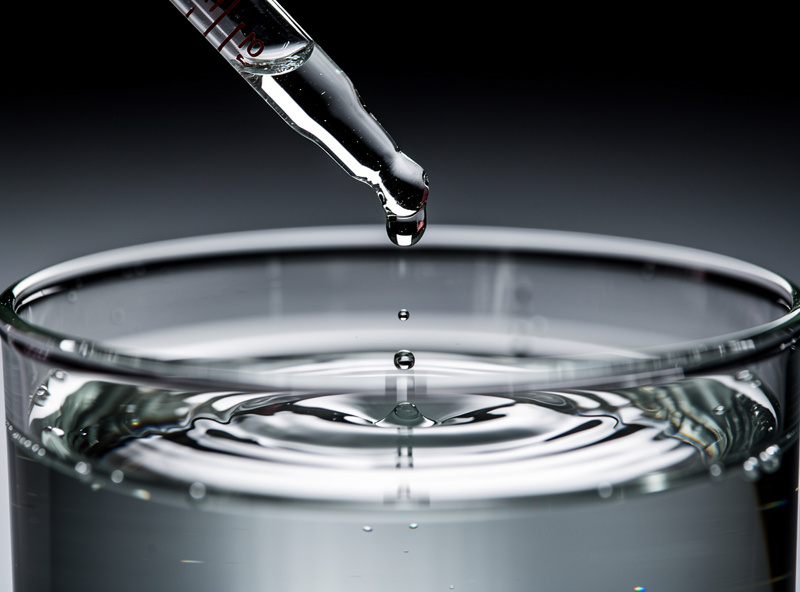
Most commercial hydroponic pH Down is phosphoric acid (H3PO4) based, sometimes blended with a little citric acid or mono-ammonium phosphate. Bottle labels almost never disclose the exact concentration — it’s treated as proprietary — but per Science in Hydroponics’ breakdown of pH-down chemistry, it’s meaningfully diluted from the 75-85% strength the raw industrial acid starts as, which is exactly why dropwise dosing works instead of requiring lab gloves and a fume hood. Phosphoric is the dominant choice because it adds phosphorus — a useful plant nutrient — rather than introducing elements plants do not need, though a few brands use sulfuric acid instead.
General Hydroponics pH Down, the most widely sold product, doesn’t publish its exact concentration, but it’s the phosphoric-acid-based liquid I keep on my own shelf. A 1-quart bottle runs roughly $15 to $21 depending on retailer and lasts a typical home grower 18 to 24 months because the dose per use is so small. Earth Juice Natural Down takes a different route — it’s a dry citric-acid crystal, not a liquid, so it doses by the pinch rather than the drop; it’s the milder organic option growers reach for when they want to skip phosphoric acid entirely. For organic operations, a homemade citric acid solution at 5% strength also works well and costs almost nothing.
Industrial-grade phosphoric acid concentrates (75%+ strength, sometimes sold as food-grade phosphoric acid for other uses) are available in some agricultural supply stores and online, but the safety risk is much higher and getting the dilution right yourself is easy to mess up. For home use, stick to a bottled product sold specifically as hydroponic pH Down — the cost difference is negligible at home-grower volumes and the safety margin is meaningful.
How to Use pH Down Safely
The single most important rule is: add it dropwise. pH adjusters are concentrated enough that a teaspoon dumped in at once can crash a 5-gallon reservoir to pH 3 within seconds. Crashed pH burns root tips within an hour and the affected tissue does not recover. I learned this the hard way on an early DWC tote of lettuce — eyeballed the dose instead of measuring it, watched the reading crash into the 3s overnight, and lost the whole tray. I measure with a syringe now, every time, no exceptions.
Standard procedure for adjusting a freshly mixed reservoir:
Mix your nutrients first and stir thoroughly — pH Down works on the final solution, not on plain water. Wait three minutes after the last nutrient addition for everything to fully dissolve. Test pH. If reading is below 6.5, no adjustment needed. If above 6.5, draw 1 ml of pH Down into a syringe or use the supplied pipette. Add a single drop, stir for 30 seconds, retest. Repeat until pH lands in the 5.8 to 6.2 sweet spot.
Most 5-gallon reservoirs need 1 to 3 ml of pH Down to drop from a starting pH of 7.0 down to 6.0. Hard tap water needs more (sometimes 5 to 8 ml) because dissolved limestone buffers against acidification. Soft or RO water needs less — sometimes a single drop is enough.
For an established reservoir that has drifted upward over several days, the same dropwise process applies but you may need to use slightly more total volume because plant root mass and biofilm provide some pH buffering. Never adjust more than 1 full pH point in a single session — let plants stabilize for 24 hours between large adjustments.
Household and Organic Alternatives to Commercial pH Down
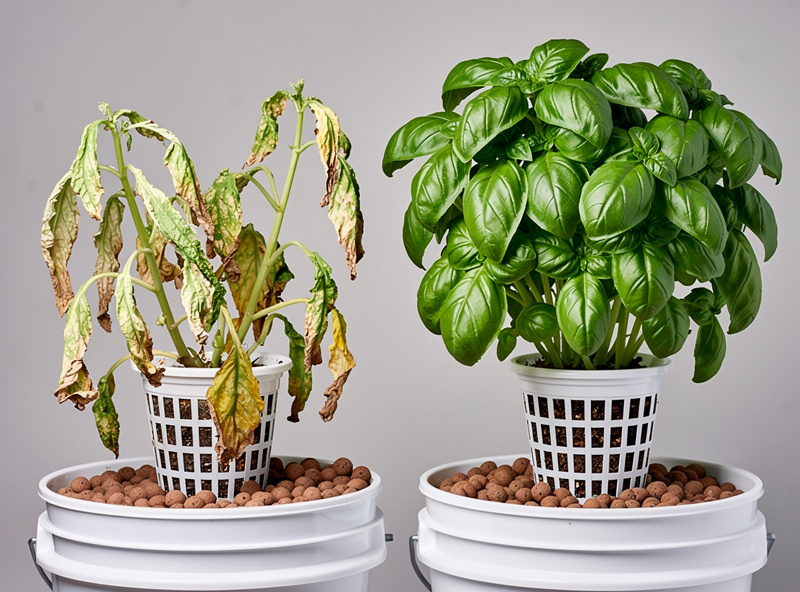
Three household acids work as pH Down substitutes. Two are reliable; one is widely recommended online but should be avoided.
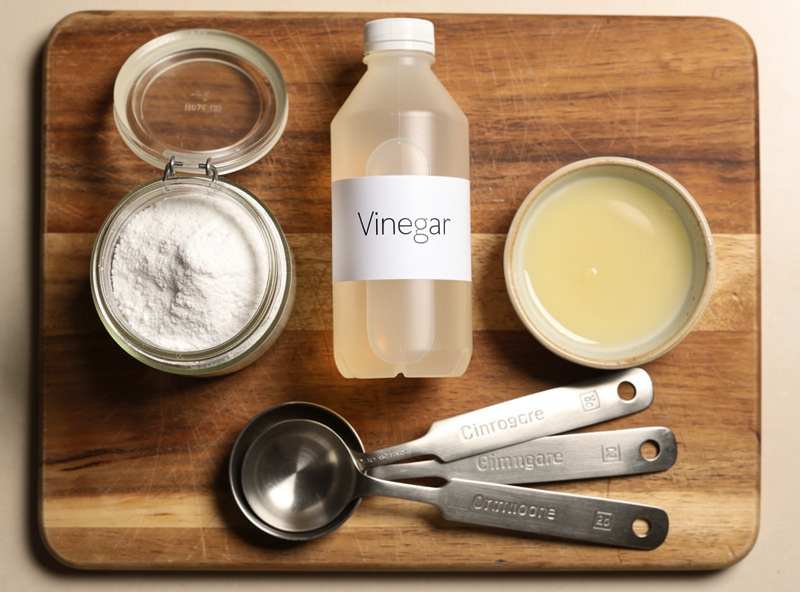
Citric acid (works well). Food-grade citric acid powder dissolved at 5% strength (50 grams per liter of water) creates a usable pH down solution. Dose is roughly 5 to 10 ml of that 5% solution per 5-gallon reservoir to drop pH by 0.5 to 1.0 points (scale down for smaller reservoirs — see the dosing table below). Citric acid is a weak acid, so it is gentler on roots than phosphoric and harder to crash a reservoir with. The downside: citric acid feeds reservoir bacteria, so a reservoir adjusted with citric acid destabilizes faster than one adjusted with phosphoric. Best for organic growers who change reservoirs weekly anyway — it’s what I keep mixed for the one tote on my bench I run closer to organic.
White vinegar (works in emergencies). Distilled white vinegar at 5% acidity can drop pH if you have nothing else available. Dose is roughly 10 ml per 5-gallon reservoir for a 0.5-point drop (see the table below for other sizes). Vinegar is acetic acid, which dissipates in 2 to 3 days as bacteria break it down — meaning your pH adjustment lasts only a couple of days before drift returns. Use only as a temporary fix until proper pH Down is available.
Lemon juice (avoid). Often recommended on social media but problematic in practice. Fresh lemon juice contains sugars, bacteria, and inconsistent acid concentration. It feeds reservoir bacteria aggressively and introduces variables that make pH troubleshooting harder. Skip it.
For organic hydroponic systems specifically, citric acid is the right pick. I cover this in more depth in my organic hydroponic nutrients guide. For synthetic systems, commercial phosphoric pH Down is cheaper, more predictable, and longer-lasting per dose — there is no real reason to substitute.
pH Down Dosing Reference Table
| Reservoir Size | pH Drop Target | GH pH Down (phosphoric acid) | Citric Acid (5% solution) | White Vinegar (5%) |
|---|---|---|---|---|
| 1 gallon | 0.5 points | 1-2 drops | 1 ml | 2 ml |
| 1 gallon | 1.0 point | 3-5 drops | 2 ml | 4 ml |
| 5 gallons | 0.5 points | 0.5-1 ml | 5 ml | 10 ml |
| 5 gallons | 1.0 point | 1-3 ml | 10 ml | 20 ml |
| 10 gallons | 0.5 points | 1-2 ml | 10 ml | 20 ml |
| 10 gallons | 1.0 point | 3-6 ml | 20 ml | 40 ml |
| 27 gallons | 0.5 points | 3-5 ml | 25 ml | 50 ml |
| 27 gallons | 1.0 point | 8-15 ml | 50 ml | 100 ml |
These are starting estimates — always add half the suggested dose, stir, retest, and add more if needed. Hard tap water requires more pH Down than soft or RO water because of limestone buffering.
How Often You Need pH Down
Most hydroponic reservoirs need pH adjustment every 1 to 3 days during active growth. The drift is real and predictable: as plants take up nitrate (which is alkaline), reservoir pH rises. As they take up ammonium (which is acidic), pH falls. Most synthetic nutrients lean toward nitrate, so the dominant drift direction is upward — meaning pH Down is the adjuster you reach for most often.
Younger plants drift pH faster than mature ones because they feed at a higher rate per gallon. A bucket of seedlings may need daily pH adjustment; a bucket of mature lettuce ready for harvest might hold steady for 4 to 5 days. Track the drift rate for your specific setup over the first month of any new system, then schedule your daily check accordingly. My tap water here in Sweden runs hard enough that I go through pH Down noticeably faster on any reservoir I fill straight from the tap than on the ones I top off with RO — worth checking your own water hardness before you assume your usage rate is normal.
If a reservoir requires pH Down daily and the drift exceeds 1 full point per 24 hours, that is a signal something else is wrong — usually anaerobic bacteria growing in a poorly aerated reservoir, or a pH meter that needs calibration. My guide to common hydroponic mistakes that kill plants covers the troubleshooting workflow. The full nutrient strategy that pH supports is in my complete guide to hydroponic nutrients.
Safety Notes
Concentrated phosphoric acid (the active ingredient in most commercial pH Down) is corrosive to skin, eyes, and clothing. Wear safety glasses when handling the bottle, especially when measuring with a pipette. Rinse skin contact immediately with cool water for 15 minutes — the burn can take a few minutes to develop after contact.
Store pH Down out of reach of children and pets. The bright color and small bottle size make it look harmless; a tablespoon ingested can cause serious chemical burns to the throat and stomach. Use a child-resistant cap if your bottle has one and label it clearly.
Never mix pH Down with bleach, ammonia, or any cleaning products — phosphoric acid reacting with chlorine bleach releases chlorine gas. Keep the workspace clear of unrelated chemicals while you mix reservoirs. The same precautions apply to every pH adjuster covered above, including citric acid (less corrosive but still an irritant) and vinegar.
Frequently Asked Questions
What is pH Down made of?
Most commercial hydroponic pH Down is phosphoric acid (H3PO4) based, diluted down from the 75-85% strength industrial acid it starts as. Manufacturers like General Hydroponics don’t publish the exact bottled concentration since it’s proprietary. A few brands use sulfuric acid or citric acid instead. Phosphoric is preferred because it adds phosphorus, a useful plant nutrient.
How much pH Down do I add per gallon?
For a 5-gallon hydroponic reservoir, 1 to 3 ml of standard phosphoric-acid pH Down typically drops pH by 1 full point. Hard tap water needs more (sometimes 5 to 8 ml) because of limestone buffering. Always add one drop at a time, stir for 30 seconds, and retest before adding more.
Can I use vinegar instead of pH Down?
Yes, in emergencies. Distilled white vinegar at 5% acidity drops pH at roughly 10 ml per 5-gallon reservoir for a 0.5-point drop. The downside: vinegar dissipates in 2 to 3 days as bacteria break it down, so the pH adjustment is temporary. Use only as a stopgap until proper pH Down is available.
What pH should hydroponic plants be at?
5.5 to 6.5 is the universal hydroponic target range. Within this range, all 14 mineral nutrients stay soluble and accessible to roots. Above pH 7.0 iron and phosphorus lock out. Below pH 5.0 calcium and magnesium become unavailable. The sweet spot for most crops is 5.8 to 6.2.
Why does my hydroponic pH keep going up?
Plant uptake of nitrate (the dominant nitrogen form in synthetic nutrients) is alkaline — it raises reservoir pH as plants feed. Other causes include hard tap water with high mineral buffering, biofilm growth in the reservoir, and anaerobic bacteria from poor aeration. Daily upward drift of 0.5 to 1.0 points is normal.
Is pH Down dangerous to handle?
Concentrated phosphoric acid is corrosive to skin and eyes. Wear safety glasses when measuring, store out of reach of children, and never mix with bleach or ammonia (releases toxic gas). Skin contact: rinse with cool water for 15 minutes. The product is safe to use with normal precautions.