Hydroponic farm profitability comes down to one uncomfortable truth: you make money by selling everything you grow at a premium, not by growing more of it. Margins on hydroponic produce are thin, startup costs are high, and the operations that succeed win on consistency and a direct local relationship — not on yield-per-square-foot. A leafy-greens crop turns in roughly 4 to 6 weeks, so a working farm lives or dies on selling every harvest through that fast cadence, not on squeezing more heads into a tray. If you cannot sell it, growing more just costs more.
Let me be straight up front, because it matters for trust: I have not run a hydroponic business, and I am not going to invent an income number to sell you a dream. I grow at home in Sweden and I publish openly. What I can do — and what most “how I make $X growing lettuce” content will not — is walk you honestly through how the economics actually work, where the costs hide, and what the levers really are. This is a spoke under my commercial hydroponics hub, and it pairs directly with selling hydroponic produce locally, because the selling is the profitability.
The Shape of the Economics
Strip away the hype and hydroponic farming has a recognizable financial shape: high upfront capital cost, modest and controllable operating costs, thin per-unit margins, and profitability that depends almost entirely on selling at retail-direct prices rather than wholesale. University extension enterprise budgets and the commercial growers who publish their numbers consistently describe this same pattern. The crop is a perishable commodity, and a commodity sold at commodity prices does not clear the capital cost.
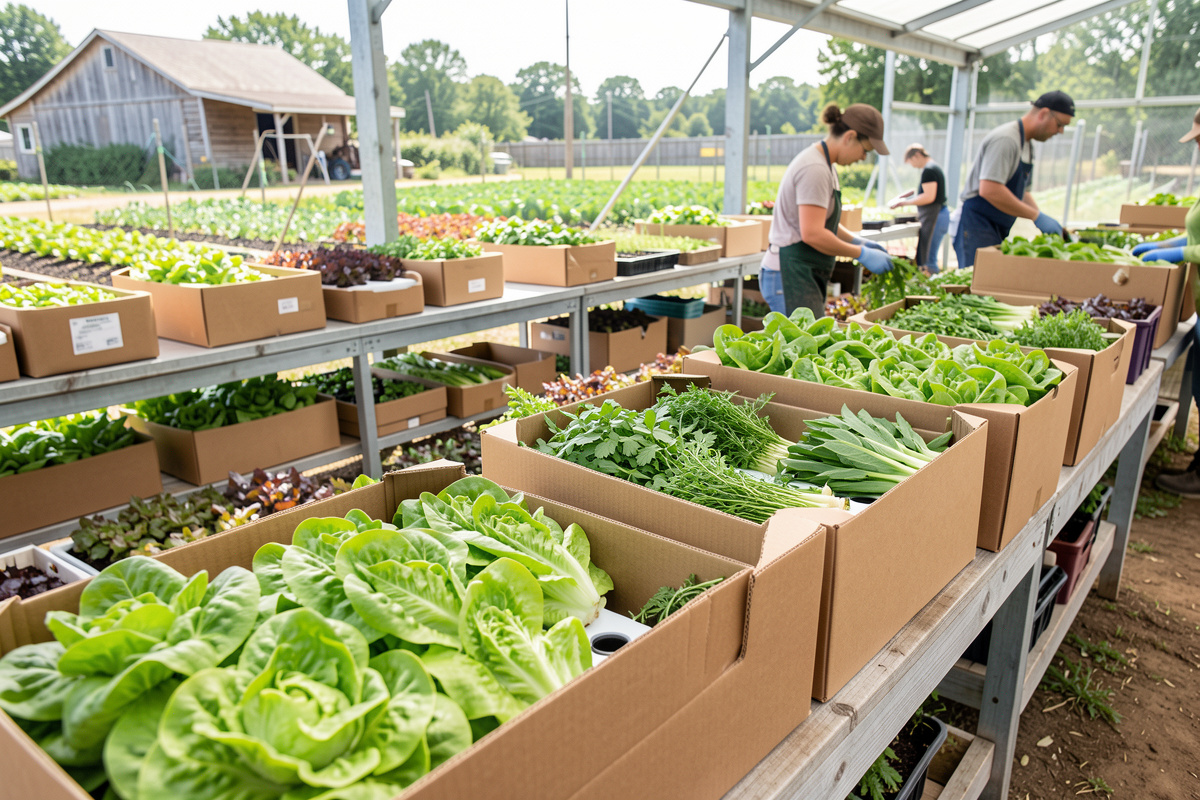
That is why the small operations that work almost always sell direct — farmers markets, restaurants, CSA boxes, farm stands — where freshness and locality command a premium a distributor never pays. The whole business case rests on capturing that premium for everything you produce. Before spending a krona or a dollar, the single most valuable thing you can do is build an enterprise budget for your specific crop, method and market. Extension services publish templates for exactly this, and they are worth more than any gadget.
Where the Costs Actually Live
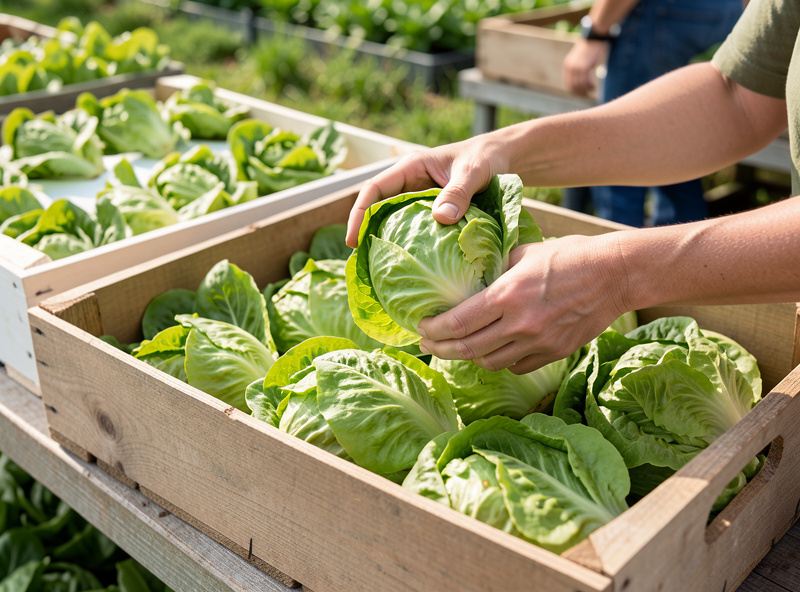
New growers consistently misjudge which costs matter. They overestimate nutrients and water and underestimate labor and lighting. In a recirculating system the solution is reused, so per-head nutrient cost on leafy greens is genuinely small — the dry salts I mix cost pennies per gallon of solution. The costs that actually move the needle are capital (the structure and systems), energy (lighting in an indoor build), and above all labor.
Commercial growers repeatedly report that labor is the largest controllable operating cost in small leafy-green production — seeding, transplanting, harvesting, washing, packing and delivering on a fixed weekly cadence is the real job, and it scales with volume in a way the growing chemistry does not. Knowing this changes how you plan: efficiency in handling and harvest matters far more to your bottom line than squeezing another tenth of a point of EC.
| Cost category | Type | How much it matters |
|---|---|---|
| Structure & systems (greenhouse, racks, pumps) | Startup capital | High — the main barrier |
| Lighting (indoor builds) | Capital + ongoing energy | High indoors, low in a greenhouse |
| Labor (seed to delivery) | Operating | Highest controllable cost |
| Nutrients & water | Operating | Low in a recirculating system |
| Seeds, media, packaging | Operating | Moderate, scales with volume |
The Levers That Decide Profitability
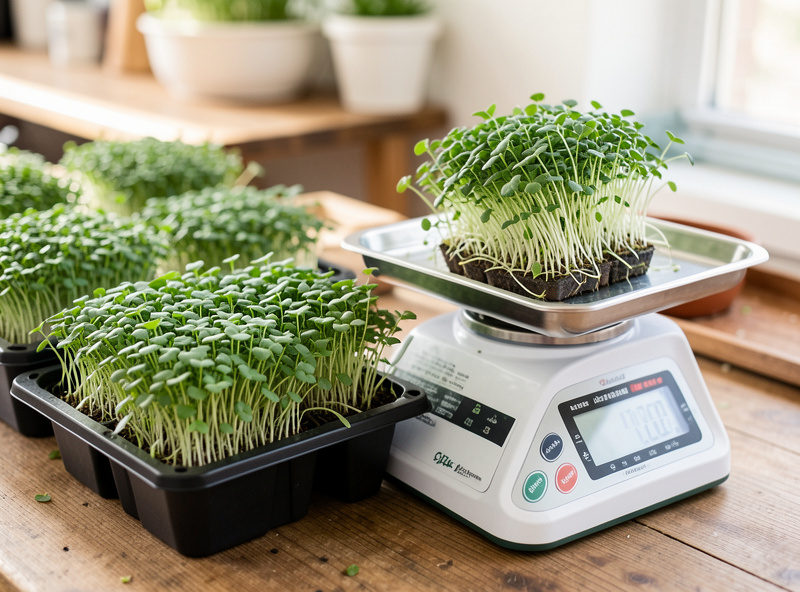
Because margins are thin, profitability is decided by a few high-leverage choices rather than by working harder. The first is crop choice: short-cycle, high-value crops with a freshness premium — leafy greens, culinary herbs, microgreens — turn over fast and sell at strong per-kilo prices. Microgreens in particular return the most per square foot of anything soilless, which is why they anchor so many small operations. The crop selection guide covers the growing side.
The second lever is sell-through: a crop you do not sell is pure loss, so matching production to demand through staggered planting beats growing a big flush you cannot move. The third is price, which means selling direct rather than wholesale. And the fourth is efficiency in the costly steps — labor and energy. Notice what is not on the list: maximum yield. Chasing yield without a buyer just converts inputs into compost. Read selling locally for the demand side and the harvest and yield guide for handling efficiency.
Breakeven Thinking, Not Income Promises
The useful financial question is not “how much will I make” — nobody honest can tell you that — but “what does it take to break even, and how long until I do.” Breakeven is your capital cost plus operating costs divided by the premium margin per unit you can actually capture and sell. Run that with conservative numbers for your market and the answer tells you whether the plan is a business or an expensive hobby. Most failures come from running it with optimistic price and sell-through assumptions.
This is exactly why I refuse to hand anyone a single startup figure or a monthly-income number: both depend so heavily on crop, scale, environment, energy cost and local prices that any single number is misleading at best and dishonest at worst. The honest path is to build your own budget, prove a buyer at a small scale, and only then scale to meet demand you have already confirmed — the order I lay out in the hub guide. Scaling before you have proven sell-through is how growers turn a working hobby into a debt.
Start Small, Prove the Market, Then Scale
The lowest-risk path to profitability is also the slowest, and that is not a coincidence. Prove you can grow a consistent crop at home, sell a small surplus locally to learn what your market actually pays and wants, then scale only the part that sold. This way the market funds the expansion and you are never building capacity for demand that does not exist. My scaling guide covers the growing side of that climb, and a greenhouse or vertical setup only makes sense once a buyer is asking for more than your bench can produce.
Profitability in hydroponics is real, but it is earned in the unglamorous parts — the budget, the labor efficiency, the standing weekly order — not in the grow tent. Get those right and the growing, which is the part I can genuinely teach, becomes the easy 20 percent of a working farm.
Frequently Asked Questions
Is a hydroponic farm actually profitable?
It can be, but margins are thin and profitability depends on selling everything you grow at premium direct-to-customer prices rather than wholesale. Extension enterprise budgets and commercial growers describe high startup costs and small per-unit margins, so success comes from consistency and local relationships, not from maximum yield.
What is the biggest cost in running a hydroponic farm?
Labor is the largest controllable operating cost in small leafy-green production: seeding, transplanting, harvesting, washing, packing and delivering on a fixed weekly schedule. Capital for the structure and, in indoor builds, lighting energy are the other major costs. Nutrients and water are surprisingly small in a recirculating system.
What crops are most profitable to grow hydroponically?
Short-cycle, high-value crops with a freshness premium: leafy greens, culinary herbs and especially microgreens, which return the most per square foot of anything soilless. They turn over quickly and sell at strong direct-market prices, which is why they anchor most small hydroponic operations.
How much money can you make with a hydroponic farm?
There is no honest single number. Income depends so heavily on crop, scale, environment, energy cost and local prices that any figure is misleading. The reliable approach is to build an enterprise budget for your specific situation, prove a buyer at small scale, and scale only to meet confirmed demand.
How do I work out if a hydroponic farm will break even?
Breakeven is your capital cost plus operating costs divided by the premium margin per unit you can actually sell. Run it with conservative price and sell-through assumptions for your local market. Most plans fail because they use optimistic numbers, so being pessimistic on price and realistic on labor is the safer test.
Should I sell wholesale or direct to be profitable?
Direct. Wholesale prices rarely clear hydroponic capital and operating costs because the crop becomes a commodity. Selling direct through farmers markets, restaurants, CSA boxes or a farm stand captures the freshness-and-local premium the business case depends on, which is why nearly all small profitable operations sell direct.