Scaling up a home hydroponic system is mostly an exercise in managing volume and risk, not in buying a bigger pump. The single biggest change going from one DWC bucket to a full bench is that your reservoir volume per plant shrinks unless you plan for it — drop under about a gallon of active water per leafy-green plant and a crowded reservoir swings EC and pH far faster than a generous one. Get the water-to-root ratio right and the rest follows.
I have done this climb on my own bench in Sweden, going from a single recirculating tote to a row of them feeding off one reservoir. This guide is the practical version of that, written from my res logs: where things actually break when you scale, and how to size around it before you spend money. If you have not picked a method yet, start with the commercial hydroponics hub and the system decision guide first — scaling the wrong method just multiplies a mistake.
Why Reservoir Volume Is the First Thing to Scale
The most common scaling failure is adding plants without adding water. A bigger plant count drinks more, transpires more, and dumps more root exudate into a reservoir that has not grown to match — so EC creeps and pH lurches between top-offs. A useful rule from my own logs: keep at least a gallon to a gallon and a half of active reservoir volume per mature leafy-green plant, more for fruiting crops. Below that, you are hand-correcting chemistry daily.
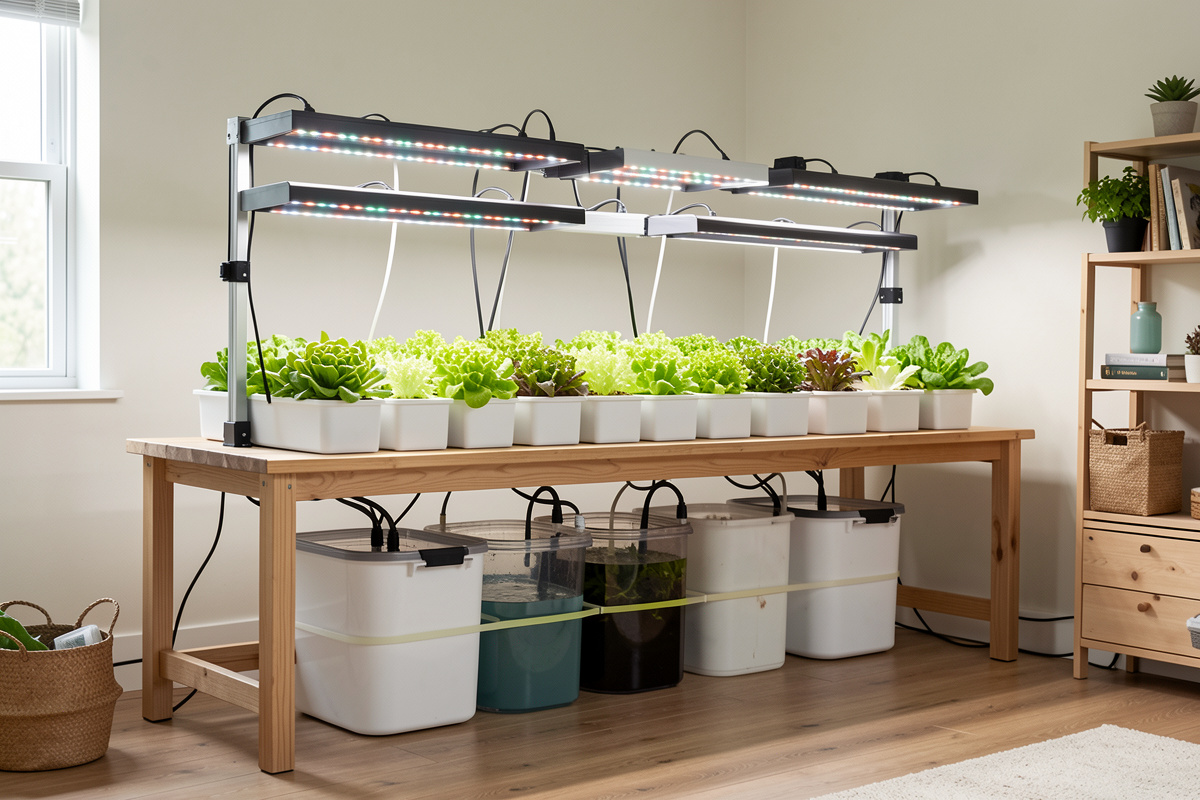
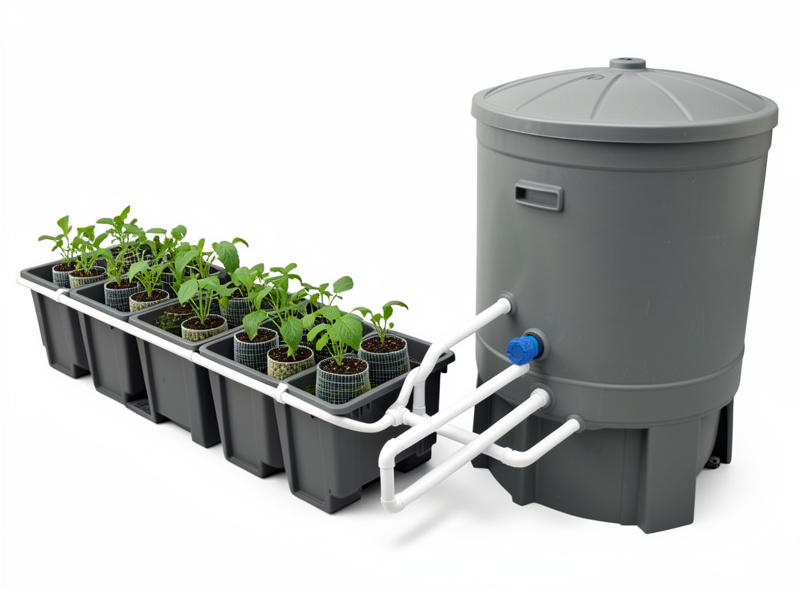
Volume is your buffer. A large reservoir is a flywheel — it absorbs the daily swings so you intervene weekly instead of hourly. This is the same logic as sizing any reservoir, just applied to a plant count that has gone up. When I scaled my DWC row, the move that fixed the daily pH chase was not a fancier pen; it was plumbing every tote back to one shared, oversized reservoir so the whole system shared one big, stable body of water.
Recirculating vs Standalone: The Decision That Defines Your Scale
At one or two buckets, standalone reservoirs are fine — each is its own little world. Past three or four grow sites, recirculating to a central reservoir wins decisively because you mix, measure, and correct one body of water instead of five. Every commercial system recirculates for exactly this reason: you cannot hand-balance a dozen separate reservoirs and stay sane.
Recirculating means a central reservoir, a circulation pump pushing solution out to the grow sites, and gravity or return lines bringing it back. The cost is plumbing and a single point of failure — if that pump dies, everything downstream stops. The benefit is that one EC reading and one pH adjustment now manage the entire system. When I run my totes recirculating, a res change is one dump-and-mix instead of five, and that labor saving is the whole reason scaling is bearable. The reservoir setup guide covers plumbing a central tank.
Aeration and Dissolved Oxygen Scale With Root Mass
More plants means more root mass means more oxygen demand — and dissolved oxygen is the failure mode that quietly kills scaled DWC. A single air stone that kept one bucket happy will not oxygenate a 40-gallon shared reservoir packed with roots. You scale aeration with the system: bigger air pump, more air stones or a disc diffuser, and you keep them running 24/7.
The danger compounds in summer. Warm water holds less dissolved oxygen exactly when bigger root mass needs more of it, which is the classic recipe for Pythium root rot. I keep my reservoir below 68°F and treat anything above 72°F as the danger zone — the same numbers whether it is one bucket or a row. Read dissolved oxygen and water temperature together, because at scale they are the same problem, and root rot prevention is the payoff for getting them right.
Power, Pumps and the Redundancy You Now Need
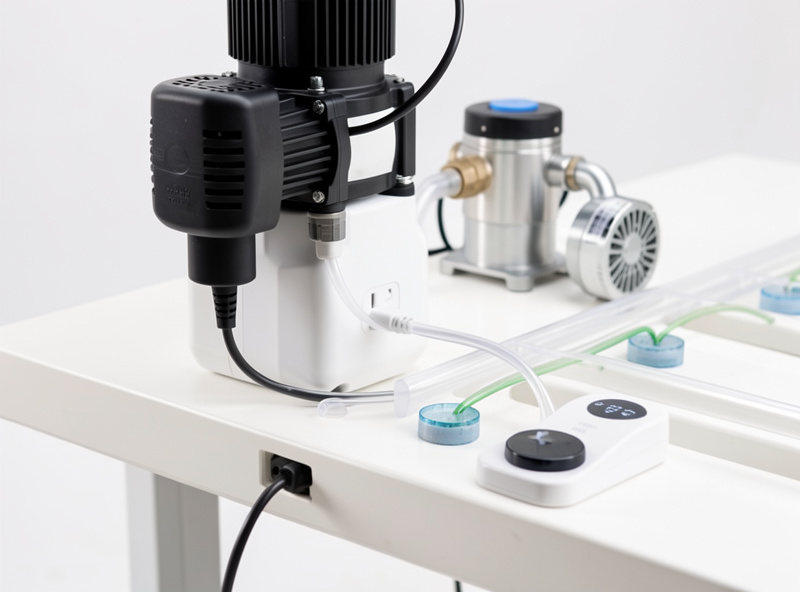
At hobby scale, a power cut for an hour is a non-event. At bench-and-room scale, a dead pump or a tripped breaker can crash an entire crop in the time it takes NFT channels to dry or a DWC reservoir to go anoxic. Scaling means thinking about redundancy for the first time: a battery backup on critical pumps, a second air pump as failover, and ideally an alert when something stops.
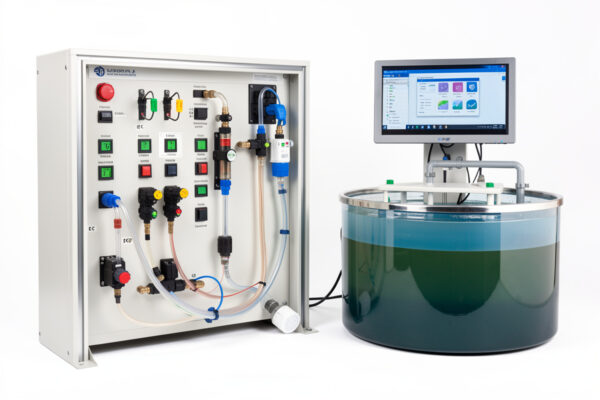
This is where the maker side earns its keep. A simple smart plug with power-failure alerting, an inexpensive water-level float, and a temperature alarm turn a silent catastrophe into a phone notification. I treat the rig like any other control loop — sensors and alerts so I only intervene when it actually fails. If you want to go further, the smart sensors guide and the solar and battery sizing guide both force you to size your real electrical load, which you need to know before you add a single channel.
Light Has to Scale With Footprint
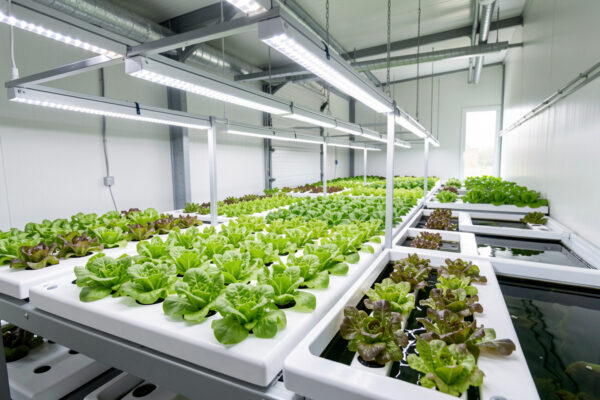
This is the cost nobody budgets for: doubling your grow area roughly doubles your lighting requirement, and light is the expensive resource indoors. You cannot spread one panel thinner over a bigger bench and expect the same yield — PPFD falls off fast with distance and spread, and your daily light integral collapses with it. Leafy greens want a DLI around 14 to 17 mol/m²/day across the entire canopy, not just the bright patch under the middle of the fixture.
Scaling light well means adding fixtures to keep the canopy evenly lit, then verifying with a PAR meter rather than guessing. In my short Nordic winters this math is mandatory — I do not get to rely on a sunny window. The PPFD and DLI guide has the numbers and the grow light guide covers fixture choice and hanging height for a bigger footprint.
The Stages of Scaling, and What Changes at Each
Scaling is not one jump. Here is the progression I think in, and the thing that actually changes at each stage — because the gear you add is a response to the problem each stage creates, not a shopping list.
| Stage | Grow sites | Reservoir | What changes |
|---|---|---|---|
| Single system | 1–4 plants | Standalone, 5–10 gal | Hand-tested; chemistry swings fast |
| Bench | 6–20 plants | Shared central, 20–40 gal | Recirculate; one EC/pH point for all |
| Room | 20–80 plants | Central, 40–100+ gal | Aeration scales; redundancy and alerts needed |
| Micro-farm | 80+ plants | Multiple zones | Staggered planting; automation earns its keep |
The honest takeaway is that each stage adds a discipline, not just hardware: the bench adds plumbing, the room adds redundancy, the micro-farm adds production planning. Skip the discipline and the hardware will not save you. When you outgrow a room, the next moves are stacking up with vertical farming at home or out under glass with greenhouse hydroponics, and eventually automating the whole system.
Frequently Asked Questions
How big should my reservoir be when scaling up?
Keep at least one to one and a half gallons of active reservoir volume per mature leafy-green plant, and more for fruiting crops. A larger shared reservoir acts as a buffer that absorbs daily EC and pH swings, so you correct chemistry weekly instead of chasing it every day.
Should I recirculate or keep standalone reservoirs when scaling?
Standalone reservoirs are fine up to three or four grow sites. Past that, recirculating to one central reservoir wins because you mix, measure and correct a single body of water instead of many. The trade-off is plumbing and a single pump as a point of failure.
Do EC and pH targets change when I scale up?
No. Leafy greens still sit around 1.2 to 1.8 mS/cm with pH in the 5.5 to 6.0 band, and fruiting crops run higher. What changes is that a bigger plant count swings a small reservoir faster, so you need more volume as a buffer or more frequent correction.
Why does my pH swing more after adding plants?
More plants drink and transpire more and release more root exudate into a reservoir that did not grow to match, so concentration and pH shift faster. The fix is more reservoir volume per plant, or recirculating everything to one larger shared tank that resists swings.
How much does aeration need to increase when scaling DWC?
Aeration scales with root mass, not plant count alone. A single air stone that suited one bucket will not oxygenate a packed 40-gallon shared reservoir. Upsize the air pump, add stones or a disc diffuser, run them 24/7, and keep reservoir temperature below 68 degrees Fahrenheit to hold dissolved oxygen.
Do I need backup power when scaling a hydroponic system?
Yes, redundancy starts mattering at bench and room scale. A dead pump can crash a whole crop before you notice. A battery backup on critical pumps, a failover air pump, and a simple power-failure or water-level alert turn a silent catastrophe into a phone notification.