The crops that actually pay off in hydroponics fall into three tiers I sort by nutrient strength: leafy greens and lettuce at EC 0.8–1.2 mS/cm, herbs and strawberries in the 1.0–1.6 middle, and fruiting tomatoes and peppers up at 2.0–3.5. Pick by the EC tier your system and light can actually feed, not by what looks good on a seed packet.
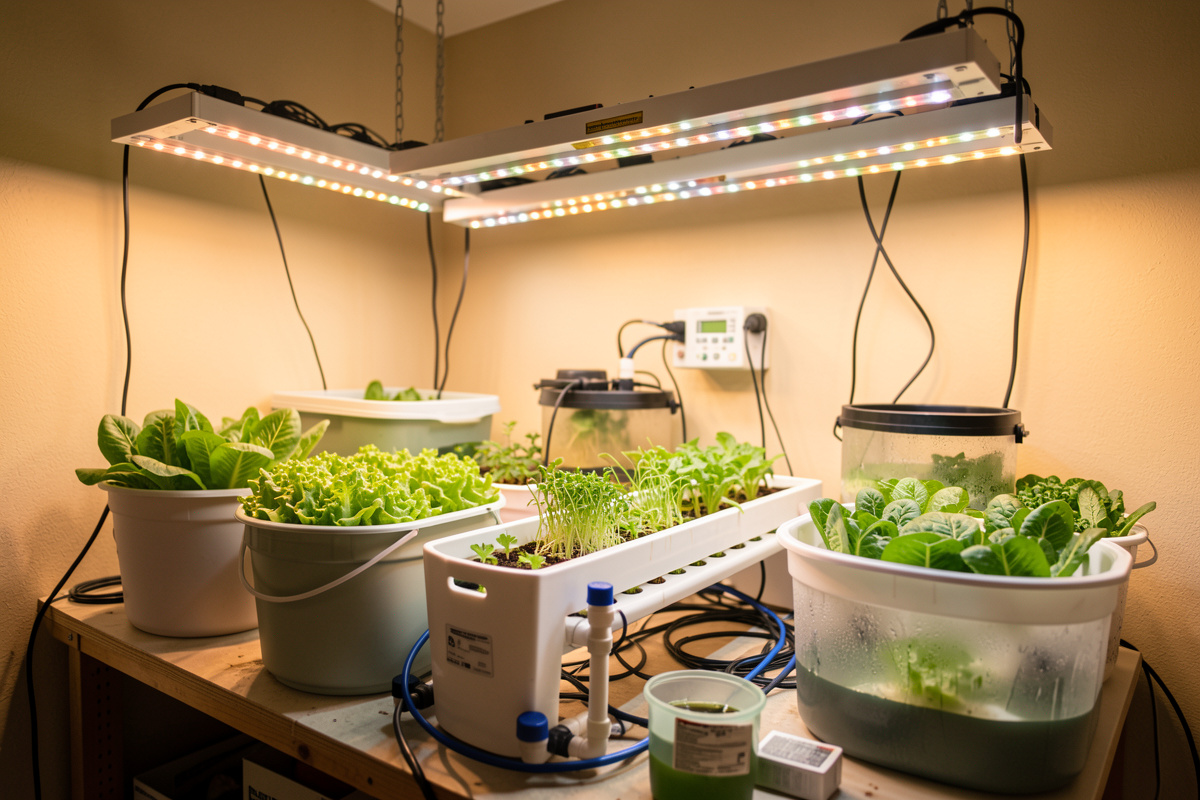
I run DWC, NFT, Kratky and ebb-and-flow side by side in a spare-room lab in Sweden, logging EC, pH and PPFD on every reservoir, and the single biggest thing I’ve learned about choosing crops is that the plant is rarely the problem. The system is. A crop succeeds or fails on whether your method can hold its target EC, deliver its light demand, and keep the root zone cool and oxygenated. This guide is the map I use to match a crop to all three before I ever drop a seed in a rockwool cube.
How I Decide What to Grow
Three numbers decide a crop before I commit: target EC, daily light integral (DLI), and root-zone temperature tolerance. If my light can deliver the DLI and my reservoir can hold the EC, the crop will grow. If either falls short, no nutrient brand or gadget rescues it.
Most hobby content sells crops on taste and novelty. I sort them on demand. A head of lettuce wants a weak solution and modest light — roughly 12–14 mol/m²/day of DLI — which means it thrives under a cheap LED bar even through a dark Nordic January. A tomato wants double the light and triple the EC, plus support, pruning and a fruiting-stage feed change. Both are “hydroponic crops,” but they live in completely different worlds of effort. Before I pick, I check the EC-by-crop chart and ask one honest question: can this rig actually hold these numbers for 60 days? If the answer is no, I grow something easier and enjoy it more.
The Three Crop Tiers by Difficulty
I bucket every edible crop into three tiers. Tier 1 (leafy greens, herbs, microgreens) is forgiving, low-EC, low-light and fast. Tier 2 (strawberries) is a perennial middle case. Tier 3 (tomatoes, peppers, cucumbers) is high-EC, high-light, long-season work that rewards patience.
The tiers matter because they predict your failure mode. In Tier 1 the thing that kills a crop is almost always the root zone — a warm reservoir tipping into Pythium and root rot — not nutrition. In Tier 3 the failures are nutritional and structural: calcium lockout showing up as blossom-end rot, an EC that drifts because a heavy-feeding plant drinks water faster than it eats salts, a vine that topples because nobody built it a trellis. Knowing which tier you’re in tells you what to watch. I started everyone I’ve ever taught on Tier 1, and I’d give you the same advice: earn the fundamentals on lettuce before you spend four months on a tomato.
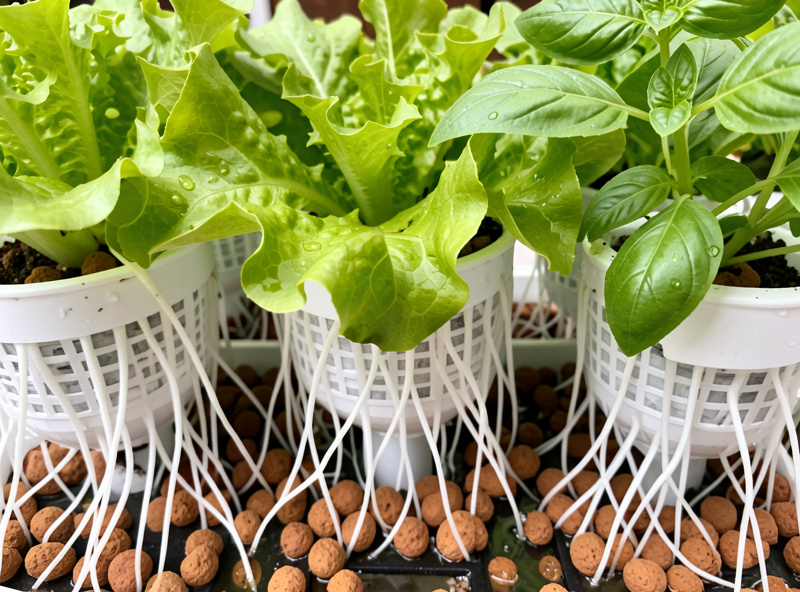
Leafy Greens and Lettuce: the EC 0.8–1.2 Tier
Lettuce is the crop I measure every system against. It wants EC 0.8–1.2 mS/cm, pH 5.5–6.0, a reservoir under 20°C (68°F), and only about 12–14 mol/m²/day of light. Seed to harvest runs 28–45 days. It’s the fastest honest feedback loop in the hobby.
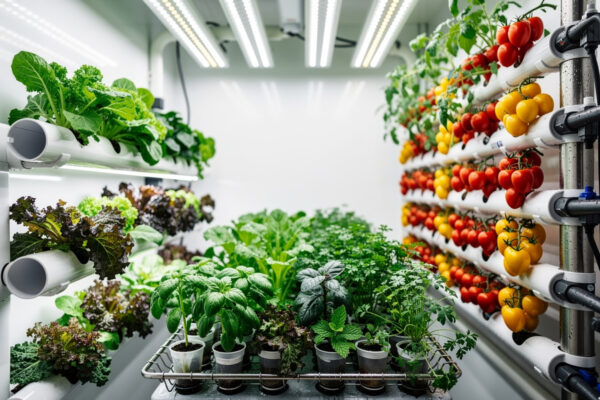
Loose-leaf varieties — Salanova, oakleaf, lollo types — are the most forgiving because you cut outer leaves and keep the plant producing. Crisphead and romaine want more light and cooler roots or they bolt and turn bitter. Lettuce in particular punishes a warm res: above 21–22°C the dissolved oxygen drops, the roots brown, and slime takes over. That’s why I keep lettuce on DWC with an air stone running 24/7, or on NFT where the thin film stays oxygenated by design. Spinach, kale, chard, bok choy and most Asian greens slot into the same tier with slightly higher EC (1.4–1.8 for spinach) — I cover the full cultivation routine in the growing lettuce hydroponically guide.
Herbs: the Everyday Workhorse
Herbs are the highest-value-per-square-inch crop I grow, and most live in the EC 1.0–1.6 band at pH 5.5–6.5. Basil is the flagship — cut-and-come-again, fast, and worth a fortune at the store relative to what a net pot costs to run.
The trick with herbs is that they don’t all want the same thing. Basil, mint and chives are thirsty, fast and happy at EC 1.2–1.6. Mediterranean woody herbs — rosemary, thyme, oregano, sage — come from dry hillsides and resent a soggy, rich reservoir; I run them leaner (EC ~1.0) and on a method that lets the roots breathe, like ebb-and-flow in hydroton or a well-aerated DWC. Cilantro bolts the instant the root zone warms, so it’s a cool-season, fast-turnover crop for me. Because herbs are compact and low-light (12–16 mol/m²/day), they’re the perfect partner for leafy-green grow lights. The full lineup — which herbs actually earn their res space and which to skip — is in the growing herbs in hydroponics guide.
Fruiting Crops: Tomatoes and Peppers
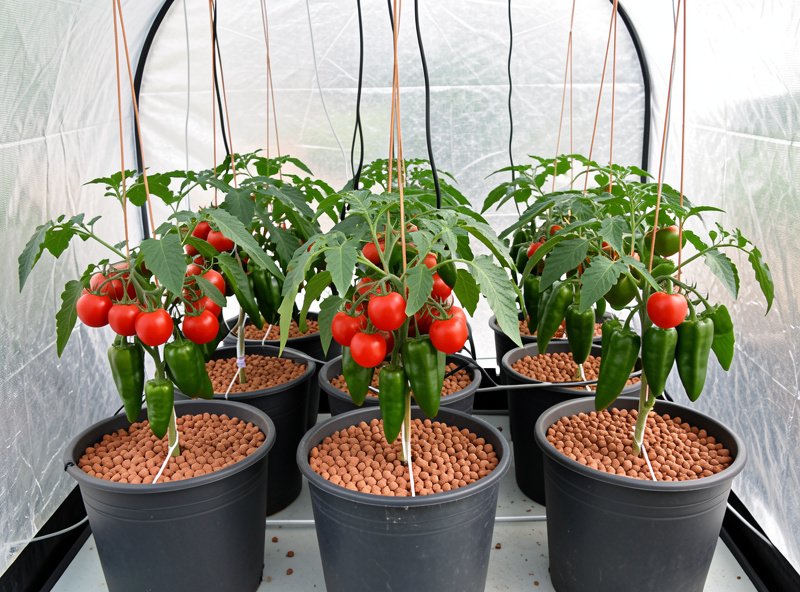
Tomatoes and peppers are the high-EC, high-light tier: EC 2.0–3.5 for tomatoes and 1.8–2.8 for peppers, both at pH 5.8–6.3, both wanting 20–30 mol/m²/day of light and a fruiting-stage feed shift toward potassium. These are 90–120 day commitments, not salad-bar quick wins.
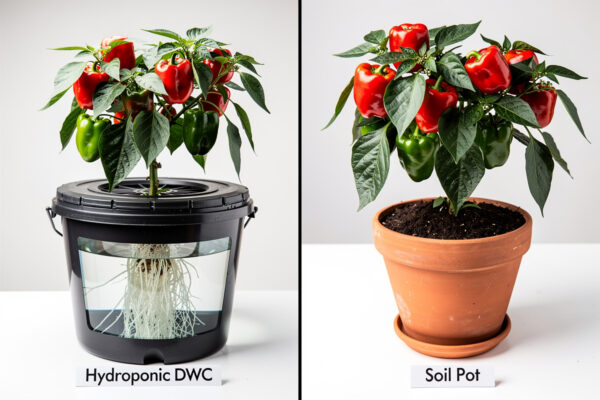
What makes fruiting crops harder isn’t the plant — it’s the bookkeeping. A flowering tomato drinks water far faster than it consumes nutrients, so the EC climbs as the res evaporates and transpires down, and you have to top off with plain or low-EC water to hold the number. Calcium delivery becomes make-or-break: skimp on it and you get blossom-end rot, the classic sunken black patch on the fruit base, which is a calcium-transport failure, not a disease. I run fruiting crops on Dutch buckets or a flood-and-drain hydroton bed because they give the big root systems room and oxygen, and I keep CalMag on the bench for the whole run. Full routines live in the hydroponic tomatoes guide and the growing peppers hydroponically guide.
As an Amazon Associate I earn from qualifying purchases.
Strawberries: the Perennial Outlier
Strawberries don’t fit the annual mold — they’re a perennial that fruits in flushes, wants a moderate EC 1.0–1.4 at pH 5.5–6.2, and needs a cold-induced or day-length cue to flower. They reward a grower who’s patient enough to let the crown establish before expecting fruit.
The reason I file strawberries between leafy greens and fruiting crops is that their nutrition is gentle but their patience demand is high. Day-neutral varieties (Albion, Seascape) are the ones worth running indoors because they fruit on light cues rather than a strict seasonal chill, so a Nordic indoor grower can crop them most of the year under controlled photoperiod. They love a vertical tower or Dutch-bucket layout, and they’re fussy about crown rot if you bury the crown — the growing point must sit proud of the media. The full establish-and-fruit timeline is in the hydroponic strawberries guide.
Microgreens: the Fastest Return
Microgreens are the quickest crop in hydroponics by a wide margin — 7–21 days from seed to harvest, often on plain pH-adjusted water or a very weak EC 0.5–1.0 solution, because the seed carries most of the energy the seedling needs.
They’re the one crop where the usual EC obsession relaxes. You’re harvesting the cotyledon-to-first-true-leaf stage, so the plant barely touches your nutrient solution. That makes microgreens the ideal gateway: a flat tray, a hydroponic mat or thin hydroton, decent light, and you eat in under two weeks. The risks are different too — not nutrient lockout but damping-off and mold from over-wet, under-ventilated trays. I treat them like I treat a sourdough starter: clean process beats fancy ingredients. The seed densities, blackout periods and harvest timing are in the hydroponic microgreens guide.
Matching Crop to System
No single method is best for everything — that’s the whole reason I run four. Leafy greens and herbs belong on DWC, NFT or Kratky; fruiting crops belong on Dutch buckets or ebb-and-flow; microgreens don’t need a recirculating system at all. Match the method to the crop’s root size and feed rate.
The table below is how I’d steer a new grower’s first three or four crops. It’s built from running these same crops across these same methods on one bench with the same meters — not from spec sheets. If you’re still choosing your first system, the how-to-choose-a-system guide walks the decision in depth, and the Kratky method is the zero-pump way to test a crop before you commit to plumbing.
| Crop | Target EC (mS/cm) | pH | DLI (mol/m²/day) | Best system | Seed→harvest |
|---|---|---|---|---|---|
| Lettuce / leafy greens | 0.8–1.2 | 5.5–6.0 | 12–14 | DWC, NFT, Kratky | 28–45 days |
| Basil & soft herbs | 1.2–1.6 | 5.5–6.5 | 14–18 | DWC, NFT | 21–35 days |
| Spinach | 1.4–1.8 | 6.0–7.0 | 14–17 | NFT, DWC | 35–45 days |
| Strawberries | 1.0–1.4 | 5.5–6.2 | 17–22 | Dutch bucket, tower | 60–90 days to fruit |
| Peppers | 1.8–2.8 | 5.8–6.3 | 20–25 | Dutch bucket, ebb-flow | 90–120 days |
| Tomatoes | 2.0–3.5 | 5.8–6.3 | 22–30 | Dutch bucket, ebb-flow | 90–110 days |
| Cucumbers | 1.7–2.5 | 5.8–6.0 | 20–25 | Dutch bucket, ebb-flow | 50–70 days |
| Microgreens | 0.0–1.0 | 5.8–6.2 | 10–14 | Flat tray / mat | 7–21 days |
One practical note on that table: the EC ranges are starting points for a healthy plant in mid-cycle, not commandments. I nudge a hair lower when my reservoir runs warm (warm water plus high EC stresses roots), and I feed at the top of the range in bright light when the plant is transpiring hard. The numbers are a leash, not a cage — but I always know where on the leash I am, because my EC pen tells me rather than my gut.
The Numbers That Decide Success
Across every crop, four readings predict whether you’ll harvest: EC held within range, pH parked in the 5.5–6.2 uptake band, reservoir temperature under 20°C, and DLI on target. Get those four right and the crop is almost an afterthought.
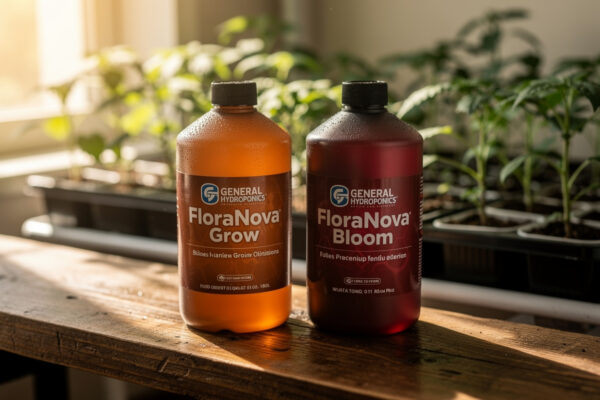
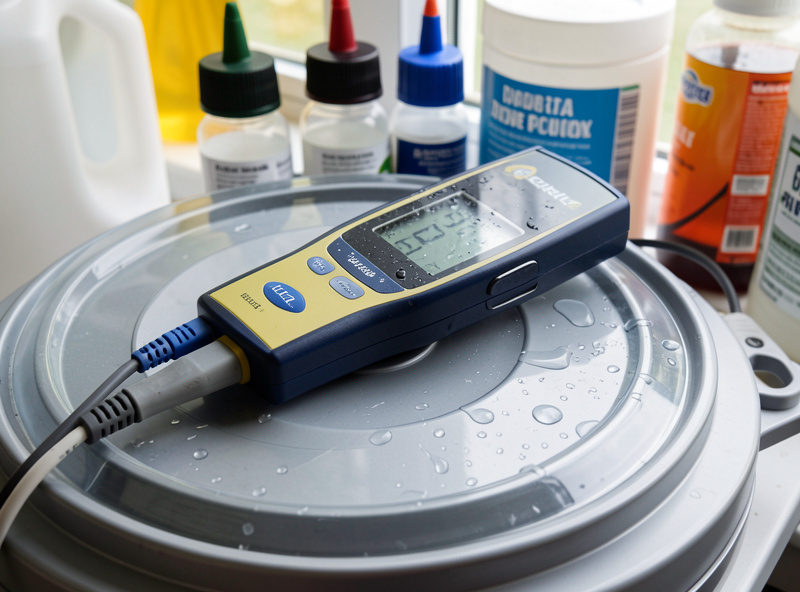
EC is the dial that tells you whether the plant is eating what you mixed. If EC rises between top-offs, the plant is drinking faster than it’s feeding — dilute. If it falls, it’s eating hard — feed up at the next res change. pH is the gatekeeper: drift outside 5.5–6.2 and nutrients lock out even when they’re present in the tank, which is why I cross-check my pen against drops and keep my water chemistry dialed before blaming the nutrient line. Reservoir temperature is the silent killer — warm water holds less dissolved oxygen, and oxygen-starved roots invite rot faster than any pest. And DLI is the one most growers under-deliver: a light bright enough for lettuce is half of what a tomato needs, which the PPFD and DLI guide lays out in mol-per-day terms. I mix every reservoir to a target EC with the GH Flora trio or Masterblend, never by feel, and I keep an EC/pH meter calibrated on the bench — the meter is the cheapest insurance in this hobby.
Pollinating Fruiting Crops Indoors
Indoors there’s no wind and no bees, so tomatoes, peppers and strawberries need help moving pollen or they drop flowers without setting fruit. Tomatoes and peppers are self-fertile and just need vibration; strawberries need pollen physically spread across the flower face or they set lumpy, malformed berries.
For tomatoes and peppers I run an electric toothbrush or a small clip fan against the flower trusses for a few seconds a day during bloom — the buzz shakes pollen loose inside the flower, which is exactly what a bumblebee’s wingbeat does in a greenhouse. A gentle daily airflow from a circulation fan does double duty here: it strengthens stems and nudges pollen. Strawberries are fussier; I use a soft brush and dab every open flower every day or two, because a half-pollinated strawberry flower becomes a knobbly, half-formed berry. This is the kind of small daily intervention that separates a fruiting crop from a leafy one — greens you can largely ignore between res changes, but a flowering plant wants a minute of attention a day. None of it is hard; it just has to actually happen, which is why I treat the bloom window like a checklist item rather than a someday task.
The Nordic-Winter Light Problem
Growing indoors in Sweden forces a discipline most warm-climate growers never need: in deep winter the sun gives me only about six hours of weak daylight, so every usable photon is the one my LED bars deliver. That makes DLI math mandatory, not optional — I size the photoperiod to hit the crop’s target light integral regardless of what’s happening outside.
The way it plays out is simple arithmetic. DLI is PPFD multiplied by seconds of light per day. If my fixture delivers 200 µmol/m²/s at canopy height and lettuce wants ~13 mol/day, I need roughly 18 hours of light to get there — trivial to schedule with a photoperiod timer. A tomato wanting 25 mol/day at 400 µmol/m²/s needs about 17 hours but at double the intensity, which is a far bigger fixture and a real electricity bill. This is why I tell cold-climate growers to lean into leafy greens and herbs through the dark months and save the high-DLI fruiting crops for when supplemental light isn’t fighting a six-hour day. It’s also why a cheap countertop appliance with a token LED strip is the most expensive way to grow — it can’t deliver the DLI, so the crop limps, and a limping crop is wasted water, nutrients and time. Measure the light, do the multiplication, and the dark months stop being a mystery.
A 90-Day Crop Progression for New Growers
If you’re starting out, don’t begin with the crop you most want to eat — begin with the crop that teaches you fastest. My standard progression is microgreens in weeks 1–2, lettuce and herbs in weeks 2–6, then a single fruiting crop once holding EC and pH is automatic.
Here’s why that order works. Microgreens give you a harvest in under two weeks, so you get a win and a feel for clean water and airflow before you’ve sunk any real time. Lettuce and basil then drill the core loop — mix to a target EC, watch pH, keep the res cool, top off correctly — on a forgiving plant with a 30-day cycle, so a mistake costs you a salad, not a season. Only once those readings are second nature do I point a new grower at a tomato or pepper, because by then the high-EC bookkeeping and the daily pollination habit land on someone who already trusts their meters. Run that progression and you’ll have eaten from three crop tiers and learned every core skill inside three months, for the price of seeds, salts and a bag of clay pebbles. Rushing straight to fruit is the single most common way I see beginners quit — four months of small mistakes with nothing to show, instead of four quick crops that each taught something.
What I’d Skip or Save for Later
Some crops are technically possible in hydroponics but a poor use of a hobby res. Root crops (carrots, potatoes), corn, and sprawling vine squash all want soil depth, space or pollination logistics that make them more trouble than they’re worth indoors. Save them for the garden.
I also steer beginners away from anything that demands a four-month commitment before the first taste. It’s not that you can’t grow a beefsteak tomato — it’s that a failed two-week lettuce crop teaches you ten times faster and costs you almost nothing. Build the EC, pH and root-zone instincts on the cheap, fast crops, then graduate to the long-season fruiting plants when holding your numbers is second nature. If you want the honest ranking of every common crop by how much grief it’ll cause you, the what grows best in hydroponics guide is the companion to this one, and the 15 easy beginner plants list is a good shortlist to start from. For feeding any of them, the complete nutrients guide and the mixing walkthrough cover the salts; the seed-starting guide and transplanting guide cover getting them into the system.
Frequently Asked Questions
What is the easiest crop to grow hydroponically?
Lettuce and leafy greens are the easiest. They want a weak EC 0.8 to 1.2 solution, modest light around 12 to 14 mol per day, and harvest in 28 to 45 days, giving you fast feedback with very little that can go wrong.
What grows fastest in hydroponics?
Microgreens are by far the fastest, ready in 7 to 21 days from seed. They run on plain pH-adjusted water or a very weak 0.5 to 1.0 EC solution because the seed itself carries most of the energy the seedling needs.
Can you grow tomatoes and peppers in the same system as lettuce?
Not well in the same reservoir. Lettuce wants EC 0.8 to 1.2 while tomatoes want 2.0 to 3.5, so a shared tank starves one or burns the other. Run high-EC fruiting crops on a separate reservoir from your leafy greens.
What EC and pH should I run for hydroponic crops?
It varies by crop: leafy greens at EC 0.8 to 1.2, herbs and strawberries around 1.0 to 1.6, and tomatoes and peppers at 1.8 to 3.5. Keep pH in the 5.5 to 6.2 uptake band for almost everything to avoid nutrient lockout.
Which hydroponic system is best for fruiting crops?
Dutch buckets and ebb-and-flow hydroton beds are best for tomatoes and peppers because they give large root systems room and oxygen, and handle the high EC and frequent top-offs that heavy-feeding fruiting crops demand over a 90 to 120 day season.
Why does my reservoir EC keep rising on fruiting crops?
Flowering tomatoes and peppers transpire water faster than they consume nutrients, so the salts concentrate as the water level drops and EC climbs. Top off with plain or low-EC water between full res changes to hold your target number.