The only spider mite control that reliably works in a sealed hydroponic room is biological plus environmental: release predatory mites — Phytoseiulus persimilis for a hot active infestation, Neoseiulus californicus as a slower standing guard — and at the same time make the room hostile to mites by dropping temperature, raising humidity and adding airflow. Hot, dry, stagnant air is spider-mite paradise; take it away and you are halfway to winning.
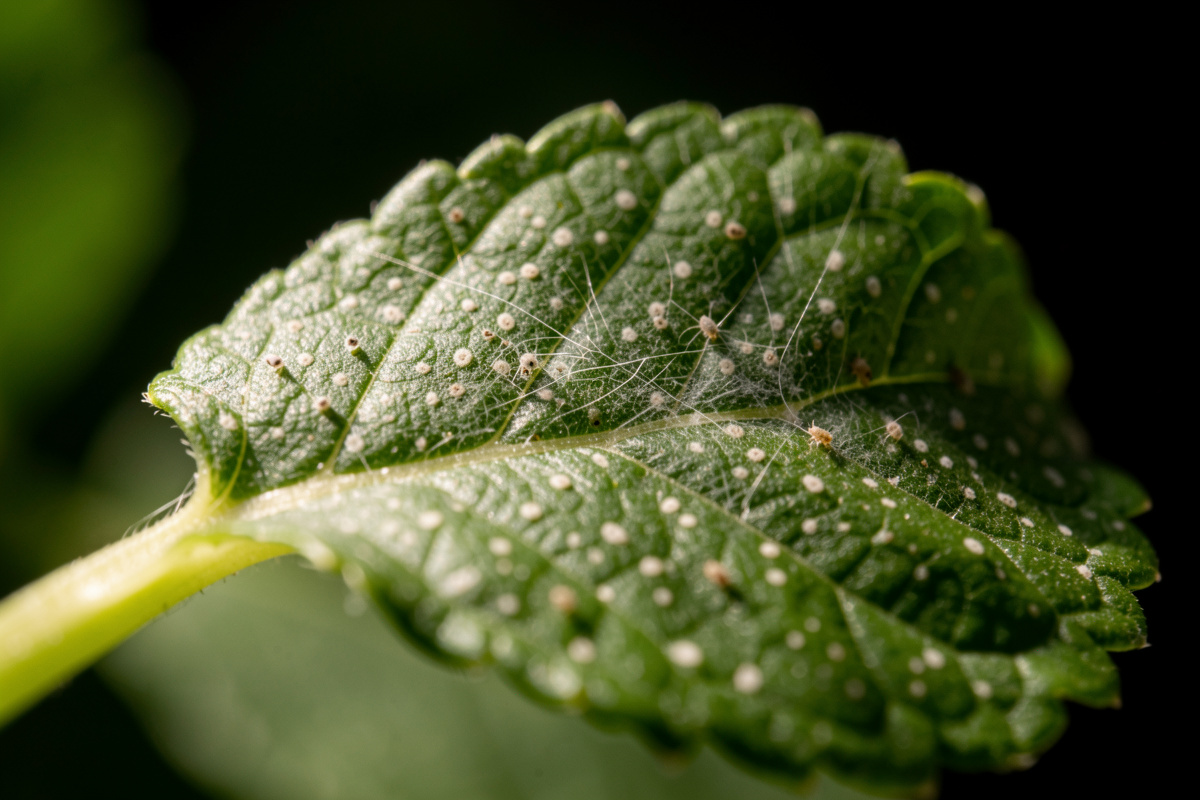
Of every pest on my bench, spider mites are the one I respect most and catch latest. They are barely visible — specks the size of a grain of pepper on the underside of a leaf — and they breed so fast in warm dry air that by the time you notice fine webbing strung across the growing tips, you are already deep into an infestation that has been building for a week or two. This guide is the control program I run; if you are still trying to confirm whether those tiny dots are mites, dust or thrips, the existing spider mites identification guide covers spotting and confirming, and this article is about driving them out.
Why Spider Mites Explode in Indoor Grows
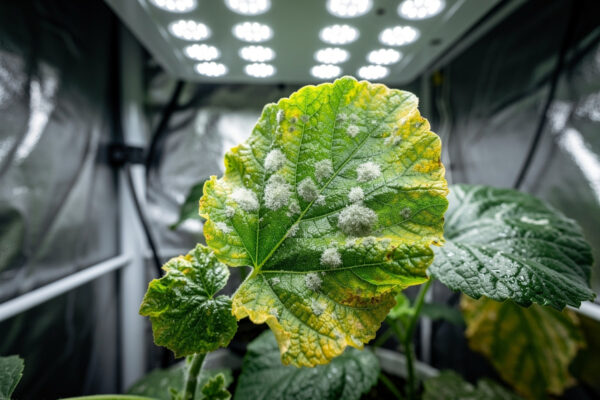
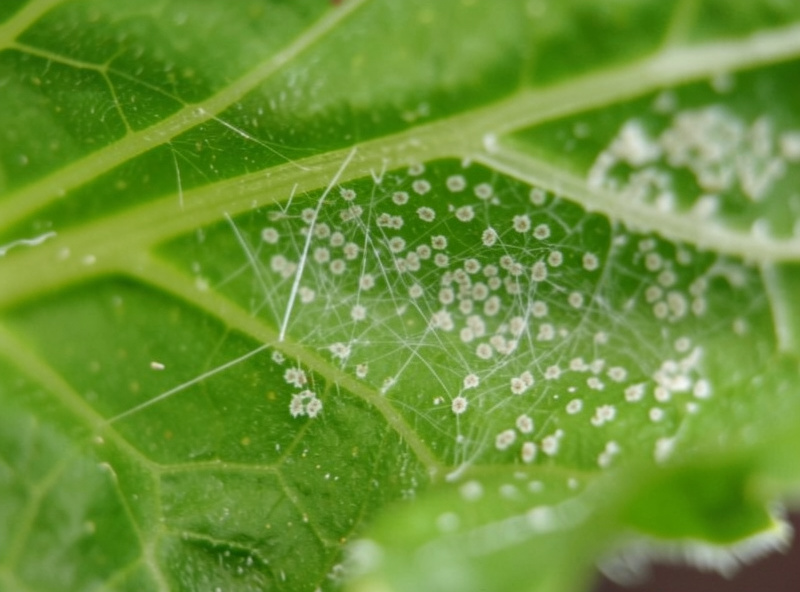
Spider mites are not insects — they are tiny arachnids, and their biology is what makes them so dangerous indoors. In warm conditions a population can double in a matter of days, and a female lays dozens of eggs over her life, so the numbers run away exponentially before you see damage. They pierce leaf cells and drain them, leaving the tell-tale fine pale stippling that spreads across a leaf until it bronzes, dries and dies. In a bad infestation they spin the fine webbing that gives them their name, using it to move between plants and protect the colony. Michigan State University IPM is a solid reference for the mite life-cycle timing that decides how often you have to repeat a treatment.
The reason indoor hydroponic rooms are so vulnerable comes down to climate. Spider mites thrive in hot, dry, still air — exactly the microclimate under bright lights in a sealed tent with marginal airflow, especially in a dry heated winter room. That is the bad news. The good news is that the same climate levers are your most powerful control: mites breed far slower in cooler, more humid, moving air, so fixing the environment both slows the outbreak and stops the next one. The grow room environment numbers behind that live in the grow room environment guide and the humidity and VPD guide.
Predatory Mites: The Control That Actually Works
In a closed room, predatory mites are the single most effective spider-mite control there is, and they are what I reach for over any spray. They hunt spider mites, their eggs and their larvae, and because they are mites themselves they get into exactly the leaf-underside crevices where spider mites hide and where sprays struggle to reach. In a sealed indoor space they cannot wander off, so once you release a sufficient population they stay and work until the prey runs out.
Two species cover most situations, and the choice depends on how hot the infestation is:
- Phytoseiulus persimilis is the specialist shock troop for an active, established infestation. It eats spider mites voraciously and breeds fast when prey is dense, crashing a hot population quickly. Its weakness is that once it has eaten all the spider mites it starves out, so it is a cure rather than a standing guard. It also wants reasonable humidity to thrive.
- Neoseiulus californicus (also sold as Amblyseius californicus) is the durable generalist. It works through an infestation more slowly but survives on low prey numbers and even some pollen, so it persists as a standing guard that catches the next outbreak early. I lean on it as preventive insurance after persimilis has done the heavy lifting.
The common pattern for a real infestation is to deploy both: persimilis to crash the active population and californicus to remain on patrol afterwards. Release them per the supplier’s rate, distributed across the worst-affected plants, and resist the urge to “help” with a spray — which brings us to the one rule that ruins more predator releases than anything else.
The Spray-or-Predator Rule
You commit to one strategy. Contact sprays — neem, soap, oils — kill predatory mites just as dead as they kill spider mites, so spraying after a release wipes out the army you paid for. If you are going biological, you stop spraying the moment the predators go in, full stop. If the infestation is too far along to wait for predators, you spray first to knock the numbers down hard, then release predators only after the spray residue has fully cleared. Mixing the two at once is the most common and most expensive mistake in spider-mite control.
When You Spray Instead
For a small, early, localized infestation — or as the knockdown before a predator release — sprays have their place. Cold-pressed neem oil at ~0.5% (5 mL/L) with an emulsifier, applied lights-off and hitting leaf undersides thoroughly, smothers mites and disrupts their breeding. Insecticidal soap and lightweight horticultural oils work similarly on contact. The non-negotiables: spray the undersides, where mites actually live; spray lights-off to avoid leaf burn; and repeat every few days, because no spray kills the eggs, so you must keep hitting each new hatch for two to three weeks. A bottle of cold-pressed neem oil is the workhorse here.
As an Amazon Associate I earn from qualifying purchases.
Control Methods Compared
| Method | Best for | Speed | Key rule |
|---|---|---|---|
| Phytoseiulus persimilis | Hot active infestation | Fast | Starves out when prey gone; no spraying |
| Neoseiulus californicus | Standing guard / prevention | Slow, persistent | Survives low prey; no spraying |
| Neem ~0.5% lights-off | Small/early, or pre-release knockdown | Days, repeated | Undersides; repeat for eggs; not with predators |
| Cooler, humid, moving air | Always — slows breeding | Preventive | Removes the mites’ ideal climate |
Environment: The Half of Control Everyone Skips
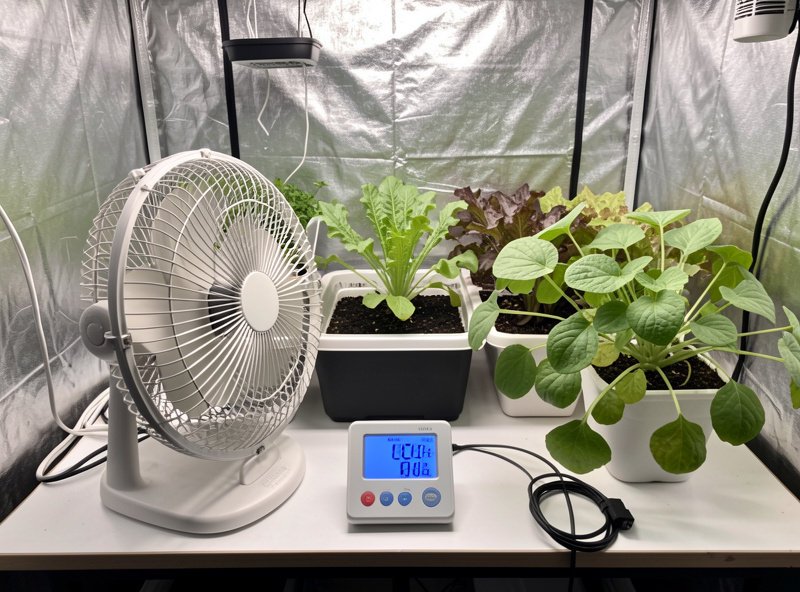
You cannot win a spider-mite fight in a hot, dry, dead-air room no matter what you spray or release, because the climate keeps rebuilding the population faster than you knock it down. So the environment work runs alongside whatever else you do. Drop the temperature toward the cooler end of your crop’s comfortable range — mite breeding slows markedly as it falls. Raise the humidity out of the bone-dry zone mites prefer (which also helps persimilis thrive). Add airflow with an oscillating fan so the still pockets where mites colonize get disturbed. In my dry Nordic winter room, mite season is exactly the season I have to fight low humidity and add moving air, and getting that climate right does more than any single treatment.
A Realistic Spider Mite Battle Plan
When you confirm an active infestation, the order of operations matters as much as the tools. Here is the sequence I follow rather than panic-spraying everything at once.
First, isolate. Spider mites spread between plants on their webbing and on your hands, so move heavily infested plants away from clean ones immediately, and handle the infested ones last when you work in the room. A single afternoon of careless handling can seed mites across an entire grow.
Then decide spray-first or predator-first based on severity. Light and early: go straight to predators, or a couple of neem applications if you would rather not wait. Heavy, with visible webbing: knock the numbers down hard with neem lights-off, applied to undersides, repeated every three to four days for a week or two — and only then, once residue has cleared, release predators to mop up and stand guard.
Fix the climate in parallel. From day one, cool the room, raise humidity and add airflow. This is not optional garnish; it is what stops the population doubling under you while you treat. Skipping it is the single biggest reason spider-mite fights drag on for months.
Be patient and keep scouting. No spray kills the eggs, so the fight spans at least one full life cycle — two to three weeks of repeated applications, or a couple of weeks for predators to catch up to the prey. Keep checking leaf undersides with a loupe and do not declare victory until you have gone a full week with no live mites and no fresh stippling.
Method-Specific Vulnerability
Because spider mites are a foliar pest rather than a root-zone one, your growing method matters less here than it does for root rot — DWC, NFT, Kratky and ebb-and-flow are all equally exposed on the leaves. What does vary is the canopy density and airflow your layout creates. Tightly packed vertical towers and crowded NFT channels build the still, humid-then-dry pockets deep in the canopy where mites get established unseen, so they reward extra airflow and closer scouting. More open bench layouts dry and move air more evenly and tend to show trouble earlier. Whatever the method, the mites live on the leaf undersides, so that is where both your loupe and your treatment go.
One layout habit that pays off: leave enough space between plants that air actually moves through the canopy and you can flip leaves to inspect them without a fight. A crowded grow is not just a mite incubator, it is a grow you cannot scout properly, and a pest you cannot see is a pest you cannot catch early. I would rather run fewer plants with real airflow and clear sightlines than pack the tent and lose the ability to spot a dozen mites before they become a webbed-over emergency. Spacing is quietly one of the cheapest forms of spider-mite control there is.
Keeping Them Out
Spider mites almost always walk into a clean room on something: a new plant, a cutting, or even your own sleeve after handling an infested outdoor plant. They do not appear from nowhere. The defenses are the standard exclusion habits — quarantine every new plant for two weeks and inspect leaf undersides under a loupe before it enters the grow, never bring outdoor plants in, and be careful what you carry in on your clothes after gardening — all covered in the hydroponic room biosecurity guide. Spider mites sit within the wider program in the hydroponic pest control guide, and the predator approach is part of the roster in beneficial insects for indoor hydroponic grows. Catch them at a dozen mites with a loupe and a predator release ends it quietly; catch them at webbing and you are in for a long fight — which is the whole argument for scouting twice a week.
Frequently Asked Questions
What is the best spider mite control for hydroponics?
In a sealed indoor room, predatory mites are the most effective control: Phytoseiulus persimilis to crash an active infestation and Neoseiulus californicus as a persistent standing guard. Pair them with cooler, more humid, moving air, which slows mite breeding. Sprays alone rarely keep up with how fast mites reproduce.
Does neem oil kill spider mites on hydroponic plants?
Cold-pressed neem at about 0.5 percent (5 mL per liter) smothers spider mites and disrupts breeding when sprayed lights-off on leaf undersides. It does not kill the eggs, so you must repeat every few days for two to three weeks. Do not use neem at the same time as predatory mites, which it also kills.
Why do spider mites keep coming back in my grow tent?
Hot, dry, stagnant air lets them rebuild faster than you knock them down, and they often re-enter on new plants. Lower the temperature, raise humidity, add airflow, and quarantine new plants. If you spray, you must repeat to catch newly hatched mites, since no single spray kills the eggs.
Can I use predatory mites and neem together?
No. Contact sprays like neem and insecticidal soap kill predatory mites just as effectively as they kill spider mites. Choose one strategy. If the infestation is severe, spray first to knock numbers down, then release predators only after the spray residue has fully cleared.
How do I find spider mites before they spread?
Scout twice a week with a magnifying loupe, checking the undersides of leaves and the growing tips for tiny moving specks and fine pale stippling. Webbing means a heavy, late-stage infestation. Catching them at a few dozen mites lets a predator release end it quietly instead of a long fight.
What temperature and humidity discourage spider mites?
Spider mites thrive in hot, dry air, so push the room toward the cooler end of your crop’s comfortable range and raise humidity out of the bone-dry zone. Moving air from an oscillating fan disrupts the still pockets where they colonize. The exact targets depend on your crop and stage.