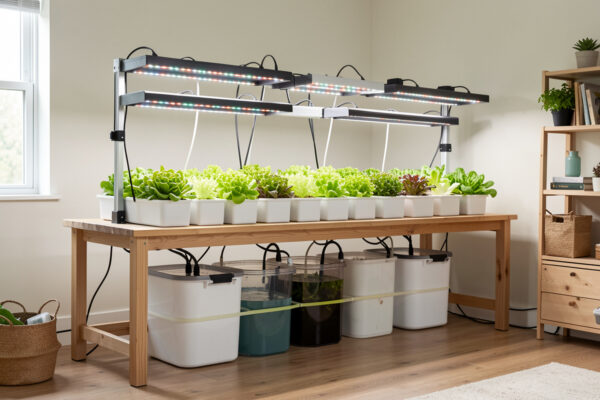
A commercial hydroponics guide has to be honest about one thing first: the gap between a working home bench and a paying farm is not bigger pumps — it is logistics, labor, and margins measured in cents per head of lettuce. I run DWC, NFT, Kratky and ebb-and-flow side by side in a spare room in Sweden, and scaling that up is a different discipline than running it.
This is the hub page for everything on SmartHydroLab about taking a hydroponic system past the hobby line. I will tell you straight where I speak from my own res logs — methods, EC and pH, dissolved oxygen, light math — and where I am repeating what commercial operators and university extension budgets report, because I have never run a 40,000-square-foot greenhouse and I am not going to pretend I have. That honesty is the whole point: most “start a hydroponic farm” content is written by people who have never crashed a reservoir, and you can feel it.
What “Commercial Hydroponics” Actually Means
Commercial hydroponics is growing soilless crops at a scale and consistency that has to satisfy a buyer, not just your dinner plate — typically hundreds to tens of thousands of plant sites, run on a schedule with predictable weekly output. The defining shift is not size. It is that a missed harvest or a crashed reservoir now costs revenue and a customer, so redundancy and record-keeping stop being optional.
On my bench, if a res cooks in a July heatwave and I lose a tote of lettuce, I shrug and re-sow. A market grower selling forty heads a week to a restaurant cannot shrug — that is a relationship and an invoice. Everything that follows in this guide flows from that single difference. The growing knowledge transfers almost perfectly from a hobby DWC bucket to a commercial raft pond. The business around it is the part nobody hands you, so I have broken it into focused guides you can read in any order.
The Honest Ladder: From Hobby Bench to Paying Farm
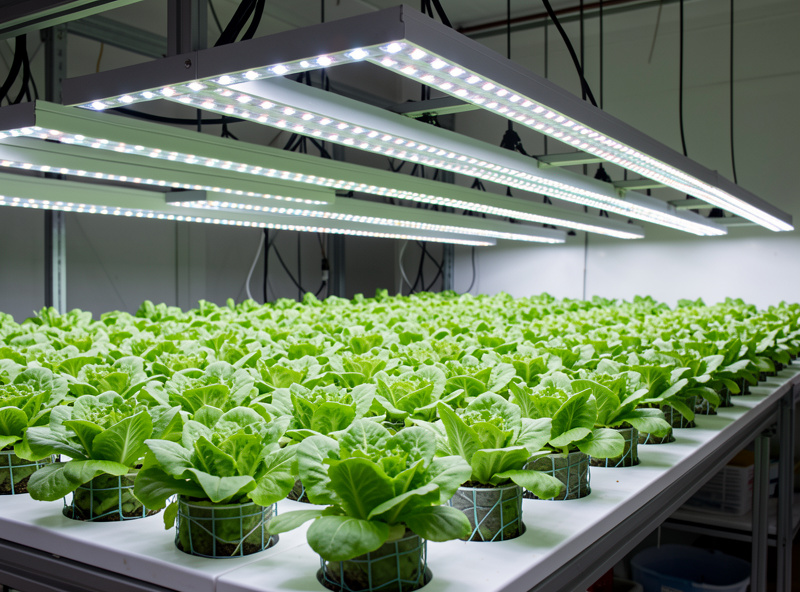
There is no single leap from hobby to commercial — there are four rungs, and most people who fail skip one. The rungs are: prove the method at home, scale the same method without breaking your unit economics, build an environment that holds climate year-round, then automate so the operation survives you taking a day off. Skip the unit-economics rung and you scale a money-loser.
I think of it as the same control loop I use everywhere in this house: sensors, schedules, and intervention only when the loop fails. A hobby rig fails quietly. A commercial rig that fails quietly bankrupts you. So before anyone buys a polytunnel, the questions in order are: which crop, at what EC and DLI, in which method, sold to whom, at what price, and who turns the pumps off when you are sick. Each rung below has its own deep guide.
- Rung 1 — Prove it: get one method dialed at home. Start with my deep water culture guide or the method decision guide if you have not picked a system yet.
- Rung 2 — Scale the method: turn one bucket into a bench, then a room. See scaling up a home hydroponic system.
- Rung 3 — Stack or enclose: go up with vertical farming at home, or out under glass with greenhouse hydroponics setup.
- Rung 4 — Make it pay and run itself: understand hydroponic farm profitability basics, learn selling hydroponic produce locally, and close the loop with automating a commercial hydroponic system.
Choosing a Method That Survives Scale
Not every hobby method scales gracefully. Deep water culture and NFT dominate commercial leafy-green production because they recirculate cheaply and pack tightly; Dutch bucket (drip) runs the fruiting crops like tomato and cucumber; Kratky basically does not scale because you cannot top off or correct a thousand passive jars. The commercial side has settled on raft (deep-flow) ponds for lettuce and Dutch bucket for vine crops for good reasons, and they are worth understanding before you buy.
Here is how the four methods I run at home actually behave when you multiply them by a hundred. The verdicts on the growing are from my own bench; the commercial-scale notes are what large operators report.
| Method | Best crop at scale | Scales well? | Water/energy use | Main failure mode at scale |
|---|---|---|---|---|
| Deep water culture / raft pond | Leafy greens, lettuce, basil | Excellent | Low water, needs aeration energy | Root rot if pond temp climbs above 72°F |
| NFT (nutrient film) | Lettuce, herbs, strawberries | Very good | Low water, pump-dependent | Pump failure dries channels in hours |
| Ebb & flow (flood-and-drain) | Mixed greens, starts, small fruiting | Moderate | Moderate | Timer/valve faults and salt buildup in media |
| Dutch bucket (drip) | Tomato, cucumber, pepper | Very good | Higher, per-plant emitters | Emitter clogging, runoff management |
| Kratky (passive) | Single-harvest lettuce only | Poor | Lowest, no power | No correction possible; not viable commercially |
If you are still picking a system, my complete systems guide and the head-to-head pages for NFT, ebb and flow and Dutch buckets walk through each one. For a garden-scale stepping stone, the IBC tote raft build is the cheapest way to taste pond-scale growing before you commit to a real system.
The Measurement Layer Does Not Change — It Just Gets Expensive to Ignore
This is where my hobby experience transfers one-to-one, and it is the single biggest reason most small hydroponic farms underperform: they grow by feel. EC, pH, dissolved oxygen and root-zone temperature behave exactly the same in a 1,000-gallon raft pond as they do in my 5-gallon DWC bucket — the difference is that at scale, drift you cannot see costs you a whole crop cycle instead of one head of lettuce.
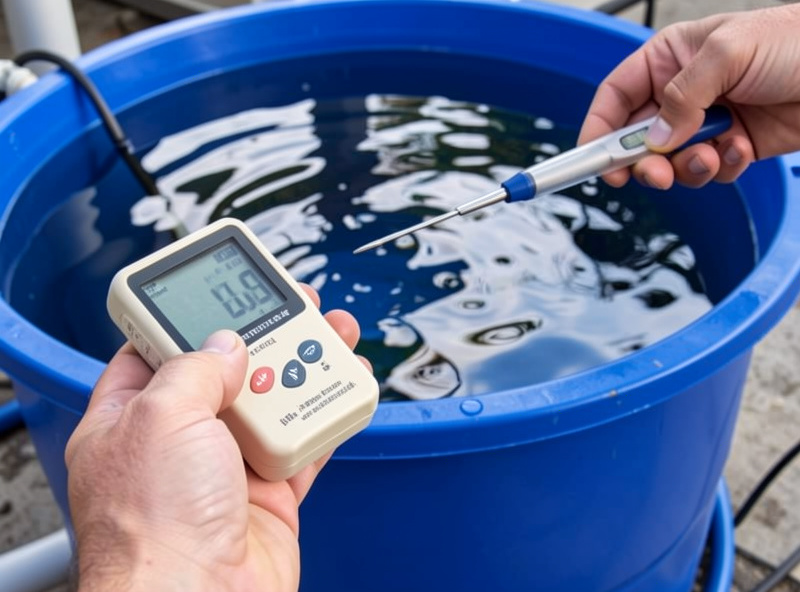
I mix every reservoir to a target EC, not by feel, and I log the drift. A leafy-green pond sits around 1.2 to 1.8 mS/cm with pH held in the 5.5 to 6.0 lockout-avoidance band; fruiting crops run higher, roughly 2.0 to 2.8 mS/cm. Those numbers do not change because you got bigger — your EC meter reads the same. What changes is that a commercial pond needs continuous monitoring because nobody can hand-test a thousand sites daily. That is the bridge to automation, and the exact reason it earns its keep at scale.
Dive deeper on the chemistry in my nutrient guide, mixing to a target EC, the reservoir guide, and why dissolved oxygen and water temperature decide whether you fight Pythium all summer.
Environment: The Real Cost Center at Scale
At hobby scale your house is the climate control. At commercial scale, climate is the line item that decides whether you make money — and it is the rung where my Nordic-winter experience actually pays off. Short winter daylight forced me to do real DLI math years ago; commercial growers in any climate eventually face the same arithmetic, just with a bigger electric bill.
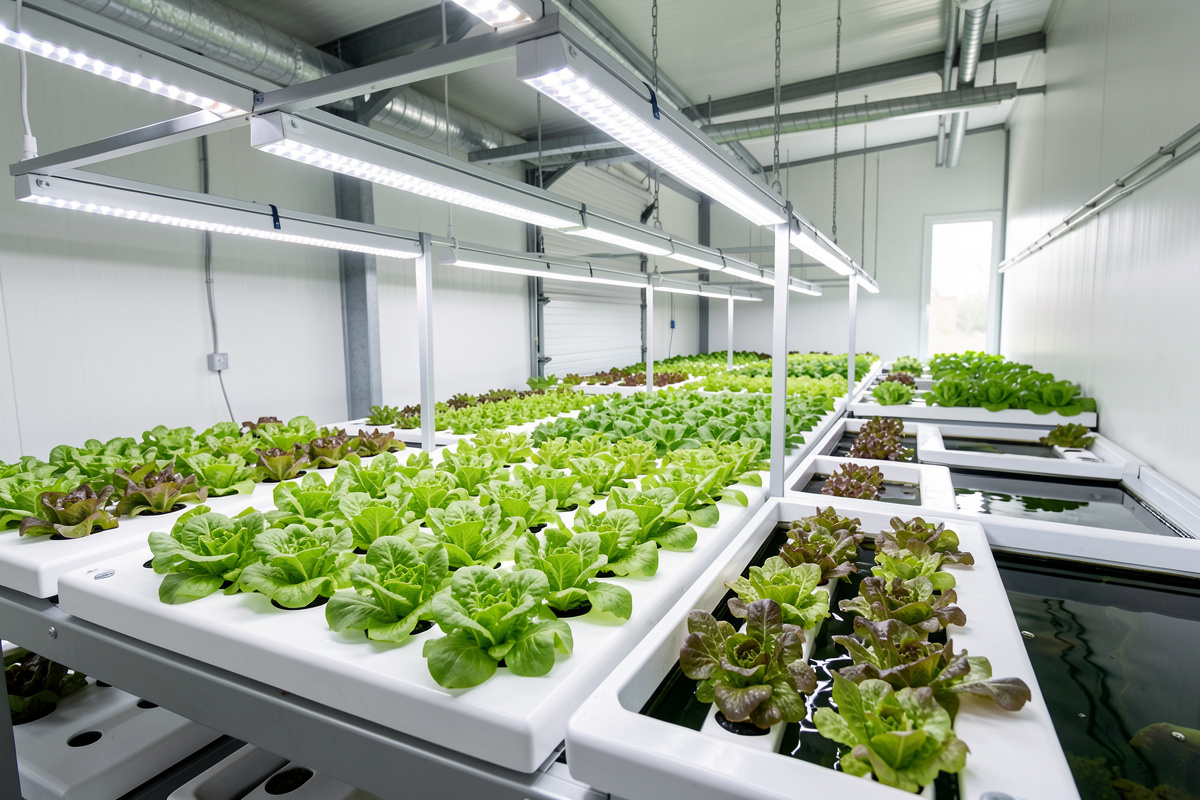
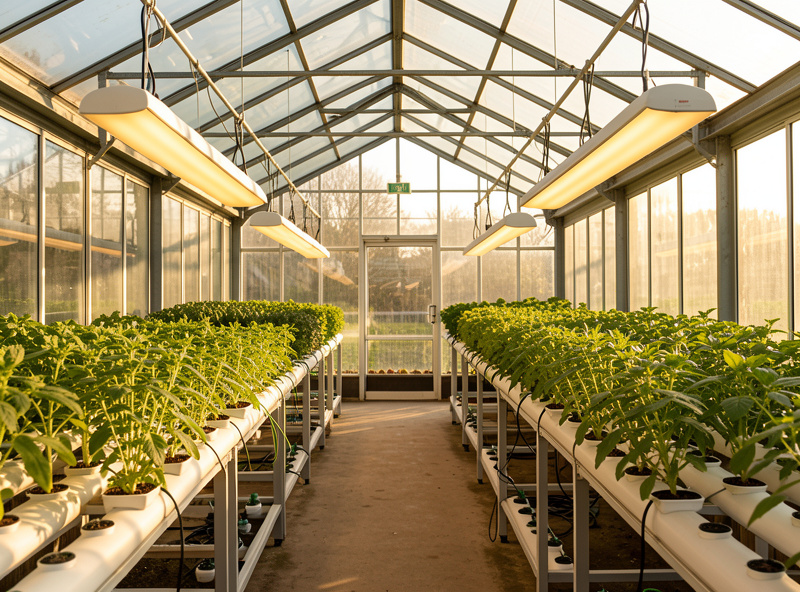
You have two broad paths: an enclosed indoor room with full artificial lighting, or a greenhouse that leans on the sun and supplements. Indoor rooms give total control and stack vertically but pay for every photon; greenhouses cut lighting cost dramatically but hand you the weather. Most small commercial growers start in a greenhouse for that reason. The light targets do not move — leafy greens want a daily light integral around 14 to 17 mol/m²/day, fruiting crops more — whether the photons come from the sun or an LED bar. My PPFD and DLI guide explains the numbers, and the photoperiod and timer guide covers scheduling them.
The two deep guides here are greenhouse hydroponics setup for the under-glass path and vertical farming at home for stacking indoors. For continuous-power resilience, off-grid solar and battery sizing is worth reading even if you stay on the grid, because it forces you to size your real load.
Where the Money Actually Is
I do not publish income claims and I never will — I have not run a hydroponic business and I am not going to invent a number to sell you a dream. What I can do is point you at how the economics actually work, because they are unforgiving and most people get the math backwards. The honest summary: hydroponic farming sells a perishable commodity into a price-sensitive market, and the winners win on consistency, freshness, and a local relationship that the supermarket cannot match — not on yield-per-square-foot bragging rights.
University extension enterprise budgets and the commercial growers who publish their numbers tend to agree on the shape: high startup cost, thin per-unit margins, and profitability that lives or dies on selling everything you grow at a premium price. That last clause is the whole game. Growing the lettuce is the part I can teach; selling it is the part that decides whether you have a farm or an expensive hobby. The two guides here are hydroponic farm profitability basics and selling hydroponic produce locally.
Automation: The Line Between a Hobby and a Job
The “smart” in SmartHydroLab is the control loop, and at commercial scale it stops being a convenience and becomes structural. A hobby grower can hand-dose pH every morning. A commercial grower who hand-doses pH every morning has bought themselves a job with no days off and a single point of failure — themselves. Automation at scale is not about gadgets; it is about turning grower-hours into sensor-hours so the operation survives a sick day.
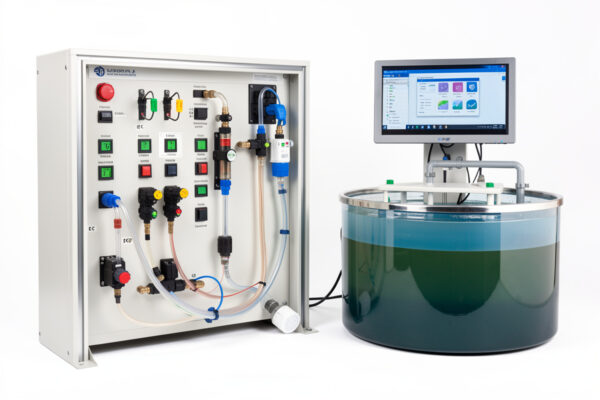
I treat a hydroponic system the same way I treat a smart-home rig: sensors, schedules, and intervention only when the loop fails. Continuous EC and pH sensing, automated dosing, photoperiod timers, and alerting are the backbone. My smart sensors guide covers the monitoring layer and the deep dive lives in automating a commercial hydroponic system. If you run a real lab, putting it on its own network segment — covered in my hydroponic lab VLAN guide — keeps cameras and sensors from cluttering your home network.
Labor, Logistics and the Costs Nobody Budgets For
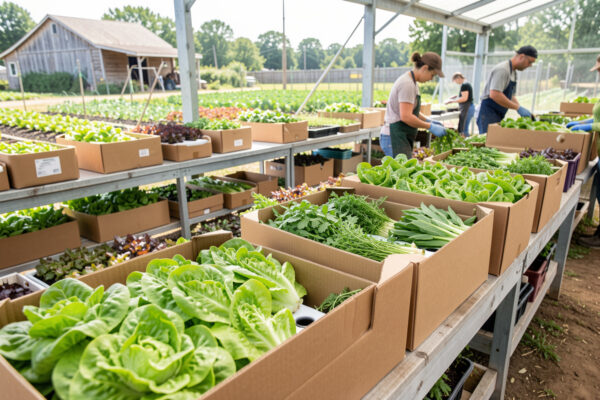
The reason a profitable-looking spreadsheet turns into a money-loser is almost always the same: the costs that do not show up until you scale. At hobby level my labor is free and my logistics is carrying a tote across the room. At commercial level, seeding, transplanting, harvesting, washing, packing and delivering a perishable crop on a fixed weekly cadence is the actual job — and it scales with volume in a way the growing does not. Commercial growers consistently report that labor, not nutrients or electricity, is the largest controllable cost in small-farm leafy-green production.
Then there is the part that ambushes new growers: shelf life and timing. A head of lettuce does not wait for you. It is ready on a Tuesday whether or not you have a buyer on Tuesday, which means production has to be sequenced to demand, not the other way around. That is why I keep hammering the order of operations — prove a buyer, then build for that buyer. Staggered planting so you harvest a steady weekly amount, rather than a feast-and-famine flush, is a production-planning skill that has nothing to do with EC and everything to do with whether the business works. The growing chemistry is the easy 20 percent; sequencing, harvest, cold chain and delivery are the hard 80 percent, and they are exactly what the profitability guide and the local selling guide dig into.
Water and nutrient cost, by contrast, is the part hobbyists overestimate. A recirculating system reuses its solution, so per-head nutrient cost on leafy greens is genuinely small — the dry Masterblend-style salts I run cost pennies per gallon of mixed solution. The expensive resources at scale are space, light (in an indoor build), and human hours. Knowing which costs actually move the needle is half of not going broke, and it is why I refuse to hand anyone a single “it costs X to start” number.
Crops Worth Growing Commercially
Not every crop earns its space. The commercial sweet spot is short-cycle, high-turnover crops with a freshness premium that the supermarket cannot match — which is exactly why leafy greens, culinary herbs, and microgreens dominate small hydroponic farms. A head of lettuce goes from transplant to harvest in roughly three to four weeks under good light; basil and other herbs sell at a strong price per kilo and regrow; microgreens turn over in one to two weeks and command the highest price per square foot of anything you can grow soilless.
Fruiting crops — tomato, cucumber, pepper — are tempting because the per-plant yield looks huge, but they tie up space for months, demand more light and a taller structure, and put you in direct competition with field growers during their season. They can absolutely work in a heated greenhouse selling out of season, which is the classic Dutch-bucket greenhouse play, but they are a harder first business than greens. My honest steer for a first commercial crop is leafy greens or microgreens, full stop, and you can read the growing detail in the crop selection guide and the lettuce guide. Microgreens in particular overlap with the urban-growing and sprouting work over on my cityrooted projects, if that is the direction you lean.
A Realistic First-Year Roadmap
If I were starting the climb myself, here is the order I would do it in — and it is deliberately slow, because the failures at scale are expensive. Prove one method at home for a full season first; you want EC and pH to be boring before you multiply them by a hundred. Then scale that one method only, holding your unit cost steady, and sell a small amount locally to learn the market before you build for it.
Only after you have a buyer asking for more do you build the environment — greenhouse or stacked room — to meet demand you have already proven. Automation comes last, layered onto a system you understand by hand, because automating a process you do not understand just lets you fail faster. The crops to start with are the ones with the shortest cycle and the most forgiving chemistry: lettuce, basil and other leafy greens. My lettuce guide, the crop selection guide, and the harvest and yield guide cover the growing side; pest and disease prevention covers the failure mode that ruins a commercial cycle fastest.
The thread through all of it is the same one I pull on my own bench: measure first, scale only what you have proven, and never confuse growing the crop with running the business. Work through the spoke guides below in the order that matches the rung you are on.
Frequently Asked Questions
Is commercial hydroponics actually profitable?
It can be, but margins are thin and profitability depends almost entirely on selling everything you grow at a premium local price. Extension enterprise budgets and commercial growers report high startup costs and small per-unit margins, so the business succeeds on consistency and direct relationships, not on yield bragging rights.
What hydroponic method scales best for a commercial farm?
Deep water culture raft ponds and NFT dominate commercial leafy-green production because they recirculate cheaply and pack tightly. Dutch bucket drip systems run the fruiting crops like tomato and cucumber. Kratky does not scale because you cannot correct or top off thousands of passive containers.
Do I need a greenhouse or can I grow commercially indoors?
Both work. Indoor rooms give total climate control and stack vertically but pay for every photon of light. Greenhouses lean on the sun and cut lighting costs dramatically but hand you the weather. Most small commercial growers start in a greenhouse to keep energy costs down.
How much does it cost to start a small hydroponic farm?
Startup cost is the biggest barrier and varies widely with method, environment and scale, so any single number is misleading. The honest approach is to build an enterprise budget for your specific crop, method and market before buying anything, and to scale only after you have proven both the growing and a buyer.
What EC and pH should a commercial leafy-green system run?
The targets do not change with scale. Leafy greens sit around 1.2 to 1.8 mS/cm EC with pH held in the 5.5 to 6.0 band to avoid nutrient lockout. Fruiting crops run higher, roughly 2.0 to 2.8 mS/cm. The difference at scale is that you need continuous monitoring instead of hand-testing.
Should I automate my hydroponic system from the start?
No. Automate last, after you understand the process by hand. Automating a system you do not understand just lets you fail faster. Prove one method manually for a full season, scale it, then layer continuous EC and pH sensing, dosing and alerting onto a process you already control.