Automating a commercial hydroponic system is the difference between owning a farm and being chained to one. The goal is not gadgets — it is converting grower-hours into sensor-hours so the operation runs consistently and survives you taking a sick day. A good automation layer holds EC in the 1.2 to 1.8 mS/cm band, pH at 5.5 to 6.0, and reservoir temperature under 68°F around the clock, and only calls you when the control loop actually fails. That is the whole job.
This is where my two worlds meet: I treat a hydroponic system exactly like a smart-home rig — sensors, schedules, and intervention only when something breaks — and I have built that control loop on my own bench in Sweden. This guide is the practical version of how I would automate a system as it scales commercial, written from that experience. It is a spoke under my commercial hydroponics hub, and the capstone of the whole climb, because automation is the rung you build last.
Automate Last, Not First
The most important rule in this entire guide is counterintuitive: do not automate a process you do not yet understand by hand. Automating a system you cannot run manually just lets you fail faster and more expensively, because you will not recognize when the automation is doing the wrong thing. Prove one method manually for a full season, learn how your crop’s EC drifts and how its pH swings, and only then hand those tasks to machines. Automation amplifies competence; it does not substitute for it.
Build it in layers, too, in order of payback. Monitoring comes first because information is cheap and powerful. Scheduling — lights and pumps on timers — comes next because it is simple and reliable. Automated dosing comes later because it is the most complex and the most dangerous when it goes wrong. Climate automation scales with your environment. Trying to install all of it at once, on a process you have not mastered, is how growers end up with an expensive system they do not trust and cannot debug.
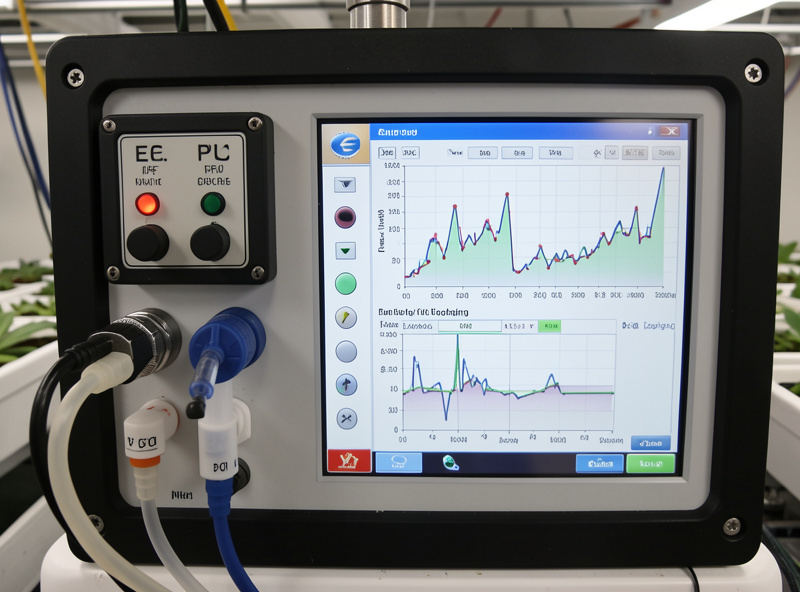
The Monitoring Layer: Information First
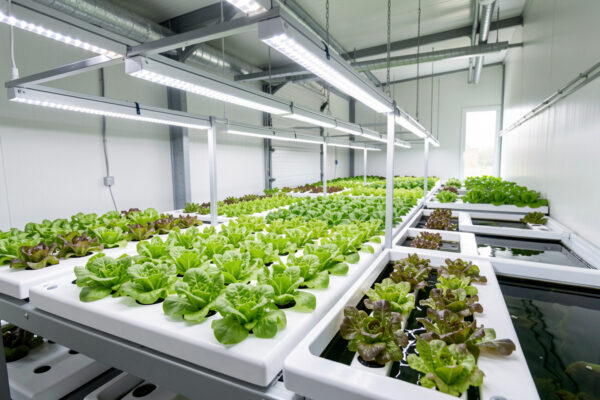
Continuous monitoring is the highest-value automation you can add, and it is where I would start every time. At commercial scale nobody can hand-test a thousand plant sites daily, so inline EC, pH, water-level and temperature sensors that log continuously turn invisible drift into a chart you can act on. The payoff is not just convenience — it is catching a pH creep or a temperature climb hours before it becomes a crop-threatening problem, while it is still a five-minute fix.
The targets the sensors watch do not change with scale: leafy greens around 1.2 to 1.8 mS/cm EC, pH held in the 5.5 to 6.0 band, reservoir temperature below 68°F. What automation adds is a tireless eye on all of them at once, plus a history you can reason about. My smart sensors guide covers the monitoring hardware in depth, and the EC meter guide explains the readings the sensors are taking — you still need to understand what a number means before you let a machine react to it.
Scheduling: The Simple, Reliable Win
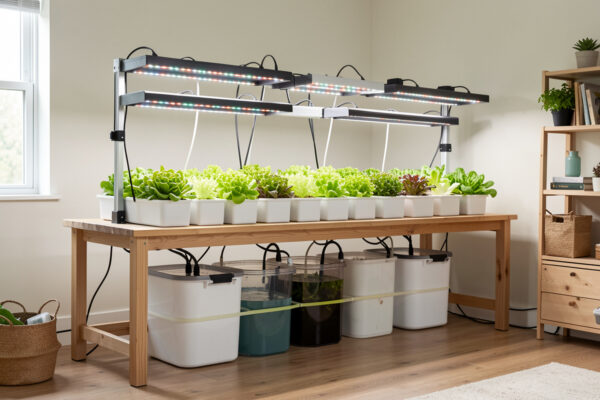
Before any clever dosing, the easiest automation is putting your lights and pumps on reliable schedules. Photoperiod timing matters for the crop and for energy cost — running lights only when needed, ramping a supplemental greenhouse top-up to a DLI target, cycling ebb-and-flow pumps on a precise flood schedule. This is low-risk, high-reliability automation: a good timer or smart plug almost never fails, and the consequences of getting it right are steady growth and a predictable power bill.
I run this layer the same way I run the rest of my smart home, and it is the most natural crossover in the whole network — the same kind of smart plugs and schedules I write about over on my home automation projects drive my grow lights and pumps here. The grow light schedule guide covers photoperiod timing and the ebb and flow guide covers flood-cycle scheduling. Get this layer solid and reliable before you add anything that injects chemicals into your reservoir.
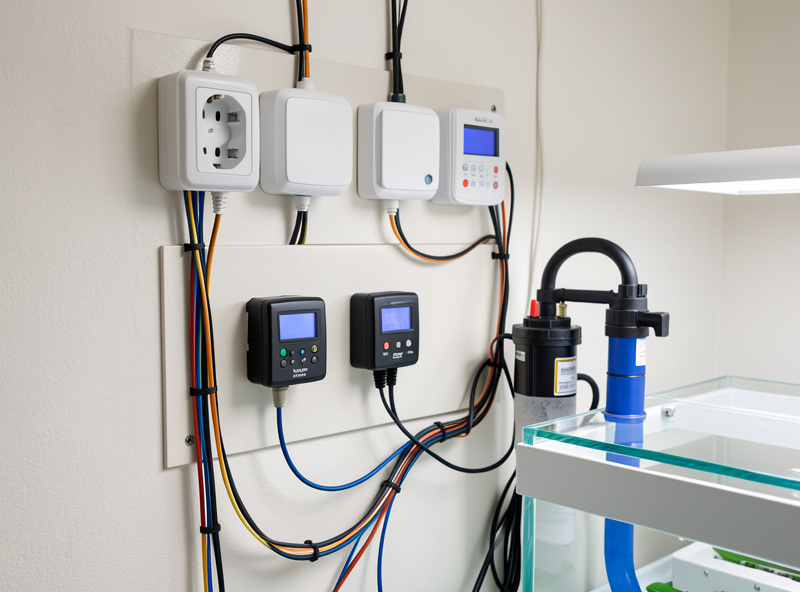
Automated Dosing: Where It Earns Its Keep, and Where It Is Theatre
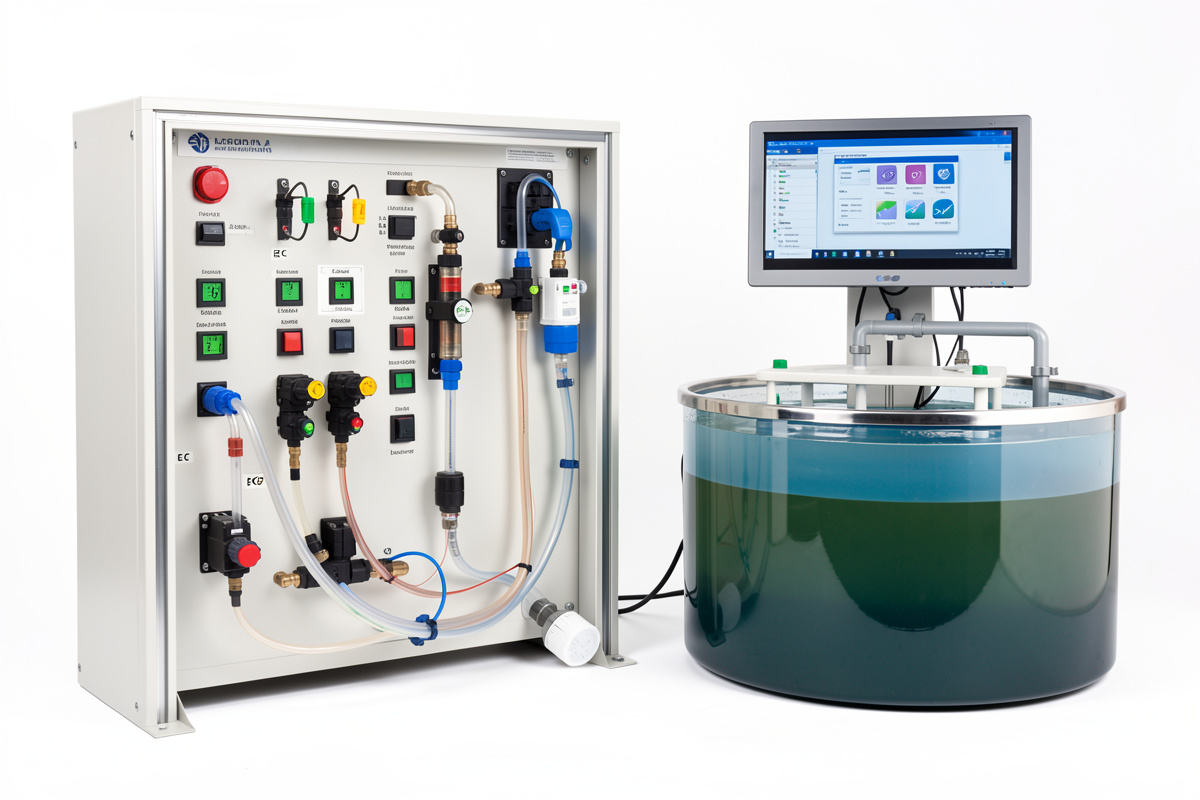
Automated EC and pH dosing is the layer growers fixate on, and it is genuinely valuable at scale — but only once everything before it is solid. A dosing system measures EC and pH continuously and injects nutrient stock or pH adjuster to hold targets, which at commercial scale saves real labor and keeps a large recirculating reservoir far more stable than hand-correction ever could. On a big system feeding hundreds of plants, this is where automation stops being convenience and becomes structural.
But dosing automation is also where it is most dangerous and most often oversold. A miscalibrated probe or a stuck pump can dump acid or nutrient into your reservoir and crash a whole crop faster than any manual error — so a dosing system demands disciplined probe calibration, sane dosing limits, and fail-safes. On a small home system it is often theatre: the labor it saves is minutes a day you could do by hand while you learn. My honest steer is that dosing automation earns its keep when your reservoir is too big to hand-balance and your plant count is too high to hand-test, and not really before. Until then, the monitoring and scheduling layers give you most of the benefit at a fraction of the risk.
| Task | Manual | Automated | Automate when |
|---|---|---|---|
| Monitoring EC/pH/temp | Hand-test daily | Continuous sensors + logging | First — highest value |
| Lights & pumps | Manual switching | Timers / smart plugs | Early — low risk |
| EC/pH correction | Mix and adjust by hand | Dosing pumps to setpoint | When too big to hand-balance |
| Climate (heat/vent) | Manual vents/heater | Controller + sensors | Scales with environment |
| Failure alerting | Notice when you visit | Push alerts on fault | As soon as a crop has value |
Alerting and Fail-Safes: The Part That Actually Matters
The single most underrated piece of automation is the alert. At commercial scale a silent failure — a dead circulation pump, a heater that quit on a winter night, a reservoir climbing past 72°F — can destroy a crop in hours, and the difference between a near-miss and a catastrophe is whether your phone buzzed. Power-failure alerts, water-level alarms, and temperature thresholds are cheap to add and worth more than any fancy dosing rig, because they protect everything else.
Fail-safes are the other half: dosing limits that cap how much a system can inject, backup pumps that take over, and battery backup on critical loads. I design the loop so the failure modes are safe — if a sensor disconnects, the system should stop dosing, not dose blindly. If you run a real automated lab, isolating it on its own network segment, which I cover in my hydroponic lab VLAN guide, keeps the control system reliable and separate from household traffic. Pair all of this with the redundancy thinking from the scaling guide and the resilience math in the off-grid power guide.
Build the Loop, Then Let It Run
Done right, automation makes a commercial hydroponic system boring in the best way — it holds the targets you would hold by hand, logs everything, and interrupts you only when something genuinely needs a human. That is the same control loop I trust on my own bench, scaled up: sensors to see, schedules to act, alerts to escalate, and fail-safes so a fault degrades safely. Build it in that order, on a process you already understand, and you get the thing every grower actually wants — a system that runs the routine so you can run the business. The hub guide ties the whole climb together.
Frequently Asked Questions
Should I automate my hydroponic system from the start?
No. Automate last, after you can run the system by hand for a full season. Automating a process you do not understand just lets you fail faster, because you will not recognize when the automation is doing the wrong thing. Automation amplifies competence rather than substituting for it.
What part of a hydroponic system should I automate first?
Monitoring. Continuous EC, pH, water-level and temperature sensors are the highest-value, lowest-risk automation because they catch drift hours before it becomes a crop-threatening problem. Scheduling lights and pumps comes next. Automated dosing and climate control come later once the basics are solid.
Is automated EC and pH dosing worth it?
At commercial scale yes, once everything before it is solid. Dosing earns its keep when your reservoir is too big to hand-balance and your plant count too high to hand-test. On a small home system it is often unnecessary, and a miscalibrated probe can crash a crop, so it demands calibration discipline and fail-safes.
What is the most important automation for a hydroponic farm?
Failure alerting. A silent dead pump or a reservoir climbing past 72 degrees Fahrenheit can destroy a crop in hours. Power-failure alerts, water-level alarms and temperature thresholds are cheap and protect everything else, making them more valuable than any sophisticated dosing system.
Do automation targets change as a hydroponic system scales?
No. Leafy greens still want 1.2 to 1.8 mS/cm EC, pH in the 5.5 to 6.0 band, and reservoir temperature below 68 degrees Fahrenheit. Automation does not change the targets; it adds a tireless eye watching all of them continuously plus a logged history you can reason about.