The Lettuce Grow Farmstand is the highest-yield home hydroponic system in the consumer market. A well-run 24-plant unit produces something closer to 2 to 3 pounds of leafy greens per week at peak production — not per month, which is the mistake most spec sheets and even some reviews make when they quote a single “monthly” figure — from a 2 sqft floor footprint, paying for itself within 18 to 24 months for households that eat $80+/month in fresh greens. This guide covers sizing (18, 24, or 36 plant slots — Lettuce Grow markets these as Small/Medium/Large under its current “Original Farmstand” line), the mandatory Glow Rings LED kit for indoor use, the seedling subscription program, and the real-world cost over 3 years compared to grocery-store organic greens.
Quick Answer: Which Size Farmstand?
For a household of 2 adults eating 4 to 6 salads per week, the 24-plant Medium (roughly $600-700 for the tower + a flat $399 Glow Rings kit, all-in around $1,000-1,100) is the right size. Lettuce Grow’s current “Original Farmstand” line no longer sells a standalone 12-plant tier — the lineup runs Small (18 plants), Medium (24), and Large (36) — so 18 plants is your floor if you want the full tower rather than the smaller 3-plant Counterstand. For families of 4+, step up to the 36-plant Large (roughly $700-950 for the tower + the same $399 Glow Rings kit). Don’t buy any Farmstand without Glow Rings if you’ll grow indoors — natural light alone won’t produce sustained harvest volume. Exact pricing shifts with Lettuce Grow’s promotions, so check lettucegrow.com before you buy.
What Makes the Farmstand Different
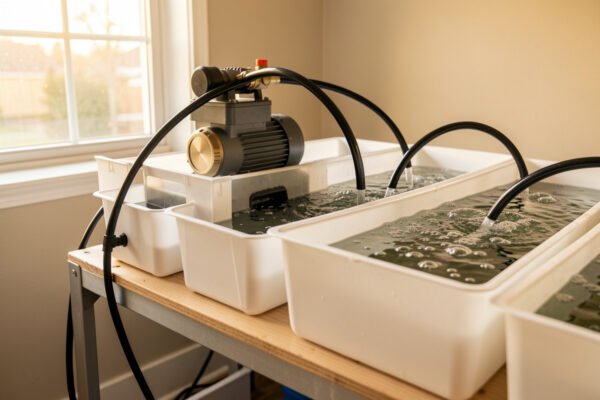
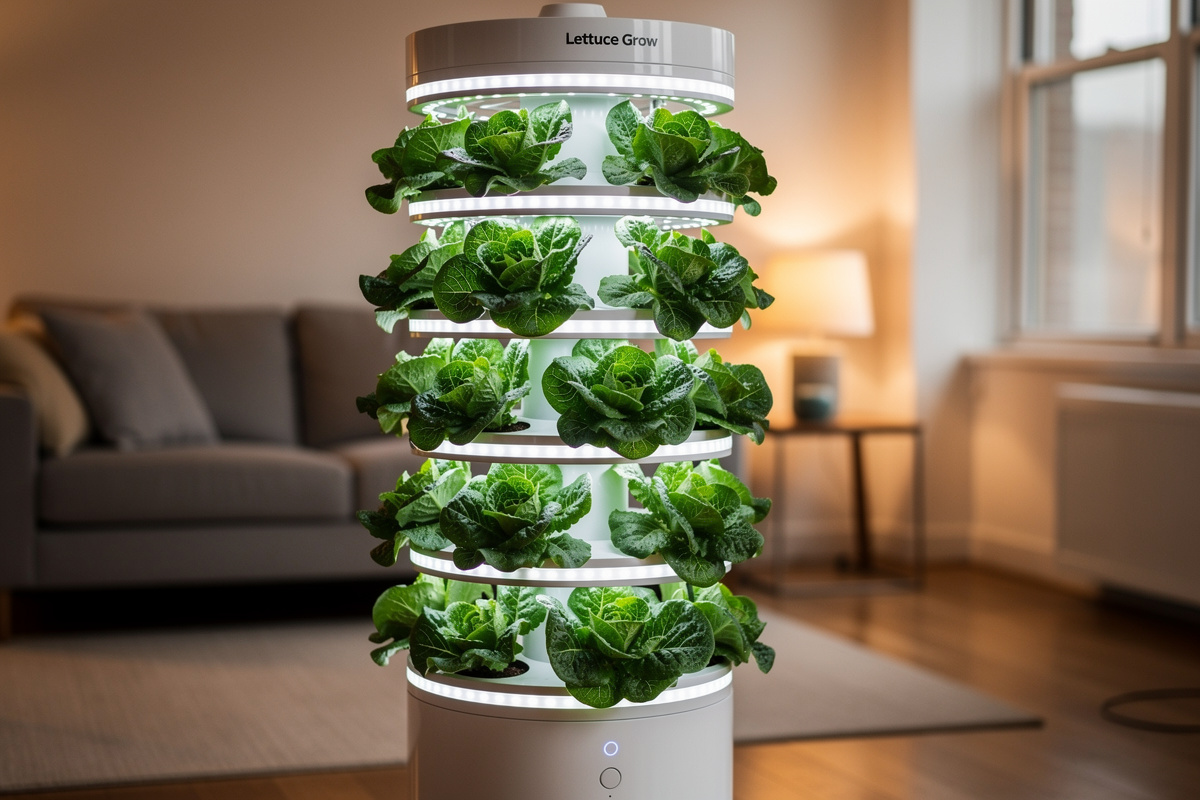
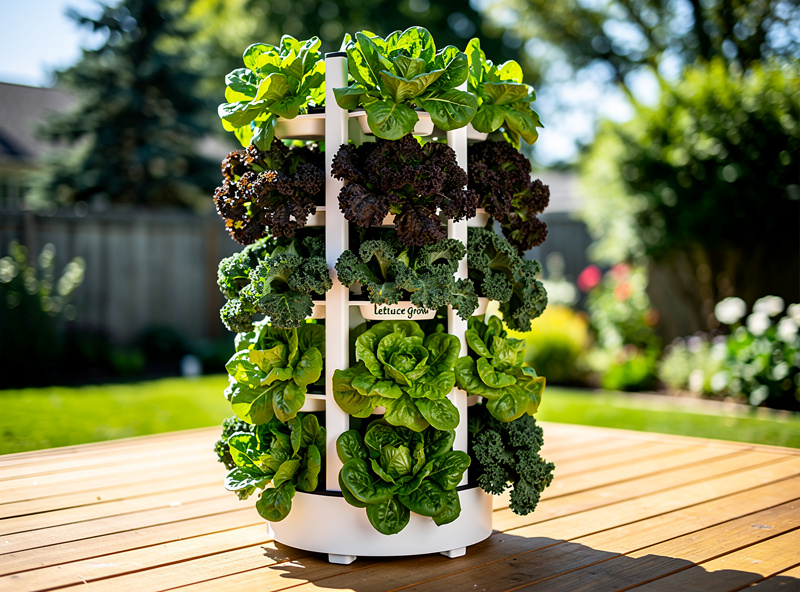
The Farmstand is a vertical hydroponic tower that holds 18, 24, or 36 plants in a self-contained 24-inch diameter water reservoir at the base. Water with nutrients pumps from the base up to the top, then trickles down through plant pockets via gravity, returning to the base in a continuous loop — mechanically it’s closer to a commercial vertical NFT setup than anything else on the consumer market, which is why the vertical footprint is the real selling point over the horizontal DWC totes and NFT channels I run on my own bench.
Three differences from countertop pod systems (AeroGarden, Click and Grow):
- Volume: roughly 2-3 lbs of greens per week at peak from a 24-plant Farmstand vs 8-12 oz/month from a 6-pod AeroGarden — a much bigger gap than the “per month” comparisons most spec sheets imply
- Vertical footprint: 2 sqft floor space, 4-6 ft tall — fits in apartment corners where horizontal counter systems don’t
- Subscription model: Lettuce Grow ships pre-seeded transplants monthly ($60-90/month), eliminating the germination phase
The flip side: higher initial cost (roughly $600-950 for the tower alone depending on size vs ~$90-100 for an AeroGarden Harvest), more space, more water (3-5 gallons vs 1 gallon), more daily attention.
For broader system context, see my Best Indoor Hydroponic Gardens guide.
Indoor vs Outdoor Use
The Farmstand was originally designed for outdoor patios with full sun. Indoor use requires the Glow Rings kit — a single $399 add-on that wraps around the tower providing 96W of full-spectrum LED. Per Lettuce Grow’s own product page, that price doesn’t change by Farmstand size — you’re paying the same $399 whether you’re lighting an 18-plant or 36-plant tower, though the taller towers get more ring tiers stacked into the same kit.
Without Glow Rings indoors, plants grow leggy and pale. Even bright south-facing windows provide only 40 to 60 percent of the PPFD that leafy greens need for compact, dense growth.
For outdoor use (zones 7+, frost-free seasons, 6+ hours direct sun): no LED needed. Just plant seedlings, fill reservoir, plug in pump.
For year-round indoor use: Glow Rings are mandatory. Budget the flat $399 into your initial purchase.
Sizing by Capacity
| Model | Plant Slots | Footprint | Height | Water | Tower Price | + Glow Rings | Yield (Greens, at peak) |
|---|---|---|---|---|---|---|---|
| Small | 18 | 24″ diameter | 4′ | 3 gal | ~$400-530 | +$399 (flat) | ~1.5-2.5 lbs/week |
| Medium | 24 | 24″ diameter | 5′ | 4 gal | ~$600-700 | +$399 (flat) | ~2-3 lbs/week |
| Large | 36 | 24″ diameter | 6′ | 5 gal | ~$700-950 | +$399 (flat) | ~3-5 lbs/week |
Lettuce Grow’s own naming has moved to Small/Medium/Large for the Original Farmstand line, and there’s no standalone 12-plant tier in the current lineup — the 3-plant Counterstand is the only thing smaller than the 18-plant Small. Tower prices above are ballpark and shift with promotions; the $399 Glow Rings price is the one number that’s fixed across all three sizes per Lettuce Grow’s own product page. The weekly yield figures are scaled from a documented 18-month owner review reporting 3-5 lbs/week peak-season harvest on a 36-plant tower — treat the Small/Medium numbers as proportional estimates, not independently verified.
The 24-plant Medium is the sweet spot for most households. The 18-plant Small is fine for a couple who eats salads a few times a week but won’t dent a family’s grocery bill; 36 is more capacity than most households use before plants over-mature.
The Seedling Subscription
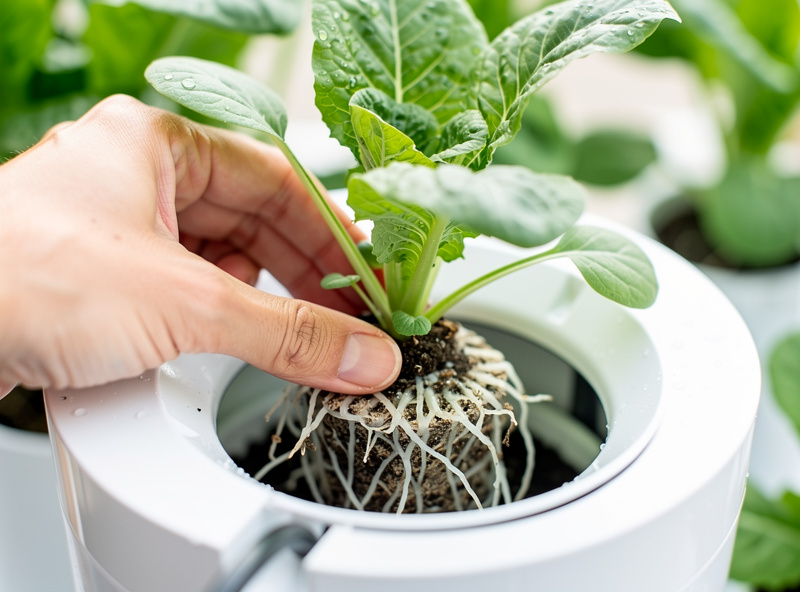
Lettuce Grow ships pre-seeded transplants monthly. You pick from a rotating menu of lettuce, kale, herbs, leafy greens, edible flowers, and specialty crops. Plants arrive at 3-week-old transplant stage, ready to drop into the Farmstand’s plant slots.
Subscription cost: $60-90/month for 12-24 transplants depending on variety and season. The first month is included with the Farmstand purchase.
The subscription is the convenience killer feature. You skip the germination phase entirely (most expensive part of hydroponics in time and equipment). The downside: you’re locked into Lettuce Grow’s seedling pricing — about $2.50 to $3 per transplant (Lettuce Grow’s own listed rate) vs $0.50 or less if you start from seed yourself.
You can cancel the subscription and grow from seed using the Farmstand’s plant baskets ($25 add-on). Most committed growers do this after 3-6 months.
What Grows Well in the Farmstand
| Plant | Time to Harvest | Yield Per Slot | Notes |
|---|---|---|---|
| Loose-leaf lettuce | 3-4 weeks from transplant | 0.5-1 lb cut-and-come | Best Farmstand crop overall |
| Butterhead lettuce | 4-5 weeks | 0.4-0.6 lb head | Lower yield, premium texture |
| Kale, collards, chard | 4-6 weeks | 0.5-1 lb continuous | Strong producer |
| Arugula, spinach, mustard | 3-4 weeks | 0.3-0.5 lb | Fast cycle, multiple replants |
| Basil, parsley, dill, cilantro | 3-4 weeks | Continuous | 3-6 month harvest period |
| Strawberries | 10-14 weeks | 0.5-1 lb fruit/slot | OK with LED Glow Rings only |
| Cherry tomatoes | 10-14 weeks | 1-3 lbs/slot | Train down or up; works with LEDs |
| Peppers (small) | 14-18 weeks | 0.5-1 lb/slot | Slow producer; only with LEDs |
| Cucumbers, zucchini | — | — | Don’t try, too sprawling |
Setup Reality
Out-of-box setup is 2 to 3 hours for first-time users. Steps:
- Assemble the tower from stacked sections (24-plant has 4 sections plus base)
- Install pump in base reservoir
- If using LED Glow Rings, mount the rings to tower
- Fill reservoir with 4 gallons of water
- Add starter pH balancer and nutrients
- Drop transplants into plant slots
- Plug in pump and lights
- Set timer (16 hours light, 8 dark for indoor; ambient for outdoor)
The unit is heavy (50 lbs assembled with water) — set up in its final location before filling.
Maintenance
Daily: Visual check (5 seconds — is the pump running, are plants healthy).
Weekly: Top off reservoir with 0.5-1 gallon depending on plant maturity and ambient temperature. Check pH (target 5.8-6.2) and EC/PPM (target 800-1200) — the same weekly-log discipline I run on every one of my own reservoirs, just on a system that hides the readout behind an app instead of handing you a pen and a notebook.
Every 4 weeks: Drain reservoir completely, scrub with diluted vinegar, refill fresh. This prevents biofilm buildup.
Every 8-12 weeks: Replace plants that have over-matured. Cut-and-come-again lettuce gives 3 cuttings before needing replacement.
For broader nutrient management, see my Hydroponic Nutrients Complete Guide. For pH management specifically, see my pH Down for Plants.
Cost Reality Over 3 Years
| Item (Medium/24-plant) | Cost |
|---|---|
| Initial tower (Medium) | ~$650 |
| Glow Rings (indoor use, flat price) | $399 |
| Year 1 transplants subscription ($75/mo × 12) | $900 |
| OR Year 1 from-seed (after canceling sub) | $50-100 |
| Year 1 nutrients + pH | $120 |
| Year 1 electricity (Glow Rings 96W + pump, 2026 rates) | ~$120 |
| Year 1 total (with subscription) | ~$2,190 |
| Year 1 total (subscribe 3mo, then seed) | ~$1,570 |
| Year 2-3 (from seed) | ~$315/year |
| 3-year total (with subscription throughout) | ~$4,470 |
| 3-year total (subscribe months 1-3, then seed) | ~$2,200 |
Compare to grocery store organic greens at $80/month: 3-year grocery cost is $2,880. Growing from seed after the first few months, the Farmstand pays back at roughly the 20-26 month mark for households that actually eat the volume — and the per-pound greens cost lands around $2-3 from seed (the subscription path is convenient but runs closer to $8-10/lb once you do the math, so it’s worth switching to seed once you’re comfortable germinating). The 96W Glow Rings draw more power at current electricity rates than a lot of older Farmstand write-ups account for — budget for it rather than treating the light kit as a rounding error.
Common Issues
Pump failure. The pump is rated 12-18 months. Replacement is $35 and 5-minute job. Lettuce Grow sends new pumps under warranty during the first year.
Algae in reservoir. Light leaks past the dark base cause algae over 4-8 weeks. Cover any unused plant slots with the included plugs. Black foam tape around any visible cracks.
Roots clogging the pump. By month 3-4, mature lettuce roots can extend 12+ inches. Trim with scissors. Keep root mass clear of pump intake — the exact same maintenance rhythm I keep on my own DWC totes, where an untrimmed root mass reaching the pump is the single most common failure I’ve had to fix on my own bench.
Plants outgrowing slots. Some lettuce varieties get bushy and crowd neighbors. Plant variety chart on Lettuce Grow’s app shows max diameter per plant — space accordingly.
Cold weather slowdown indoor. Plants slow growth below 65°F. Most apartments are fine; basements may need supplemental heat in winter.
Honest Pros and Cons
Pros: Highest-yield home hydroponic system. 2 sqft floor footprint. Subscription model removes germination friction. Outdoor or indoor capable. Excellent for serious salad-eating households.
Cons: High initial cost (roughly $800-$1,350 with the flat $399 Glow Rings kit, depending on tower size). Requires regular maintenance (5-10 minutes daily, 30 minutes weekly). Glow Rings alone can run $95-105/year in electricity at current rates — more than most owners budget for. Subscription model is convenient but expensive per pound long-term. Tower height (4-6 feet) requires decent ceiling clearance.
For comparing alternatives, see my AeroGarden Harvest 2.0 Review for the smaller-volume option.
Is the Lettuce Grow Farmstand worth it?
Yes for households eating $80+/month in fresh leafy greens. Growing from seed, the 24-plant Farmstand pays back in roughly 20 to 26 months at around $2 to $3 per pound vs $5-7 retail organic greens. Skip if you eat fewer than 4 salads per week or want a low-maintenance setup.
What size Lettuce Grow Farmstand should I buy?
Lettuce Grow’s current Original Farmstand lineup runs Small (18 plants, roughly $400-530), Medium (24 plants, roughly $600-700, most popular), and Large (36 plants, roughly $700-950) – there’s no standalone 12-plant tier anymore. Two adults eating 4-6 salads a week should land on Medium; families of 4+ should size up to Large.
Do I need Glow Rings for the Farmstand indoors?
Yes, for sustained year-round harvests. Without them, plants grow leggy and pale even in bright windows. Outdoor use in zones 7+ with 6+ hours sun does not need them. The Glow Rings kit is a flat $399 regardless of Farmstand size, per Lettuce Grow’s own product page, and is essentially mandatory for indoor use.
How much does the Lettuce Grow seedling subscription cost?
$60-90 per month for 12-24 transplants depending on Farmstand size and variety selection, working out to roughly $2.50 to $3 per transplant. First month is included with the Farmstand purchase. Subscription is cancelable anytime; many committed growers cancel after 3-6 months and grow from seed using $25 plant baskets.
How much electricity does a Farmstand use?
Pump alone: 8-12 watts continuous, roughly $14-19/year at 2026 average US residential rates. The Glow Rings kit draws 96W on a 16-hour timer, which runs closer to $95-105/year at current rates – noticeably more than older estimates assumed. Total electricity for an indoor Medium Farmstand: roughly $110-125/year.
Can the Farmstand grow tomatoes and peppers?
Yes with Glow Rings (indoor) or full sun (outdoor). Cherry tomatoes produce 1-3 lbs per slot over 4-6 months. Small peppers produce 0.5-1 lb per slot but need 14-18 weeks. Full-size beefsteak tomatoes don’t work — too sprawling.