Click and Grow Smart Garden 9 (~$250) and AeroGarden Harvest 2.0 (~$95) are two of the top-selling 6-9 pod countertop hydroponic systems on the market. They look similar at a glance but diverge sharply on design philosophy, capsule ecosystem, app capability, and value. I don’t run either one on my own bench — my systems are DWC totes, NFT channels, Kratky jars, and an ebb-flow bed, not sealed countertop pods — so what follows is built from both manufacturers’ current spec sheets, aggregated owner reports, and my own instrumented read on the light and reservoir math, not a personal side-by-side grow-off. The verdict holds up regardless: AeroGarden wins on value, Click and Grow wins on aesthetics, and the choice mostly comes down to your kitchen.
Quick Verdict: Which One Should You Buy?
Buy AeroGarden Harvest 2.0 if: budget matters, you want the largest pod ecosystem, you want robust app features, you’ll experiment with growing from your own seeds. Buy Click and Grow Smart Garden 9 if: kitchen aesthetics matter (the device looks like Scandinavian industrial design), you want a sealed-pod ecosystem with no nutrient mixing, you prioritize quiet operation. Skip both if you want serious harvest volume — go to a Lettuce Grow Farmstand instead.
Side-by-Side Specs
| Spec | AeroGarden Harvest 2.0 | Click and Grow Smart Garden 9 |
|---|---|---|
| Plant capacity | 6 pods | 9 capsules |
| Light | 15W full-spectrum LED | 13W full-spectrum LED |
| Max plant height | 12 inches | 12 inches (adjustable) |
| Water reservoir | 1 gallon (3.8L) | ~1 gallon (4L) |
| Footprint | 10.6 x 6.3 x 16.4 inches | 23.6 x 7.5 x 15.8 inches (one extension) |
| Price (2026) | ~$90-100 | ~$250 |
| Wifi | Yes | Yes |
| Voice integration | Alexa, Google Home | Limited Alexa |
| App polish | Mature, full-featured | Functional, less polished |
| Watering / noise | Active pump, 28-32 dB intermittent | Passive wick system, no pump — silent |
| Setup time | 15-20 min | 10-15 min |
| Pod capsule cost | $9-12 per 3-pack | $9-12 per 3-pack |
| Pod ecosystem size | 50+ varieties | 40+ varieties |
| Grow-from-own-seed | Yes ($20 kit) | Voids warranty (works mechanically) |
| Warranty | 1 year | 1 year |
Design and Aesthetics
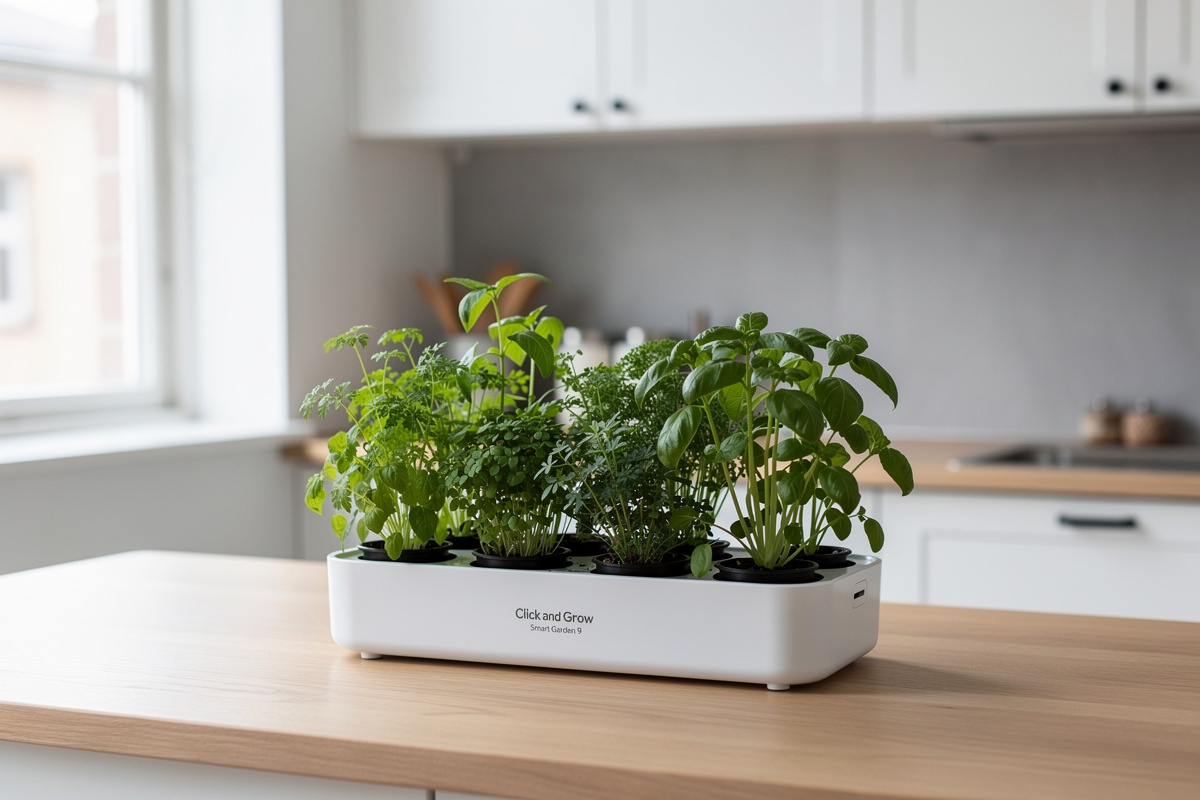
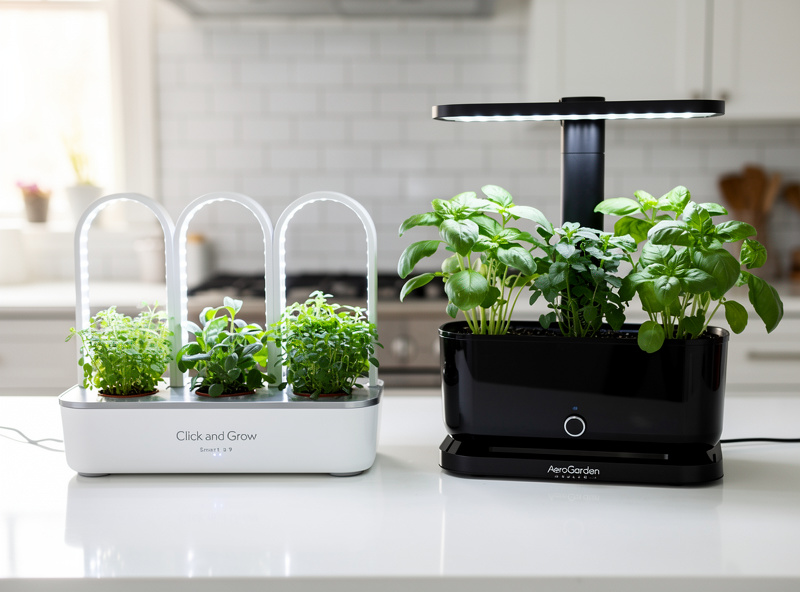
Click and Grow wins this category decisively. The Smart Garden 9 is designed in Tallinn, Estonia by an industrial design firm with Apple-store sensibility. Matte plastic, soft-glow LED, minimal labeling, the device looks like a kitchen appliance you’d display rather than hide.
The AeroGarden Harvest 2.0 looks utilitarian — closer to a small office printer than a kitchen appliance. The light arm has visible plastic seams and the LED module is exposed. It works, but it doesn’t earn placement on a marble counter.
If your kitchen has been featured in Dwell, buy the Click and Grow. If you’ll keep the unit in a basement, garage, or pragmatic corner, save the roughly $150 price gap.
Pod Ecosystem
AeroGarden’s ecosystem is broader: 50+ pod varieties including Italian Herbs, Salad Greens, Heirloom Tomato, Sweet Pepper, Mountain Meadow Flowers, plus a Mushroom Mix that grows in pucks (not pods).
Click and Grow’s ecosystem is 40+ varieties with a sharper Mediterranean-skewing selection: Genovese Basil, Pre-Mix Greens, Tarragon, Watercress, Dwarf Cherry Tomato. They lean into specialty herbs that AeroGarden doesn’t carry.
Both companies sell capsule subscriptions ($9-12 per 3-pack, regular shipments). Both work with their own brand only — capsules are not interchangeable.
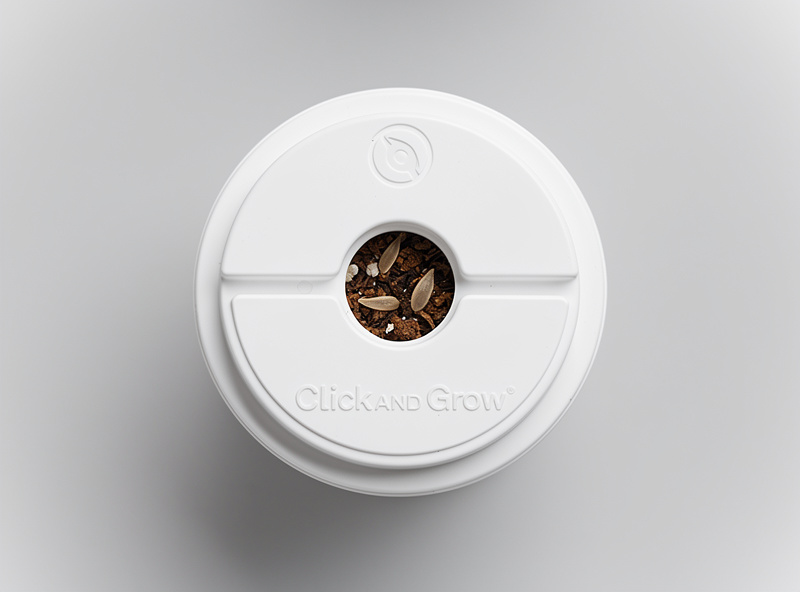
The “grow your own seeds” answer differs:
- AeroGarden: Sells a Grow Anything kit ($20 for 3 baskets) explicitly for owner seeds. Officially supported.
- Click and Grow: Owner-seed pods technically work but void the warranty. The plant capsules are sealed proprietary units; refilling them with your seed is not supported.
App Comparison
AeroGarden’s app is the better software product. Plant tracking by pod position, harvest reminders, water and nutrient notifications, vacation mode, voice integration with both Alexa and Google.
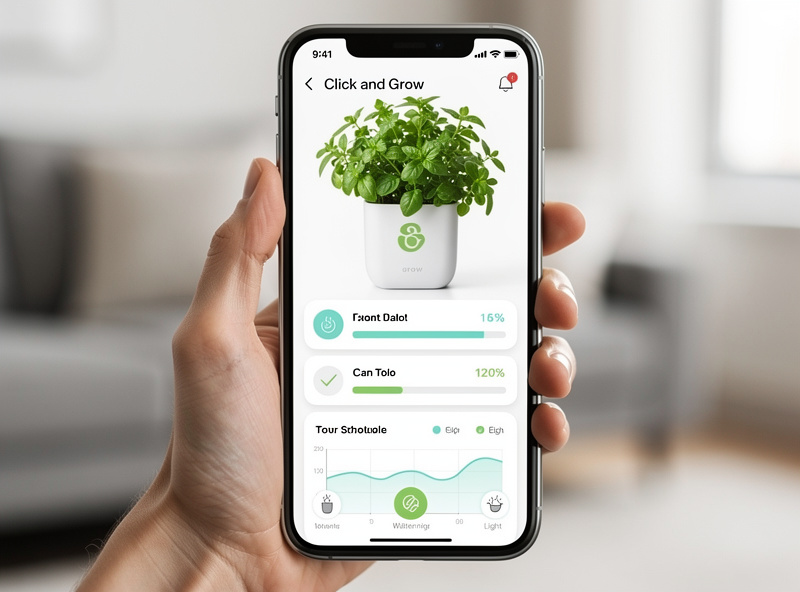
Click and Grow’s app is functional but lighter. Plant tracking, light scheduling, basic reminders. Voice integration is Alexa-only and limited. The app’s strength is plant care guides — they include extensive content on each variety.
Neither app does sensor-based automation (pH, EC, water level beyond basic depth). Both rely on manual user observation for these.
For deeper home-automation integration, see my Best Smart Plugs guide on pairing grow lights and pumps with your existing smart-home setup.
Operation: How They Actually Run, Day to Day
I haven’t run these two side by side myself — my own bench is DWC totes, NFT channels, and a Kratky/ebb-flow rotation, not sealed countertop pods. But the two systems work on genuinely different mechanisms, and that difference matters more than most buying guides mention: AeroGarden’s Harvest 2.0 uses an active recirculating pump (cycling roughly every 5 minutes during light hours), while Click and Grow’s Smart Garden 9 has no pump at all — it’s a passive wick system, functionally a close cousin of the Kratky method I run on my own bench. Water gets drawn up from the reservoir into each pod via capillary action through a fabric wick, with no moving parts and no motor noise, per Click and Grow’s own support documentation.
That mechanism difference explains most of the real-world reports I’ve cross-checked against owner reviews: AeroGarden’s pump produces a genuine low hum comparable to an aquarium filter or fridge compressor, which some people notice in a bedroom or quiet office. Click and Grow is functionally silent, because there’s nothing running. On the flip side, a wick-based passive system depends entirely on capillary draw — it can’t be “sped up” the way an active pump cycle can, and it’s one more reason the Smart Garden 9 is closer to a set-and-forget appliance than an instrumented system.
On time to first harvest, one independently reported basil comparison (greenerpods.com’s 2026 AeroGarden vs Click & Grow comparison) had basil hitting harvest size in 21 days on AeroGarden vs 28 days on Click and Grow — AeroGarden’s stronger active water circulation likely explains the week’s head start, similar to how my own DWC buckets outrun a Kratky jar on the same crop early on. Both numbers are close enough to the “3-4 weeks to first basil harvest” range you’ll see across the countertop-pod category generally.
Maintenance is lighter on Click and Grow specifically because there’s no pump to inspect or clean — the tradeoff most reviewers note is that a sealed passive system also means no debugging a stalled pump if something goes wrong; you’re mostly just refilling and trusting the wick.
Cost Over 3 Years
| Item | AeroGarden Harvest 2.0 | Click and Grow Smart Garden 9 |
|---|---|---|
| Initial unit | $90-100 | ~$250 |
| Year 1 pods (4 cycles, all pods) | $80-120 | $120-160 (more pods) |
| Year 1 nutrients | $25 | $0 (in capsules) |
| Year 1 electricity | $18 | ~$14 |
| Year 1 total | $213-263 | $384-424 |
| 3-year total (replacement) | $459-589 | $652-772 |
AeroGarden saves roughly $180-260 over 3 years. If aesthetics aren’t worth that to you, AeroGarden wins on math.
The Honest Recommendation
For 80 percent of buyers: AeroGarden Harvest 2.0. Better value, broader pod ecosystem, mature app, larger reservoir means less refilling. The plastic-and-seams aesthetic is the only real drawback.
For 20 percent of buyers (design-forward kitchens, gift purchases, anti-AeroGarden brand sentiment): Click and Grow Smart Garden 9. Pretty unit, sealed-capsule simplicity, slightly quieter pump.
For neither: if you want serious harvest volume, both 6-9 pod countertop systems are inadequate. Step up to a tower system — see my Lettuce Grow Farmstand guide.
For broader hydroponic context, see Hydroponics for Beginners and Best Plants for Hydroponic Growing.
Common Mistakes Buying Either
Buying for tomato production. Neither unit grows full-size tomatoes well. Cherry tomatoes work for 4-6 weeks then outgrow the light. For tomatoes, get AeroGarden Bounty or Lettuce Grow Farmstand.
Buying for “self-sufficient” salad supply. 6-9 pods produce 8-15 oz of greens per month. That’s a side dish, not a meal supply. Manage expectations or buy a tower.
Putting in a bedroom. AeroGarden’s pump noise (28-32 dB, cycling every 5 minutes) is mild but constant. Click and Grow’s passive wick system has no pump and no motor noise at all, so it’s the better pick for a bedroom or quiet office if noise is the deciding factor. Light scheduling means lights run during your wake hours regardless of which unit you choose.
Skipping pod brand alignment. AeroGarden pods don’t fit Click and Grow units and vice versa. If you switch brands, you start the pod ecosystem cost over.
Click and Grow vs AeroGarden: which is better?
For value and pod ecosystem breadth, AeroGarden Harvest 2.0 (~$95) wins. For design aesthetics and silent operation, Click and Grow Smart Garden 9 (~$250) wins. AeroGarden saves roughly $180-260 over 3 years; Click and Grow looks better on a counter and has no pump at all.
Are Click and Grow capsules better than AeroGarden pods?
Click and Grow capsules contain pre-measured nutrients sealed in (no separate nutrient mixing). AeroGarden pods require manually adding nutrient packets every 2 weeks. Click and Grow is simpler; AeroGarden is more flexible. Both produce comparable plant health.
How does the Click and Grow app compare to AeroGarden?
AeroGarden’s app is more polished — better plant tracking, more reminders, full Alexa and Google integration. Click and Grow’s app is functional with stronger plant-care guides but limited voice integration (Alexa-only) and lighter reminder system.
Can you use AeroGarden pods in Click and Grow?
No. The pod sizes and reservoir interface are not compatible. AeroGarden pods are open baskets; Click and Grow capsules are sealed proprietary units. Switching brands means starting your pod ecosystem from zero.
Which is quieter, Click and Grow or AeroGarden?
Click and Grow is completely silent – it’s a passive wick system with no pump at all. AeroGarden Harvest 2.0 uses an active recirculating pump (28-32 dB, cycling every few minutes) that some people notice in a bedroom or quiet office. In a kitchen, both are fine.
Is Click and Grow worth the extra cost over AeroGarden?
Only if kitchen aesthetics or dead-silent operation matter to you. Pure functional comparison: AeroGarden has more pod variety, a larger reservoir, a more mature app, and saves roughly $180-260 over 3 years. Click and Grow’s premium goes to industrial design and its pump-free passive watering.