Organic hydroponic nutrients work, but with real trade-offs: on my bench, somewhat lower yields than synthetic equivalents, weekly reservoir changes instead of biweekly, and consistently cloudy water that masks root health checks. The honest reason to choose them is personal preference around mineral salts — not better plant performance.
This guide covers what “organic” actually means in a hydroponic context, which products work reliably, what compromises you accept versus what marketing claims you should ignore, and the specific setup adjustments that make organic hydroponics viable instead of frustrating. If you are still deciding between organic and synthetic, my complete guide to hydroponic nutrients covers the synthetic side for direct comparison.
What “Organic” Actually Means in Hydroponics
An organic hydroponic nutrient is a fertilizer derived from biological sources — fish hydrolysate, kelp extract, bat guano, worm castings, molasses, alfalfa meal, rock phosphate, and similar — rather than synthesized mineral salts. Certified organic products carry an OMRI listing (Organic Materials Review Institute) and meet USDA National Organic Program standards.
The complication is jurisdictional, and it genuinely splits down the middle. In the US, hydroponic operations can be USDA Organic certified — the National Organic Standards Board settled the question in 2017 and the Ninth Circuit Court of Appeals upheld it in 2022, so a hydroponically-grown tomato can legally carry the USDA Organic label if the grower is certified (the appellate ruling covers the reasoning). The EU takes the opposite position — EU organic regulation requires production connected to living soil, and hydroponic systems are explicitly excluded regardless of the inputs used. Where I grow, in Sweden, that means a hydroponic crop can never carry an EU organic label no matter how clean the inputs are — it’s just not on the table here the way it is in the US.
For home growers this distinction usually does not matter — you are not selling tomatoes at a farmers market. What matters is whether the inputs match your personal definition of organic, and whether the resulting plants and water taste different than synthetic-grown crops. Most growers who’ve run both side by side report no reliably detectable flavor difference at the consumer level.
Why Organic Hydroponics Is Harder Than Synthetic
Three biological realities make organic hydro harder than soil-based organic gardening or synthetic hydroponics. None are deal-breakers, but all require workflow changes.
First, organic nutrients release elements slowly. Fish hydrolysate has to be broken down by bacteria into mineral nitrogen before plants can absorb it. In soil, this happens automatically through native soil microbiology. In a sterile hydroponic reservoir, it does not happen at all unless you deliberately culture beneficial bacteria. Most home growers see plant deficiency symptoms within two weeks of starting organic if they do not inoculate the reservoir.
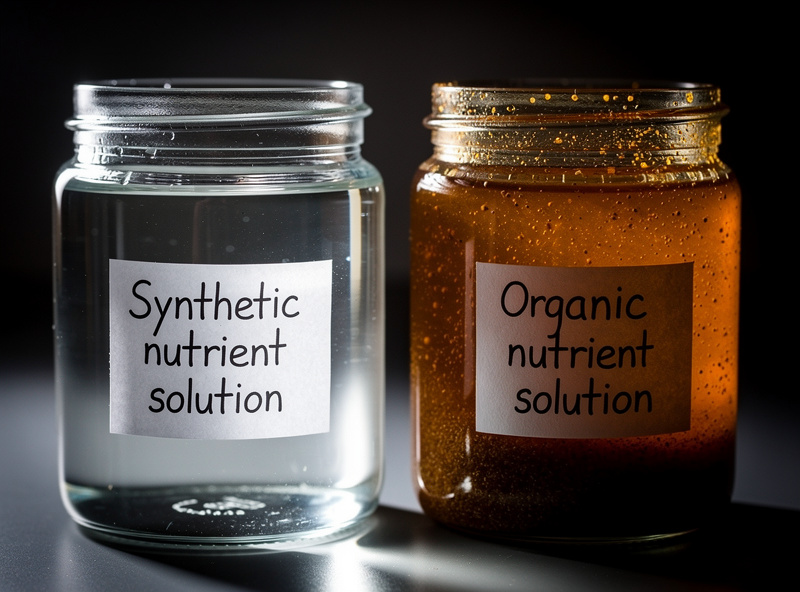
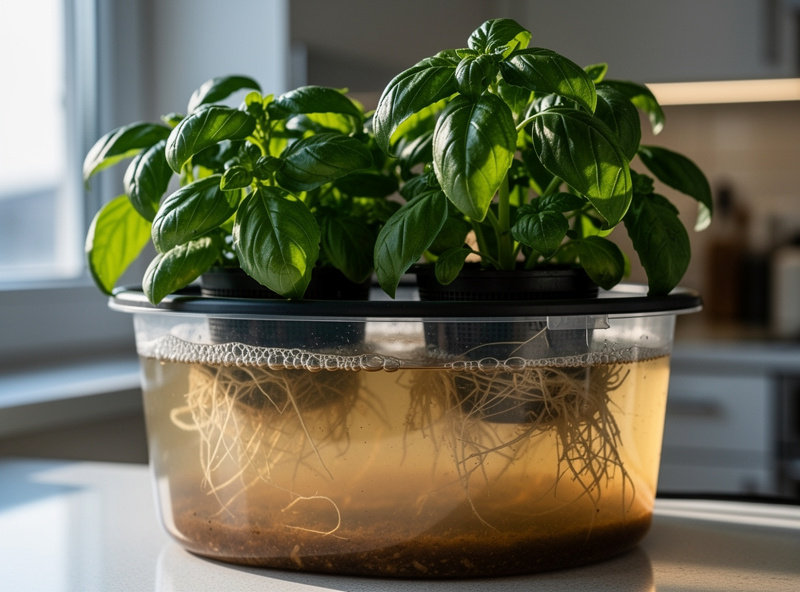
Second, organic inputs cloud water and feed bacteria indiscriminately — including the harmful kinds. A reservoir that runs clear with synthetic nutrients for 14 days will run cloudy and develop biofilm within 5 to 7 days on organic inputs. This is not necessarily a problem (cloudy water can be perfectly healthy) but it makes diagnosing root issues much harder. You cannot see white roots through brown water.
Third, organic nutrients are physically harder on equipment. The undissolved particulates clog drip emitters, foul air stones, and slowly accumulate as sludge in pump intakes. Plan to clean equipment weekly instead of monthly.
Organic Hydroponic Nutrients That Work
Three product lines have a track record at home-grower scale. Anything outside this list is either too new to evaluate or has documented issues with consistency between batches.
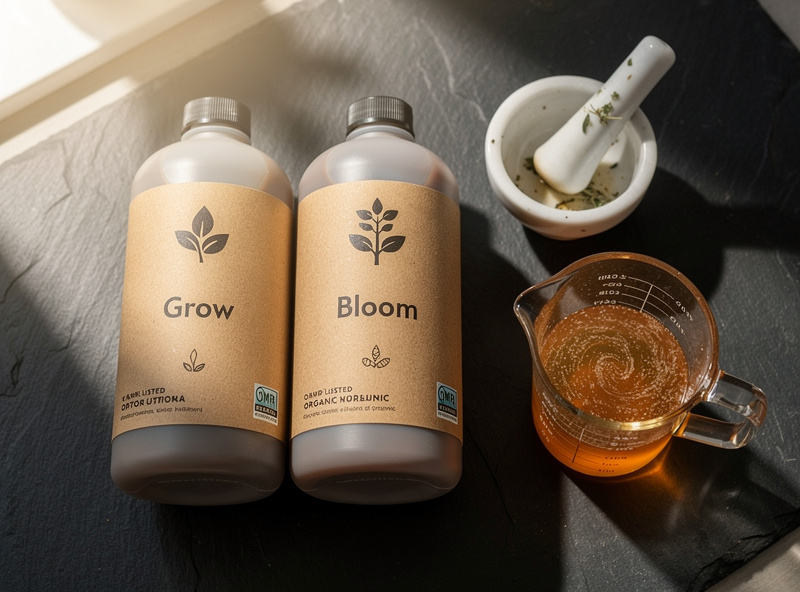
General Hydroponics BioThrive Grow & Bloom. Two-bottle organic system, OMRI-listed, $30 to $45 per quart pair. The most widely used organic option among hobbyists. NPK ratios run 4-3-3 (Grow) and 2-4-4 (Bloom). Standard dose is 10 to 15 ml per gallon, more than synthetic equivalents because nutrient release is slower. Pairs well with beneficial bacteria inoculants.
Earth Juice Original (Grow, Bloom, and Catalyst). Three-part organic system, $20 to $35 per quart. Heavier on humic acid and natural sugars than BioThrive, which feeds reservoir microbiology aggressively. Best in systems with active aeration and weekly cleaning. Some growers report stronger flavor in tomato and basil crops compared to synthetic, though this is subjective.
Roots Organics Buddha Bloom & Grow. Two-bottle organic system designed for hydroponic and aquaponic use, $25 to $40 per quart pair. Cleaner profile (less particulate matter) than BioThrive, which means slightly less reservoir fouling. Lower nutrient density means dosing 12 to 18 ml per gallon for full effect.
Avoid: dry organic powders sold as “soluble” — they are typically not fully soluble in cold water and leave undissolved sediment that clogs systems. Avoid generic compost teas as your primary nutrient source — they are useful supplements but lack consistent NPK ratios for predictable growth. My broader guide to the best hydroponic fertilizers covers synthetic alternatives if you want to compare side by side. For a hybrid case — a fermented organic-style supplement layered on top of a synthetic base feed — see my deep-dive on Floralicious Plus, when (and whether) to add it.
Setup Adjustments for Organic Hydroponics
Four adjustments separate working organic hydro setups from failing ones. None are expensive but all are non-optional.
Add a beneficial bacteria inoculant. Organic nutrients require live microbiology to mineralize organic compounds into plant-available forms. Hydroguard, Mammoth P, or Great White at the manufacturer dose adds the bacteria that does this work. Without inoculation, you can have a reservoir full of organic nitrogen that plants cannot access, which produces deficiency symptoms within 10 to 14 days.
Run a slightly higher pH range. Organic nutrient release works best at pH 6.0 to 6.5, at the top end of the 5.5 to 6.5 sweet spot used for synthetic. Many organic products buffer themselves into this range naturally. If yours does not, my guide to pH Down for plants covers safe organic pH adjustment alternatives like citric acid.
Increase aeration. The aerobic bacteria that mineralize organic nutrients need dissolved oxygen. Run a larger air pump (at minimum 2 watts per gallon) and add a second air stone if possible. Anaerobic conditions in organic reservoirs produce sour-smelling, plant-killing root environments within 48 hours.
Plan reservoir changes every 7 days, not 14. Even with good aeration and bacterial culture, organic nutrient solutions destabilize faster than synthetic. The bacterial bloom that powers nutrient release also produces metabolic waste that lowers dissolved oxygen and shifts pH unpredictably.
Organic vs Synthetic: Honest Comparison
| Factor | Organic Hydroponic | Synthetic Hydroponic |
|---|---|---|
| Yield (typical home-grower reports) | Somewhat lower | Baseline |
| Reservoir change frequency | Every 5-7 days | Every 10-14 days |
| Equipment cleaning | Weekly required | Monthly sufficient |
| Reservoir water clarity | Cloudy/amber after 24 hours | Clear throughout cycle |
| pH stability | Drifts up to 1.0 daily | Drifts 0.2-0.5 daily |
| Beneficial bacteria required | Yes — must inoculate | No — sterile is fine |
| Cost per gallon mixed | $0.40-0.80 | $0.10-0.30 |
| USDA Organic eligibility | Disputed (depends on certifier) | Not eligible |
| Best crops | Leafy greens, herbs, tomatoes | All crops |
When Organic Hydroponics Actually Makes Sense
Three scenarios genuinely benefit from organic inputs. Outside these, synthetic is the easier and more productive choice.
The first is herb production for personal use where flavor matters and quantity does not. Basil, mint, and cilantro grown in well-managed organic hydroponic systems often have stronger essential oil concentrations than synthetic-grown equivalents — not because organic is inherently better, but because organic systems force slower growth that allows secondary metabolite accumulation. If you grow basil for pesto rather than salad volume, organic is worth the extra labor.
The second is small commercial operations selling to organic-conscious markets that accept hydroponic certification. Some farmers markets, restaurants, and farm-to-table buyers specifically want OMRI-listed inputs even when full USDA Organic certification is not on the table. The premium pricing can offset the lower yields.
The third is personal preference. If you want to garden without handling concentrated mineral salts, organic hydroponics is a valid path. The plants will not know the difference. The water will look different (cloudy vs clear) and the workflow will be more demanding (weekly resets, equipment cleaning, bacterial inoculation), but the end result is food on the table either way.
Common Organic Hydroponic Mistakes
Most organic hydro failures trace to one of three errors. Avoid these and the system runs reasonably well even at beginner level.
Skipping the bacterial inoculant. The single most common mistake. New organic growers buy a fancy OMRI-listed nutrient and pour it into a sterile reservoir, then wonder why plants stall after two weeks. Without bacteria, organic nitrogen stays locked in unavailable forms. Always inoculate from day one.
Using compost tea as a sole nutrient. Compost teas are great supplements but inconsistent as primary nutrients. NPK ratios vary wildly between batches, and bacterial loads can crash a reservoir overnight. Use commercial organic nutrients as your base and tea as a top-up at most.
Not running enough air. Organic systems need aggressive aeration to keep beneficial aerobic bacteria alive. The same air pump that handled a synthetic DWC bucket comfortably will produce dead anaerobic zones in an organic reservoir — I learned this converting one of my own DWC totes to BioThrive without upsizing the air pump first, and the sour smell showed up inside of two days. The full troubleshooting workflow is in my 7 common hydroponic mistakes that kill plants.
Frequently Asked Questions
Are organic hydroponic nutrients actually organic?
They use biologically derived inputs (fish, kelp, molasses, rock minerals) instead of synthesized salts, and OMRI-listed products meet organic input standards. However, USDA Organic certification on the final crop is disputed — many certifiers require soil microbiology, which pure water-based hydroponics lacks.
Do organic hydroponic nutrients yield as much as synthetic?
Usually not quite, based on what growers who’ve run both formats side by side report — organic inputs release nutrients more slowly and are harder to dial in precisely, so plants tend to lag a synthetic-fed system somewhat. The gap tends to be narrower with leafy greens and wider with fruiting crops like tomatoes and peppers, which demand more nutrient during fruit set than slow-release organics reliably deliver.
What is the best organic hydroponic nutrient brand?
General Hydroponics BioThrive (Grow and Bloom) is the most widely used and reliable, at $30 to $45 per quart pair. Earth Juice Original and Roots Organics Buddha are also proven options. Avoid generic compost teas and unbranded organic powders as primary nutrients.
How often do you change organic hydroponic nutrient solution?
Every 5 to 7 days, roughly twice as often as synthetic. The bacterial activity that makes organic nutrients available also destabilizes pH and dissolved oxygen faster, so reservoirs do not last the standard 10 to 14 days that synthetic systems run.
Do you need beneficial bacteria for organic hydroponics?
Yes — non-negotiable. Organic nitrogen must be mineralized by aerobic bacteria before plants can absorb it. Without inoculants like Hydroguard, Mammoth P, or Great White, plants develop deficiency symptoms within 10 to 14 days even in a reservoir full of organic nutrients.
Can you use compost tea in hydroponics?
Only as a supplement, not a sole nutrient. Compost tea has inconsistent NPK ratios between batches and high bacterial loads that can crash reservoirs. Use a commercial organic nutrient as your base and add small amounts of tea as a microbial boost if desired.