Preventing powdery mildew in hydroponics is almost entirely an environment job: keep humidity below 60%, keep air moving across every leaf, and avoid the warm-days/cool-humid-nights swing the fungus loves. As a chemical backstop, a potassium bicarbonate spray at ~5 g/L shifts the leaf surface out of the pH range the fungus can colonize. Fix the room first and you rarely reach for the bottle.
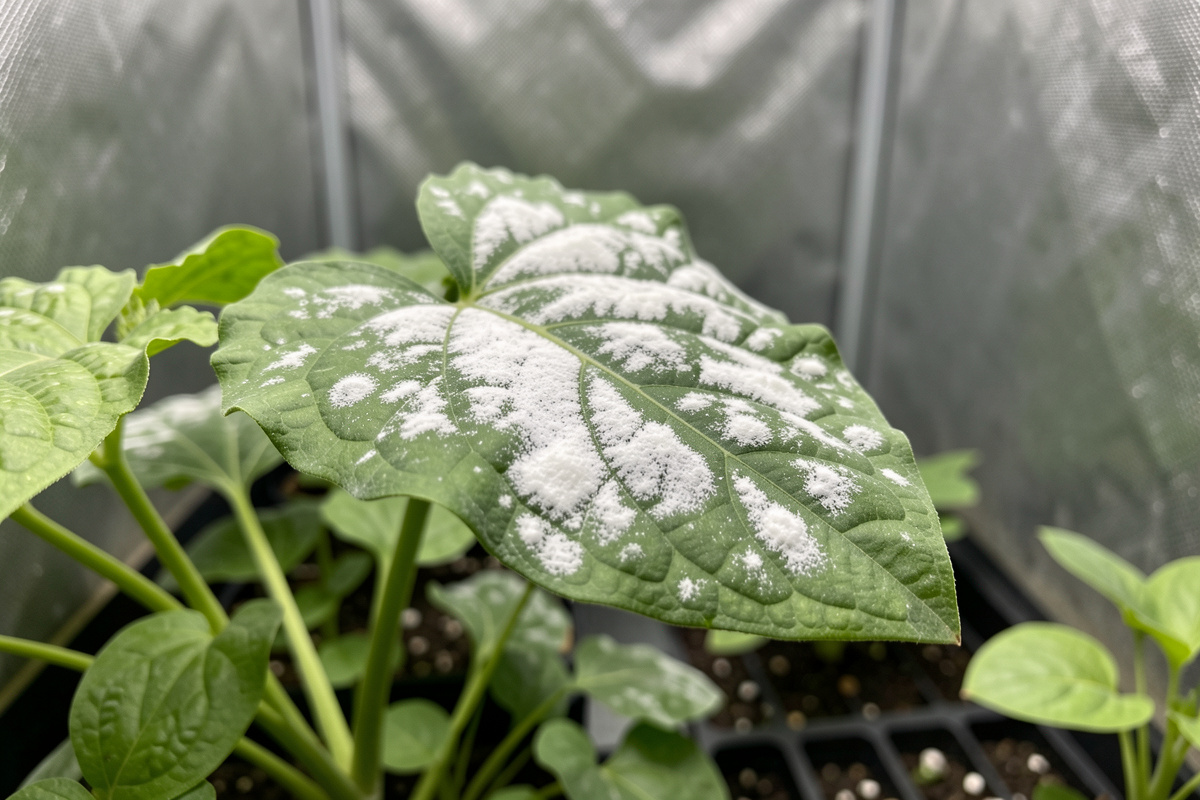
Powdery mildew is the disease that turns up looking like someone dusted your plants with talcum powder, and in an indoor grow it is almost always a symptom of stagnant, humid air rather than bad luck. It is one of the few plant pathogens that does not even need wet leaves to take hold — it thrives on humidity in the air and dead, still pockets in the canopy. That makes it a pure environment problem, which is good news, because environment is the one thing you fully control in a sealed hydroponic room. This guide is the prevention program I run on my bench; if you are already looking at white patches and need to stop an active outbreak, the existing powdery mildew treatment guide covers knocking it down, and this article is about never getting there.
What Powdery Mildew Is and Why It Spreads Indoors
Powdery mildew is a fungal disease that shows as white or grey powdery patches, usually starting on the upper surfaces of older, shaded leaves and spreading to stems and new growth if unchecked. The patches are colonies of fungal threads and spores feeding on the leaf; as they spread they block light and stunt the plant, and a heavy infection can defoliate it. The spores travel on air currents and on your hands and clothes, and they can sit dormant until conditions favor them. The UC Statewide IPM Program pest notes are the reference I trust for the conditions that trigger each fungal disease.
Indoor hydroponic rooms create those favorable conditions almost by default. The fungus likes moderate temperatures, high humidity, and crucially still air and shaded, crowded canopy where moisture lingers — exactly what you get in a packed grow tent with marginal airflow. It is especially happy with a daily swing from warm, drier daytime to cooler, more humid night air, because the cool night raises relative humidity right at the leaf surface. Understanding that profile is the whole key: every prevention lever below is just removing one of the things the fungus needs.
The Prevention Levers, In Order of Power
These are the controls I actually run, ranked by how much difference they make. Get the top two right and powdery mildew mostly stops being a topic.
1. Humidity Below 60%
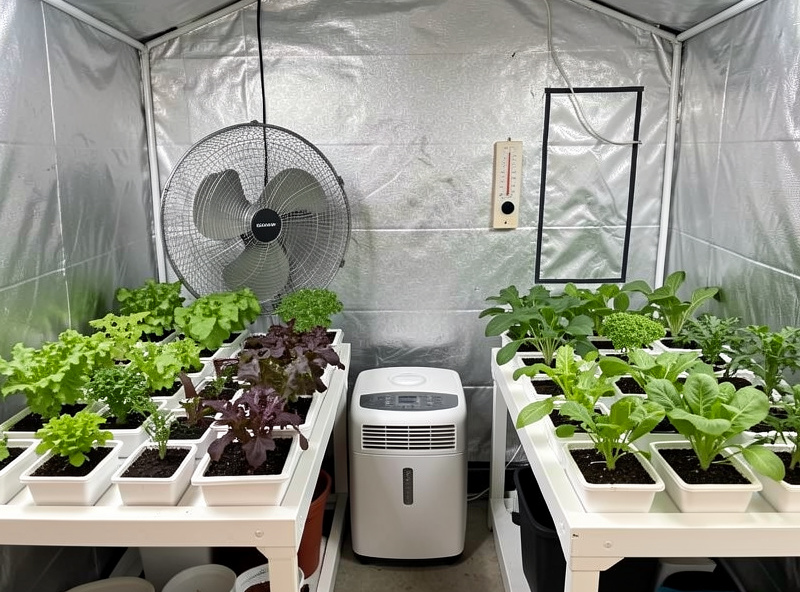
Relative humidity is the master lever. Powdery mildew germination climbs steeply as humidity rises into the high range, so holding the room below about 60% relative humidity removes the single biggest driver. A simple hygrometer in the canopy tells you where you stand, and a dehumidifier, better exhaust, or in my dry Nordic winter simply the room’s natural low humidity keeps it there. Watch the night numbers especially — relative humidity rises as the room cools after lights-out, so a room that reads 55% by day can spike past 70% at night and hand the fungus its window. The humidity and VPD targets that tie into this live in the humidity and VPD guide.
2. Airflow Across Every Leaf
Moving air is the second great preventive, and it works two ways: it breaks up the still, humid micro-layer that forms right at the leaf surface, and it makes spores far less able to settle and germinate. An oscillating fan that gently rustles the whole canopy — not a gale, just constant movement — does more to prevent mildew than any spray. Pair it with adequate exhaust so humid air actually leaves the room rather than recirculating. The fan and ventilation reasoning is in the grow room environment guide. Crowded plants defeat airflow, so spacing and sensible pruning to open the canopy are part of this lever too.
3. Potassium Bicarbonate As a Backstop
When you want a preventive spray — or to stop an outbreak that is just starting — potassium bicarbonate at ~5 g/L is my go-to. It works by raising the pH right at the leaf surface to a level the fungus cannot colonize, and it is both preventive and mildly curative on contact, knocking back colonies that have already started. It is gentle, cheap, and safe on edibles when rinsed, which is why I prefer it to harsher fungicides in a room growing food. Spray to cover leaf surfaces, repeat weekly during high-risk periods, and treat it as the backup to good air management rather than a substitute for it. A tub of potassium bicarbonate lasts a very long time at that rate.
As an Amazon Associate I earn from qualifying purchases.
Environment Targets vs. Treatment
| Lever | Target / dose | Role | Notes |
|---|---|---|---|
| Relative humidity | Below ~60% (watch nights) | Primary prevention | RH rises as the room cools after lights-out |
| Airflow | Constant gentle canopy movement | Primary prevention | Breaks the leaf-surface humid layer |
| Canopy density | Spaced, pruned, open | Supports airflow | Crowding creates still, humid pockets |
| Potassium bicarbonate | ~5 g/L foliar | Preventive + early cure | Raises leaf-surface pH; repeat weekly |
| Temperature swing | Avoid warm-day/cool-humid-night | Prevention | Cool nights spike leaf-surface humidity |
The Quiet Mistakes That Invite It
Most powdery mildew outbreaks I have helped diagnose trace back to a habit, not bad luck. Overcrowding the tent is the big one — packing in one more plant kills the airflow that was holding the disease off, and creates the shaded, still, humid interior the fungus needs. Ignoring the night humidity is the sneaky one: growers check humidity during the day, see a safe number, and never realize it spikes after lights-out. Letting humid air recirculate without real exhaust just moves moisture around the room. And bringing in an infected plant seeds spores that wait for the first humid, still night to bloom. Each of those is a removable cause, not a fixed fact of indoor growing.
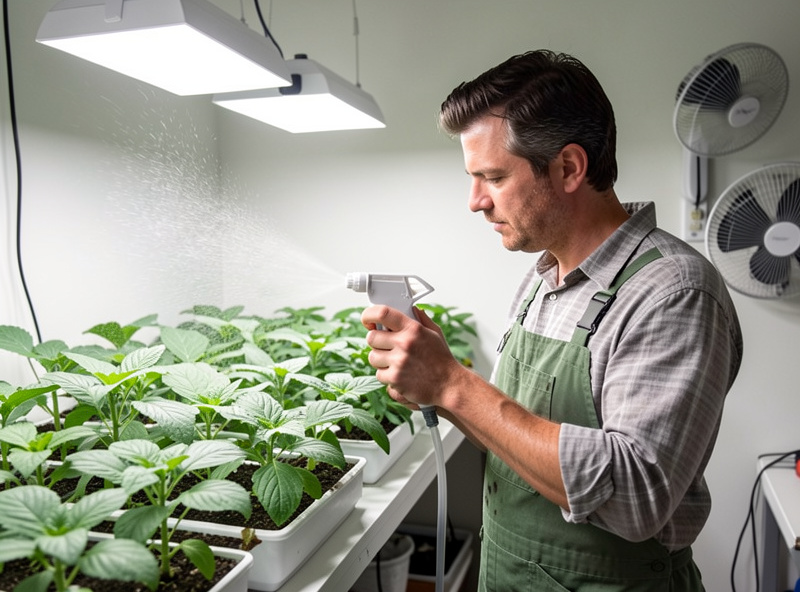
One more worth naming: misting or wetting foliage in an already-humid room. While powdery mildew does not strictly need wet leaves the way some fungi do, raising the humidity around the canopy by spraying water for any reason hands it a better environment. If you are spraying potassium bicarbonate, do it when the room can dry afterward with good airflow, not right before lights-out in a closed tent.
Telling Powdery Mildew From Look-Alikes
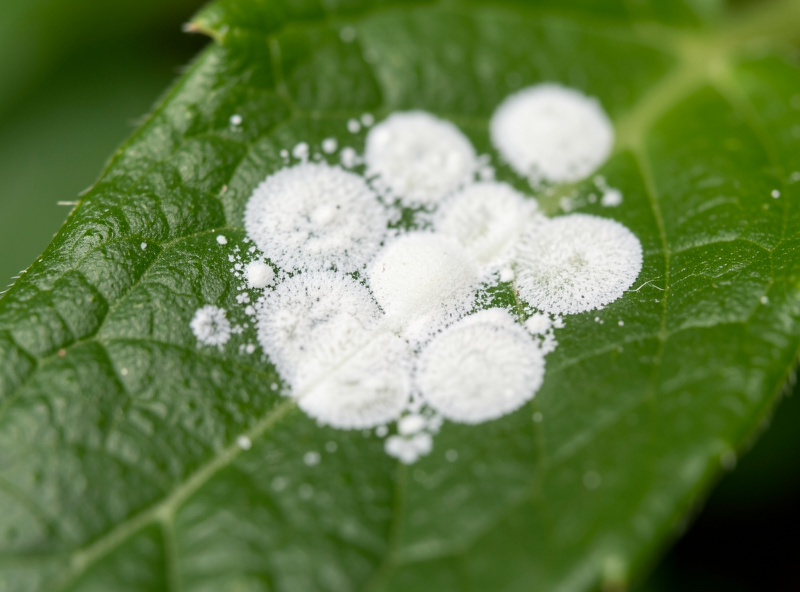
Before you treat, make sure that white mark is actually powdery mildew, because the wrong diagnosis wastes a spray and misses the real problem. Genuine powdery mildew is a slightly raised, fuzzy or powdery coating that starts as small round colonies and spreads outward; it will smear if you rub it, but it grows back. The common confusions on a hydroponic leaf are easy to sort once you know them.
Hard water residue from misting or splashing leaves a flat, crusty white deposit that wipes off cleanly and does not return — it sits on the surface rather than growing. Trichomes, the natural fine hairs or crystalline frosting some plants produce, are evenly distributed and structured rather than appearing as spreading round patches. Nutrient or light spotting tends to be flat discoloration rather than a raised powder. And downy mildew, a different disease, shows fuzzy growth on the leaf underside with yellow patches on top, and needs a different, more aggressive response. When in doubt, the spreading, raised, round-colony pattern on upper leaf surfaces is the powdery-mildew signature.
Choosing Less Susceptible Crops and Varieties
Prevention starts before the plant is even in the system. Some crops and varieties are notably more prone to powdery mildew than others — many cucurbits like cucumber and squash are classic magnets, while a lot of leafy greens and herbs shrug it off under the same conditions. If powdery mildew is a recurring battle in your room, it is worth choosing more resistant varieties where you have the option; seed catalogs often flag powdery-mildew resistance explicitly. It will not replace good air management, but starting with a plant that is hard to infect stacks the odds in your favor, and on a packed indoor bench every advantage compounds.
The same logic applies to plant spacing and training. A plant trained open, with airflow reaching its interior, resists infection far better than the same plant left to bush into a dense, shaded thicket. Sensible pruning to remove the lowest, most shaded leaves — the ones where mildew almost always starts — removes both the launch pad and the still, humid pocket at once. I treat canopy management as a genuine disease-prevention tool, not just a yield tweak.
You will also see harsher options promoted — sulfur burners, systemic fungicides, exotic biofungicides. In a small home room growing food, I leave most of them alone. A sulfur burner can scorch sensitive plants and is unpleasant in an enclosed space, and systemic fungicides move into the produce you intend to eat for a problem that gentle methods handle. Potassium bicarbonate, a milk-based foliar spray that some growers swear by, or a labelled biofungicide based on beneficial bacteria all stay on the safe, edible-friendly side of the line. The honest hierarchy is simple: fix the air first, spray potassium bicarbonate as a backstop, and reserve anything stronger for a commercial-scale problem you will not meet on a home bench that is managed well.
Catching It Early and Keeping It Out
Even with good prevention, scout for the first signs so you can act before a patch becomes a problem. Twice a week, check the upper surfaces of the older, lower, more shaded leaves first — that is where it almost always starts. The earliest stage is a few small, faint white spots that look like they would wipe off; that is your cue to improve airflow, check the night humidity, and hit it with potassium bicarbonate before it spreads. Caught at a spot or two, it is trivial; left for a week in a humid tent, it can cover a canopy.
Keeping spores out is the same exclusion discipline that prevents every other problem: quarantine and inspect new plants before they enter the grow, do not bring outdoor plants in, and be mindful that spores ride in on clothing — all covered in the hydroponic room biosecurity guide. Powdery mildew sits within the wider program in the hydroponic pest control guide, and because it is so tied to the room climate, getting humidity and airflow right also pays off against the gnats and the root rot covered in preventing root rot in hydroponics. Fix the air, and the fungus simply runs out of the conditions it needs.
Frequently Asked Questions
What humidity prevents powdery mildew in hydroponics?
Hold relative humidity below about 60 percent, and watch the night numbers especially, because humidity rises as the room cools after lights-out. A room that reads 55 percent by day can spike past 70 percent at night and give the fungus its window. A hygrometer in the canopy tells you where you actually stand.
How does potassium bicarbonate stop powdery mildew?
Potassium bicarbonate at about 5 g per liter raises the pH right at the leaf surface to a level the fungus cannot colonize. It is both preventive and mildly curative on contact, so it knocks back early colonies too. It is gentle and safe on edibles when rinsed, making it a good fit for a food-growing room.
Does airflow really prevent powdery mildew?
Yes, it is one of the two most powerful levers. Constant gentle air movement breaks up the still, humid micro-layer at the leaf surface where the fungus germinates and makes spores far less able to settle. An oscillating fan that rustles the whole canopy, paired with real exhaust, prevents more mildew than any spray.
Why does powdery mildew keep coming back in my grow tent?
Almost always because the room conditions still favor it: overcrowding that kills airflow, night humidity that spikes after lights-out, or humid air recirculating without real exhaust. Treatments knock it down, but until you fix the air it returns. Spacing plants and adding airflow and dehumidification break the cycle.
Can I prevent powdery mildew without spraying anything?
Often yes. Powdery mildew is so tied to humidity and still air that holding humidity below 60 percent, keeping air moving across every leaf, and not overcrowding the canopy prevents most outbreaks on their own. A potassium bicarbonate spray is a useful backstop, not a requirement, when the environment is right.