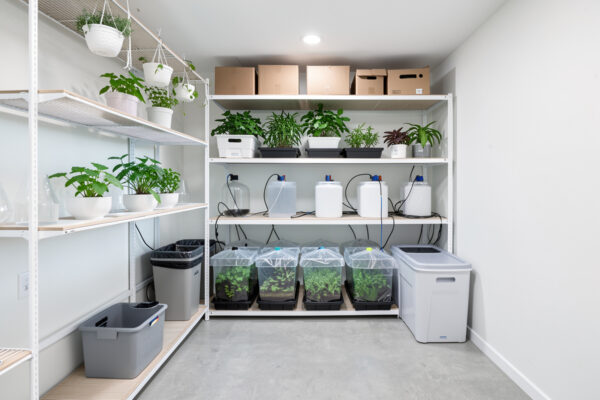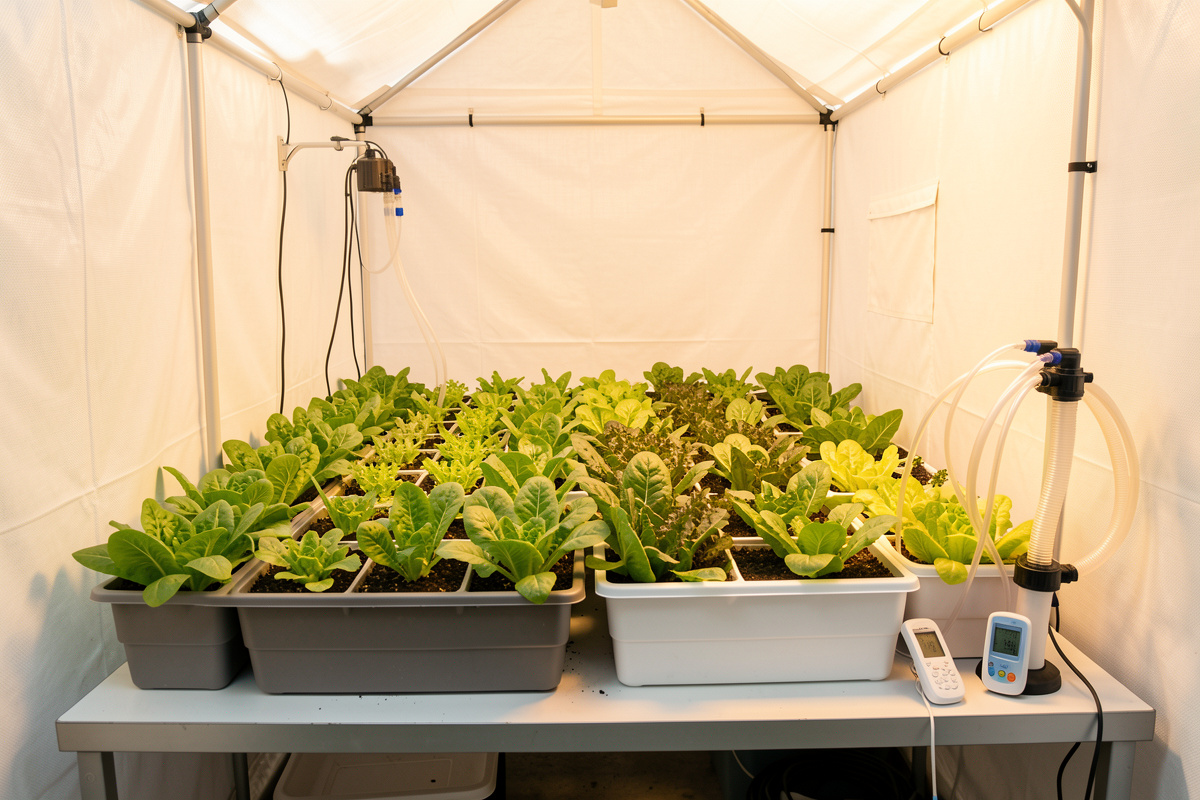
Hydroponic pest control is a control loop, not a spray bottle. The single most reliable program I run on my bench is prevention-first integrated pest management (IPM): keep the reservoir at or below 68°F (20°C), run air stones 24/7, dose Bacillus on every res change, screen the room, and scout twice a week. Get those right and you spray almost never.
I have run DWC, NFT, Kratky and ebb-and-flow side by side for years, and the thing nobody tells beginners is that soilless growing changes the entire pest game. There is no soil food web to buffer you, no friendly nematode population already living in the medium, no fungal network competing with the bad fungi. Your reservoir is a sterile-ish nutrient broth that Pythium would love to colonize, and your warm, humid, windless grow tent is a breeding spa for fungus gnats, aphids, spider mites and powdery mildew. This guide is the system I actually use to stay ahead of all of it — measured, repeatable, and built around the numbers off my own meters rather than the panic-buy spray aisle.
Why Hydroponic Pest Control Is Its Own Discipline
In hydroponics the failure modes are faster and the levers are different. A root-rot outbreak in soil takes a week to show; in a warm DWC tote it can turn roots from white to brown slime in 48 hours because the pathogen is swimming directly against bare root mass with no soil barrier. That speed cuts both ways: because you control the reservoir, you also control the single biggest variable — root-zone oxygen and temperature — with a precision a soil grower can only dream about.
The discipline rests on three legs. First, environment: reservoir temperature, dissolved oxygen, humidity and airflow decide whether pests and pathogens get a foothold at all. Second, exclusion: biosecurity keeps the spores and the adult gnats out of the room in the first place. Third, intervention: when something does break through, you reach for the right tool at the right dose instead of carpet-bombing your roots. Most hobby content only talks about the third leg, which is why most hobby growers fight the same outbreak every cycle. That prevention-first, intervention-last ordering is exactly how the EPA frames integrated pest management, and it maps cleanly onto a reservoir. I would rather fix the room than buy another bottle.
The other reason this is its own discipline: a lot of garden-store advice is actively wrong for soilless systems. Soil drenches, beneficial-fungi mycorrhizae, diatomaceous earth in the root zone — half of it does nothing in water culture and the other half clogs your pump. Everything below is filtered for what works in a recirculating or static reservoir specifically.
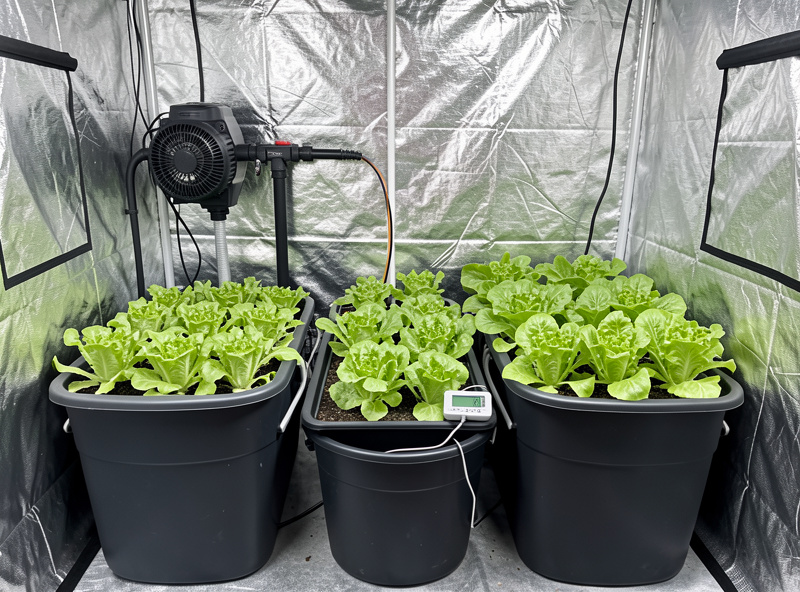
The Prevention Layer: Environment Comes First
Roughly nine out of ten problems I have ever solved on my bench were solved at the reservoir and the room, not on the leaf. The reason is simple: a plant grown in a well-oxygenated, correctly fed, correctly lit environment defends itself. A stressed plant broadcasts on every frequency pests can hear.
The non-negotiables in my prevention layer:
- Reservoir temperature ≤68°F (20°C). Above 72°F (22°C) dissolved oxygen falls and Pythium wakes up. This is the single highest-leverage number in the whole system. In a Nordic winter my res runs cold for free; in summer it is the fight of the season.
- Air stones running 24/7. Saturated dissolved oxygen keeps root membranes healthy and outcompetes anaerobic rot. I never run a DWC reservoir without redundant aeration.
- Bacillus inoculant every res change. A beneficial Bacillus product (Hydroguard is the one I keep on the shelf) colonizes the root surface so the bad guys have nowhere to land. I dose it fresh every single reservoir change because the population doesn’t persist through a dump-and-refill.
- pH held in the 5.5–6.0 band. Drift out of that lockout band stresses the plant and invites trouble; it also changes how some treatments behave.
- Humidity and airflow under control. Stagnant, >65% humidity air is the powdery-mildew and gnat incubator. A small oscillating fan and honest VPD management end most foliar disease before it starts.
If you internalize one thing from this hub, make it this: buy the meters before you buy the sprays. A calibrated EC/TDS pen, a pH pen, and a cheap waterproof thermometer in the res tell you about a problem days before your eyes do. I have caught more outbreaks from an EC reading drifting wrong than from spotting a bug. A decent EC and pH meter set is the cheapest pest-control insurance you will ever buy.
As an Amazon Associate I earn from qualifying purchases.
The Exclusion Layer: Biosecurity
Every pest in your room arrived from somewhere. Fungus gnats hitchhike in on a bag of damp coco or a nursery transplant. Spider mites walk in on your sleeve from an outdoor plant. Powdery mildew spores ride the air and your clothes. Exclusion is the layer almost no hobby grower runs, and it is the layer that separates a clean room from a perpetual battle.
My core biosecurity rules: quarantine every new plant for two weeks away from the main grow; never bring outdoor plants into the hydro room; sterilize net pots, totes and tools between cycles; keep a dedicated pair of shoes or just go barefoot in the grow space; and treat incoming grow media as suspect until proven clean. I dig into the full room protocol in the hydroponic room biosecurity guide, because it deserves its own deep treatment — it is the highest-ROI habit on this entire list and the one people skip.
The mental model that makes biosecurity click is to treat the grow room like a clean reservoir, not a garden. I run the hydro res the way I run a sourdough starter: the outcome is decided by clean process, not fancy ingredients. A pest you never let in is a pest you never have to treat, which means you never have to spray an edible crop, never have to gamble a beneficial release against an established infestation, and never lose the week it takes to recover. Exclusion is unglamorous — washing totes, screening intakes, refusing the gift cutting from a friend’s spider-mite-ridden windowsill — and it is precisely why disciplined rooms stay clean while busy ones cycle through the same outbreak every crop. Spend your effort at the door and you spend almost none inside.
The Big Six: Pests and Pathogens You Will Actually Meet
Across every method I run, the same short list of antagonists shows up again and again. Here is the management summary for each, with a link to the full protocol. Note the deliberate split on this site: the existing articles cover how to identify and kill an active infestation, while this cluster covers how to prevent and control systematically. Use both.
Fungus Gnats
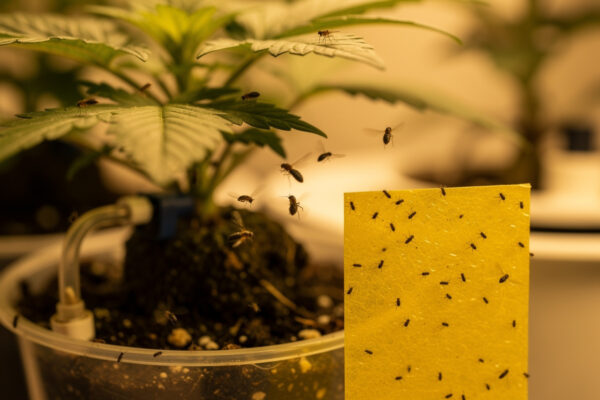
Small black flies hovering at the media surface; larvae in the root zone chewing fine roots and spreading Pythium. The control stack is layered, not a single spray: yellow sticky traps to knock down and monitor adults, Bacillus thuringiensis israelensis (BTI, sold as mosquito bits) to kill larvae in the water, and Steinernema feltiae beneficial nematodes for a biological knockout in the medium. Let the surface of any media dry and you remove their nursery. The full sequence is in controlling fungus gnats in hydroponic systems, and for spotting them early see the existing fungus gnats identification guide.
Root Rot (Pythium)
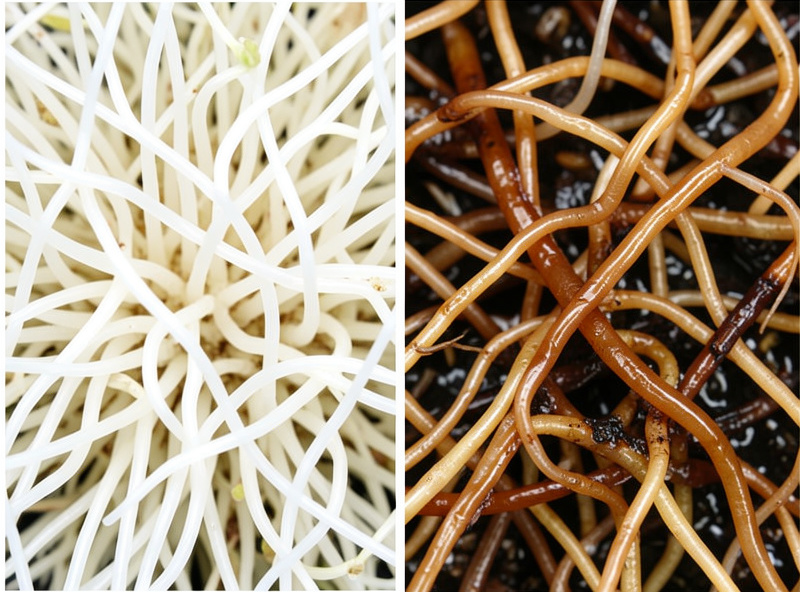
The big one. Brown, slimy, foul-smelling roots replacing healthy white root mass — and the cause is almost always a warm, under-oxygenated reservoir. Prevention is the cure: res ≤68°F (20°C), air stones 24/7, Bacillus every res change, and a one-time 3% hydrogen peroxide reset (2–3 mL/L) when you need to crash an algae or rot bloom — never alongside live bacteria, because the peroxide kills your good inoculant too. On recirculating builds an inline UV sterilizer keeps the water column clean. Full protocol: preventing root rot in hydroponics.
Aphids
Soft-bodied green, black or peach insects clustering on new growth and leaf undersides, multiplying fast and excreting honeydew that grows sooty mold. In an enclosed hydro room they have no natural predators unless you import them. Control runs from a firm water knockdown, to insecticidal soap, to cold-pressed neem at ~0.5% (5 mL/L) sprayed lights-off, up to releasing ladybugs or Aphidius parasitic wasps for a standing infestation. See dealing with aphids in hydroponic gardens.
Spider Mites
The pest I respect and fear most: tiny, fast-breeding, and by the time you see fine webbing on the growing tips you are already deep in it. Hot, dry, stagnant air is their paradise, so environment is half the battle. The biological answer that actually works in a closed room is predatory mites — Phytoseiulus persimilis for a hot infestation, Neoseiulus californicus as a slower, more persistent guardian. Neem at ~0.5% lights-off backs them up. Full plan: spider mites in hydroponic systems, with the existing spider mite identification guide for early spotting.
Powdery Mildew
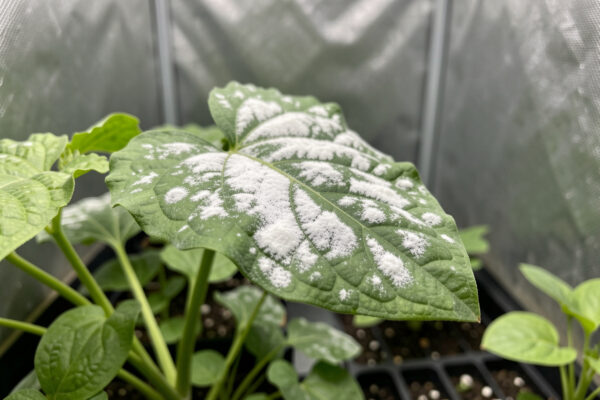
White talcum-powder patches on leaves, driven by high humidity and dead air. The cheapest, most effective preventive on my shelf is a potassium bicarbonate spray at ~5 g/L, which shifts the leaf-surface pH out of the range the fungus can colonize. But the real fix is the room: drop humidity below 60%, add airflow, and you rarely see it. Details in powdery mildew prevention in hydroponics and the existing powdery mildew treatment guide.
Algae
Not a pest exactly, but the gateway problem: green slime on media, lids and reservoir walls wherever light hits nutrient water. Algae competes for oxygen, feeds fungus-gnat larvae, and crashes your dissolved oxygen overnight as it dies. The fix is light exclusion — opaque reservoirs, 3D-printed lids that actually seal, covered net pots — plus a peroxide reset if it gets ahead of you. Full treatment lives in the existing algae in hydroponics guide.
The Intervention Toolkit (and Its Doses)
When prevention fails — and it will, eventually — you want a small, well-understood toolkit rather than a shelf of mystery bottles. These are the only interventions I keep on the bench, with the doses I actually use. Keep these numbers identical across every system you run so you never have to second-guess yourself mid-outbreak.
| Tool | Target | Dose / Form | Key rule |
|---|---|---|---|
| 3% Hydrogen peroxide | Root rot, algae reset | 2–3 mL/L of reservoir | One-time reset only; never with live Bacillus |
| Bacillus inoculant (Hydroguard) | Root-zone prevention | Per label, every res change | Re-dose fresh each change; not after peroxide |
| Cold-pressed neem oil | Aphids, mites, foliar | ~0.5% (5 mL/L) + emulsifier | Spray lights-off, leaf undersides |
| Potassium bicarbonate | Powdery mildew | ~5 g/L foliar spray | Preventive and curative; raises leaf pH |
| BTI (mosquito bits) | Fungus gnat larvae | Steep in res / wet media | Targets larvae, harmless to plants |
| Inline UV sterilizer | Waterborne pathogens | Sized to flow rate | Recirculating builds; run continuously |
| Yellow sticky traps | Flying adults / monitoring | 1 per plant + at canopy | Your early-warning system, always up |
A few hard rules that I have learned the expensive way. Hydrogen peroxide and live bacteria cancel each other out — pick one per reservoir, never both at once. Neem goes on lights-off or you scorch leaves and the oil degrades. Sticky traps are not a control method, they are a sensor — when the catch count jumps, that is your cue to act, not your treatment. And biologicals (predatory mites, nematodes, parasitic wasps) are incompatible with broad sprays: if you release predators, you stop spraying, full stop.
You will notice what is not on that list: systemic chemical pesticides, pyrethroid bombs, and anything labeled for soil. On edible crops in an enclosed room I keep the toolkit boring and biological on purpose. If you want hardware, the only things worth buying preemptively are yellow sticky traps and a bottle of cold-pressed neem oil; the biologicals you order fresh when you need them.
Pest Vulnerabilities by Growing Method
One thing I can offer that single-system growers cannot: I run DWC, NFT, Kratky and ebb-and-flow under the same roof, on the same crops, with the same meters — and they do not share the same weaknesses. Matching your vigilance to your method saves a lot of wasted worry.
Deep Water Culture lives and dies on reservoir temperature and oxygen. The entire root mass sits permanently submerged, so a warm res with weak aeration is a Pythium invitation. DWC is the method where the ≤68°F (20°C) rule and 24/7 air stones are not optional — they are the whole defense. The upside: because the water is right there, a peroxide reset or a Bacillus re-dose acts instantly.
NFT (nutrient film technique) has the opposite failure mode. A thin film of water down a channel is prone to drying out at the roots if the pump stutters, and any root-rot slime narrows or blocks the channel, starving plants downstream. NFT also shows root disease later than DWC because you can’t see the roots, so I lean harder on smell and on EC behavior to catch trouble. Channel hygiene between crops matters more here than anywhere else.
Kratky and other passive, pump-free systems trade aeration risk for stagnation risk. With no air stone, dissolved oxygen depends entirely on the growing air gap above a falling water line — get the gap wrong and roots suffocate, which looks exactly like rot. Kratky reservoirs also sit still long enough for algae and fungus-gnat larvae to settle in, so light exclusion is everything. I use Kratky to teach fundamentals precisely because it punishes sloppiness fast.
Ebb and flow (flood-and-drain) on a clay-pebble bed is the most forgiving on oxygen — the drain cycle pulls fresh air down through the medium every flood — but the inert pebbles and the dark, damp tray are a fungus-gnat and algae haven if the medium surface stays wet between floods. Cycle timing is your pest lever: floods frequent enough to feed, infrequent enough to let the surface breathe.
| Method | Biggest pest risk | Primary defense | Early warning |
|---|---|---|---|
| DWC | Pythium root rot | Res ≤68°F + air stones 24/7 | Visible roots browning |
| NFT | Channel rot / blockage | Channel hygiene, reliable pump | Sour smell, EC drift |
| Kratky | Stagnation, algae, gnats | Correct air gap, light exclusion | Falling water clarity |
| Ebb & flow | Fungus gnats, algae in media | Surface dry-back between floods | Adults on sticky traps |
Reading the Symptoms: A Diagnostic Walkthrough
Before you reach for any treatment, you have to read what the plant and the reservoir are telling you — because the wrong diagnosis wastes a treatment and a week. Roughly half the “pest” panics I get asked about turn out to be a nutrient or environment problem wearing a pest costume. Here is how I sort it on my own bench.
Start at the roots. White and stringy with a faint clean smell means the root zone is healthy and your problem is foliar or imagined. Brown, slimy, and sour means rot, and your fix is environmental, not a leaf spray. Tan staining with healthy texture is usually just nutrient tannins, not disease. The roots are the single most honest sensor in the system, which is one reason I value clear reservoir access on every build.
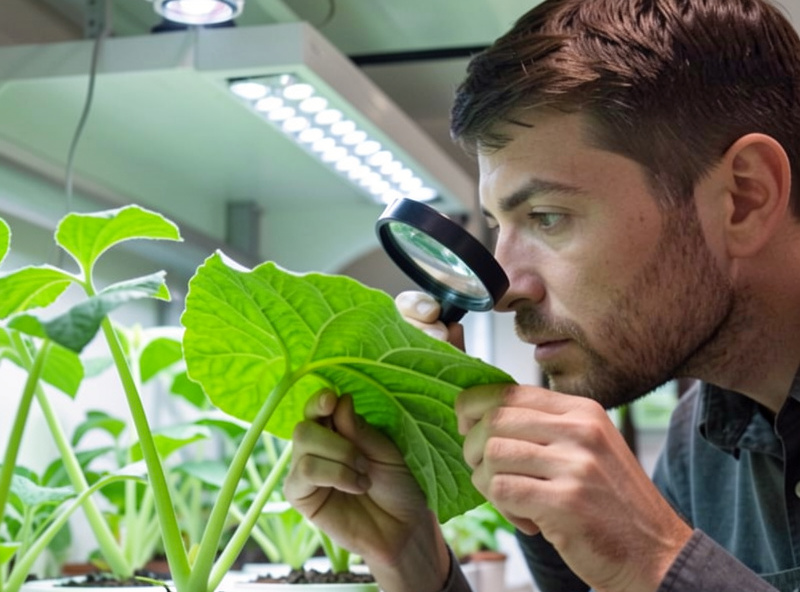
Then read the leaves, top and bottom. Stippling and fine speckling on upper surfaces with anything resembling webbing underneath is spider mites — get the loupe out immediately. Sticky shine and curling new growth is aphids and their honeydew. White powder that wipes off is mildew. Yellowing that follows a pattern — old leaves first, or veins-vs-tissue — is far more likely a nutrient issue than a bug, which is why I keep my nutrient deficiency guide within reach during any diagnosis.
Check the environment numbers before you blame a pest. A res that crept to 75°F, humidity stuck at 70%, or a pH that wandered out of the 5.5–6.0 band will produce stressed plants that look pest-ridden even when no pest is present. Fix the number, wait a few days, and watch half your “infestations” evaporate. The meters tell you which battle you are actually fighting.
This is the part most spray-first advice skips entirely, and it is where the measurement-first approach earns its keep. A grower who diagnoses correctly intervenes once; a grower who guesses sprays three times and still loses the plant.
The Nordic Indoor Angle
I grow in Sweden, and the cold-climate indoor constraint genuinely changes the pest math in ways warm-climate channels never have to think about. The short winter daylight that forces me to run supplemental light and do real DLI calculations also gives me a free gift on the pest side: my reservoir runs naturally cold for half the year, so the ≤68°F (20°C) target that summer growers fight chillers to hit, I get for nothing from November to March. Root rot is a summer problem on my bench, not a winter one.
The trade-off is the sealed, heated, dry winter room. Low winter humidity is a gift against powdery mildew and fungus gnats — but the same dry, still, warm air under the lights is exactly what spider mites want, so winter is mite season here. And a sealed room with no fresh outdoor air exchange means that whatever gets in stays in and multiplies, which is why my biosecurity layer is non-negotiable. The lesson generalizes: know which season your room favors which pest, and front-load your vigilance accordingly rather than reacting every cycle.
Beneficial Insects: The Standing Army
The most elegant hydroponic pest control is the kind that fights for you while you sleep. In a sealed indoor room there are no predators unless you import them — which is also an advantage, because once you release the right beneficials they have nowhere to wander off to. Predatory mites for spider mites, Aphidius wasps and ladybugs for aphids, Steinernema feltiae nematodes for fungus-gnat larvae, and a general predatory mite like Neoseiulus californicus as a standing guard. The catch is that beneficials and sprays don’t mix, so you commit to one strategy. I lay out the full roster, release rates and compatibility in beneficial insects for indoor hydroponic grows.
Common Mistakes That Make Pest Problems Worse
Most chronic infestations I have helped diagnose were not bad luck — they were a habit feeding the problem. These are the ones I see again and again, and every one of them is self-inflicted.
Running the reservoir too warm. This is the master mistake. Growers obsess over nutrients and lights and ignore the one number — res temperature — that decides whether Pythium ever gets started. A 200-watt water heater forgotten in a summer res, a pump dumping its waste heat into the tank, a reservoir parked next to a radiator: all of them cook the water past 72°F and undo every other good habit. Measure it, log it, fix it first.
Treating sticky-trap catches as the cure. Sticky traps are a sensor. When growers hang a trap, watch it fill, and feel they have “dealt with” the gnats, the larvae in the medium keep breeding untouched. Traps tell you to act on the larvae with BTI or nematodes; they do not act for you.
Spraying and releasing predators at the same time. Neem and a predatory-mite release are mutually exclusive. I have watched growers pay for live Phytoseiulus, release them, then spray neem two days later and wipe out the army they just bought. Commit to one strategy per crop and stick to it.
Skipping quarantine. The single most common entry route for spider mites and aphids is a new plant brought straight into the main room. Two weeks of isolation and a loupe inspection would have caught it. Almost every “it appeared out of nowhere” outbreak walked in the front door on a transplant.
Letting light hit the nutrient solution. Every gap where light reaches water grows algae, algae feeds gnat larvae and crashes oxygen, and the whole pest cascade follows. Opaque reservoirs and sealing lids are pest control, not cosmetics — which is exactly why I print my own lids and collars to close those gaps.
Over-pruning into open wounds. Aggressive defoliation in a humid room leaves cut surfaces that fungal spores colonize. Prune with intent, keep airflow up, and don’t hand the pathogens an open door.
Building Pest Resistance Into the System
The endgame is a system that is hostile to pests by design, so that intervention becomes the rare exception. That means an opaque, sealed, well-aerated reservoir held cool; a room with real airflow and humidity under 60%; a quarantine bench physically separate from the grow; sticky traps up permanently as your early-warning grid; a Bacillus habit on every res change; and a meter routine that catches the environment drifting before the plant ever shows stress.
Build that, and pest control stops being a series of emergencies and becomes a quiet background process. The fifteen minutes a week you spend scouting and logging is the cheapest insurance in the entire hobby — far cheaper than the crop, the wasted nutrients, and the weekend teardown that a single ignored outbreak costs. The growers with the cleanest rooms are not lucky and they do not spray the most; they are the ones who fixed the environment and then mostly left it alone.
A Realistic Weekly Routine
None of this works as a one-time event. Pest control is a cadence. Here is the rhythm I run, and it takes maybe fifteen minutes a week once it is a habit.
- Twice weekly: Scout. Turn leaves over, check the growing tips with a loupe, read the sticky traps, sniff the reservoir. Smell is an underrated sensor — a healthy res is nearly odorless; a sour, swampy smell means rot is starting.
- Weekly: Check and log res temp, EC and pH. Top off correctly to manage EC drift. Wipe down any algae you see before it spreads.
- Every res change: Clean the reservoir, re-dose Bacillus, inspect roots (white and stringy = good; brown and slimy = act now), confirm air stones are bubbling hard.
- Every new plant: Quarantine two weeks, inspect under a loupe before it ever enters the main room.
The reason the cadence matters more than any single product: every pest on the big-six list breeds exponentially. Catch spider mites at a dozen individuals and a predator release ends it. Catch them at webbing and you are looking at a teardown. The grower who scouts twice a week wins; the grower who reacts loses a crop. I would rather spend fifteen minutes a week looking than a weekend rebuilding a system.
Where Pest Control Meets the Rest of the System
Pest management never lives alone. The reservoir habits that prevent root rot are the same habits in my reservoir guide; the dissolved-oxygen targets come straight from the dissolved oxygen article; res temperature ties into water temperature control; and the humidity and airflow numbers that stop powdery mildew live in the grow room environment guide. A clean reservoir routine — see how to clean and sterilize a reservoir — does more for pest control than any spray. And because I print my own sealing lids and net-pot collars to keep light and gnats out, the 3D-printed hydroponic parts piece is genuinely part of my biosecurity, not a side hobby. Healthy plants resist pests, so correct light scheduling and a sane water-change schedule are pest control too.
That is the whole philosophy in one line: a hydroponic system is the same control loop as a smart-home rig — sensors, schedules, and intervention only when the loop fails. Build the loop well and the bugs mostly never get a turn.
Frequently Asked Questions
What is the most common hydroponic pest problem?
Root rot from Pythium is the most common and most destructive, and it is almost always caused by a warm, under-oxygenated reservoir. Keeping the res at or below 68 degrees Fahrenheit (20C) with air stones running 24/7 prevents the large majority of cases.
Can I use neem oil on hydroponic vegetables?
Yes, cold-pressed neem oil at about 0.5 percent (5 mL per liter) is widely used on edible hydroponic crops. Spray leaf undersides with the lights off to avoid leaf burn, and stop applications well before harvest so leaves can be rinsed clean.
Do I need pesticides for an indoor hydroponic grow?
Usually not. A prevention-first program of cool oxygenated reservoirs, Bacillus inoculant, biosecurity and twice-weekly scouting handles most situations. When you do intervene, biological tools like BTI, predatory mites and neem are enough for the large majority of indoor home grows.
Why do hydroponic systems get pests if there is no soil?
No soil removes some pests but it also removes the natural predators and microbial buffering that soil provides. Warm humid indoor rooms are ideal for fungus gnats, aphids, spider mites and powdery mildew, and pests arrive on new plants, media and clothing rather than from the ground.
Is hydrogen peroxide safe to add to my reservoir?
3 percent hydrogen peroxide at 2 to 3 mL per liter works as a one-time reset to crash root rot or algae, but it also kills beneficial bacteria. Never run it at the same time as a live Bacillus inoculant, and re-dose your beneficial bacteria only after the peroxide has fully broken down.
How often should I check my hydroponic system for pests?
Scout at least twice a week: turn leaves over, inspect growing tips with a loupe, read your sticky traps and smell the reservoir. Most pests breed exponentially, so catching them early is the difference between a quick predator release and a full system teardown.