Biosecurity for a hydroponic room comes down to one idea: a pest you never let in is a pest you never have to treat. The core practices are quarantining every new plant for two weeks, never bringing outdoor plants inside, sterilizing tools, net pots and totes between crops, screening air intakes, and being deliberate about what you carry in on your hands, clothes and shoes. It is the cheapest, highest-return habit in the entire hobby — and the one most growers skip.
Every pest and pathogen on my bench arrived from somewhere. Fungus gnats hitchhiked in on a damp bag of media; spider mites walked in on a sleeve; powdery mildew spores rode the air and my own clothes; root rot came in on an infected transplant. None of them generate spontaneously. That single realization is what turns pest control from a perpetual firefight into a quiet, managed system: instead of reacting to outbreaks, you build a wall at the door and most outbreaks simply never start. This guide is the exclusion discipline I actually run, and it is the layer the whole hydroponic pest control guide keeps pointing back to.
Why Exclusion Beats Everything Else
Think about the economics of an outbreak. Once a pest establishes in a warm, predator-free indoor room, you spend money on treatments, time on repeat applications, and you gamble a crop on catching it in time — and even a successful response costs you the week or two it takes to bring the population down. Compare that to two weeks of quarantine and a loupe inspection that would have caught the founders before they ever entered. The prevention is almost free; the cure never is. Exclusion is the first pillar of integrated pest management as the EPA defines it — stop the pest at the door before you ever reach for a control.
There is a deeper reason exclusion matters indoors specifically. A sealed grow room has no natural enemies and no weather to knock pests back, so anything that gets in multiplies unchecked and fast. The same containment that makes imported beneficials so effective makes invading pests so dangerous — the room amplifies whatever you let into it. That cuts both ways, and biosecurity is how you make sure it cuts in your favor. I treat the grow room the way I treat a clean reservoir or a sourdough starter: the outcome is decided by clean process, not by what you pour in to fix it afterward.
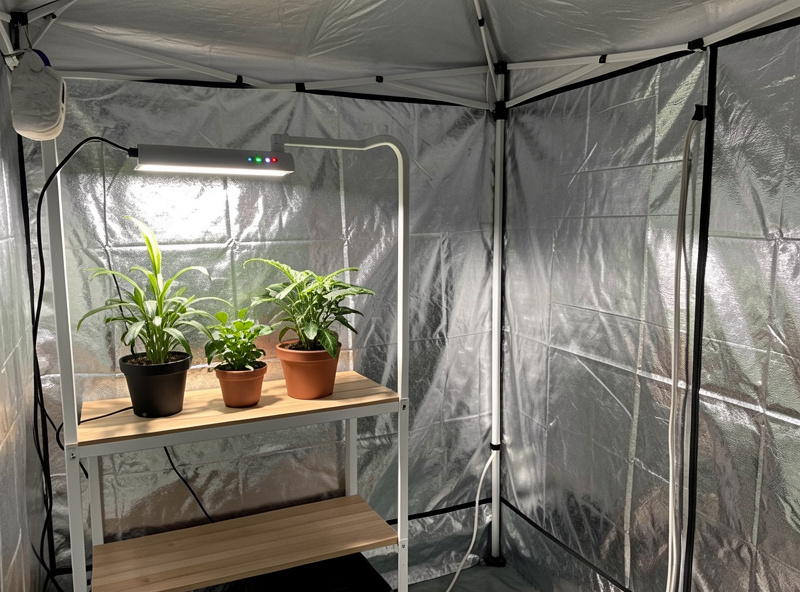
Quarantine: The Single Highest-Return Habit
Most pests enter on a plant. A nursery transplant, a supermarket herb, a cutting from a friend’s windowsill — any of them can carry a few founder aphids, spider-mite eggs, fungus-gnat larvae in the plug, or mildew spores waiting for humidity. Quarantine catches them before they reach the main grow.
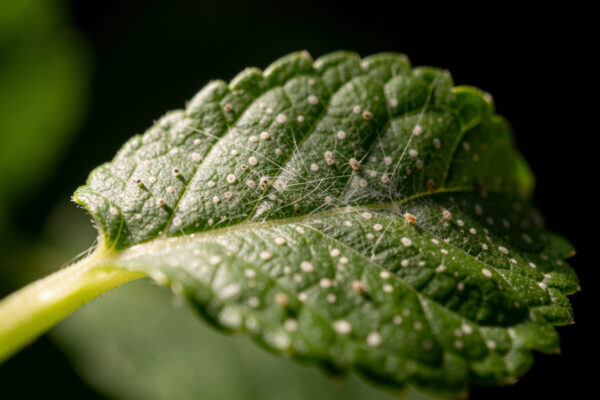
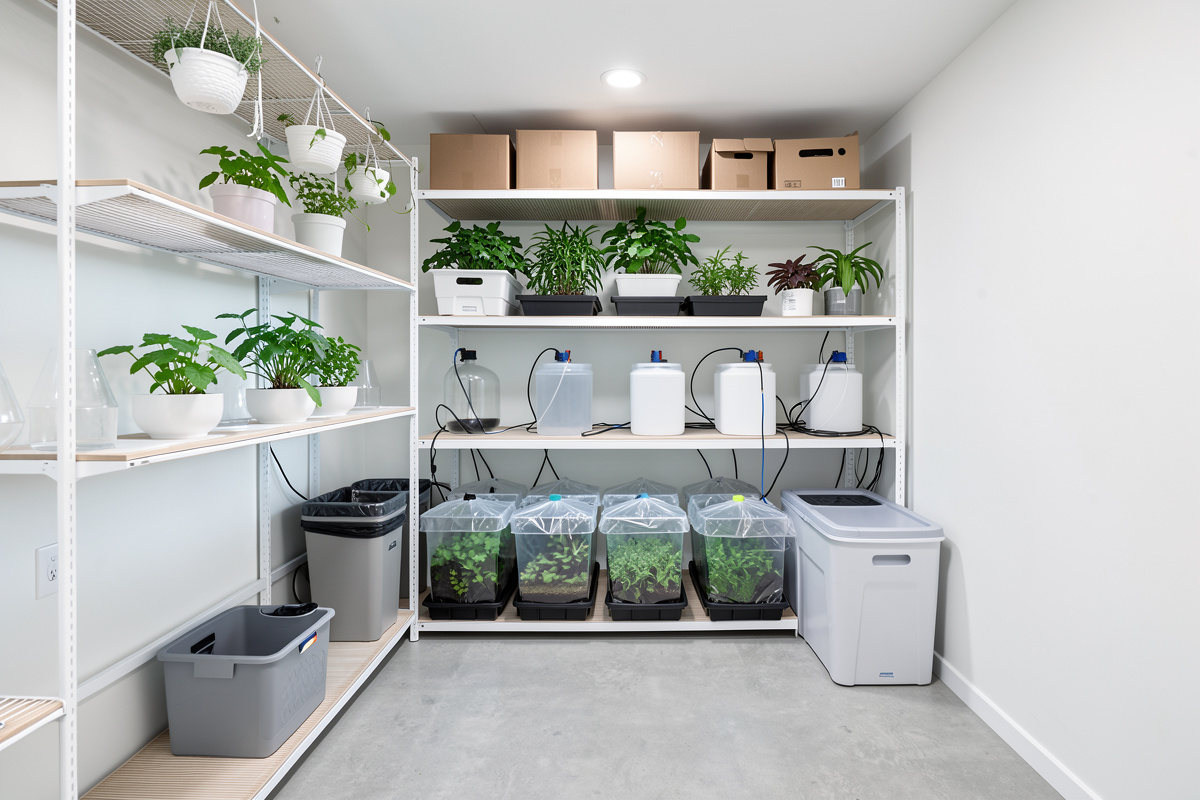
The protocol is simple and non-negotiable on my bench: every new plant spends two weeks physically separated from the main room — a different shelf, a different tent, ideally a different room — under its own light. During that time I inspect it under a magnifying loupe, paying special attention to leaf undersides and growing tips where pests hide, and watch for any sign of disease. Two weeks spans enough of a pest’s life cycle that a hidden population will reveal itself before the plant ever joins the others. If anything shows up, you treat it in isolation or cull it, having risked one plant instead of the whole room. This one habit prevents more outbreaks than every spray and predator combined.
The hardest part of quarantine is discipline, not technique. It is tempting to slot a beautiful new plant straight into the system, and almost every “it appeared out of nowhere” outbreak I have diagnosed skipped this step. Treat the quarantine bench as a permanent fixture of the grow, not an optional extra.
Never Bring the Outdoors In
A closely related rule: outdoor plants stay outdoors. An outdoor plant has spent its life accumulating spider mites, aphids, thrips and fungal spores that your sealed room has no defenses against. Bringing one in — to overwinter it, to propagate from it, because it looked sad on the patio — is the fastest way to seed your grow with everything at once. The same goes for cut flowers and produce from the garden. If you must propagate from outdoor stock, take a clean cutting, wash and inspect it thoroughly, and run it through full quarantine before it comes anywhere near the system. When in doubt, keep the two worlds separate.
Sanitation Between Crops
Pests and pathogens overwinter in the gunk left behind from the last crop. Biofilm in a reservoir, algae on a net pot, eggs in a corner of a tray, spores on a pair of scissors — all of it waits for the next planting. So the turnaround between crops is a biosecurity opportunity, not just a cleanup chore.
Between every crop I scrub and sterilize the reservoir, the net pots, the channels or buckets, and the tools, removing all organic residue first because biofilm shields pathogens from any sanitizer. The full reservoir routine is in how to clean and sterilize a hydroponic reservoir. Grow media gets the same scrutiny: reusable media like clay pebbles must be thoroughly cleaned and sterilized or replaced, and single-use media like rockwool is discarded rather than risked. Tools that move between plants — scissors, blades — get wiped down between uses during a crop, not just at the end, so you are not carrying a problem from one plant to the next on the blade.
| Biosecurity practice | When | What it stops |
|---|---|---|
| Quarantine new plants 2 weeks | Every new plant | Aphids, mites, gnats, disease on transplants |
| Loupe inspection | Before a plant enters the grow | Hidden eggs and early infestations |
| No outdoor plants indoors | Always | Mass pest and spore introduction |
| Sterilize res, pots, tools | Between crops + tools during | Overwintering pathogens and eggs |
| Screen air intakes | Setup / ongoing | Flying aphids, gnats, thrips |
| Dedicated shoes/clothing | Entering the room | Mites and spores carried in |
| Light-tight reservoirs/lids | Always | Algae that feeds gnats and crashes oxygen |
Control the Air and the Traffic
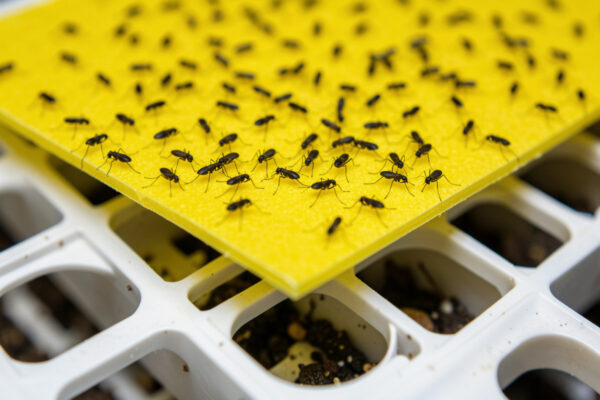
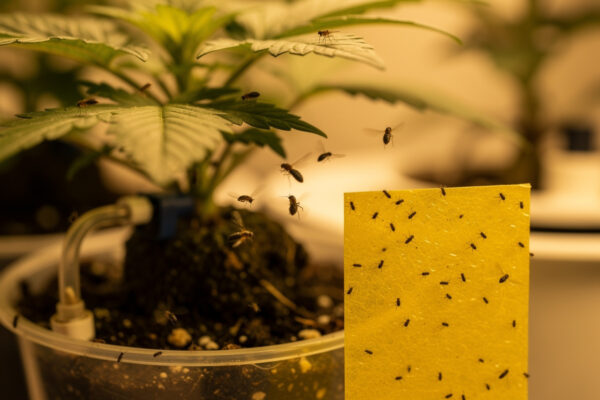
Plants are the main entry route, but not the only one. Winged aphids, fungus gnats and thrips can fly in through an open window or an unscreened intake vent, especially in summer. Fine mesh screening on intakes keeps the worst of them out while still letting air through. Inside, keep sticky traps up permanently near intakes and at canopy height as an early-warning grid that catches anything that does get in while the population is still small.
Then there is you. Spider mites and spores travel on hands, clothes and shoes — walk through an infested outdoor garden and you can carry mites straight into the room on your sleeve. The fixes are low-effort: keep a dedicated pair of shoes or sandals for the grow space (or go barefoot), wash your hands before handling plants, and avoid going from gardening outdoors straight into the room. If you tend an outdoor garden and an indoor grow, work the indoor room first, before you pick up outdoor pests, not after.
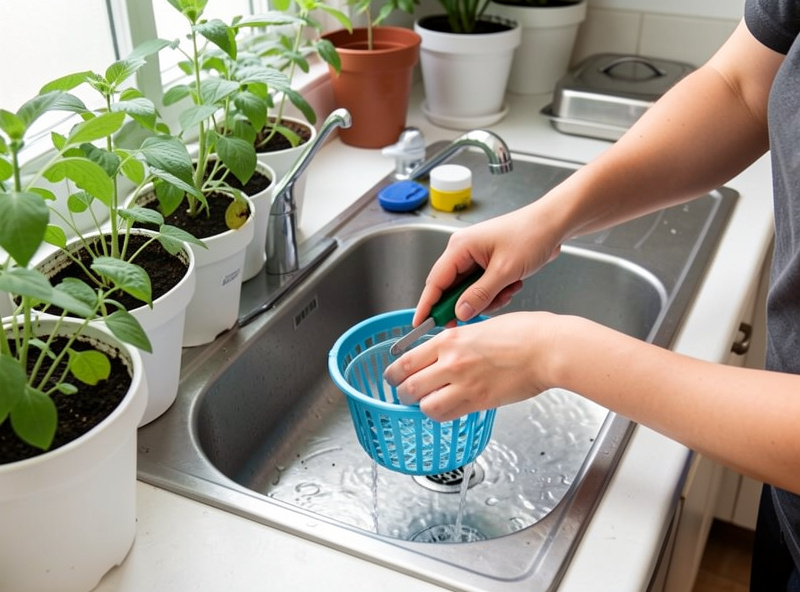
Handle Media and Water Like They Are Suspect
Incoming grow media deserves the same suspicion as a new plant. A bag of coco or peat left open in a damp shed can already hold fungus-gnat eggs; store media sealed and dry, and treat any questionable bag as suspect — a quick BTI drench (mosquito bits) on incoming media is cheap insurance, as covered in controlling fungus gnats. Light-tight reservoirs and sealing lids belong in the biosecurity conversation too: every gap where light hits nutrient water grows algae, and algae feeds gnat larvae and crashes your dissolved oxygen, which is one of the reasons I print my own light-sealing lids and collars to close those openings. Keeping the reservoir below 68°F (20°C), clean and oxygenated is itself a biosecurity measure, because it denies root rot the conditions it needs — the same logic as preventing root rot in hydroponics.
The Common Biosecurity Failures
Knowing the practices is easy; the failures are where rooms actually get infested, and they are almost always the same handful of lapses. The exciting new plant that goes straight into the system because quarantine felt like overkill — and brings spider-mite eggs with it. The overwintered patio plant carried inside for the winter, seeding the room with everything it accumulated all season. The reused media that skipped sterilization to save a few minutes, carrying last crop’s gnat eggs into the new one. The shared scissors moved from an infected plant to a healthy one without a wipe, spreading a problem you could have contained. And the unscreened summer window that let winged aphids drift in. Every one of these is a five-minute habit skipped once, and every one can cost a crop.
What they share is that they feel harmless in the moment. No single skipped quarantine obviously causes an outbreak, which is exactly why the discipline erodes — until the room is infested and you are trying to remember which shortcut let it in. The fix is to make the practices automatic enough that you do not have to decide each time. A grower who treats biosecurity as a fixed routine never has to weigh the risk of a single lapse, because there are no single lapses.
It also helps to scout for the consequences of any failure early. Keep reading your sticky traps and turning leaves over a couple of times a week, because even the best exclusion is not perfect, and the goal is to catch the rare breach while it is still a handful of individuals. Biosecurity and scouting are partners: exclusion keeps the numbers near zero, and scouting catches whatever slips past before it multiplies.
Make It a Routine, Not a Reaction
Biosecurity only works if it is habitual. None of these practices is difficult; the challenge is doing them every single time, including the day you bring home a plant you are excited about or you are in a hurry to flip a crop. Build the habits into fixed points: a permanent quarantine bench, a cleaning routine that is part of every crop turnaround, dedicated grow-room shoes by the door, sticky traps that stay up year-round. Done consistently, exclusion turns pest management from a series of emergencies into a quiet background process — and the fifteen minutes a week it costs is the best insurance in the hobby. The growers with the cleanest rooms are not lucky; they are the ones who guard the door so they rarely have to fight inside.
Frequently Asked Questions
What are the most important biosecurity practices for a hydroponic room?
Quarantine every new plant for two weeks away from the main grow, never bring outdoor plants inside, sterilize reservoirs, pots and tools between crops, screen air intakes, and be deliberate about what you carry in on shoes and clothing. Quarantine alone prevents more outbreaks than any treatment.
How long should I quarantine a new plant before adding it to my system?
Two weeks is the standard. That spans enough of a typical pest’s life cycle for a hidden population of aphids, spider mites or fungus gnats to reveal itself. Keep the plant physically separated under its own light and inspect it under a loupe, focusing on leaf undersides and growing tips, before it joins the grow.
Can I bring an outdoor plant into my indoor hydroponic grow?
It is the fastest way to introduce pests. Outdoor plants carry spider mites, aphids, thrips and fungal spores your sealed room has no defenses against. If you must propagate from outdoor stock, take a clean cutting, wash and inspect it thoroughly, and run it through full two-week quarantine first.
How do I sterilize hydroponic equipment between crops?
Remove all organic residue and biofilm first, since it shields pathogens from any sanitizer, then clean and sterilize the reservoir, net pots, channels and tools. Sterilize or replace reusable media like clay pebbles, and discard single-use media like rockwool. Wipe tools between plants during a crop too, not just at the end.
Do I really need to worry about carrying pests in on my clothes?
Yes. Spider mites and fungal spores travel easily on hands, clothes and shoes, so walking in from an infested outdoor garden can seed your room. Keep dedicated grow-room shoes or go barefoot, wash your hands before handling plants, and work your indoor room before the outdoor garden rather than after.