The right hydroponic growing media holds water and air in balance, stays inert enough to let your nutrient solution do the talking, and matches the system you run. Across the four methods I run side by side, coco coir, perlite, clay pebbles, and rockwool each win a different job — there is no universally best substrate, only the right one for your method, crop, and water habits.
I have packed net pots with every one of these on my bench, logged how each shifts EC and pH in the res, and watched which ones drown roots and which ones dry out a Kratky jar by lunch. This guide is the map: what each medium actually does, how it behaves once it is wet and feeding a plant, and how to pick without buying the marketing. The deep dives for each medium link out from here, so treat this as the hub and follow the threads.
What Growing Media Actually Does in Hydroponics
In soilless growing the medium is not food — it is a scaffold. Its only jobs are to anchor the root mass, hold a working ratio of water to air, and stay out of the chemistry so your nutrient solution is what the roots taste. The best media for hydroponics are the ones that do those three jobs and otherwise shut up. That is why inert materials dominate: they do not release their own minerals into the res and throw your EC pen a curveball.
The single number I care about most with any medium is its air-to-water ratio at field capacity — how much air the root zone keeps when the medium is fully wetted and drained. Rockwool can sit near 80% water and starve roots of oxygen if you over-water it. Clay pebbles hold maybe 10–15% water and dump the rest, which is why they pair with a pump that brings the solution back. Coco coir lands in the middle, which is exactly why it is the most forgiving choice for new growers. Get this ratio matched to your method and most “mystery” root problems disappear.
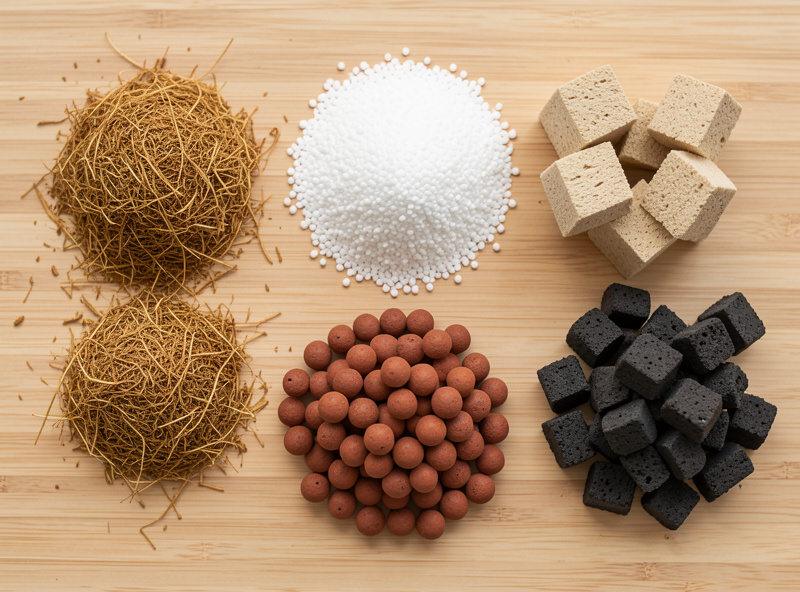
The Five Media I Keep on the Bench
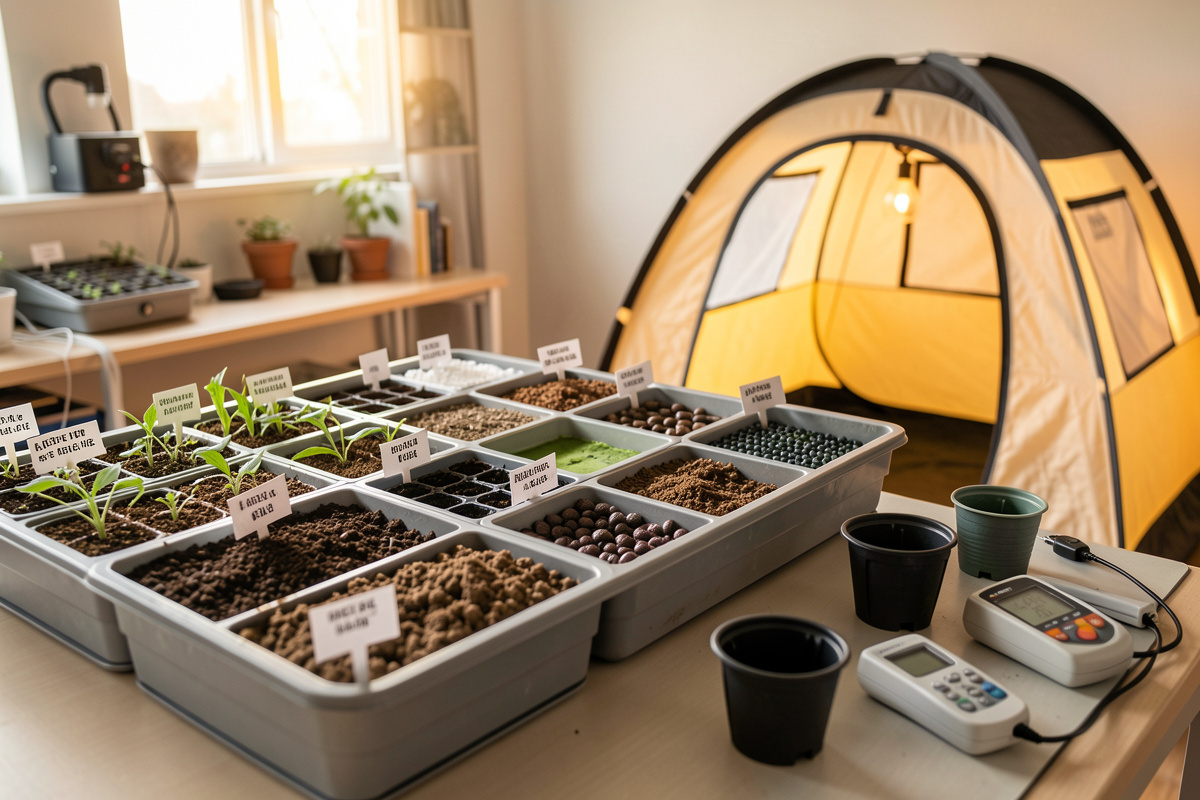
Walk into a hydro shop and the substrate wall looks overwhelming. It is not. There are really only a handful of materials that earn their place, and each one has a personality. Here is how I describe them after running them head to head on the same lettuce and basil with the same meters.
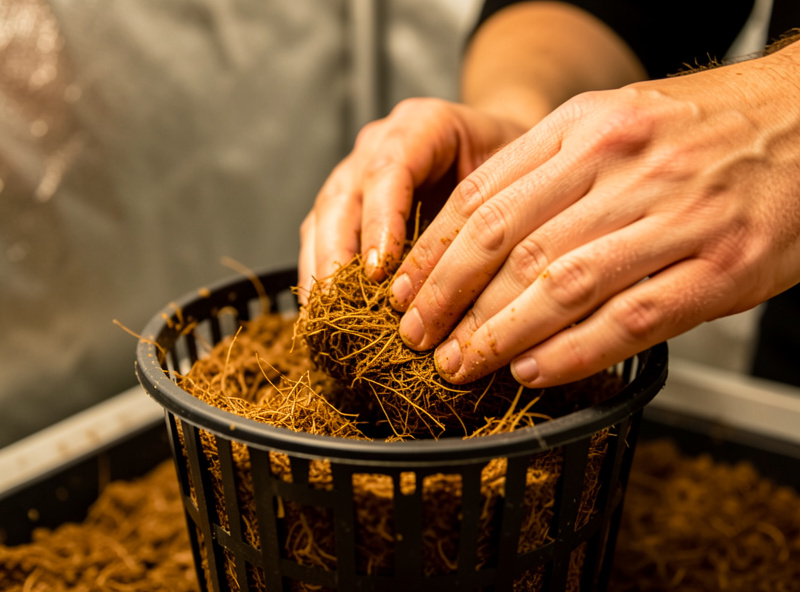
Coco coir is shredded coconut husk, and it is the closest thing to “soil that behaves” you will find. It holds water like a sponge, keeps decent air, and buffers pH swings gently — but it has a real chemical catch. Fresh coir is loaded with potassium and sodium and grabs calcium and magnesium out of your solution through cation exchange, which is why it has to be buffered before it touches a root. I cover that whole process in the guide to buffering coco coir, and the medium itself in the coco coir for hydroponics guide.
Perlite is volcanic glass popped like popcorn into white, lightweight granules. It is bone-inert, sterile, and all about air. It holds almost no water and has zero cation exchange, so it never touches your chemistry. I use it straight in some net pots and as the “lung” mixed into coco. The full rundown lives in perlite in hydroponics.
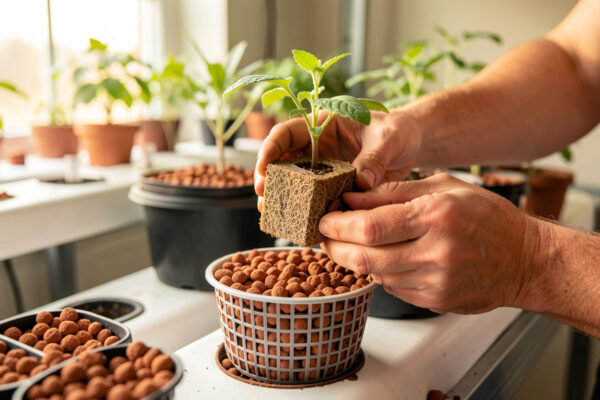
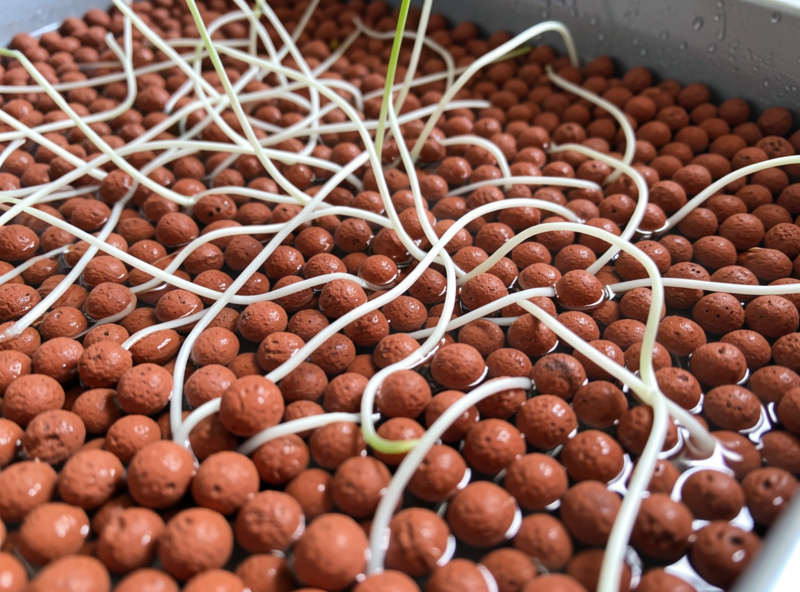
Clay pebbles — hydroton, LECA, expanded clay — are fired clay balls full of air pockets. They drain hard, hold little water, never break down, and rinse clean for reuse over and over. They are my default for ebb-and-flow beds and Dutch buckets where a pump does the watering.
Rockwool is spun basalt and chalk — mineral wool. It is the propagation king: cubes and slabs that wick water beautifully and hold a seedling rooting like nothing else. But it ships at a wild pH around 7.5–8.5 and has to be conditioned before use, and it holds so much water that it punishes over-watering. See the rockwool starter cubes guide.
Expanded clay versus the rest is the comparison new growers ask about most, usually framed as hydroton clay pebbles vs rockwool — two media that sit at opposite ends of the water-holding spectrum.
Side-by-Side: How the Media Compare
This is the table I wish I had when I started. Every value here is how the medium behaves in a working hydro system, not a lab datasheet. Water retention and aeration are relative across these five; pH note is what the raw medium does to your res before you correct it.
| Medium | Water Holding | Aeration | Reusable | Raw pH Effect | Best System |
|---|---|---|---|---|---|
| Coco coir | High | Medium | 1–2 cycles | Neutral, but strips CalMag | Drip, hand-water, run-to-waste |
| Perlite | Very low | Very high | Yes, many cycles | Inert / neutral | Net pots, amendment, Dutch bucket |
| Clay pebbles | Low | High | Yes, indefinitely | Inert after rinse | Ebb-and-flow, Dutch bucket, net pots |
| Rockwool | Very high | Low–medium | No (single use) | High, ~7.5–8.5 raw | Propagation, slab-grown crops |
| Coco/perlite mix | Medium | High | 1–2 cycles | Neutral, strips CalMag | Most versatile all-rounder |
If you only remember one row, make it the last one. A 70/30 coco-perlite blend is the medium I hand to anyone who asks what to start with, because it forgives both over- and under-watering and works in nearly every system that is not pure water culture. The full breakdown of trade-offs lives in the hydroponic growing media comparison.
Matching Media to Your System
The mistake I see most often is picking a medium because a YouTube grower liked it, then forcing it into the wrong system. Medium and method are a pair. Here is how they actually fit together across the systems I run.
Deep water culture barely needs a medium at all — the roots live in oxygenated solution, so all the net pot does is hold the plant up. A handful of clay pebbles or a single rockwool cube does the job. If you are building a DWC system, do not overthink the substrate; spend that attention on your air stone and dissolved oxygen instead.
Ebb-and-flow is where clay pebbles shine. The bed floods, the pebbles wet briefly, then drain and gulp air on every cycle. I run a hydroton bed for fruiting crops for exactly this reason — you can read the system build in ebb-and-flow hydroponics.
Kratky and other passive systems want a medium that wicks but does not waterlog. A rockwool cube nested in clay pebbles is my standard for the Kratky method, because the cube keeps the stem zone moist while the pebbles hold the air gap as the water level drops.
NFT channels grow plants in a thin film of moving solution, so the medium just supports the seedling until roots hit the gully. Rockwool cubes or small net pots of clay pebbles both work in an NFT system. Dutch buckets are happiest with clay pebbles or a coco-perlite blend — see Dutch bucket hydroponics. If you are still choosing a method, my guide to choosing a hydroponic system and the broader hydroponic systems guide are the place to start, and absolute beginners should read hydroponics for beginners first.
The Chemistry: Why Inert Wins
Here is the part most beginner content skips, and it is the whole game. Your nutrient solution is mixed to a target EC — I mix to a number, never by feel — and dialed to a target pH, usually 5.8–6.2 for most crops. A good medium leaves both of those alone. A bad one fights you.
Rockwool fresh out of the bag will drag your root-zone pH up toward 8 until you condition it, which locks out iron and manganese and yellows new growth fast. Coco coir does the opposite kind of mischief: it is pH-friendly but chemically greedy, pulling calcium and magnesium out of solution for the first few weeks until its exchange sites are saturated — that is exactly why buffered coir and extra CalMag in your nutrients go together. Perlite and rinsed clay pebbles do none of this; they are inert, which is why I lean on them when I want my EC meter readings to mean exactly what they say. Keep a bottle of pH Down on the bench regardless of medium — every res drifts.
As an Amazon Associate I earn from qualifying purchases. If you want to start a media shelf, a bag of expanded clay pebbles and a pack of rockwool starter cubes cover propagation and most systems between them.
Reusing and Sterilizing Media
Media cost adds up, and some of these materials last for years if you treat them right. Clay pebbles are nearly immortal — I rinse, sterilize, and re-bed them indefinitely. Perlite reuses well too. Coco gets one or two more grows if it has not compacted. Rockwool is the one I treat as single-use, because spent cubes hold old root mass and stay too wet to trust.
My reset on reusable media is a rinse to clear debris, then a soak in 3% hydrogen peroxide at roughly 3 mL per litre to knock back any lingering pathogens, then a clean-water rinse before the next grow. That is the same H2O2 ratio I use to reset a res after root rot. The full process — what is worth saving and what to bin — is in reusing hydroponic growing media, and keeping a clean reservoir is the other half of the same habit.
My Starting Recommendations by Goal
Strip away the options and most growers fall into one of a few buckets. If you want leafy greens with the least fuss, run a coco-perlite blend or clay pebbles in a forgiving system. If you are starting seeds and clones, rockwool cubes are worth their single-use cost — pair them with the rockwool seed-starting walkthrough and the broader seed-starting guide. If you are running fruiting crops in ebb-and-flow or Dutch buckets, clay pebbles. And if you want one bag to cover almost everything, buffered coco with perlite mixed in.
Whatever you pick, the medium is only half the system. It works with your reservoir, your light, and your meters — the medium decides how often you water, but your reservoir setup and nutrient discipline decide whether the plant thrives. Pick the substrate that suits how often you actually want to intervene, and you will spend more time growing and less time troubleshooting.
Water-to-Air Ratio: The Number That Decides Everything
Every watering question in hydroponics is really a question about how much air the medium keeps when it is wet. A medium that holds too much water suffocates roots; one that holds too little leaves them thirsty between cycles. The medium you choose sets your watering frequency before you ever plug in a pump, and getting that pairing right is the difference between a rig that runs itself and one that needs babysitting.
Rockwool and coco sit at the wet end, so they want fewer, slower waterings — a coco bed might take one or two feeds a day, and an over-eager timer is how people drown rockwool seedlings in their first week. Clay pebbles and perlite sit at the dry end, holding so little water that they want frequent, short cycles — an ebb-and-flow bed of hydroton might flood four to twelve times a day depending on plant size and room temperature. When I bring a new medium onto the bench, the first thing I do is wet it, let it drain, and feel how heavy it stays; that tells me more about my watering schedule than any bag instruction. The practical rule I follow: pick the medium first, then build the watering schedule around its dry-down, never the other way round.
Five Media Mistakes That Cost Me Crops
I have made every one of these, and most of them looked fine for a week before the plant told me otherwise. They are worth flagging because they are the failures that send new growers back to soil convinced hydroponics is fussy — when really the medium was just being used wrong.
Over-watering rockwool is the classic. The cube looks dry on top while it is a swamp inside, and the roots brown out from lack of oxygen. The fix is to let it dry further than feels comfortable between feeds. Skipping the pre-rinse on clay pebbles dumps a cloud of red clay dust into your res that clogs pumps and coats roots — I rinse pebbles until the water runs clear, every time. Running coco unbuffered gives you textbook calcium and magnesium deficiency two weeks in, with rusty spotting on new leaves, because the medium is eating your CalMag faster than you feed it. Letting perlite dust into a water-culture system irritates fine root hairs; rinse it first. And reusing rockwool to save a few coins reliably costs more than it saves, because the old root mass holds pathogens and the cube no longer drains right. Avoid those five and your media will behave.
Growing Media in a Cold-Climate Indoor Grow
I grow indoors in Sweden, where winter daylight is short and my grow room runs cooler than a warm-climate tent, and that changes how media behaves. Cold roots and low light mean plants transpire slowly, so a water-heavy medium that is perfect in a hot summer tent will stay soggy for days in a cold January room. In winter I lean toward more aeration — more perlite in the blend, or clay pebbles outright — precisely because slow uptake turns a wet medium into a root-rot risk.
Reservoir and root-zone temperature matter here as much as the medium itself. I keep my res at or below 68°F (20°C); above about 72°F (22°C) dissolved oxygen drops and Pythium gets aggressive, and a waterlogged medium makes that worse. This is the kind of detail warm-climate channels never have to solve, and it is why I treat media choice as a seasonal decision rather than a one-time purchase. The same control-loop thinking I apply to a smart-home rig applies here: the medium is one variable, but temperature, light, and watering frequency all move together, and the medium you pick should suit the rest of the loop you are running.
Frequently Asked Questions
What is the best growing medium for hydroponics?
There is no single best medium. Clay pebbles win for ebb-and-flow and Dutch buckets, rockwool wins for propagation, and a 70/30 coco-perlite blend is the most forgiving all-rounder for leafy greens. Match the medium to your system and watering habits.
Do I need growing media at all in hydroponics?
Water-culture systems like DWC need only a token amount to hold the plant up, since roots live in oxygenated solution. Most other systems need a medium to hold the water-to-air balance, support the root mass, and keep stems upright between waterings.
Which hydroponic media are reusable?
Clay pebbles are reusable almost indefinitely after a rinse and sterilize. Perlite reuses well, and coco coir is good for one or two more grows. Rockwool is best treated as single-use because spent cubes hold old root mass and stay waterlogged.
Why does coco coir need to be buffered?
Fresh coco holds potassium and sodium and grabs calcium and magnesium out of your nutrient solution through cation exchange. Buffering with a calcium-magnesium solution saturates those sites first, so the medium stops stripping CalMag from your feed and causing deficiencies.
What pH should my growing medium be?
Aim for a root-zone pH of 5.8 to 6.2 for most crops. Inert media like perlite and rinsed clay pebbles do not affect pH. Rockwool ships at pH 7.5 to 8.5 and must be conditioned to 5.5 before use, or it will lock out iron and yellow new growth.
Can I mix different growing media together?
Yes, and blending is often smarter than running one alone. A 70/30 coco-perlite mix combines coco’s water retention with perlite’s aeration, giving you a medium that forgives both over- and under-watering across nearly every system except pure water culture.