Both hydroponics and soil can grow great lettuce indoors — but they deliver different results at different costs. Hydroponic lettuce grows 30-50% faster and yields more per square foot. Soil-grown lettuce is simpler, cheaper to start, and more forgiving of mistakes. This guide compares every factor that matters — growth speed, taste, cost, maintenance, and difficulty — so you can choose the method that fits your goals and experience level.
The Core Difference: How Each Method Works
Before comparing results, it helps to understand the fundamental difference between these two approaches.
Hydroponic Lettuce
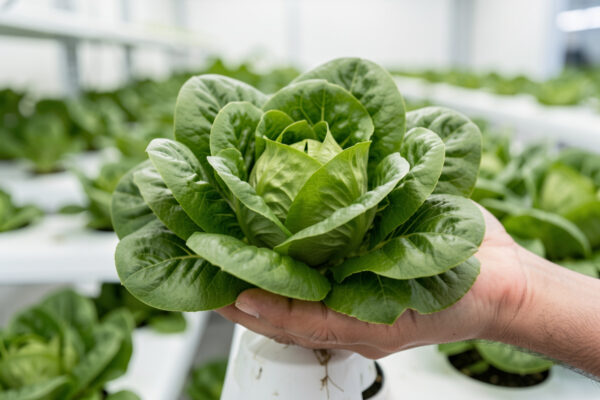
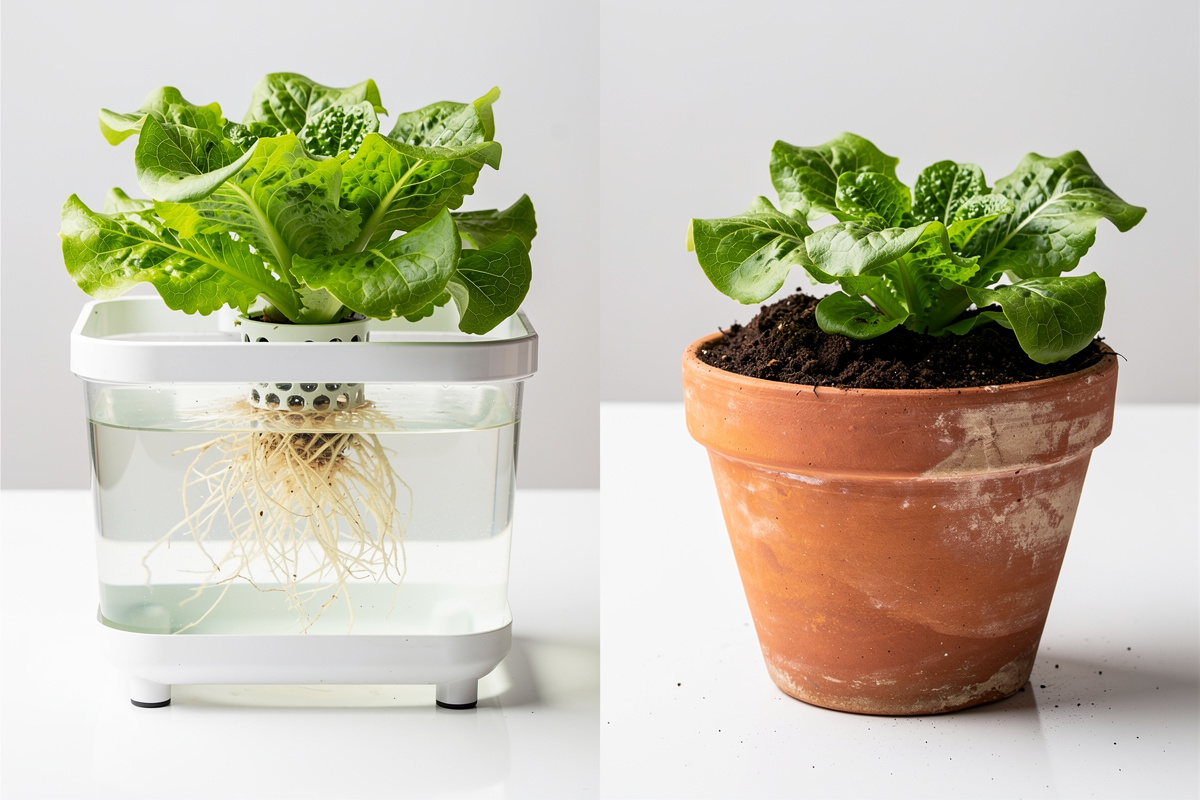
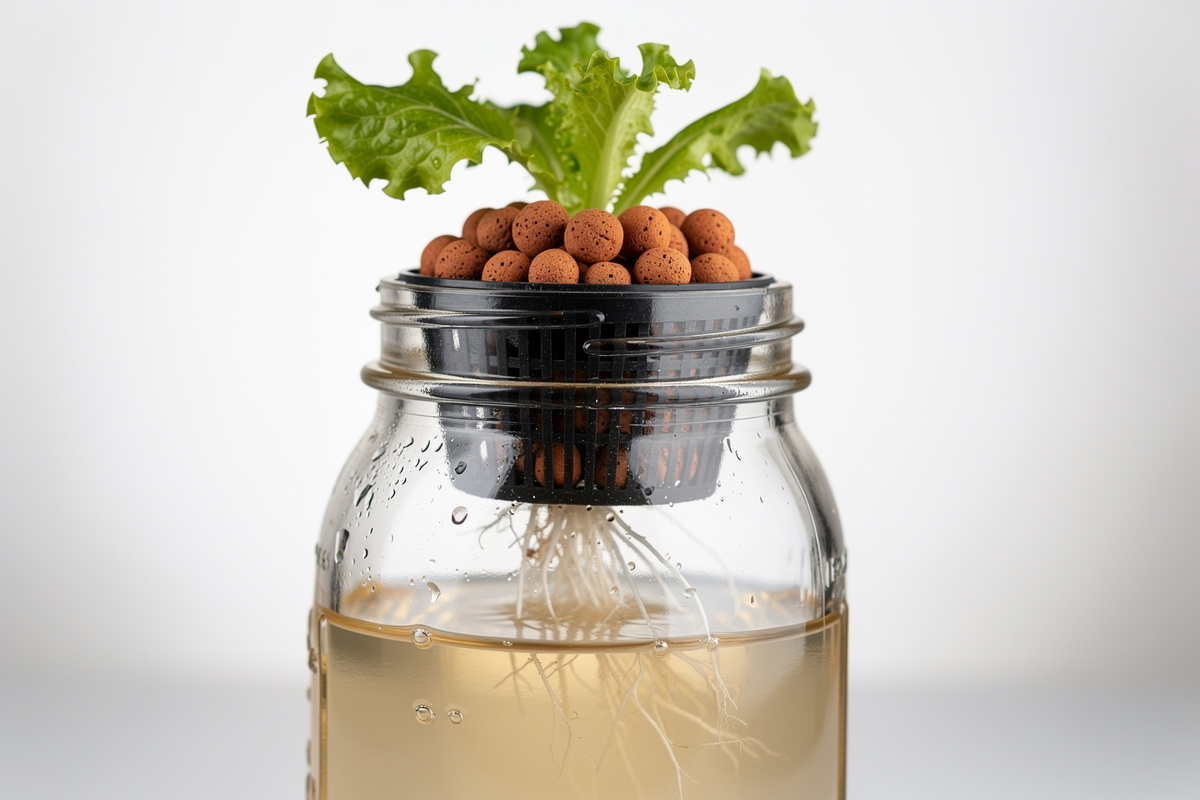
Hydroponic growing replaces soil with nutrient-rich water. Lettuce roots sit directly in a water solution containing dissolved minerals — nitrogen, phosphorus, potassium, calcium, and trace elements. The plant absorbs exactly what it needs without spending energy searching through soil for nutrients.
Common hydroponic systems for lettuce include:
- Kratky method: The simplest — a jar or container filled with nutrient solution, no pumps or electricity needed. The plant sits in a net pot with roots dangling in the water
- Deep Water Culture (DWC): Similar to Kratky but adds an air pump to oxygenate the water, boosting growth speed
- NFT (Nutrient Film Technique): A thin stream of nutrient water flows past the roots in a channel. More complex but very efficient for multiple plants
Soil-Grown Lettuce
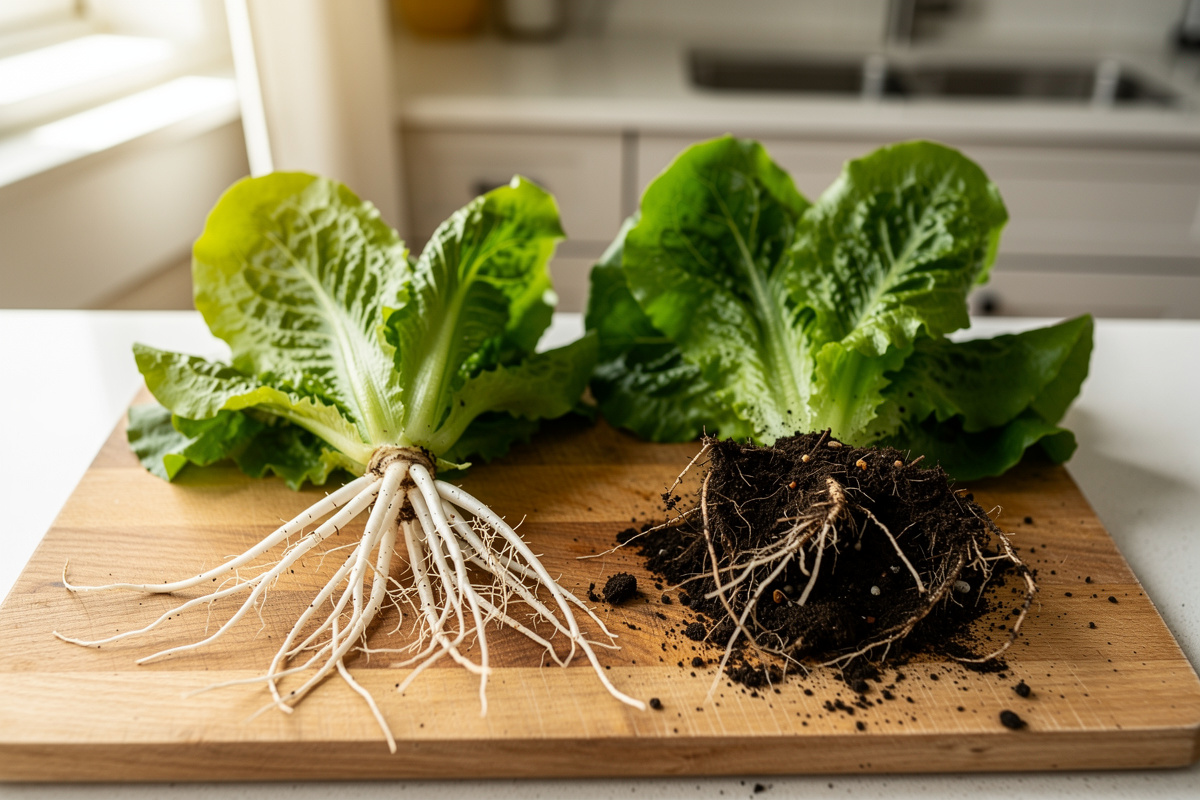
The traditional method — lettuce grows in potting mix inside containers. Roots extract water and nutrients from the soil. You add fertilizer periodically to replenish what the plant uses. This is the same approach people have used for thousands of years, scaled down to fit a windowsill.
If you prefer the simplicity of growing lettuce in containers with regular potting soil, this beginner guide covers everything you need to get started.
Growth Speed: Hydroponics Wins
This is where hydroponics shows its biggest advantage. Lettuce grown hydroponically matures 30-50% faster than soil-grown lettuce (saferbrand.com) because roots have direct, constant access to nutrients and water without expending energy searching for them. I’ve run butterhead side by side in a soil pot and a DWC bucket on the same shelf under the same light, and the hydro head is reliably ready to cut a week or more before the soil one.
| Lettuce Type | Hydroponic Harvest | Soil Harvest | Speed Advantage |
|---|---|---|---|
| Loose-leaf (baby greens) | 18-21 days | 25-30 days | Hydro ~30% faster |
| Butterhead | 35-40 days | 50-60 days | Hydro ~35% faster |
| Romaine (mini) | 40-50 days | 60-75 days | Hydro ~35% faster |
Hydroponic lettuce also produces more harvests per year. With a DWC system and grow lights, you can cycle through 10-12 plantings annually versus 6-8 with soil containers.
Why the speed difference? In soil, roots must physically grow toward water and nutrient pockets, and compete with the soil microbiome for resources. In hydroponics, dissolved nutrients are immediately available at the root surface. The plant redirects energy from root expansion into leaf production — which is exactly what you want from lettuce.
Yield: Hydroponics Produces More Per Plant
Hydroponic lettuce plants typically produce 20-30% more leaf mass than soil-grown plants of the same variety, consistent with the 20-50% yield range reported for hydroponic versus soil growing (greengenius.com.au). The leaves tend to be larger, more uniform, and denser because the plant receives perfectly balanced nutrition throughout its life.
Hydroponics also allows tighter spacing since plants are not competing for soil nutrients. In a DWC system, you can grow lettuce heads 6 inches apart versus 8-10 inches in soil containers. This means more plants per square foot of growing space — a significant advantage for apartment growers.
Taste and Nutrition: Surprisingly Close
This is the question most people ask first, and the answer may surprise you: properly grown hydroponic and soil lettuce taste nearly identical.
Taste
In blind taste tests, most people cannot reliably distinguish hydroponic lettuce from soil-grown lettuce of the same variety. Both methods produce crisp, fresh, mild-flavored leaves when grown under good conditions.
The differences that do exist are subtle:
- Hydroponic lettuce tends to be slightly more tender and uniform in texture. Some growers report a marginally cleaner, milder taste
- Soil-grown lettuce can develop slightly more complex flavor, especially in mineral-rich potting mixes. Some growers describe it as “earthier” in a positive way
The variety you choose matters far more than the growing method. A flavorful butterhead like Buttercrunch will taste great whether grown in water or soil.
Nutrition
Nutritional studies show that hydroponic and soil-grown lettuce contain comparable levels of vitamins and minerals. The key variable is the nutrient solution or fertilizer — not the growing medium itself. A well-formulated hydroponic nutrient solution delivers the same minerals as quality potting soil with fertilizer.
One nutritional advantage of growing your own lettuce — regardless of method — is freshness. Research on post-harvest storage of salad leaves shows ascorbate (vitamin C) can drop substantially within about a week of harvest, with losses varying by variety and storage conditions (peer-reviewed study). When you harvest and eat the same day, you get peak nutrition from either method.
Startup Cost: Soil Is Cheaper
Getting started with soil containers costs significantly less than setting up a hydroponic system.
| Item | Soil Method | Hydroponic (Kratky) | Hydroponic (DWC) |
|---|---|---|---|
| Container/system | $3-10 (pot) | $5-15 (jars + net pots) | $25-50 (tub + net pots) |
| Growing medium | $8-12 (potting mix) | $8-10 (clay pebbles) | $8-10 (clay pebbles) |
| Nutrients | $5-10 (liquid fertilizer) | $12-20 (hydro nutrients) | $12-20 (hydro nutrients) |
| Air pump | Not needed | Not needed | $10-20 |
| pH test kit | Not needed | $8-12 | $8-12 |
| Seeds | $2-3 | $2-3 | $2-3 |
| Total startup | $18-35 | $35-60 | $65-115 |
Soil growing costs roughly half of even the simplest hydroponic setup. The Kratky method is the cheapest hydroponic option — essentially just jars with nutrient water — but still costs more than pots with potting mix.
Ongoing Costs
Ongoing expenses are closer between the methods:
- Soil: Replace potting mix every 2-3 plantings ($3-5 per cycle), occasional liquid fertilizer ($1-2 per month)
- Hydroponics: Nutrient solution ($2-4 per month), occasional pH adjusters ($1-2 per month), replace clay pebbles rarely
Over a year of continuous growing, ongoing costs are roughly $30-50 for soil versus $40-60 for hydroponics. The gap narrows over time because the initial investment in hydroponic supplies lasts through many growing cycles.
Maintenance and Daily Effort
Both methods require regular attention, but the type of work differs.
Soil Maintenance
- Daily: Check soil moisture (finger test), water when top inch is dry
- Weekly: Inspect for pests, rotate container for even light exposure
- Every 2 weeks: Feed with diluted liquid fertilizer
- Between plantings: Dump old soil, refill with fresh potting mix
Time commitment: 2-3 minutes per day, 10 minutes between plantings
Hydroponic Maintenance
- Daily: Check water level (top up as needed)
- Every 3-5 days: Test and adjust pH (should be 5.5-6.5 for lettuce)
- Weekly: Check nutrient concentration (EC/TDS meter or by schedule), inspect roots for discoloration
- Between plantings: Dump solution, clean reservoir, sanitize net pots, mix fresh nutrients
Time commitment: 3-5 minutes per day, 20-30 minutes between plantings
That daily few minutes is really just the EC pen and pH pen coming out — the same habit I use across every res I run, lettuce or otherwise. It stops being a chore once it’s a routine instead of a decision.
The Verdict on Maintenance
Soil is simpler. You water when dry and feed occasionally. Hydroponics requires monitoring pH and nutrient levels — not difficult once you learn the routine, but it introduces variables that soil handles naturally. If you forget to check pH in a hydroponic system, nutrient lockout can stunt growth within days. If you forget to fertilize soil-grown lettuce for a week, it barely notices.
Difficulty Level: Soil Is More Forgiving
This is the most important factor for beginners deciding between the two methods.
Why Soil Is Easier
- Buffering capacity: Soil acts as a buffer against pH swings, overwatering, and over-fertilizing. Small mistakes get absorbed rather than immediately damaging roots
- No equipment to learn: You water, you feed, you harvest. No pH meters, EC meters, or nutrient mixing ratios to understand
- Familiar process: Most people intuitively understand how to water a plant in a pot. Hydroponics introduces unfamiliar concepts
- Failure is gentle: Under-fertilized soil lettuce grows slowly but survives. An empty hydroponic reservoir kills plants in hours
Where Hydroponics Gets Tricky
- pH management: Hydroponic lettuce needs pH between 5.5-6.5. Outside this range, nutrients become unavailable even when present in the water. You must test and adjust regularly
- Root rot risk: Warm, stagnant nutrient water breeds pathogens. DWC systems need adequate aeration. Kratky systems need the air gap maintained correctly
- Nutrient mixing: Mixing concentrated hydroponic nutrients at the correct ratio takes practice. Too strong burns roots, too weak starves plants
- Algae growth: Light hitting nutrient solution causes algae blooms that compete with plants and clog systems. Reservoirs must stay light-proof
None of these challenges are insurmountable — thousands of beginners learn hydroponics every year. But they represent a steeper learning curve compared to putting seeds in potting mix and watering them.
Space Efficiency: Hydroponics Wins
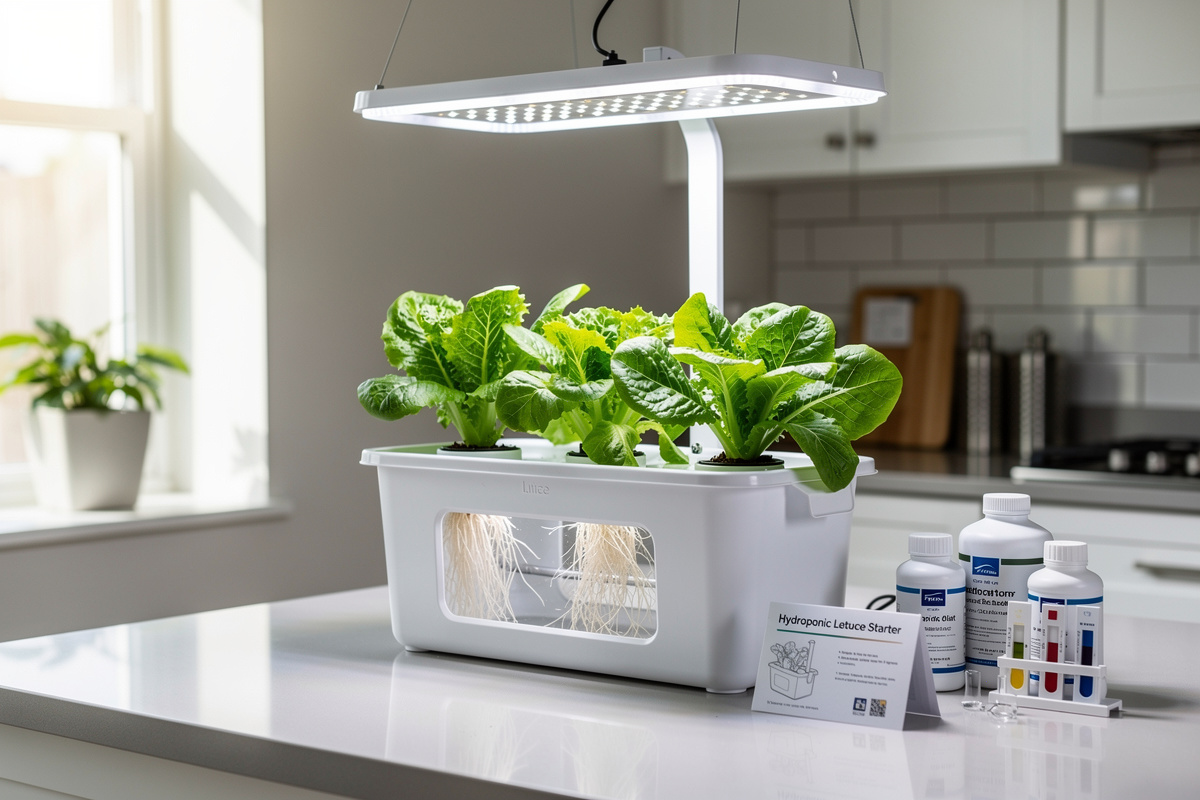
Hydroponics uses space more efficiently than soil containers:
- Tighter spacing: Hydroponic lettuce can grow 6 inches apart versus 8-10 inches in soil
- Vertical stacking: Hydroponic systems can be stacked in tiers more easily than heavy soil containers
- No soil weight: A 5-gallon DWC system weighs less than a 5-gallon pot full of wet soil, making shelf-mounted setups safer
For growers with very limited space — a single shelf or small countertop — hydroponics fits more plants in the same footprint.
Which Method Should You Choose?
Choose Soil If:
- You are a complete beginner who has never grown anything
- You want the lowest startup cost (under $25)
- You prefer simplicity over maximum speed
- You do not want to buy pH meters or mix nutrient solutions
- You want a forgiving system that tolerates mistakes
- You are growing lettuce casually alongside other windowsill plants
Choose Hydroponics If:
- You want the fastest possible harvest times
- You plan to grow lettuce continuously year-round
- You enjoy the technical side of growing and optimizing systems
- You have limited space and want maximum yield per square foot
- You have some growing experience and want a new challenge
- You are interested in scaling up to more plants or other hydroponic crops
Our Recommendation
Start with soil, upgrade to hydroponics later. Soil teaches you the fundamentals of plant care — reading leaf color, understanding light needs, managing watering — without the added complexity of pH and nutrient management. Once you have grown a few successful soil batches and understand how lettuce behaves, transitioning to hydroponics is straightforward because you already know what healthy lettuce looks like.
Many experienced hydroponic growers started exactly this way. The skills transfer directly — you simply swap the growing medium and add nutrient monitoring to your routine.
That’s roughly the order I’d tell a friend to go in, too — soil first to learn what a healthy lettuce leaf actually looks like, then move to a Kratky jar or bucket once you’ve got that eye. Skipping straight to hydro isn’t wrong, it just means you’re troubleshooting two new things — the method and the plant — at once instead of one.
Side-by-Side Summary
| Factor | Hydroponic | Soil | Winner |
|---|---|---|---|
| Growth speed | 18-40 days | 25-60 days | Hydroponic |
| Yield per plant | 20-30% more | Baseline | Hydroponic |
| Taste | Clean, mild | Slightly earthier | Tie |
| Nutrition | Comparable | Comparable | Tie |
| Startup cost | $35-115 | $18-35 | Soil |
| Daily effort | 3-5 min | 2-3 min | Soil |
| Difficulty | Moderate | Easy | Soil |
| Space efficiency | More plants/sqft | Standard spacing | Hydroponic |
| Forgiveness | Low tolerance | High tolerance | Soil |
| Scalability | Excellent | Limited | Hydroponic |
Frequently Asked Questions
Does hydroponic lettuce grow faster than soil lettuce?
Yes, hydroponic lettuce matures 30-50% faster than soil-grown lettuce. Butterhead lettuce reaches harvest in 30-35 days hydroponically versus 45-55 days in soil. The speed advantage comes from direct nutrient delivery to roots, eliminating the energy plants spend searching for food in soil.
Does hydroponic lettuce taste different from soil-grown?
Hydroponic lettuce tends to be crisper and milder in flavor, while soil-grown lettuce often has slightly more complex, earthy notes. Most people cannot tell the difference in blind taste tests. Hydroponic lettuce has the advantage of being cleaner — no soil residue or grit to wash off before eating.
Is hydroponic lettuce more nutritious than soil-grown?
Nutritional content is comparable between methods when both are well-managed. Hydroponic lettuce can have higher vitamin C and folate levels due to controlled nutrient delivery. Soil-grown lettuce may contain more trace minerals from complex soil biology. Neither method is definitively superior nutritionally.
What is the cheapest way to grow hydroponic lettuce?
The Kratky method is the cheapest hydroponic setup at $10-20 total. You need a mason jar or food container, a net pot ($2-3), clay pebbles ($5), hydroponic nutrients ($5-10), and seeds ($2). No pump, no electricity, no timer required. Lettuce matures in 30-40 days using this method.
Can I grow lettuce hydroponically without grow lights?
Yes, if you have a south-facing window providing 6+ hours of direct sunlight daily. Lettuce is one of the lowest-light crops and tolerates partial shade. Without adequate natural light, a basic 15-25 watt LED panel ($20-30) running 12-14 hours daily is sufficient for healthy lettuce growth.
Which lettuce varieties grow best in hydroponics?
Butterhead varieties (Boston, Bibb, Buttercrunch) are the best for hydroponics — they grow fast, tolerate pH fluctuations, and form compact heads. Looseleaf varieties (Salad Bowl, Black Seeded Simpson) are equally easy and allow continuous harvest by picking outer leaves. Avoid iceberg lettuce — it is slow and demanding.
Related Articles
- Complete Guide to Hydroponic Plant Growing — Master plant selection, nutrient schedules, and harvest timing for all hydroponic crops
- Hydroponics for Beginners
- Hydroponic Systems Explained
- DIY Hydroponics on a Budget
- Hydroponic Tomatoes vs Soil
- Hydroponic Herbs vs Soil