This is the failure mode that catches careful growers, not careless ones. You mix a perfect reservoir, the EC reads dead-on, the plants look great — and a week later a leaf is tip-burning and your pen reads high. You did not over-feed. The water left and the salts stayed. That slow climb is EC drift, and managing it correctly is the difference between a reservoir that holds steady and one that quietly poisons your plants between water changes.
Topping off sounds trivial — add water when the level drops — but how you do it decides whether your EC stays flat or creeps up day after day. On my bench I treat top-off water and nutrient water as two completely different jobs, and that one habit prevents most slow-drift disasters. Here is exactly how reservoir top-off and EC drift work, and how I manage them.
What Is EC Drift in a Hydroponic Reservoir?
EC drift is the steady rise in nutrient concentration that happens as water evaporates and plants transpire while most dissolved salts stay behind. The water volume drops but the salt load barely changes, so electrical conductivity climbs over days. It is normal, predictable, and managed by topping off with plain water — not more nutrients.
Picture the reservoir as a pot of salty water on a low simmer. As water leaves through evaporation and the plants drinking and transpiring, the salts it carried mostly stay in the tank. The remaining solution gets more concentrated, so your EC pen reads higher even though you added nothing. Plants do take up some nutrients, which pulls the other way, but in most home setups evaporation outruns uptake and the net effect is upward drift. Recognizing this as a water problem, not a feeding problem, is the whole game.
How to Top Off a Reservoir Correctly
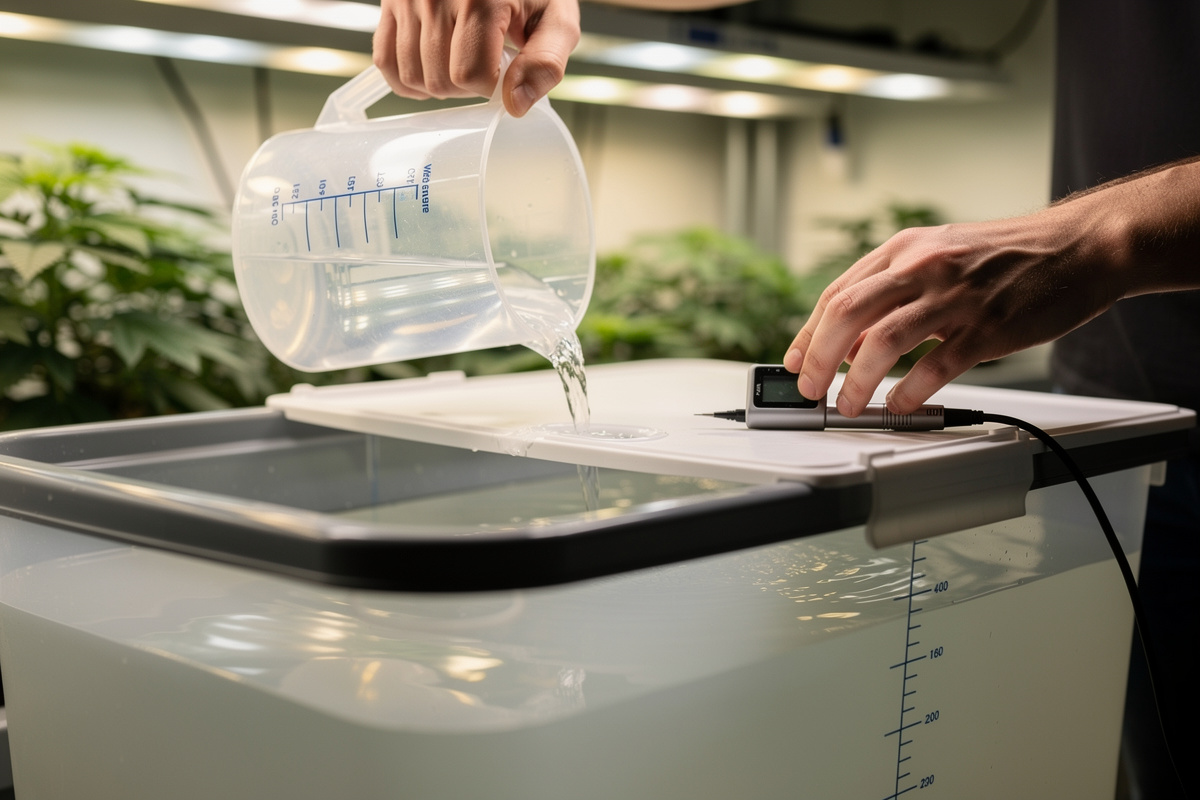
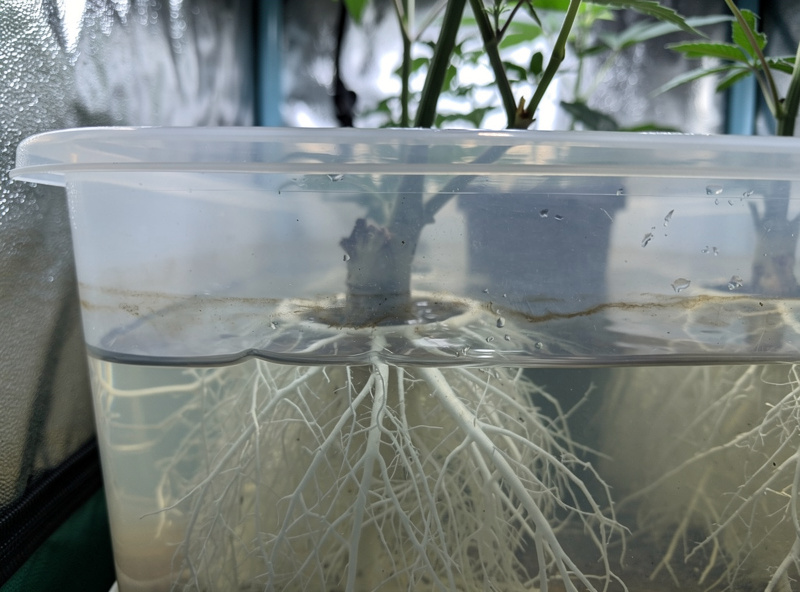
Top off with plain, pH-adjusted water — not full-strength nutrient solution — back to your marked fill line. Plain water dilutes the concentrated salts back toward your target EC. Let it mix for a few minutes, then read EC and only add nutrients if the reading is still below target. Check after every top-off.
The reason plain water is the default is simple: the salts are already in the tank, just over-concentrated, so you are restoring the water that left, not the nutrients. If I topped off with full-strength solution every time, I would stack salt on salt and the EC would run away. My routine is to keep a jug of pH-adjusted top-off water ready, pour to the fill line, let the air stones mix it, then read. Nine times out of ten that brings EC right back into band. Only if the reading still sits low — meaning the plants genuinely consumed nutrients faster than water — do I add a little solution. This is purely reservoir water management; the actual nutrient mixing and formulation is a separate topic.
Reading and Tracking the Drift
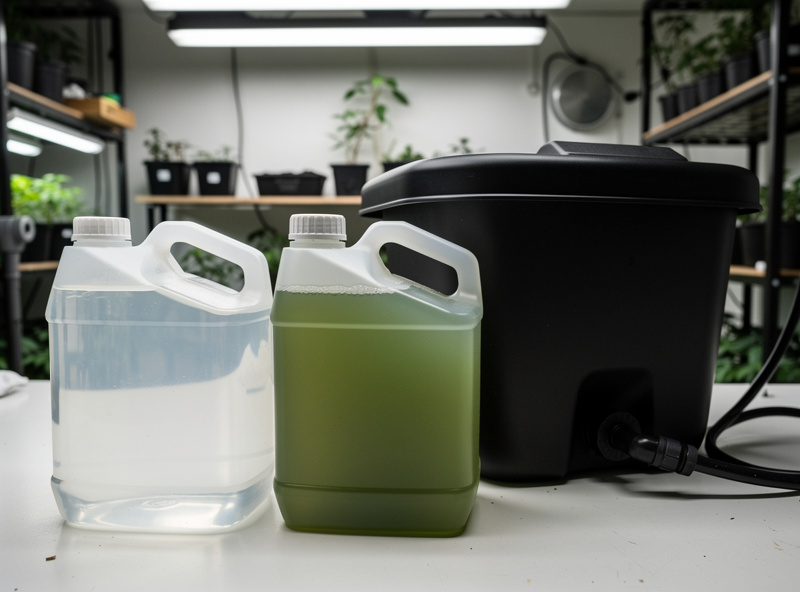
Track EC by reading it at the same point in your routine and logging it over time. A reservoir climbing steadily — say a fraction of a point of EC per day — is telling you evaporation is outpacing your top-offs. The trend matters more than any single number, because it tells you whether to top off more often or change the water.
A single EC reading is a snapshot; the value is in the line you draw over a week. I write the number down next to water temperature and pH every time I check, and the pattern becomes obvious fast. If EC creeps up half a point a day, the room is dry and bright and I am topping off too rarely. If it climbs and will not come back down with plain water, salts have accumulated unevenly and it is time for a full change rather than another top-off. Reading the pen correctly is its own skill — a meter drifting out of calibration lies confidently — which is why I cross-check against a benchtop unit, covered in the EC meter guide. A reliable EC/TDS pen is the one tool you cannot skip here.
Top-Off vs Full Water Change
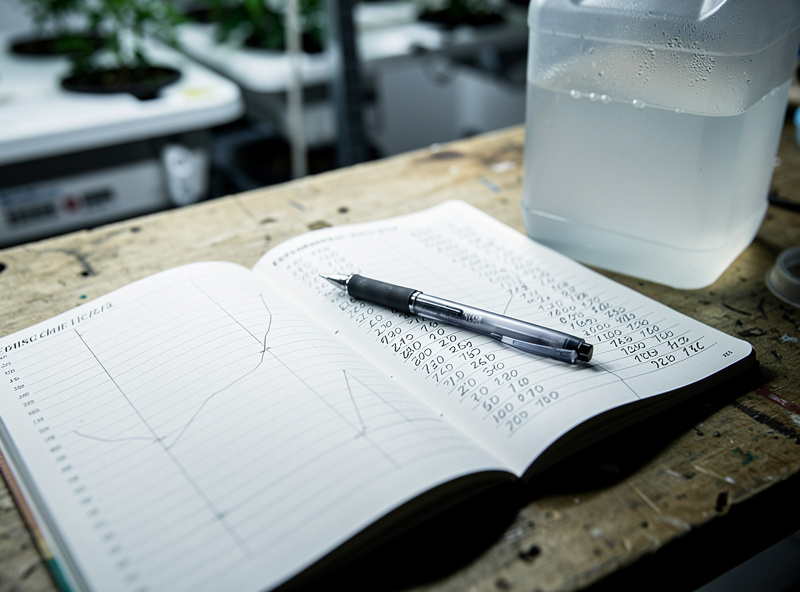
Topping off restores volume and dilutes drift between water changes; a full change dumps the entire tank to reset accumulated salt imbalances. Top off as often as the level drops — sometimes daily in hot conditions — and do a full change every one to two weeks. Top-off cannot fix uneven salt buildup, only a full change can.
| Aspect | Topping Off | Full Water Change |
|---|---|---|
| What it does | Restores volume, dilutes EC drift | Resets all salt imbalances |
| What you add | Plain pH-adjusted water | Fresh mixed nutrient solution |
| How often | As level drops (daily to weekly) | Every 1–2 weeks |
| Fixes uneven salt buildup? | No | Yes |
The two jobs get conflated constantly, and that is where growers go wrong. Top-off keeps the level and EC in check day to day, but plants take up nutrients unevenly — they pull more of some ions than others — so certain salts accumulate no matter how disciplined your topping off is. Only dumping and remixing clears that. The full cadence for when to change versus when to top off, and the signals that override the calendar, sits inside the reservoir guide, which ties the whole maintenance loop together.
Automating Top-Off So Drift Never Runs Away
An automatic top-off system uses a float valve or a level sensor and pump to add plain water from a separate reservoir whenever the main tank drops, holding the level constant. This keeps EC far steadier than manual topping off because the dilution happens continuously, not in big weekly corrections. It is the single best upgrade for a tank that drifts fast.
Manual topping off corrects in lumps — the level falls for days, then you flood it back up, and the EC swings down hard each time. A continuous top-off smooths that into a flat line. The low-tech version is a float valve plumbed to a plain-water reservoir that opens as the level drops, exactly like a toilet cistern. The smarter version uses a level sensor and a small pump, which crosses neatly into the control-loop thinking behind my hydroponic sensors guide — a reservoir is just another rig where sensors and a schedule replace babysitting. Either way, the reservoir holds its level, the EC barely drifts, and you stop chasing it. I still check the EC pen, because automation manages volume, not concentration, but the daily firefight disappears.
Reducing How Fast Your Reservoir Drifts
Slow EC drift by cutting evaporation: use a tight, opaque reservoir lid, keep the water cooler, and reduce excessive surface turbulence from oversized air stones. A larger reservoir also drifts slower because the same water loss changes a big tank’s concentration far less than a small one. Less evaporation means fewer top-offs.
Every gallon of water you keep from evaporating is a gallon you do not have to top off, and an EC swing you never have to correct. A sealed lid is the biggest lever — it traps moisture and blocks the light that drives both algae and warming. Holding the water in the cool 65–68°F band, as covered in my water temperature guide, slows evaporation further. And sizing up the tank in the first place, per the sizing guide, buys you a wider buffer so the drift you do get is gentler. Combine those and a reservoir that used to need daily attention can stretch comfortably between checks.
Affiliate disclosure: some links above are Amazon affiliate links. I may earn a small commission at no extra cost to you. I only recommend gear I run on my own reservoirs.
Frequently Asked Questions
Should I top off hydroponics with water or nutrients?
Top off with plain pH-adjusted water in most cases. Evaporation removes water while salts stay behind, so EC has usually risen. Plain water dilutes it back toward target. Only add nutrients if EC still reads low after topping off and mixing.
Why does my reservoir EC keep going up?
This is normal EC drift. Water evaporates and transpires away while most dissolved salts remain, concentrating the solution and raising EC. Top off with plain water to dilute it back. A rising EC means water loss, not over-feeding.
How often should I top off a hydroponic reservoir?
Top off whenever the level drops noticeably, which can be daily in hot, bright, dry conditions or weekly in a cool room. Check EC after each top-off. A tight lid and larger tank reduce how often you need to do it.
Does topping off replace a water change?
No. Topping off restores volume and dilutes EC drift, but it cannot fix the uneven salt buildup that comes from plants taking up nutrients unevenly. You still need a full water change every one to two weeks to reset the tank.
How do I reduce evaporation in my reservoir?
Use a tight, opaque lid, keep the water cool around 65 to 68F, reduce excessive surface turbulence, and use a larger reservoir. Less evaporation means slower EC drift and fewer top-offs between water changes.