The best beneficial insects for an indoor hydroponic grow are predatory mites for spider mites (Phytoseiulus persimilis and Neoseiulus californicus), Aphidius parasitic wasps and ladybugs for aphids, Steinernema feltiae nematodes for fungus-gnat larvae, and a soil-dwelling predatory mite like Stratiolaelaps for the root zone. A sealed room is actually the ideal place to use them — your imported predators cannot wander off the way they would outdoors.
Biological control is the most elegant pest management there is: instead of spraying on a schedule, you build a standing army that hunts for you around the clock. For years on my bench I have leaned on beneficials as the backbone of control rather than the last resort, because in an enclosed indoor grow they work better than almost anywhere else. This is the roster I actually deploy — which predator for which pest, how to release them so they establish, and the one rule that decides whether they live or die. If you want the broader prevention-first framework these fit into, start with the hydroponic pest control guide.
Why a Sealed Room Is Ideal for Beneficials
It seems backwards at first — surely an enclosed tent is too artificial for living predators? In practice the opposite is true. Outdoors, released beneficials disperse: ladybugs famously fly off within a day or two, and parasitic wasps drift to wherever the prey is densest, which may be your neighbor’s roses. In a sealed indoor room there is nowhere to go. The predators you pay for stay on your plants, find your pests, and concentrate their effort exactly where you need it. The same containment that traps pests with no natural enemies also traps the enemies you import.
The trade you accept is responsibility: because nothing arrives on its own, you have to introduce every beneficial deliberately, time it to the pest, and protect it. That protection comes down to one discipline that runs through this whole article — you cannot spray and release at the same time. The contact sprays that kill pests kill beneficials just as dead. Commit to the biological route for a given pest and the sprays go away.
The Roster: Which Beneficial for Which Pest
Each beneficial is a specialist or near-specialist. Matching the right one to the pest you actually have is the whole game — releasing ladybugs at a spider-mite problem accomplishes nothing. Cornell’s Biological Control guide to natural enemies is the reference I cross-check a species against before I order it. Here is the working roster for an indoor hydroponic grow.
Predatory Mites for Spider Mites
Phytoseiulus persimilis is the shock troop for an active spider-mite infestation: it eats spider mites, eggs and larvae voraciously and breeds fast while prey is dense, crashing a hot population — then starves out once the prey is gone, so it is a cure rather than a standing guard. Neoseiulus californicus (sold also as Amblyseius californicus) is the durable generalist that survives on low prey and even pollen, so it persists as a guard that catches the next outbreak early. The common move is both: persimilis to crash the infestation, californicus to stay on patrol. The full spider-mite plan is in spider mites in hydroponic systems.
Wasps, Ladybugs and Lacewings for Aphids
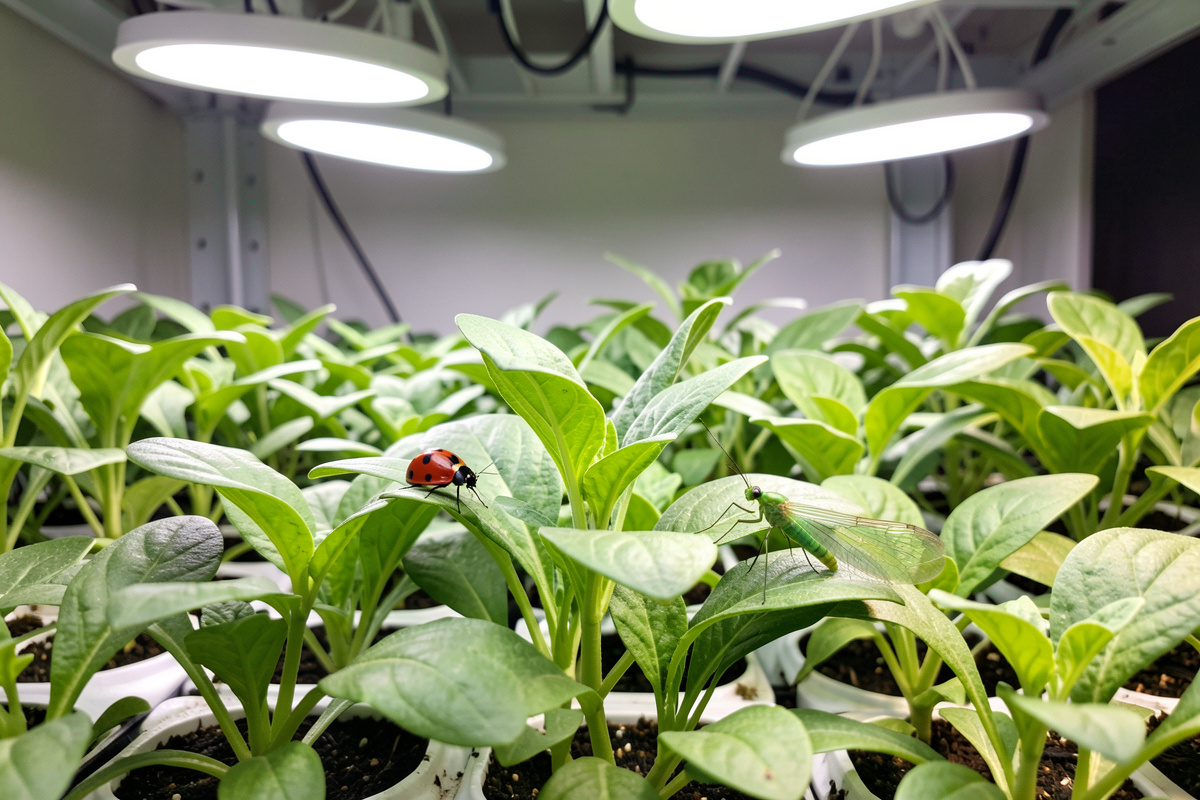
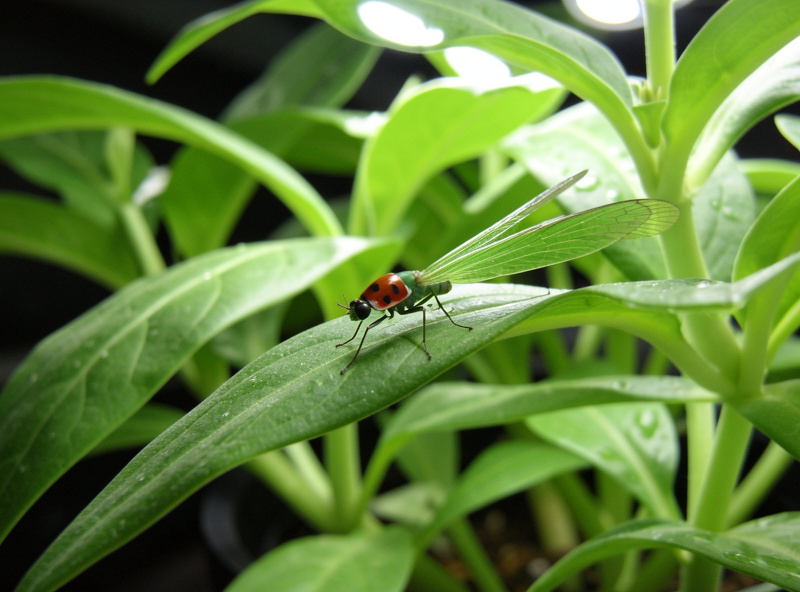
Aphidius parasitic wasps are the quiet, persistent aphid control: the tiny harmless wasp lays an egg inside each aphid, leaving the swollen brown “mummy” that tells you it is working, and the next generation keeps hunting. Ladybugs (lady beetles) are the voracious classic — each adult eats dozens of aphids a day — though in an open tent some wander; release at dusk, lights-off, with water available so they settle. Green lacewing larvae are ferocious generalist predators that take aphids, small caterpillars, mite eggs and more. The full aphid program is in dealing with aphids in hydroponic gardens.
Nematodes and Soil Mites for Fungus Gnats
Steinernema feltiae beneficial nematodes are microscopic hunters that seek out fungus-gnat larvae in moist media, enter them and kill them from inside — the most thorough larval control for a media-based system. Stratiolaelaps scimitus (formerly Hypoaspis miles) is a soil-dwelling predatory mite that patrols the media surface and root zone, eating fungus-gnat larvae and thrips pupae, and it persists for weeks as a standing root-zone guard. Both pair naturally with the layered approach in controlling fungus gnats in hydroponic systems.
Mites for Thrips
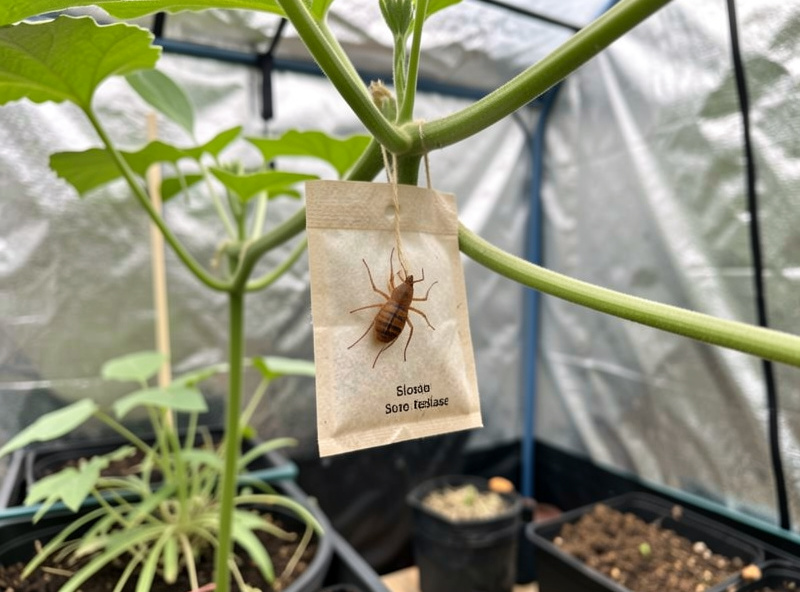
If thrips show up — slim, darting insects that leave silvery scarring — Neoseiulus cucumeris is the predatory mite of choice, eating thrips larvae before they mature. It is often sold in slow-release sachets you hang in the canopy, which keep releasing predators over weeks and suit an indoor grow well.
Beneficial Insect Quick Reference
| Beneficial | Target pest | Role | Notes |
|---|---|---|---|
| Phytoseiulus persimilis | Spider mites (active) | Fast curative | Starves out when prey gone |
| Neoseiulus californicus | Spider mites | Persistent guard | Survives on low prey/pollen |
| Aphidius wasps | Aphids | Persistent parasitoid | Leaves brown mummies |
| Ladybugs | Aphids | Fast knockdown | Release lights-off; some wander |
| Green lacewing larvae | Aphids, mite eggs, more | Generalist predator | Voracious; broad diet |
| Steinernema feltiae | Fungus-gnat larvae | Larval hunter | Needs moist media; order fresh |
| Stratiolaelaps scimitus | Gnat larvae, thrips pupae | Root-zone guard | Persists weeks in media |
| Neoseiulus cucumeris | Thrips larvae | Canopy guard | Slow-release sachets |
Most of these are ordered live from biological-control suppliers and shipped to arrive on a set day. They are perishable, so plan the release for the day they land. A reliable supply of live beneficial insects and predatory mites is available online and shipped overnight.
As an Amazon Associate I earn from qualifying purchases.
How to Release and Establish Them
Buying beneficials is the easy part; getting them to establish takes a little care. A few habits make the difference between a working colony and wasted money.
Time the release to the pest. Most predators need prey to survive, so releasing them into a spotless room means they starve or leave. Release when you have confirmed the target pest but while numbers are still low — that is the sweet spot where a modest predator population can get ahead and stay ahead. The persistent generalists like californicus and Stratiolaelaps are the exception; they tolerate low prey, so they can go in preventively as standing guards.
Release at the right time of day. Lights-off or dusk is gentler — flying beneficials are far less likely to scatter toward bright lights, and the cooler, calmer conditions help them settle onto the plants. Distribute them across the worst-affected plants rather than dumping them in one spot, so they start close to the prey.
Give them what they need to stay. A little humidity helps predatory mites; a touch of water at release helps ladybugs settle; intact, undisturbed media helps soil predators establish. Avoid hosing down or heavily disturbing the plants right after a release.
Be patient and watch for the signs of success. Biological control is slower than a spray — you are waiting for predators to find, eat and out-breed the pest. Look for the evidence: brown aphid mummies, falling pest counts on your scouting, fewer adults on sticky traps. It typically takes one to three weeks to see a population turn, and a second release is sometimes needed for a heavy infestation.
The Compatibility Rule That Decides Everything
If you remember one thing, make it this: beneficials and broad sprays do not coexist. Neem, insecticidal soap, horticultural oils and certainly any chemical pesticide kill your predators along with the pests. The moment you commit to a biological strategy for a pest, the sprays for that pest stop. If an infestation is too heavy to wait out, the correct sequence is to spray first to knock the numbers down hard, then release predators only after the residue has fully cleared — never both at once.
There is some nuance worth knowing. The very selective biologicals — BTI for gnat larvae, potassium bicarbonate for mildew on the leaf surface — generally do not harm insect predators and the soil mites, so you can often run gnat and mildew management alongside a predatory-mite release. But contact insecticides of any kind are off the table once predators are working. When in doubt, keep the room spray-free while a biological program is active and let the predators do their job.
Building a Year-Round Biological Program
The growers who get the most out of beneficials do not treat them as an emergency order placed when an infestation is already raging. They run a standing program: a couple of persistent generalists kept in the room continuously as guards, with the fast specialists ordered in only when a specific outbreak flares. That layered approach mirrors how the whole prevention-first system works.
In practice, on a year-round indoor grow that means keeping Stratiolaelaps in the media as a permanent root-zone patrol against fungus-gnat and thrips pupae, and hanging cucumeris or californicus sachets in the canopy as slow-release guards that quietly catch the early stages of a mite or thrips problem. Those standing guards survive on low prey and pollen, so they persist for weeks without a heavy infestation to feed on. Then, when scouting catches a hot spider-mite or aphid flare, you order the specialist — persimilis or Aphidius — to crash it, knowing your guards are already holding the rest of the room.
This is also the moment to be honest about my seasonal pattern. In my dry Nordic winter room, spider mites are the recurring threat, so that is when the persimilis-and-californicus pairing earns its keep; in the more humid shoulder seasons, fungus gnats and the occasional aphid flare dominate, and the nematode-and-Stratiolaelaps side of the roster does more work. Matching the standing program to the season your room actually favors is the difference between predators that thrive and predators that arrive to an empty table.
The Honest Cost Comparison
Beneficials are not free, and a single order of predatory mites or parasitic wasps can cost more than a bottle of neem that would last a season. Looked at per-application, spraying is cheaper. But that comparison misses the real ledger. Sprays demand your time on a repeating schedule, never reach the leaf-underside crevices where mites hide as well as a mite does, and stop the moment you stop applying them. A standing beneficial population works around the clock, reaches places you cannot, and keeps working between your visits. On an edible crop, beneficials also keep the produce genuinely spray-free, which is a large part of why many growers run an indoor hydroponic garden in the first place. For a serious, ongoing grow I treat the cost of beneficials the way I treat the cost of a good meter: not an expense to minimize, but the price of a system that mostly runs itself.
When Beneficials Are Not the Right Call
Biological control is not always the answer. For a tiny, early, localized pest spot, a couple of targeted neem applications may simply be faster and cheaper than ordering live predators. If you are about to harvest, there may not be time for a biological program to work. And beneficials only make sense if you are willing to keep the room spray-free while they establish — if you know you will reach for a spray at the first sign of trouble, you will just kill them. Beneficials reward the patient, prevention-minded grower; they punish the reactive one.
Used well, though, they are the closest thing to set-and-forget pest control an indoor grow offers. Combined with the environmental prevention and the biosecurity that keep pest numbers low in the first place — covered in the hydroponic room biosecurity guide — a standing population of the right beneficials turns pest management from a series of emergencies into a quiet background process. That is exactly the control-loop philosophy I trust everywhere on this bench: build the system so it defends itself, and intervene only when the loop genuinely fails.
If you are new to biological control, do not try to deploy the entire roster at once. Start with one well-matched pairing for the pest you actually have — predatory mites for a mite problem, or nematodes for gnats — keep the room spray-free while it works, and watch what happens. Success with a single beneficial teaches you the rhythm of the approach faster than any guide: how long establishment takes, what the signs of progress look like, and how it feels to leave a problem to the predators instead of grabbing a sprayer. Once you trust that rhythm, layering in standing guards and seasonal specialists becomes second nature, and the program scales with your confidence rather than overwhelming you on day one.