So, is Masterblend worth it? In my logs, a ~$30–40 three-salt Masterblend kit mixes well over 1,000 gallons at lettuce strength, putting the nutrient cost at fractions of a cent per litre — several times cheaper than the GH Flora liquid trio. If you mix more than a few gallons at a time, it’s a clear yes.
I run a Masterblend dry mix and a General Hydroponics Flora liquid trio side by side, on the same bench, feeding the same DWC totes and an NFT channel. I dose both to a target EC, not by feel, and I log every reservoir. That dual setup is the only honest way I know to answer the cost question, because the difference isn’t really about plant results — both grow fine lettuce — it’s about cost per litre, shelf life, and how much of a fuss you’re willing to make at mixing time. This is the practical verdict, not a spec sheet.
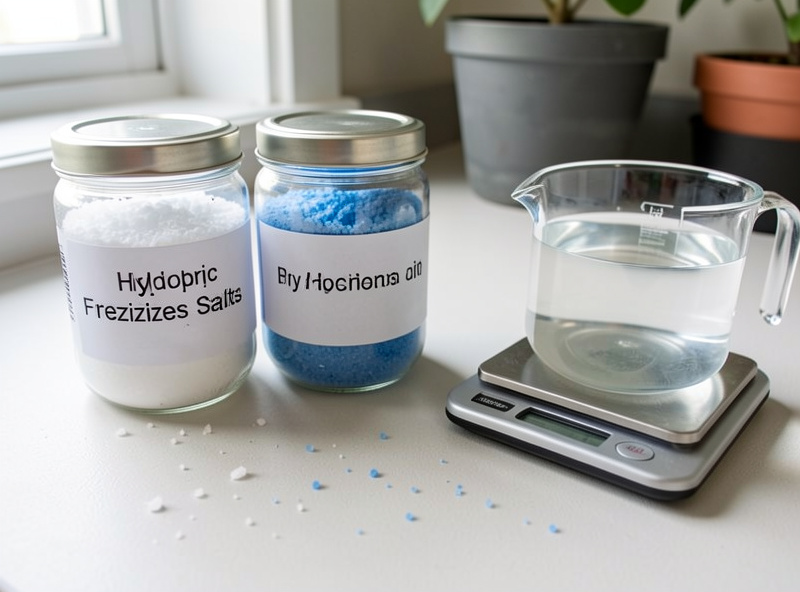
What “Masterblend” actually is (and why the cost math works)
Quick answer: Masterblend is a three-part dry salt system — Masterblend 4-18-38 plus calcium nitrate plus Epsom salt — not a single complete fertilizer. The “2-1-2” ratio by weight (MB:Epsom:cal-nit = 2:1:2) is what makes the per-litre cost so low: a couple of grams feeds a whole gallon.
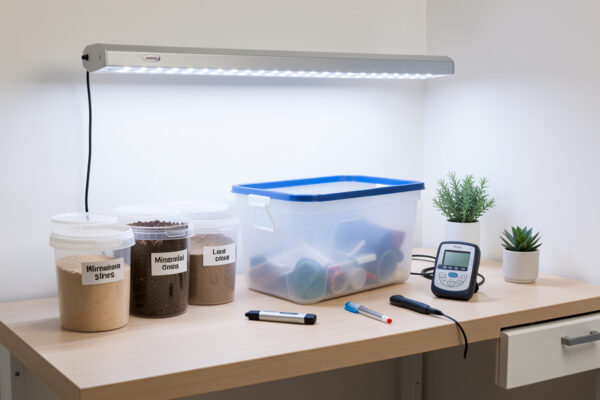
The cost question only makes sense once you understand the part-count. Masterblend 4-18-38 is not complete on its own — it carries the phosphorus, potassium, and chelated micronutrients, but you have to add calcium nitrate (15.5-0-0, around 19% Ca) for nitrogen and calcium, and Epsom salt (magnesium sulfate, roughly 9.8% Mg) for magnesium. Mix those three and you have a full nutrient. My full fruiting dose is 2 g Masterblend + 1 g Epsom + 2 g calcium nitrate per US gallon, which lands me around EC 2.0–2.4 mS/cm on the meter. Lettuce and leafy greens run far lighter — I keep them in the EC 0.8–1.4 band, so I’m using maybe half those salt weights.
That’s the whole trick to the cost. At lettuce strength you’re dissolving a gram or two of total salt per gallon. A kit that ships a few pounds of each of the three salts holds thousands of those grams, which is why a single ~$30–40 purchase mixes well past 1,000 gallons before you reorder. I walk through the exact weigh-and-dissolve order, and why you add the salts separately, in my Masterblend 4-18-38 recipe, and the broader system overview lives on the Masterblend hydroponic nutrients hub.
Cost per litre: the number that drives the verdict
Quick answer: Mixed at lettuce strength, Masterblend works out to a fraction of a cent per litre of finished solution. The GH Flora trio is far more convenient but costs several times more per litre, because you’re buying water-weight and bottles, not just salts.
I’m deliberately keeping these figures approximate, because exact pricing swings with your supplier and pack size. But the relationship holds steady across every reservoir I’ve logged: dry salts are dramatically cheaper per litre of finished nutrient. The reason is simple physics — when you buy the Flora trio you’re paying to ship and store mostly water in three bottles, plus the convenience of pre-chelated, pre-balanced liquids. When you buy Masterblend you’re buying the dry active ingredient and adding your own water at mixing time.
Here’s how that plays out on my actual bench. When I refresh a 20-gallon recirculating tote at lettuce strength, the dry salts I weigh out cost me close to nothing per change — it’s the kind of number where I stop bothering to track it, because a single kit covers a whole season of changes and top-offs. With the Flora trio, the same reservoir noticeably moves the bottle levels, and I can watch a starter set drain across a handful of res changes. Neither feels expensive in isolation. The gap only becomes obvious when you zoom out to a season’s worth of litres, which is exactly the perspective a cost-per-litre question is asking you to take.
For a small single-bucket grower that premium can be invisible — a bottle set lasts months and you never think about it. But the moment you’re topping off a recirculating tote every few days, or running multiple channels, the litres add up fast and the per-litre gap becomes real money over a season. I get into the head-to-head feeding differences in my Masterblend vs General Hydroponics comparison, and if you’re still deciding which nutrient line fits your build at all, start with the complete hydroponic nutrients guide.
Masterblend dry vs GH Flora trio: the side-by-side I actually keep
Quick answer: Dry wins decisively on cost per litre, gallons per kit, and shelf life. The Flora trio wins on convenience and mixing effort. Everything else — plant results, EC control — is close enough that it shouldn’t decide your purchase.
Here’s the comparison table I’d hand a grower asking whether to switch. The cost figures are intentionally framed as ranges, because the point is the ratio between the two columns, not a precise invented number.
| Factor | Masterblend (dry, 3-salt) | GH Flora trio (liquid) |
|---|---|---|
| Upfront cost | ~$30–40 for the three salts (a few lb each) | Similar or higher for a starter bottle set |
| Approx cost per litre | Fractions of a cent at lettuce strength | Several times higher per litre of solution |
| Gallons per kit | Well over 1,000 gal at lettuce strength | Far fewer per equivalent bottle set |
| Convenience | Weigh and dissolve each batch | Pour and go, no scale needed |
| Shelf life | Effectively indefinite if kept dry | Long, but liquids age and settle eventually |
| Mixing effort | ~5 min weigh-dissolve, mind precipitation | Measure three liquids, minimal fuss |
As an Amazon Associate I earn from qualifying purchases.
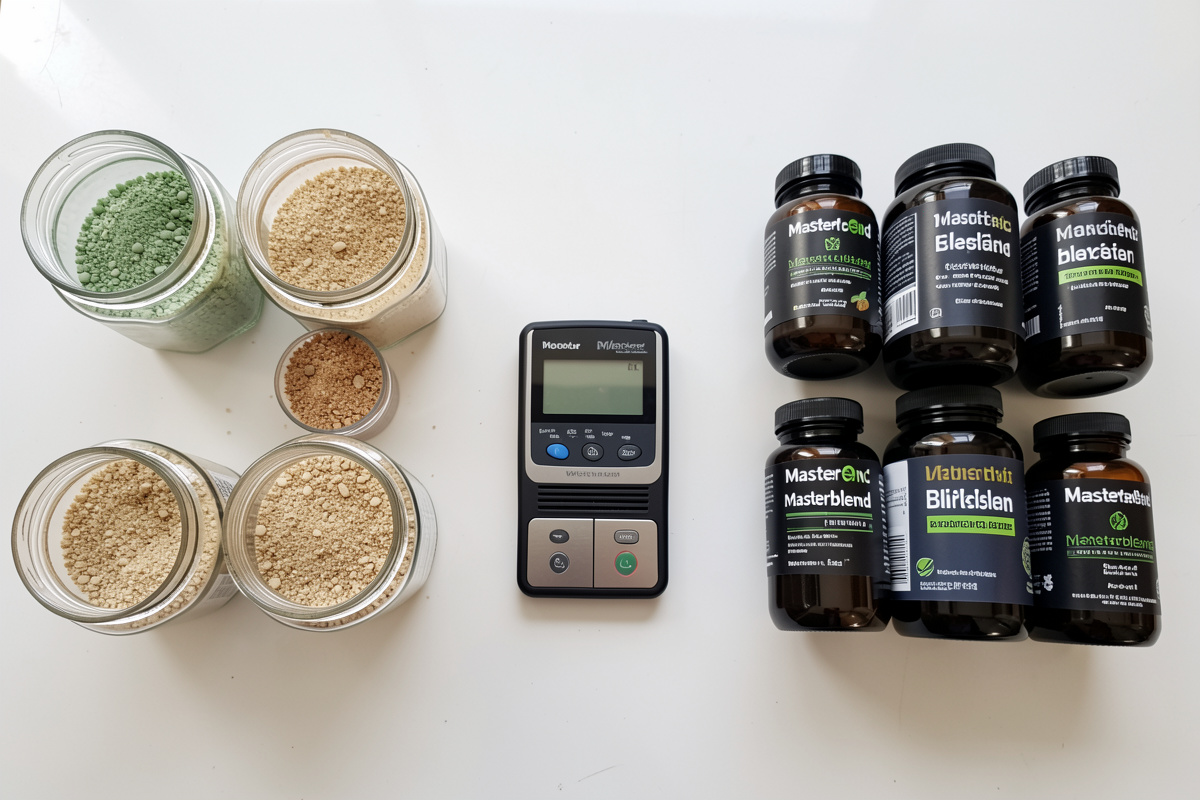
If you want to price a kit yourself, the three salts usually ship together: Masterblend 4-18-38 complete kits bundle the 4-18-38, calcium nitrate, and Epsom salt in one box. For the convenience side, the General Hydroponics Flora series is the liquid trio I run as my comparison line.
Shelf life: where dry salts quietly win
Quick answer: Dry Masterblend salts effectively never chemically expire — the only failure mode is moisture and caking. Liquids hold up well but slowly age and can settle. If you buy in bulk and use nutrients slowly, dry is the safer long-term hold.
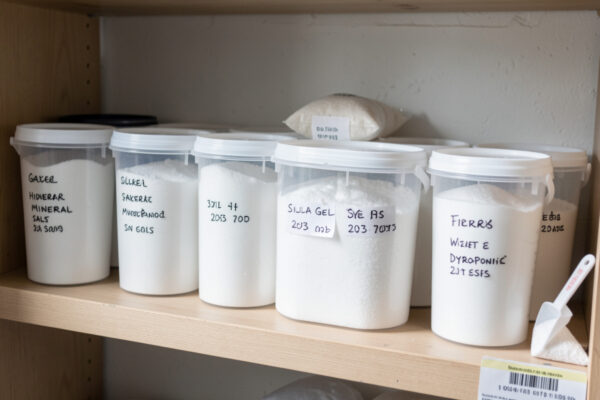
This is the part new growers underrate. A bag of dry salt that stays sealed and dry is, for practical purposes, good indefinitely. Mine don’t go bad sitting on the shelf between grows; the real enemy is humidity. If your storage is damp, the salts pull moisture, clump, and cake into a brick — and Masterblend 4-18-38 and calcium nitrate are both happy to do that in a Swedish basement winter. I keep mine in sealed tubs with desiccant packs and a tight lid, and I’ve had zero caking issues across seasons.
Liquids are the inverse risk profile. They won’t cake, but a part can settle or shift over a long enough idle stretch, and a bottle you opened two years ago isn’t quite the bottle you bought. For a high-turnover grower that never matters. For someone who runs one small bucket and tops off rarely, a dry kit you barely dent in a year is arguably the more forgiving buy — it’ll still be perfect when you finally finish it.
There’s a quieter benefit to that long shelf life too: it lets you buy the bigger, cheaper pack without worrying you’ll waste it. Liquid nutrients tempt you toward small bottles precisely because a giant jug might age before you use it. Dry salts have no such ceiling — buying a few extra pounds up front is pure savings, since it’ll keep until you get to it. In my logs that compounds with the per-litre advantage, because the cheapest dry pack size is usually the one you’d hesitate to commit to in liquid form.
The real “cost” of Masterblend: the mixing routine
Quick answer: Masterblend’s downside isn’t money, it’s discipline. You add a roughly 5-minute weigh-and-dissolve step per batch, and you must dissolve the salts separately so calcium and sulfate don’t precipitate. If you hate that, the liquid trio’s premium buys it away.
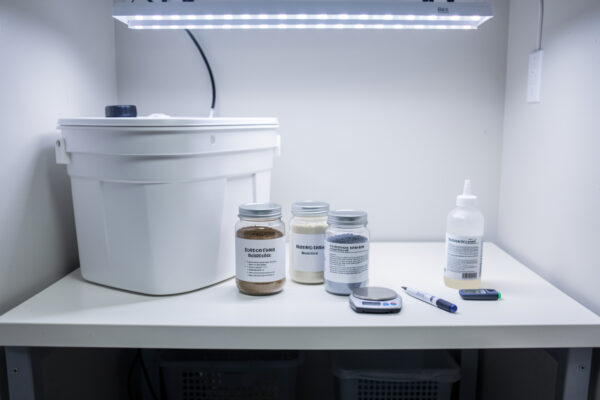
I won’t pretend dry salts are zero-effort. Every batch costs me a scale, a couple of containers, and about five minutes. More importantly, you can’t just dump all three salts into one cup of concentrate — calcium nitrate and the sulfates in Masterblend and Epsom will precipitate into a cloudy sludge that locks out nutrients. So I dissolve calcium nitrate in one volume of water and the Masterblend-plus-Epsom in another, then combine into the full reservoir volume where the dilution keeps things in solution. It’s a habit, not hard, but it is a habit you have to keep.
That precipitation discipline is precisely what the liquid trio sells you out of. Pour the three Flora bottles in their order, stir, check EC, done — no scale, no separate-cup ritual. For a single small DWC bucket where simplicity is the whole point, paying several times more per litre to never think about precipitation is a defensible trade. I dose mine to the same target EC either way, and I cover EC targeting across both lines in my General Hydroponics nutrients guide.
So who should actually buy dry — and who shouldn’t
Quick answer: Buy dry Masterblend if you mix more than a few gallons at a time, run a recirculating or bulk reservoir, or care about budget. Stick with the liquid trio if you run one small bucket, value simplicity, and never want to manage precipitation.
I won’t crown one universal winner, because the honest answer depends on your build. If you’re running a recirculating tote, several NFT channels, an ebb-and-flow bed, or anything where you’re mixing real volume on a regular cadence, the per-litre savings compound and the dry kit pays for itself many times over a season. Budget-focused growers and anyone scaling up should buy dry without much hesitation.
But if your whole operation is one Kratky jar or a single DWC bucket on a windowsill, the math flips on its head. Your total litres per season are small, so the per-litre premium of the Flora trio adds up to very little, and what you’re really buying is your time and peace of mind. That’s a legitimate purchase. The mistake is assuming “cheaper per litre” automatically means “right for you” — at tiny volume, convenience can genuinely be worth the markup. So is Masterblend worth it? For most growers mixing real volume, yes, comfortably. For the smallest setups, the liquid trio earns its premium.
Is Masterblend cheaper than General Hydroponics?
Per litre of finished solution, yes, by a wide margin. A ~$30–40 Masterblend kit mixes well over 1,000 gallons at lettuce strength, so the nutrient cost lands in fractions of a cent per litre. The GH Flora liquid trio costs several times more per litre because you’re paying for bottled, pre-mixed convenience.
Does Masterblend expire or go bad?
The dry salts effectively never chemically expire. Their only failure mode is moisture: if they absorb humidity they cake and clump. Stored sealed and dry with a desiccant pack, a Masterblend kit stays usable indefinitely, which makes dry the safer long-term hold for slow users.
How much Masterblend do I use per gallon?
My full fruiting dose is 2 g Masterblend 4-18-38, 1 g Epsom salt, and 2 g calcium nitrate per US gallon, which reads about EC 2.0–2.4 mS/cm. Lettuce and leafy greens run lighter, around EC 0.8–1.4, so I use roughly half those salt weights. Always dose to a target EC, not by feel.
When is the liquid trio actually worth the extra cost?
When you run one small bucket or Kratky jar, value simplicity, and never want to manage precipitation. At tiny seasonal volume the per-litre premium adds up to very little, and you’re really buying pour-and-go convenience and no separate-cup mixing ritual. For bulk or recirculating reservoirs, dry wins clearly.