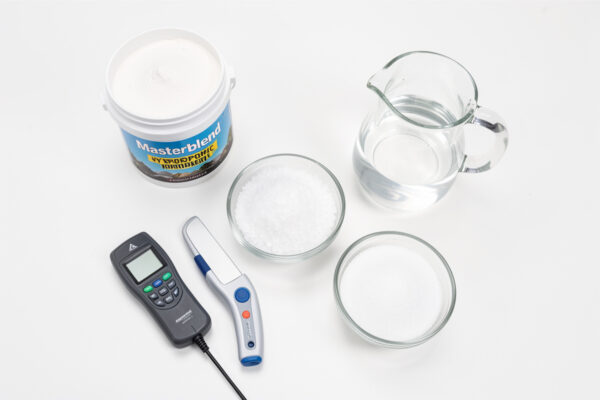
Masterblend is a three-salt dry hydroponic nutrient system: Masterblend 4-18-38, calcium nitrate (15.5-0-0), and Epsom salt, mixed in a 2-1-2 ratio by weight. At full strength that lands around EC 2.0-2.4 mS/cm, and a roughly $30-40 kit mixes well over a thousand gallons.
That last number is the whole reason this cluster exists. I run the General Hydroponics Flora trio on part of my bench because the liquids are convenient, but the dry salts are what I actually reach for when I am mixing a 100-litre reservoir and watching the cost-per-litre rather than the convenience. Masterblend is not a single bottle you pour and forget. It is three separate salts that each do one job, and the difference between a clean res and a reservoir full of white chalk comes down to understanding what each one is and the order you put them in the water. This is the guide I wish I had before I cooked my first batch into a cloudy mess.
What Masterblend Actually Is (And What It Is Not)
Masterblend 4-18-38 is the “Tomato & Vegetable Formula” — a concentrated blend of phosphorus, potassium, and the full micronutrient package, but it is not a complete nutrient. It contains no calcium and not enough magnesium to grow anything on its own. You always pair it with two more salts.
This trips up every grower who buys the bag expecting a one-and-done feed. The 4-18-38 analysis tells you it is heavy on phosphorus (18% as P2O5) and potassium (38% as K2O) with only a token 4% nitrogen and zero calcium. Plants need calcium for cell walls and a lot more nitrogen than 4% delivers, so the system is built around three components: the Masterblend itself for P, K and micros; calcium nitrate for the calcium and the bulk of the nitrogen (as nitrate, which is what hydroponic roots prefer); and Epsom salt (magnesium sulfate) for magnesium and sulfur. Leave any one out and you will be diagnosing a deficiency within two weeks. If you want to see what those deficiencies look like on the leaf, I keep a separate nutrient deficiency identification guide on the bench.
The Three Salts and What Each One Does
Think of Masterblend as a kit, not a product. Each salt covers a specific gap, and once you see the division of labour the 2-1-2 ratio stops looking arbitrary. Calcium nitrate carries calcium plus most of your nitrogen; Epsom salt covers magnesium and sulfur; the 4-18-38 base handles everything else including iron and the trace metals.
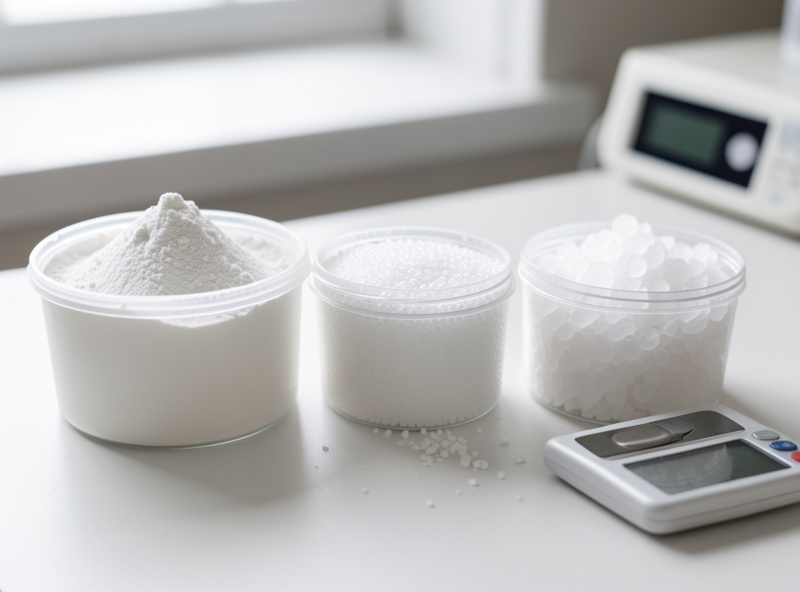
| Component | Guaranteed analysis | What it brings | Share of the 2-1-2 mix |
|---|---|---|---|
| Masterblend 4-18-38 | 4-18-38 + chelated micros | Phosphorus, potassium, iron, manganese, zinc, boron, copper, molybdenum | 2 parts |
| Calcium nitrate (15.5-0-0) | 15.5% N, ~19% Ca | Calcium and the bulk of the nitrogen, supplied as nitrate | 2 parts |
| Epsom salt (MgSO4·7H2O) | ~9.8% Mg, ~13% S | Magnesium and sulfur | 1 part |
Notice the ratio reads 2 parts Masterblend, 1 part Epsom, 2 parts calcium nitrate — that is where the “2-1-2” name comes from. It is the same recipe most growers write as “2 grams Masterblend, 2 grams cal-nit, 1 gram Epsom,” just listed in a different order. I break down exactly why those proportions hold across batch sizes in the 2-1-2 mixing ratio explainer.
The 2-1-2 Ratio: My Base Recipe by Target EC
My full-strength base for fruiting crops is 2 g Masterblend + 1 g Epsom + 2 g calcium nitrate per US gallon (3.78 L), which reads about EC 2.0-2.4 mS/cm on my pen — roughly 1000-1200 ppm on the 500 scale. For leafy greens I run it lighter; for tomatoes I run it as written.
I never mix Masterblend by feel. I mix to a target EC and let the meter tell me whether I hit it. The grams-per-gallon recipe gets you close, but tap water already carries a baseline EC, the salts vary slightly in moisture content, and a cold res dissolves differently than a warm one — so the recipe is the starting point and the EC pen is the referee. Calibrate the pen against 1.413 mS/cm solution first or the whole exercise is theatre. I walk through the full weigh-dissolve-measure routine in the 4-18-38 recipe-to-target-EC guide, and the general principles of mixing any nutrient solution apply on top of it.
Why I Dissolve Each Salt Separately
The single most important rule with Masterblend: dissolve each salt fully in its own water before it meets the others, and add the calcium nitrate last. Skip this and calcium reacts with sulfate and phosphate to form insoluble white precipitate — the chalk that clouds your res and starves your plants of the very nutrients you just paid for.
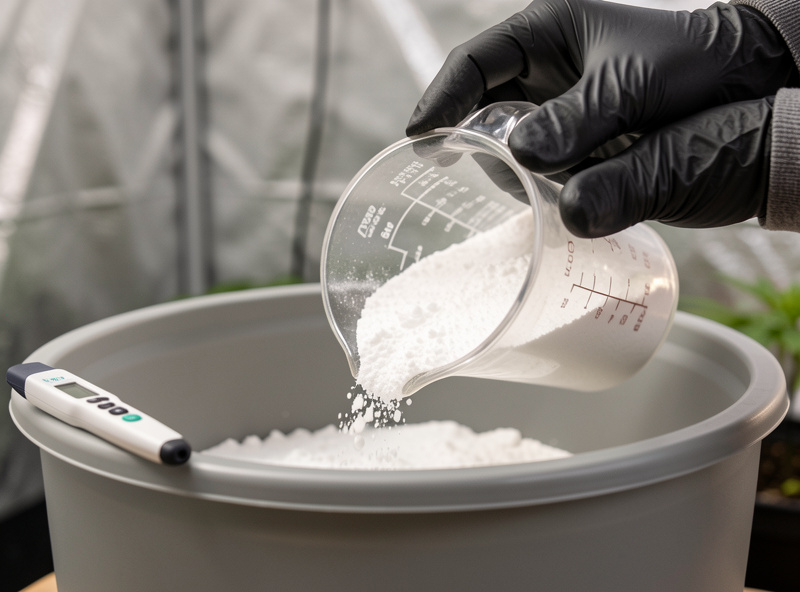
The chemistry is simple once you see it. Calcium ions from the cal-nit will happily bond with the sulfate from your Epsom salt to make calcium sulfate (gypsum), and with the phosphate from the 4-18-38 to make calcium phosphate. Both are close to insoluble. If those ions meet while concentrated — say you dump cal-nit straight onto undissolved Masterblend in a small jug — they lock up and drop out as white sludge before they ever reach a root. The fix is dilution and sequence: get the Masterblend fully into solution in the full reservoir volume, stir in the Epsom, and only then trickle in the pre-dissolved calcium nitrate so it disperses into a large, low-pH volume where the reactions cannot run. This is why calcium nitrate always goes in last, a point I cover in depth in the calcium nitrate ordering guide. If you are already staring at a cloudy tank, the precipitation fix walks you back out.
EC and pH Targets by Crop
Masterblend strength is entirely about EC, and EC depends on the crop. Lettuce wants EC 0.8-1.4 mS/cm; tomatoes want 2.0-3.5. The same three salts cover all of it — you just change how much you dissolve. pH sits at 5.5-6.0 across the board on my systems.
Here is the table I work from. The ppm column uses the 500 (TDS) scale, so if your pen reads on the 700 scale your numbers will run higher — always know which scale your meter speaks. These are reservoir targets; I let EC drift up a little as plants drink water and top off before it climbs out of range, which is its own discipline I cover in the reservoir top-off guide.
| Crop / stage | Target EC (mS/cm) | ~ppm (500 scale) | pH |
|---|---|---|---|
| Lettuce & leafy, seedling | 0.6-0.8 | 300-400 | 5.5-6.0 |
| Lettuce & leafy, mature | 0.8-1.4 | 400-700 | 5.5-6.0 |
| Herbs (basil, chard) | 1.0-1.6 | 500-800 | 5.5-6.2 |
| Fruiting, vegetative stage | 1.8-2.4 | 900-1200 | 5.8-6.2 |
| Fruiting, fruit set on | 2.4-3.5 | 1200-1750 | 5.8-6.2 |
If lettuce is your main crop — and for a lot of indoor growers it is — I have broken the leafy-green numbers down stage by stage in the Masterblend for lettuce guide, with the EC ramp I run from transplant to harvest. The broader crop picture lives in my growing lettuce hydroponically guide. Whatever you grow, you cannot run this system without a meter you trust, so calibrating an EC meter for hydroponics is step zero.
Masterblend vs the GH Flora Trio: When I Reach for Dry
I run both. The GH Flora trio (Micro, Gro, Bloom) is liquid convenience — pour and go, harder to mess up. Masterblend is dry, cheaper per litre by a wide margin, and demands the mixing discipline above. For a big recirculating res on a budget, dry wins; for a single small DWC bucket, the trio is hard to beat on simplicity.
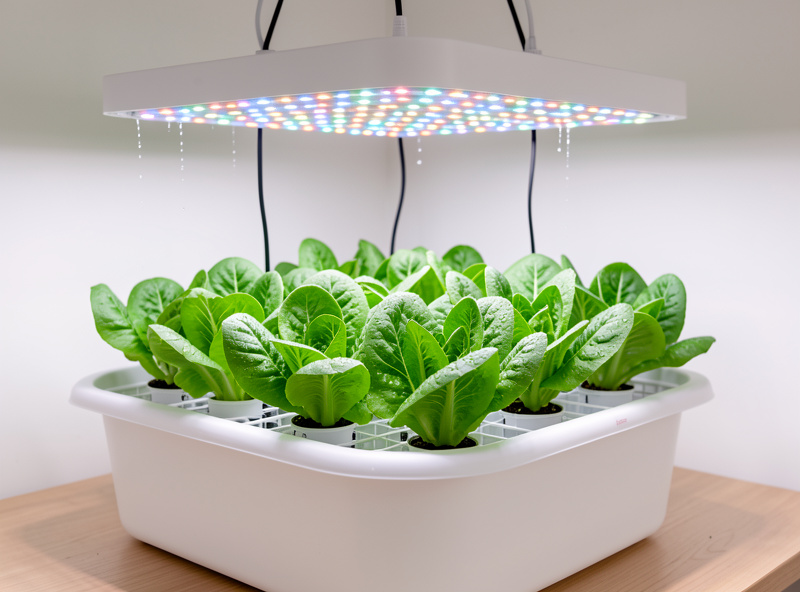
The honest version is that the choice is about volume and temperament. If you mix a few gallons at a time and value never thinking about precipitation, the liquid trio earns its premium — I keep the GH Flora series running on the DWC totes for exactly that reason. If you mix in bulk and do not mind weighing three salts, Masterblend is a fraction of the cost. I put the two head to head — solubility, cost, shelf life, and which crops each suits — in the Masterblend vs General Hydroponics comparison, and the wider field sits in my complete hydroponic nutrients guide. For the full cost math, see whether Masterblend is worth it.
If you want to try the dry route, a Masterblend kit usually ships the 4-18-38, calcium nitrate, and Epsom together. A complete Masterblend kit plus a reliable EC/TDS meter is the entire shopping list to get started.
As an Amazon Associate I earn from qualifying purchases.
Storing Dry Salts So They Last
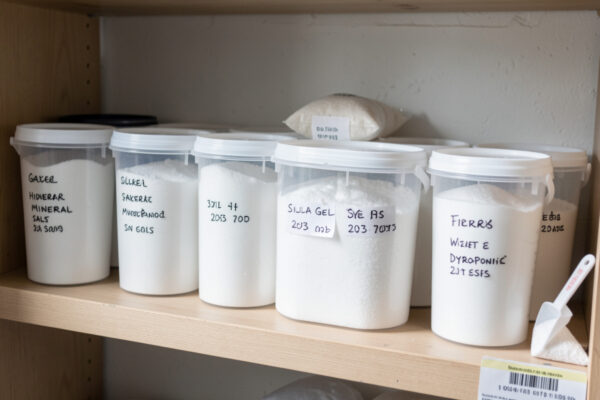
Dry Masterblend salts effectively never expire — the failure mode is moisture, not age. Calcium nitrate is strongly hygroscopic and will pull water out of humid air and cake into a brick within weeks if left open. Keep all three salts airtight, with a desiccant pack, in a cool dry spot away from the grow tent.
This matters more than people expect because the grow tent is the worst possible place to store them — high humidity is the whole point of a tent and the enemy of dry salts. I keep mine in sealed buckets with gasket lids in a cool cupboard, calcium nitrate separated from the rest. The full routine, including why I never store concentrated cal-nit alongside Masterblend, is in the storing dry hydroponic salts guide.
Making A and B Stock Concentrates for Bulk Mixing
Once you are mixing reservoirs regularly, weighing three salts every time gets old. The fix is two liquid stock concentrates — an “A” tank holding the calcium nitrate, and a “B” tank holding the Masterblend and Epsom — that you dose by volume. The cardinal rule is that calcium nitrate lives alone in A, and never shares a concentrated tank with the other two.
The reason A and B stay separate is the same chemistry that makes you add cal-nit last: at concentrate strength, calcium, sulfate, and phosphate will absolutely precipitate if they share a jug. Kept apart and only united at full dilution in the reservoir, they behave. I dissolve the calcium nitrate into one labelled jug of water for A, and the Masterblend plus Epsom into a second jug for B, then dose a measured amount of each into the working reservoir — A and B never touch until they are both diluted into the full tank. It is the home-scale version of how commercial growers run their dosing, and it turns a five-minute weigh-and-dissolve into a thirty-second pour. The catch is that concentrates have a shorter shelf life than dry salt, so I mix only what I will use in a few weeks and keep the dry stock as the long-term store — which loops straight back to keeping those salts dry in the first place.
Common Failures and How I Fix Them
Nearly every Masterblend problem traces to one of three things: wrong mixing order (precipitation), wrong EC (deficiency or burn), or wet storage (caked salt that no longer measures true). Get the sequence, the meter, and the storage right and the system runs for years.
The white-chalk cloud is the most common panic, and it is almost always a sequencing or pH problem rather than a bad batch of salt — diluting properly and adding cal-nit last solves it. Deficiencies on leafy crops usually mean the EC crept too low as plants drank the res down, or the magnesium ran short because the Epsom got skimped. And a “recipe that suddenly stopped working” is frequently caked calcium nitrate that weighs heavy with absorbed water, so your 2 grams is really 1.6 grams of salt. Each of those has its own spoke in this cluster below.
Is It Worth the Trouble?
For me, yes — once I am mixing more than a few gallons at a time. A roughly $30-40 kit mixes well over a thousand gallons at lettuce strength, so the cost per litre lands in fractions of a cent against the liquid trio. The “trouble” is a five-minute weigh-and-dissolve routine I now do on autopilot.
If you only ever run one small bucket, the savings are real but the convenience gap may not be worth it — that is an honest call, and I lay out the full cost-per-litre and shelf-life math in the dedicated is Masterblend worth it breakdown. For most growers who scale past a single tote, dry salts are the cheapest serious nutrient line you can run.
How I Mix a Full Reservoir, Step by Step
My routine for a fresh reservoir is the same every time, and the order is the whole point. I dissolve each salt in its own jug of warm water, add them to the tank in sequence with the Masterblend first and the calcium nitrate last, then check EC and pH against my targets. The whole thing takes about five minutes.
Here is the exact sequence I follow, scaled to whatever volume the res holds:
- Fill the reservoir to working volume first. Dilution is your friend — the more water already in the tank, the safer it is to add concentrated salts. Note the water temperature; cold water dissolves salts slowly and reads a lower EC than the same solution warm.
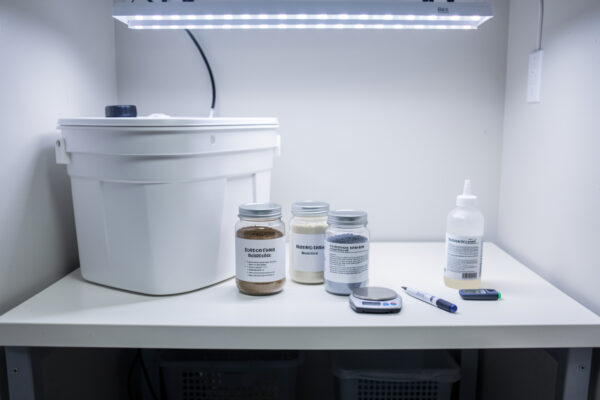
- Weigh the three salts separately on a 0.1 g scale. For a 5-gallon tote at full strength that is 10 g Masterblend, 5 g Epsom, 10 g calcium nitrate. Do not eyeball it — a teaspoon of one salt does not weigh the same as a teaspoon of another.
- Dissolve the Masterblend in a jug of warm water, stir until the water runs clear, and pour it into the reservoir.
- Dissolve the Epsom salt the same way and add it next. Epsom is the easiest of the three to dissolve and rarely causes trouble.
- Dissolve the calcium nitrate last in its own jug, and trickle it into the moving reservoir water while the circulation pump runs. Never combine the cal-nit jug with the Masterblend jug before they hit the tank.
- Check EC, then pH. Adjust EC by adding water (to lower) or a touch more of all three salts (to raise), then bring pH into the 5.5-6.0 band with pH Down. Always set EC before pH, because changing the salt load shifts the pH.
That sequence is non-negotiable in my routine because every shortcut I have ever taken with it has ended in cloudy water. If you only remember one thing from this whole guide, make it “calcium nitrate goes in last, diluted, into a full tank.”
Masterblend Across the Four Systems I Run
I run DWC, NFT, Kratky, and ebb-and-flow side by side, and Masterblend feeds all four — but the EC behaves differently in each. Recirculating systems hold EC steady; passive Kratky jars climb in EC as the water drops; and the small-volume systems swing fastest. The recipe is the same; the monitoring cadence is not.
In the DWC totes, which are my baseline, a well-aerated Masterblend res is rock-steady — I check EC every couple of days and top off before it drifts. On the NFT channels the film is thin and the reservoir small relative to the plants, so EC moves faster and I watch it daily. Kratky jars are the interesting case: there is no top-off, so as the plant drinks the water level falls and the remaining nutrients concentrate, pushing EC up over the grow — I start Kratky lettuce at the low end of the range knowing it will climb. The ebb-and-flow hydroton bed floods and drains on a timer, so the salts cycle through the clay pebbles; I flush that bed with plain water between crops to keep precipitate from building up in the medium. Same three salts, four different monitoring rhythms — and a calibrated EC pen is what makes the difference visible.
Reading EC Drift Through a Grow
EC is not a set-and-forget number. As plants transpire they drink water faster than they eat nutrients, so a reservoir’s EC tends to rise between top-offs even though the plants are consuming salts. Reading that drift correctly is the difference between a healthy res and a slow salt burn.
When EC climbs, the answer is usually water, not more nutrient — the plants have removed pure water and left the salts behind. I top off with plain pH-adjusted water to bring EC back down to target, and only do a full res change when the ratio of nutrients has drifted enough that topping off no longer holds the numbers. If EC instead falls fast, the plants are eating heavily and you may need to bump the mix up a notch — common on fast-growing fruiting crops in their stretch. Logging EC at each check turns this from guesswork into a pattern you can read; my full approach to managing that drift lives in the reservoir top-off guide, and it is the same instrument-first habit I bring to every system on the bench, from the DWC buckets outward.
Frequently Asked Questions
Is Masterblend a complete hydroponic nutrient on its own?
No. Masterblend 4-18-38 has no calcium and too little magnesium to grow plants alone. You must pair it with calcium nitrate (15.5-0-0) for calcium and nitrogen, and Epsom salt for magnesium and sulfur. The three salts together make a complete nutrient.
What is the Masterblend 2-1-2 ratio?
It is 2 parts Masterblend 4-18-38, 1 part Epsom salt, and 2 parts calcium nitrate by weight. In practice that is 2 grams Masterblend, 1 gram Epsom, and 2 grams calcium nitrate per US gallon for full-strength fruiting crops.
Why does calcium nitrate go in last?
Calcium reacts with the sulfate from Epsom salt and the phosphate from Masterblend to form insoluble white precipitate. Adding calcium nitrate last, pre-dissolved, into a large already-mixed reservoir keeps those ions too dilute to react, so nothing drops out as chalk.
What EC should I mix Masterblend to?
Match the crop: lettuce and leafy greens at EC 0.8-1.4 mS/cm, herbs at 1.0-1.6, and fruiting crops like tomatoes at 2.0-3.5. Full-strength 2-1-2 reads about EC 2.0-2.4, so dilute it for leafy greens and run it as written for fruiting plants.
Does Masterblend expire?
The dry salts effectively never chemically expire. The real failure is moisture: calcium nitrate is hygroscopic and cakes into a brick in humid air, and caked salt weighs heavy with water so your measured grams under-deliver. Store all three airtight with desiccant in a cool, dry place.
Is Masterblend cheaper than the GH Flora trio?
Considerably. A roughly $30-40 Masterblend kit mixes well over a thousand gallons at lettuce strength, putting the cost per litre in fractions of a cent. The liquid Flora trio is more convenient but costs several times more per litre of finished nutrient solution.
Related Guides
- Masterblend 4-18-38 Recipe: How I Mix It to a Target EC
- The 2-1-2 Masterblend Mix Explained
- Masterblend vs General Hydroponics Flora
- Masterblend for Lettuce and Leafy Greens
- Calcium Nitrate in a Masterblend Mix: Why It Goes In Last
- Masterblend Precipitation Fix: Stopping the White Chalk
- Is Masterblend Worth It? Cost-Per-Litre and Shelf Life
- Storing Dry Hydroponic Salts: Keeping Masterblend Dry